Table of Contents 8 sections
Are you looking to enter the booming market for athletic gear on Amazon but are unsure where to begin? The fitness and sports equipment industry is highly competitive, yet it offers immense opportunity for sellers who develop a smart strategy. Success hinges on choosing the right products, understanding fulfillment logistics, and managing your costs effectively.
Selling Amazon FBA equipment for athletes requires a clear understanding of the platform's fulfillment models, product sourcing strategies, and the specific fees associated with sports gear. By leveraging Fulfillment by Amazon (FBA), you can tap into Amazon's vast logistics network and Prime customer base. This guide provides the essential knowledge you need to build a profitable FBA business in the athletic niche for 2026, from identifying profitable sub-niches to selecting the right software to scale your operations.
Understanding Your Fulfillment Options: FBA vs FBM
Choosing your fulfillment method is one of the first and most critical decisions you'll make as an Amazon seller. The two primary options are Fulfillment by Amazon (FBA), where you send your products to Amazon's warehouses for them to handle storage, packing, and shipping, and Fulfillment by Merchant (FBM), where you manage all of these logistics yourself.
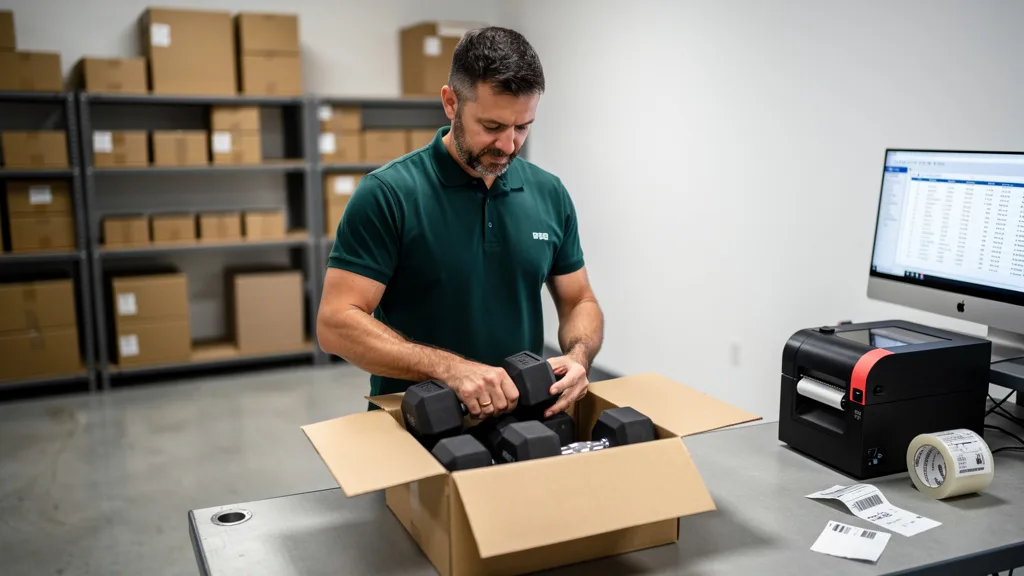
For most sellers in the athletic equipment space, FBA is the preferred method due to the convenience and access to Amazon's Prime shipping program. Customers purchasing fitness gear often want it quickly to start a new routine or replace broken equipment. The Prime badge instantly builds trust and can significantly increase your conversion rates, making FBA a powerful tool for growth.
Key Differences for Selling Fitness Products
When selling fitness products, the physical characteristics of your inventory heavily influence the FBA vs. FBM decision. Athletic equipment can range from small, light items like resistance bands to large, heavy products like dumbbells or yoga balls. With FBA, you must be mindful of storage and fulfillment fees, which are calculated based on size and weight. Bulky items can incur substantial long-term storage fees if they don't sell quickly.
With FBM, you avoid these specific Amazon fees but take on the responsibility of storing your inventory and calculating your own shipping costs. This can be cost-effective for oversized products if you have access to affordable storage and competitive shipping rates. However, you miss out on the Prime badge unless you qualify for Seller Fulfilled Prime, which has stringent performance requirements.
Pros and Cons of Each Model for Athletes
For products targeting athletes, delivery speed and reliability are paramount. FBA's main advantage is its integration with Amazon Prime, offering fast, free shipping that customers have come to expect. This hands-off approach also frees you to focus on marketing and product sourcing rather than logistics. The primary downside is the cost, especially for heavy or slow-moving items that can accumulate high storage fees.
FBM offers greater control over your inventory, packaging, and customer service interactions. This can be an advantage for building a unique brand experience. However, the logistical burden is significant, and competing with FBA offers on shipping speed and cost can be challenging. For many sellers, a hybrid approach works best, using FBA for popular, standard-sized items and FBM for larger, heavier, or more specialized equipment.
| Feature | Fulfillment by Amazon (FBA) | Fulfillment by Merchant (FBM) |
|---|---|---|
| Shipping & Logistics | Handled by Amazon; Prime eligible | Seller is responsible for storage, packing, and shipping |
| Customer Service | Handled by Amazon | Handled by the seller |
| Fees | Referral, fulfillment, and storage fees | Referral fees and seller's own shipping/storage costs |
| Best For | Standard-sized, fast-selling items like resistance bands, apparel, and small accessories | Heavy, oversized, or slow-moving items like weight sets or large exercise machines |
| Control | Less control over inventory and packaging | Full control over inventory, branding, and fulfillment |
Best Sporting Equipment to Sell on Amazon FBA in 2026
Identifying the right products is the foundation of a successful FBA business. The sports and outdoors category is vast, so niching down is essential to stand out from the competition. Instead of trying to sell everything, focus on a specific activity, customer demographic, or product type where you can become a category leader.
"The key to success in 2026 is not just finding a popular product, but finding a passionate community around that product. Whether it's pickleball, home fitness, or outdoor climbing, serving a dedicated niche allows you to build a brand that resonates and commands higher margins, which is crucial when selling Amazon FBA equipment for athletes." - Amazon Growth Expert
Identifying the Most Profitable Sub-Niches
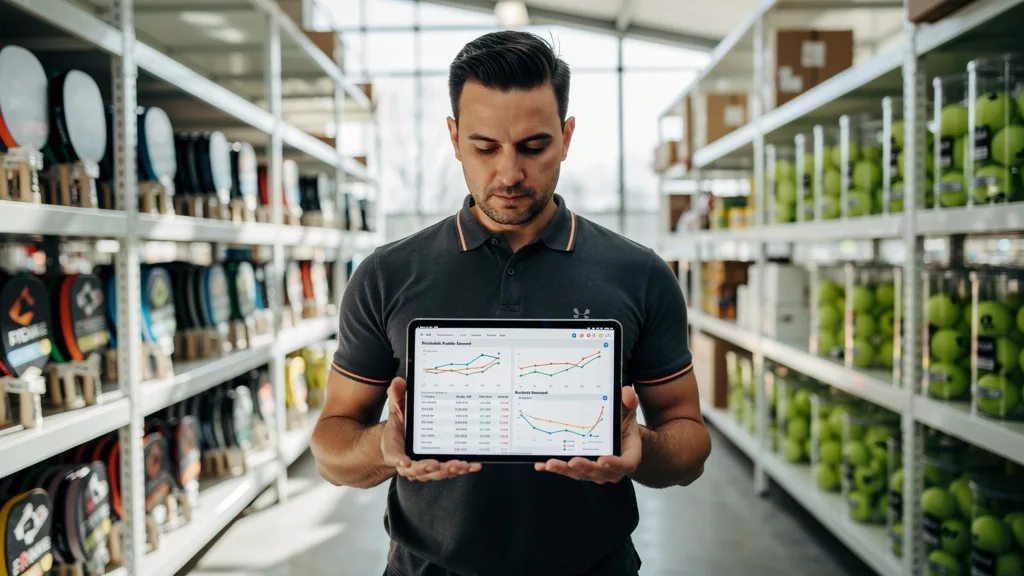
To find profitable opportunities, look for trends both inside and outside of Amazon. Growing sports like pickleball, padel, and disc golf present excellent opportunities. The evergreen home fitness market also has many sub-niches, from yoga and pilates to high-intensity interval training (HIIT) accessories. Consider these promising areas:
- Niche Sports Gear: Pickleball paddles, disc golf sets, climbing harnesses, and archery accessories.
- Recovery & Wellness: Foam rollers, massage guns, compression wear, and portable ice baths.
- Home Gym Accessories: Adjustable dumbbells, high-quality resistance bands, pull-up bars, and premium yoga mats.
- Smart Fitness Technology: Fitness trackers, smart scales, and other connected devices that integrate with workout apps.
Researching Product Demand and Competition
Once you have a few niche ideas, you must validate them with data. Use product research tools to analyze sales volume, revenue, and keyword search frequency. Look for products with consistent demand and a manageable number of competitors. A key indicator of a healthy niche is the presence of several sellers making good revenue, but without one or two dominant brands controlling the entire market.
Analyze the top competitor listings carefully. Read their customer reviews to identify common complaints or desired features that you could incorporate into your own product. This process, known as gap analysis, can help you create a superior product that directly addresses customer needs. Also, pay attention to the Best Sellers Rank (BSR) of products in your target category to gauge current demand.
Navigating Gated Categories and Brand Restrictions
While the broader Sports & Outdoors category is generally open to new sellers, some sub-categories or specific brands may be restricted or "gated." This means you need to apply for approval from Amazon before you can list products in that category. This often involves providing invoices from authorized distributors or a letter of authorization from the brand owner.
Before investing in inventory, always check the requirements for the specific products you plan to sell. Attempting to list in a gated category without approval can lead to listing suspension or even account deactivation. Understanding Amazon's eligibility for sports gear is a crucial step in your initial planning phase to avoid costly mistakes down the line.
How to Source Athletic Equipment for Your FBA Business
Finding a reliable supplier is just as important as finding the right product. Your sourcing method will directly impact your profit margins, product quality, and ability to scale. The three main sourcing models for Amazon sellers are wholesale, private label, and arbitrage.
Working With Wholesalers and Distributors
Wholesale involves purchasing branded products in bulk directly from the manufacturer or an authorized distributor at a discounted price. The primary advantage of this model is that you are selling products with existing brand recognition and established demand. This can reduce your marketing burden and lead to quicker sales.
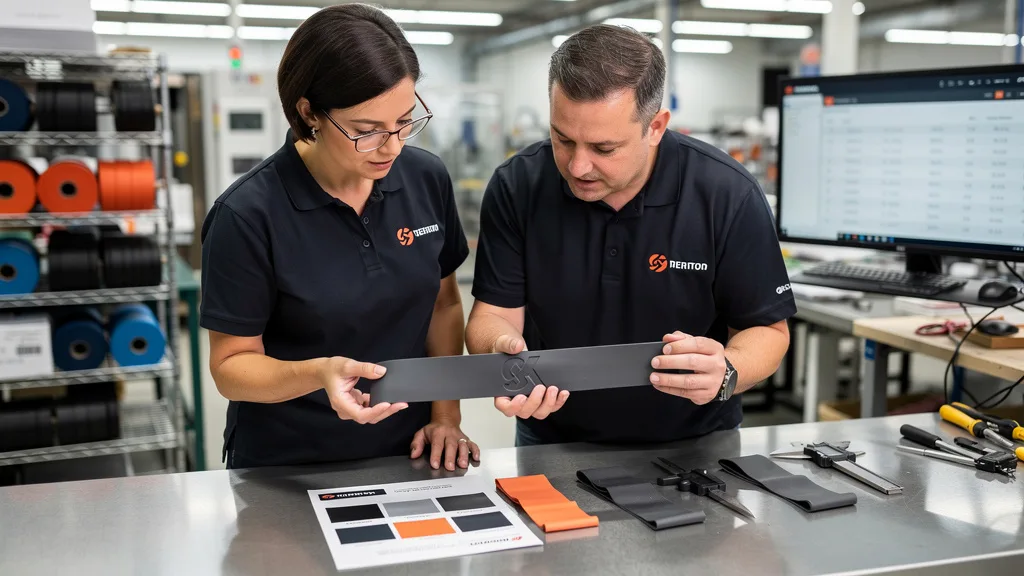
The main challenges with wholesale are finding profitable accounts and dealing with high competition. Margins are typically lower than with private label, and you may be competing with dozens of other sellers on the same listing. Success in wholesale often comes down to building strong relationships with suppliers to get the best pricing and access to exclusive products.
Exploring Private Label Manufacturing
Private label is the process of finding a manufacturer to produce products under your own brand name. This model offers the highest potential for profit and allows you to build a valuable, long-term asset. You have full control over the product design, quality, and packaging, enabling you to create something unique that stands out in the marketplace.
The downside is that private label requires a larger upfront investment in inventory and more effort in brand building and marketing. Platforms like Alibaba are popular for finding overseas manufacturers, but it's essential to vet suppliers carefully, order samples, and conduct quality control inspections. Despite the higher initial risk, private label is the preferred path for most sellers aiming to build a 7 or 8-figure brand.
Retail and Online Arbitrage Opportunities
Arbitrage is the simplest sourcing model to understand. It involves finding products at a discount from retail stores (retail arbitrage) or other ecommerce sites (online arbitrage) and reselling them on Amazon for a profit. This method has a very low barrier to entry, as you can start with a small amount of capital.
However, arbitrage is difficult to scale and can be very time-consuming. You are constantly hunting for deals, and your inventory supply can be inconsistent. While it can be a good way to learn the basics of selling on Amazon, it is not a viable long-term strategy for building a scalable business in the athletic equipment space.
Calculating Your Startup Costs and Profit Margins
A clear understanding of your finances is non-negotiable for building a sustainable business. Before you invest a single dollar in inventory, you must map out your expected startup costs and calculate your potential profit margins to ensure your product idea is financially viable.
How Much It Costs to Start Selling Sports Equipment
Startup costs can vary significantly based on your chosen product and sourcing model. For a private label launch, a realistic budget for your first product is typically between $5,000 and $15,000. This includes costs for inventory (your largest expense), product samples, shipping to Amazon, professional product photography, branding and packaging design, and an initial budget for Amazon PPC advertising.
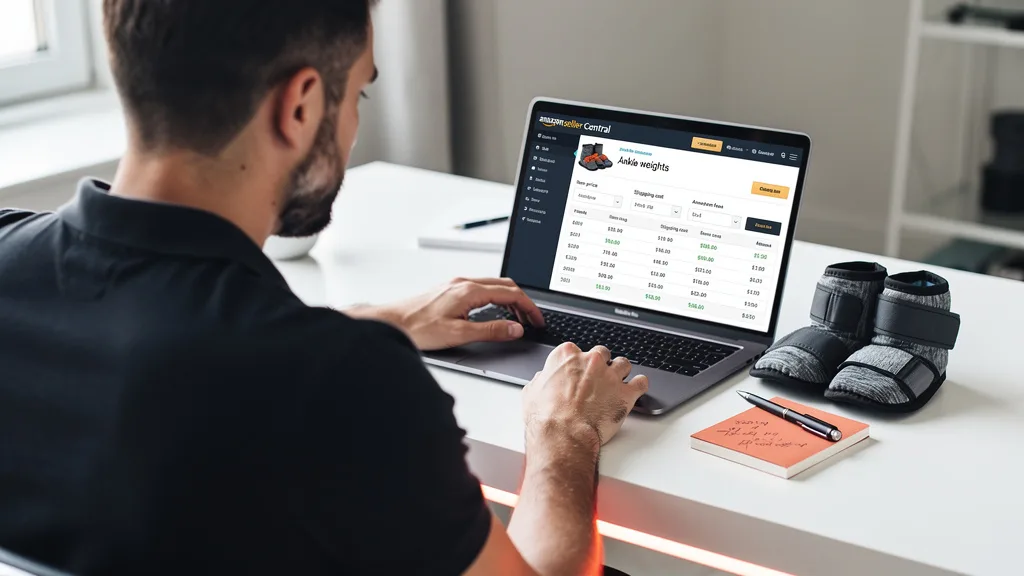
Other ongoing costs include the Amazon Professional Seller account fee ($39.99 per month) and subscriptions for essential software tools. While you can start with less using an arbitrage model, a serious private label launch requires a solid financial commitment to give your product the best chance of success.
Understanding Amazon's FBA Fee Structure
Amazon's fee structure can be complex, and underestimating these costs can erase your profits. The main fees to account for are the referral fee (typically 15% for the Sports & Outdoors category), fulfillment fees (for picking, packing, and shipping), and monthly storage fees. Fulfillment and storage fees are based on your product's size and weight, making them a critical factor for athletic equipment.
It is essential to use Amazon's FBA Revenue Calculator to model your costs accurately for each potential product. Be sure to factor in all costs, including your landed cost of goods, shipping to Amazon, and estimated advertising spend. A deep dive into Amazon's FBA fees is necessary, especially when dealing with potentially oversized items that can incur significantly higher charges.
What Are the Typical Profit Margins for Athletic Products?
Profit margins in the athletic equipment category can vary widely. For wholesale and arbitrage sellers, net margins often fall in the 8-15% range. For private label sellers, the goal is typically a net margin of 20-35% after all costs, including product cost, shipping, Amazon fees, and advertising.
Achieving a healthy margin requires careful product selection and negotiation with suppliers. Lighter, smaller products generally have better margins because of lower FBA fees. Ultimately, your profitability depends on your ability to control your costs and establish a premium price point through strong branding and positive customer reviews.
Essential Software for Your Amazon FBA Sports Business
Running a successful Amazon business at scale is nearly impossible without the right software stack. These tools automate tedious tasks, provide critical data for decision-making, and help you optimize your listings and advertising campaigns for maximum profitability.
Product Research and Analytics Tools
The foundation of any FBA business is data-driven product selection. Comprehensive tools like Helium 10 or Jungle Scout are indispensable for this phase. They allow you to analyze market trends, estimate sales volume, track competitor performance, and discover relevant keywords. These platforms provide the insights needed to validate product ideas and find low-competition, high-demand opportunities within the sports niche.
Inventory Management and Repricing Software
Once you are selling, managing your inventory becomes a top priority. Running out of stock can kill your sales momentum and BSR, while overstocking leads to high storage fees. Software like InventoryLab or Sellerboard helps you track your profitability on a per-ASIN basis, monitor your stock levels, and forecast when to reorder from your supplier. For sellers using wholesale or arbitrage, repricing tools can automatically adjust your prices to stay competitive and win the Buy Box. oversized items.
Listing Optimization and PPC Management Platforms
To maximize visibility and sales, your product listing must be fully optimized with high-volume keywords, and your Pay-Per-Click (PPC) campaigns must be managed efficiently. Tools in this category help you track your keyword rankings, A/B test different elements of your listing like titles and images, and automate your advertising bids. While software provides the data, expert management is often required to interpret that data and build a profit-focused growth strategy, especially when navigating Amazon's own advertising platform.
Key Takeaways
Building a successful business selling athletic equipment on Amazon FBA is achievable with the right strategy and execution. As you move forward, keep these core principles in mind to guide your decisions and maximize your chances of success in 2026.
- Choose the Right Fulfillment Model: Use FBA for its Prime eligibility and convenience with standard-sized items, but consider FBM for heavy or oversized equipment to better control costs.
- Niche Down for Profitability: Avoid broad categories. Focus on specific, passionate sub-niches like pickleball, home recovery, or specialized fitness accessories to reduce competition and build a stronger brand.
- Private Label Offers the Most Potential: While wholesale and arbitrage are viable entry points, creating your own private label brand provides the highest profit margins and long-term scalability.
- Master Your Numbers: Meticulously calculate all costs, especially Amazon's FBA fees for fulfillment and storage, to ensure your products are profitable before you invest in inventory.
- Leverage Technology to Scale: Utilize a suite of software tools for product research, inventory management, and PPC advertising to automate processes and make data-driven decisions.
Frequently Asked Questions
Are there successful case studies of FBA sellers in the athletic niche?
Absolutely. The athletic niche is filled with success stories of brands that started as small FBA businesses and grew into household names. Many successful sellers identified a gap in the market for a specific type of product, such as a more durable resistance band, an ergonomically designed yoga mat, or specialized gear for a growing sport like pickleball. They succeeded by focusing on superior product quality, building a strong brand identity, and gathering thousands of positive customer reviews. Amazon's own advertising platform.
These brands often start with a single hero product and then expand their catalog to serve the same customer base. Their success demonstrates that with careful research, quality sourcing, and effective marketing, it is entirely possible to build a multi-million dollar brand selling athletic equipment on Amazon.
What are some alternatives to Amazon FBA for selling athletic apparel online?
While Amazon is a dominant force, several other platforms are excellent for selling athletic apparel. Building your own ecommerce store on a platform like Shopify gives you complete control over your brand, customer experience, and data. This is an ideal long-term strategy for building an asset independent of Amazon. You can use a third-party logistics (3PL) provider to handle fulfillment in a manner similar to FBA.
Other marketplaces like Walmart Marketplace and eBay can also be effective channels. More recently, social commerce platforms like TikTok Shop have emerged as powerful sales channels, particularly for brands with a strong social media presence. A multi-channel strategy, where you sell on Amazon as well as your own site and other marketplaces, is often the most resilient approach.
How do you manage seasonality when selling sports equipment?
Seasonality is a significant factor in the sports category. Sales for outdoor gear like baseball bats or swimming accessories will peak in the spring and summer, while home fitness equipment often sees a surge in January due to New Year's resolutions. The key to managing this is careful inventory planning. Use historical sales data and forecasting tools to anticipate demand and ensure you are well-stocked for peak seasons without carrying excessive inventory during off-seasons.
Diversifying your product catalog is another effective strategy. By offering a mix of products for different seasons (e.g., ski goggles for winter and hiking gear for summer), you can create a more stable, year-round revenue stream. Aggressive PPC campaigns and promotions can also help liquidate excess inventory at the end of a season.
What are the biggest challenges when selling athletic gear via FBA?
The primary challenges include managing FBA fees for bulky items, intense market competition, and handling customer returns. Because athletic equipment can be heavy or oversized, fulfillment and storage fees can quickly eat into profit margins if not managed carefully. The popularity of the niche also means you will face stiff competition from both established brands and new sellers.
Returns can also be a challenge, especially for apparel where customers may order the wrong size. High return rates can lead to extra costs and potentially impact your account health metrics. Finally, product liability is a greater concern with equipment that people use for physical activity, making quality control and proper insurance essential.
Are there specific safety or compliance standards for sports products?
Yes, safety and compliance are critical when selling sports products. Depending on your product, you may need to meet specific standards. For example, any products intended for children must comply with the Consumer Product Safety Improvement Act (CPSIA). Items like helmets or protective gear often have to meet specific certification standards to be sold legally.
It is your responsibility as the seller to ensure your products are safe and meet all applicable laws and regulations in the countries where you sell. This may involve lab testing and obtaining compliance documentation from your manufacturer. Always consult with a compliance expert and ensure you have adequate product liability insurance. You can find more information from official bodies like the Consumer Product Safety Commission (CPSC) in the United States.
Conclusion
Launching and scaling a business with Amazon FBA equipment for athletes is a rewarding venture that taps into a passionate and growing market. Success in 2026 depends on a strategic approach: identifying a profitable niche, sourcing a high-quality product, mastering the financial details of FBA fees and profit margins, and leveraging the right software. By following the principles outlined in this guide, you can build a strong foundation for a thriving, scalable brand that stands out in a competitive landscape. Your next step is to begin your product research and validate your ideas with real-world data.
Ready to scale your athletic brand from 7 to 8 figures but unsure where to start? Our profit-first approach to PPC and listing optimization can unlock your brand's true potential. Get a comprehensive analysis of your Amazon listings and strategy today.
If you want help turning this into a concrete plan for your site or team, take the next step below to apply Amazon FBA Equipment for Athletes: What You Need to Know with confidence.
Ready to act on Amazon FBA Equipment for Athletes: What You Need to Know? Free Audit — tell us your goal, and we will help you pick the highest-leverage next step so you are not guessing alone.