
Are hidden Amazon FBA fees silently eating away at your profits and hindering your brand's growth? For many ambitious sellers, the path to 8-figures is paved with complex fee structures and unexpected charges that can quickly erode margins if left unchecked. Understanding every line item is not just good practice; it's essential for survival and scaling your ecommerce business.
The total Amazon FBA product eligibility cost is a combination of standard fulfillment and storage fees, plus variable charges that can surprise unprepared sellers. These include long-term storage penalties, returns processing fees, and unplanned service fees for improper inventory prep. Mastering these costs in 2026 is the key to maintaining profitability and successfully scaling your operations on the platform.
What Is Fulfillment by Amazon (FBA)?
Fulfillment by Amazon (FBA) is a service that allows you to outsource order fulfillment to Amazon's massive global network. Instead of managing your own warehouse, you send your products to Amazon's fulfillment centers. When a customer places an order, Amazon's team will pick, pack, and ship the product, as well as handle customer service and returns for those orders. This model is a cornerstone for many brands aiming to scale rapidly.
The primary advantage of using FBA is gaining access to Amazon's world-class logistics and the coveted Prime badge for your listings. This offers customers free, fast shipping, which significantly boosts conversion rates and customer trust. By letting Amazon handle the operational heavy lifting, you can focus on strategic growth activities like marketing, product development, and optimizing your Amazon SEO strategy.
Understanding FBA Product Eligibility Requirements
Before you can even calculate fees, you must ensure your products are eligible for the FBA program. Amazon has strict guidelines on what can and cannot be sold through their fulfillment network. Ignoring these rules not only prevents you from using the service but can also lead to costly penalties, inventory disposal, and even account suspension. Understanding these prerequisites is the first step in managing your overall costs.

Product eligibility is tied directly to safety, legal restrictions, and Amazon's operational capabilities. Certain categories require pre-approval, and all products must be prepped and labeled according to specific standards. Failure to comply results in delays and fees, directly impacting your bottom line before you even make a sale. This is a critical component of the total Amazon FBA product eligibility cost.
Restricted and Prohibited Products
Amazon maintains a detailed list of products that are either prohibited or restricted. Prohibited products are items that cannot be sold on Amazon at all, such as illegal goods or certain hazardous materials. Restricted products, on the other hand, may be sold but require you to obtain pre-approval from Amazon. These often include categories like groceries, fine art, automotive parts, and topical products.
Attempting to sell a restricted product without approval or sending a prohibited item to a fulfillment center will result in immediate action from Amazon. This can range from the rejection of your inventory at the warehouse dock to the destruction of your products at your expense. Always review the Seller Central help pages for the most current list of restricted items before sourcing a new product to avoid these costly mistakes.
FBA Prep and Labeling Requirements
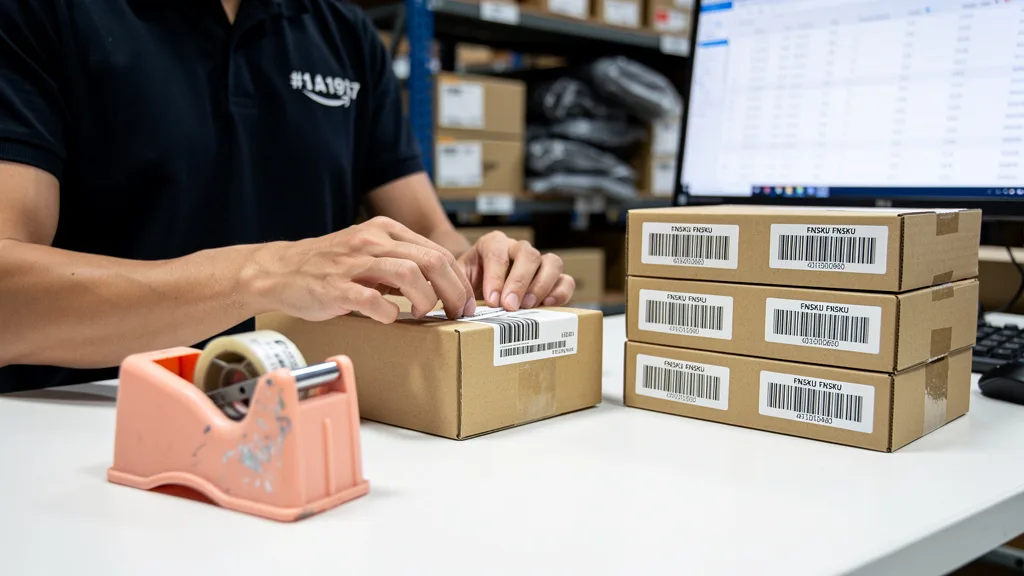
Every unit you send to an Amazon fulfillment center must be prepped and labeled correctly. This includes applying a unique FNSKU (Fulfillment Network Stock Keeping Unit) barcode that identifies the product as yours. Depending on the product, additional prep may be required, such as poly bagging for apparel, bubble wrapping for fragile items, or applying 'sold as set' labels for bundled products.
If your products arrive at the fulfillment center without the correct preparation or labeling, Amazon will perform the service for you, but at a significant cost. These are known as unplanned service fees and can be substantially higher than the cost of prepping the items yourself or through a third-party service. Proper prep is one of the most controllable factors in reducing unnecessary FBA costs and is essential for a smooth inbound process.
Core Amazon FBA Fees in 2026: The Standard Costs
When you use FBA, you will encounter two primary categories of standard fees: fulfillment fees and inventory storage fees. These are the most predictable costs associated with the service and are charged consistently based on your product's characteristics and your inventory levels. Understanding how these are calculated is fundamental to pricing your products correctly and forecasting your profitability. amazon listing optimization checklist new.
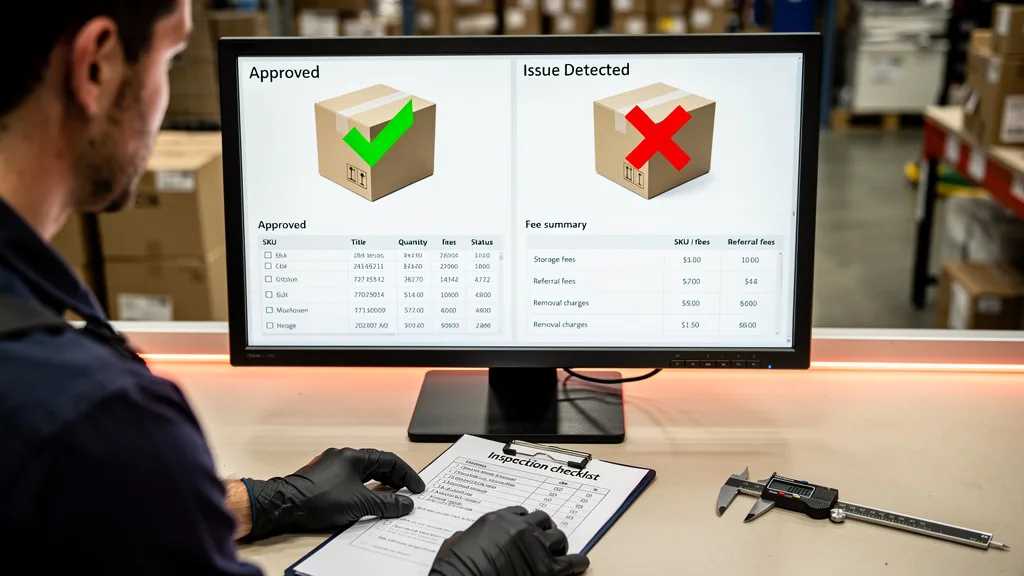
These core fees are the price of admission for leveraging Amazon's powerful logistics network. While they are a significant part of your cost of goods sold, they replace the costs you would otherwise incur for warehousing, staffing, packing materials, and shipping. For a detailed overview of all potential charges, it's helpful to review a complete Amazon Selling Fees Explained (2026) guide from an authoritative source.
FBA Fulfillment Fees (Pick, Pack, and Ship)
The FBA fulfillment fee, often called the 'pick and pack' fee, is a flat fee charged per unit sold. This fee covers the entire process of retrieving the item from the shelf, packing it in a box, and shipping it to the customer. It also includes the cost of providing customer service and processing returns related to that order.
The amount you pay for this service is determined by your product's size tier and shipping weight. Amazon categorizes products into tiers such as 'small standard-size' and 'large standard-size', up to 'special oversize'. Lighter, smaller products are significantly cheaper to fulfill than large, heavy ones. These fees are a primary driver of your FBA costs and must be accurately factored into your pricing.
Monthly Inventory Storage Fees
In addition to fulfillment fees, Amazon charges for the space your inventory occupies in their fulfillment centers. Monthly inventory storage fees are calculated based on the daily average volume of your inventory, measured in cubic feet. This fee rewards efficient inventory management and penalizes sellers who store large quantities of slow-moving products.
The cost per cubic foot varies depending on the time of year. Fees are typically higher during the peak holiday season, from October to December, to discourage sellers from overstocking during the busiest time. Keeping a lean inventory and maintaining a high sell-through rate is a key strategy for minimizing these recurring storage costs and protecting your profit margins.
Uncovering Hidden FBA Fees That Kill Your Profits
Beyond the standard fulfillment and storage fees lie several other charges that can come as a surprise and significantly impact your profitability. These are often referred to as 'hidden fees' not because Amazon conceals them, but because sellers often overlook them in their initial profit calculations. These costs typically arise from inefficient inventory management or non-compliance with Amazon's policies.

Proactively managing these potential expenses is what separates thriving 7- and 8-figure brands from those that struggle. Many sellers are unaware of the full scope of Amazon FBA's Hidden Costs until they see them on their settlement reports. By learning to anticipate and mitigate these charges, you can protect your margins and build a more resilient business.
For many 7-figure sellers, the difference between scaling to 8 figures and stagnating is not sales volume, but profit margin. Hidden FBA fees are the single biggest, and most overlooked, threat to that margin in 2026. amazon listing optimization cost 2026.
Long-Term Storage Fees
If your inventory sits in a fulfillment center for too long, you will be hit with long-term storage fees. As of 2026, these are assessed monthly for any units that have been stored for more than 365 days. These fees are substantial and are designed to prevent sellers from using Amazon's fulfillment centers as indefinite storage lockers. They are charged in addition to the regular monthly storage fees.
Effective inventory management is the only way to avoid these punitive fees. You should regularly monitor your Inventory Age report in Seller Central and take action on slow-moving stock. This might involve increasing your marketing efforts, running a sale, or creating a removal order to have the inventory returned to you before the fees are charged.
Returns Processing Fees
When a customer returns a product, Amazon handles the logistics. However, for certain product categories where Amazon offers free customer returns, such as apparel, shoes, and jewelry, sellers are charged a returns processing fee for each unit returned. This fee is equivalent to the original fulfillment fee for that item.
This fee can quickly add up, especially for products with high return rates. It's crucial to understand your product's return rate and factor this cost into your pricing. Minimizing returns by improving your product detail page, using high-quality images, and providing accurate sizing information is a key strategy for improving profitability. Analyzing return reasons can also provide valuable feedback for product improvements.
Removal and Disposal Order Fees
When you need to get inventory out of a fulfillment center, whether to avoid long-term storage fees or to discontinue a product, you must create a removal or disposal order. Amazon charges a per-item fee for both services. A removal order has Amazon ship the inventory back to you, while a disposal order means Amazon will destroy the items.
The cost for these orders varies based on the item's size and weight. While it's an added expense, creating a removal or disposal order is often more cost-effective than paying months of long-term storage fees on unsellable inventory. This is a necessary tool for managing the lifecycle of your products within the FBA ecosystem.
Unplanned Service Fees
As mentioned earlier, unplanned service fees are charged when your inventory arrives at a fulfillment center without being prepped to Amazon's standards. This could be due to a missing FNSKU label, a product not being in a required poly bag, or other compliance failures. Amazon's staff must then perform the necessary prep work, and they charge a premium for this unexpected service.
These fees are entirely avoidable with a robust quality control process at your manufacturing or prep center location. Double-checking every shipment for compliance before it leaves your facility is a simple step that can save you a significant amount of money and prevent receiving delays. For a deeper dive into optimizing your listings and avoiding such issues, our beginner's guide to listing optimization is a great resource.
FBA Fee Example: How Much Does Amazon Take From a Sale?
To make these costs more concrete, let's walk through a hypothetical example. Imagine you are selling a standard-size product for $35.00. Your goal is to understand how much of that sale Amazon keeps in fees, which is a critical part of calculating your true profit margin and overall business health.
This breakdown illustrates how quickly fees can add up. Before accounting for your product cost, marketing expenses like PPC, and other overhead, Amazon's fees have already taken a significant portion of your revenue. This is why a detailed fee analysis is essential for any serious Amazon seller.
| Item | Cost | Description |
|---|---|---|
| Sale Price | $35.00 | The price the customer pays on Amazon. |
| Amazon Referral Fee (15%) | -$5.25 | Amazon's commission for selling on their platform. |
| FBA Fulfillment Fee | -$4.80 | Fee for a standard-size item under 1 lb. (Example rate) |
| Monthly Storage Fee (1 unit) | -$0.08 | Estimated cost for one unit for one month. (Example rate) |
| Revenue After Core Fees | $24.87 | Amount remaining before product cost and other expenses. |
How to Calculate and Reduce Your FBA Costs
Successfully scaling on Amazon requires a proactive approach to managing your FBA fees. You can't just accept the charges on your statement; you must actively work to calculate, forecast, and minimize them. Fortunately, Amazon provides tools to help with this, and several strategies can be implemented to keep your costs in check.
The most profitable sellers treat fee optimization as an ongoing process, not a one-time task. It involves everything from product selection and packaging design to inventory forecasting and strategic use of promotions. By integrating cost management into your daily operations, you can protect your margins and fund future growth.
Using the FBA Revenue Calculator
Amazon provides a free FBA Revenue Calculator that is an indispensable tool for every seller. This calculator allows you to input a product's dimensions, weight, and price, and it will provide a real-time estimate of the FBA fulfillment and storage fees. You can also compare the costs and profitability between FBA and Fulfillment by Merchant (FBM).
You should use this calculator *before* you ever decide to source a new product. It provides a clear, upfront picture of a product's potential profitability and helps you avoid investing in items with margins that are too thin to be viable on the FBA program. It takes the guesswork out of your initial financial analysis.
Strategies to Minimize Storage and Fulfillment Fees
Beyond using the calculator, there are several actionable strategies you can employ to actively reduce your ongoing FBA costs. Implementing these practices can have a direct and positive impact on your bottom line.
- Improve Inventory Turnover: Monitor your inventory health and aim for a high sell-through rate. Use advertising and promotions to move aging stock before it incurs long-term storage fees. Running a well-structured campaign is key, and understanding your Amazon PPC cost is part of this equation.
- Optimize Product Packaging: Small changes to your product's packaging can sometimes move it into a lower size or weight tier, resulting in significant savings on every unit sold. Aim for compact, lightweight packaging that is still protective.
- Audit Your Fee Statements: Regularly review your settlement reports and transaction details for errors. Amazon sometimes makes mistakes, such as overcharging for weight or dimensions. You can open cases to get reimbursed for these errors. Performing a regular Amazon PPC audit can also uncover wasted ad spend, further improving profitability.
- Maintain Compliance: Ensure every shipment is perfectly prepped and labeled to avoid costly unplanned service fees. Create a clear checklist and quality control process for your team or prep center.
- Utilize FBA Small and Light: If your products meet the criteria (small, lightweight, and low-priced), enroll them in the Small and Light program, which offers lower fulfillment fees than standard FBA.
Key Takeaways
Navigating the Amazon FBA product eligibility cost and fee structure is crucial for building a profitable brand in 2026. While the service offers unparalleled reach and logistics power, its cost structure demands careful and continuous management. Here are the most important points to remember:
- Core Fees Are Predictable: The main costs are FBA fulfillment fees (per unit sold) and monthly inventory storage fees (per cubic foot).
- Hidden Fees Erode Profit: Be vigilant about long-term storage fees, returns processing fees, removal/disposal fees, and unplanned service fees. These are the costs that often kill margins.
- Eligibility and Prep Matter: Ensure your products are allowed in the FBA program and are prepped correctly to avoid costly penalties and delays.
- Use the FBA Calculator: Always estimate a product's profitability with the FBA Revenue Calculator before investing in inventory.
- Active Management is Key: Profitability with FBA is not passive. It requires constant monitoring of inventory health, auditing fee statements, and optimizing packaging and processes.
Frequently Asked Questions
Navigating the complexities of FBA fees can be challenging. Here are answers to some of the most common questions sellers have about FBA costs and processes.
Why are my FBA fees so high?
High FBA fees can stem from several factors. Your product might be in a large or heavy size tier, leading to higher fulfillment costs. You could be incurring long-term storage fees on aging inventory, or your monthly storage fees could be high due to excess stock, especially during the Q4 peak season. Lastly, unplanned service fees from improper prep can add significant, unexpected costs to your statements.
What is the difference between FBA and FBM fees?
With FBA (Fulfillment by Amazon), your fees to Amazon include the referral fee, fulfillment fee, and storage fees. With FBM (Fulfillment by Merchant), you only pay Amazon the referral fee. However, with FBM, you are responsible for all your own costs for storage, packing materials, labor, and shipping to the customer, which must be managed separately.
How do oversized items affect FBA costs?
Oversized items dramatically increase FBA costs. Both the per-unit fulfillment fee and the monthly storage fee per cubic foot are substantially higher for products classified as 'oversize'. To be profitable, oversized products require much higher price points and profit margins to absorb these significant logistical expenses. It's crucial to use the FBA Revenue Calculator to confirm viability before selling oversized goods.
Do FBA fees change during Q4 and the holiday season?
Yes, FBA fees are subject to seasonal changes. Most notably, monthly inventory storage fees increase for the peak shopping season, typically from October through December. Amazon may also implement peak fulfillment surcharges during periods of high demand to manage capacity in their network. These changes must be factored into your Q4 profitability planning.
Can I get reimbursed for lost or damaged FBA inventory?
Yes, if Amazon loses or damages your inventory while it's under their control in a fulfillment center, you are eligible for reimbursement. You must identify the discrepancy through inventory reconciliation reports and open a case with Seller Support to file a claim. This process requires diligent tracking and follow-up, but it is essential for recovering the value of your lost assets.
Conclusion
Mastering the full spectrum of Amazon FBA fees, from standard charges to the hidden costs that can derail a growing business, is non-negotiable for success in 2026. True profitability on Amazon comes not just from driving sales, but from protecting your margins through diligent cost management. By understanding your eligibility requirements, proactively managing inventory, and auditing every fee, you can leverage the power of FBA to scale from 7 to 8 figures and beyond.
If you're a 7-figure brand owner ready to scale but are unsure if hidden fees are holding you back, a professional audit can provide the clarity you need. We analyze your entire fee structure to identify opportunities for profit recovery and sustainable growth. Get your no-obligation Free Audit today.