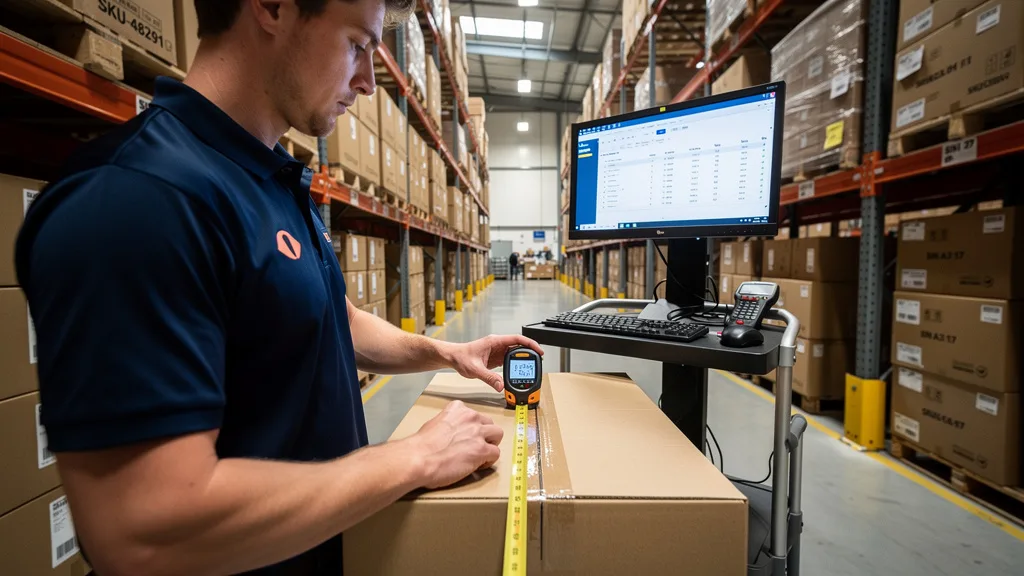
Are hidden FBA fees for large products eating into your profits? For Amazon sellers looking to scale, expanding into larger items can unlock new markets, but it comes with a complex set of rules and higher costs. Understanding the specifics of Amazon's oversize tiers is not just about compliance; it's a critical component of a profit-first strategy that separates 7-figure sellers from those who scale to 8-figures.
This comprehensive Amazon FBA Oversize Item Eligibility and Fee Guide provides the clarity you need for 2026. An item qualifies as oversize if it exceeds Amazon's standard-size dimensions or weight limits. This classification subjects your product to different fulfillment and storage fees, which can significantly impact your profit margins if not calculated correctly. Mastering these guidelines is essential for accurate forecasting and sustainable growth.
What Qualifies as an Oversize Item on Amazon FBA?
Amazon classifies any product that exceeds specific dimension or weight thresholds as an oversize item. This distinction is crucial because it dictates everything from fulfillment fees and storage costs to preparation requirements. Unlike standard-size products that fit into neat, easily managed packages, oversize items require special handling and more space within Amazon's fulfillment centers, which is why the associated costs are higher.
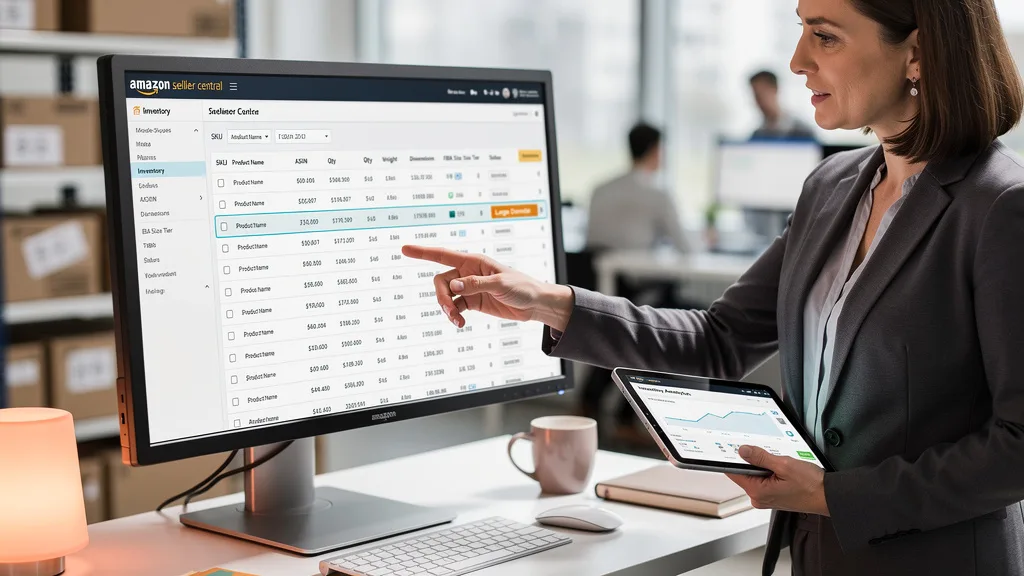
Misclassifying your product can lead to unexpected charges, shipment rejections, or even account issues. Therefore, the first step for any seller considering a larger product is to understand precisely where their item falls within Amazon's size tier system. This knowledge forms the foundation of your entire financial forecasting and logistical planning.
Standard-Size vs Oversize Tiers Explained
Amazon's product size classification is divided into two primary categories: standard-size and oversize. A product is considered standard-size if, when fully packaged, it weighs 20 lbs or less and does not exceed 18 inches on its longest side, 14 inches on its median side, and 8 inches on its shortest side. Any item that surpasses any one of these measurements is automatically moved into an oversize tier.
The oversize category is further broken down into several sub-tiers, including small oversize, medium oversize, large oversize, and special oversize. Each tier has its own set of dimension and weight limits, along with a corresponding fee structure. Understanding which specific tier your product belongs to is essential for using tools like the FBA Revenue Calculator to accurately predict your net profit per unit sold.
Key Dimension and Weight Limits to Know for 2026
As of 2026, staying current with Amazon's specific measurement thresholds is critical. These limits determine whether your product is standard or falls into one of the various oversize categories. Amazon uses the dimensions and weight of the packaged item, not the product itself, so always measure after it's ready to ship.
- Standard-Size: Up to 20 lb, with longest side ≤ 18", median side ≤ 14", and shortest side ≤ 8".
- Small Oversize: Up to 70 lb, with longest side ≤ 60", median side ≤ 30", and longest side + girth ≤ 130".
- Medium Oversize: Up to 150 lb, with longest side ≤ 108" and longest side + girth ≤ 130".
- Large Oversize: Up to 150 lb, with longest side ≤ 108" and longest side + girth ≤ 165".
- Special Oversize: Exceeds any of the Large Oversize metrics and requires special handling.
Girth is calculated as (2 x median side) + (2 x shortest side). Always double-check your final packaged measurements against these tiers to prevent costly surprises after your inventory reaches a fulfillment center.
Special Oversize Categories: Large Bulky and Extra-Large
Within the broader oversize classification, Amazon has specific categories for items that are particularly large or heavy, which were previously grouped under terms like `large bulky` and `extra large`. These products, now often falling into the large oversize or special oversize tiers, include items like furniture, large screen TVs, and major sporting equipment. These products require special handling and dedicated storage areas within Amazon's network.
The fees for these items are the highest due to the resources required to store, move, and ship them. If your product falls into these categories, it is imperative to conduct a thorough cost analysis. You must account for not only the higher FBA fees but also increased inbound shipping costs, typically via Less-Than-Truckload (LTL) freight, and potentially lower inventory turnover rates.
Determining Your Product's Oversize Eligibility
Before you commit to sourcing a large product, you must confirm its FBA eligibility and size tier. This proactive step saves you from investing in inventory that you cannot sell through FBA or that will be unprofitable due to unforeseen fees. Amazon provides tools and resources to help sellers make this determination accurately.
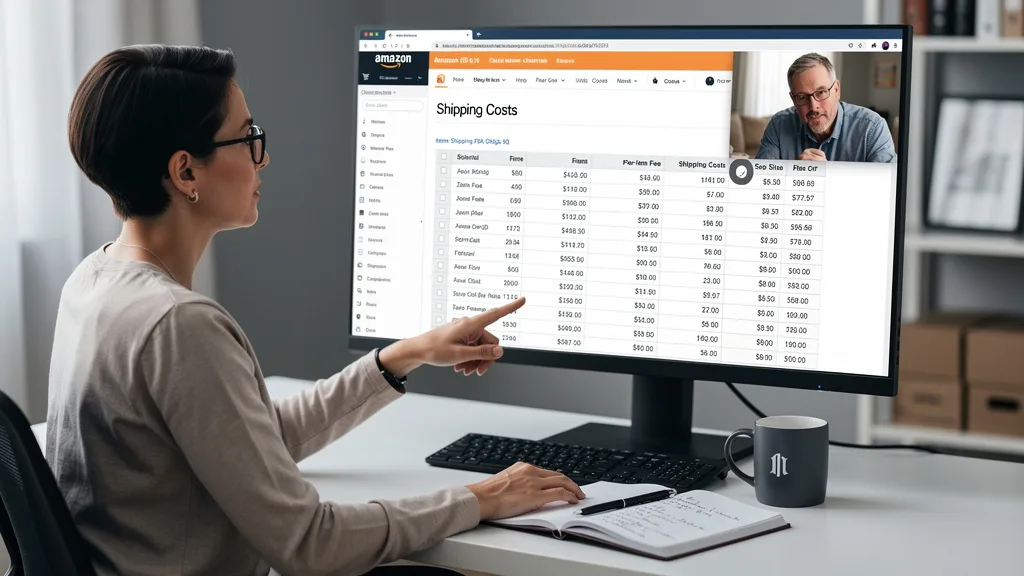
Failing to verify eligibility can result in your shipment being rejected at the fulfillment center, forcing you to arrange for its removal at your own expense. This process involves checking your product against Amazon's guidelines, understanding common rejection reasons, and knowing how to handle items that need special attention.
Using Amazon's Tools to Check Your Product Size Tier
The most reliable way to check your product's size tier and estimate fees is by using Amazon's own tools. The primary resource is the FBA Revenue Calculator. You can input your product's packaged dimensions and weight, along with your selling price and cost of goods, to get a detailed breakdown of estimated fees and net profitability.
Additionally, if you have a similar product already listed, you can check its size tier classification directly within your Seller Central account. Go to 'Manage Inventory,' find the product, and view its details. Amazon displays the calculated dimensions, weight, and the assigned size tier. Always use your own precise measurements for the calculator, as Amazon's initial estimates for new ASINs can sometimes be inaccurate.
Common Reasons for Ineligibility and Rejection
Even if a product fits within the oversize dimensions, it can still be rejected by FBA for several reasons. One of the most common issues is inaccurate dimension and weight data provided in the product listing. If the data you submit doesn't match what Amazon's fulfillment center scanners measure, it can lead to re-classification and higher fees or even rejection.
Another frequent problem is improper packaging that doesn't adequately protect the item or fails to meet FBA standards. For example, large items must be in strong, single-wall or double-wall corrugated boxes. Products that are part of a set must be clearly marked as such to avoid being separated. Finally, some products are restricted from FBA regardless of size, such as certain hazardous materials or items that do not comply with US regulations.
Navigating Restrictions for Special Handling Items
Certain oversize products also fall under the category of 'special handling'. These are items that may require specific storage conditions or careful transportation due to their contents, such as products containing lithium batteries or liquids. These goods are subject to additional FBA program policies and may need to be sent to specialized fulfillment centers.
Before sending such inventory, you must complete all necessary documentation and ensure your product labeling is compliant with all regulations. For example, items with batteries often require specific warning labels. Navigating these complexities can be challenging, and it's important to understand all applicable country-specific FBA rules to avoid compliance issues that could jeopardize your selling privileges.
A Complete Breakdown of FBA Oversize Fees for 2026
Profitability with large products hinges on a complete and accurate understanding of the associated FBA fees. These costs are significantly higher than for standard-size items and are broken down into several components. A successful seller must account for storage, fulfillment, and potential long-term penalties in their pricing model to ensure every sale is profitable.
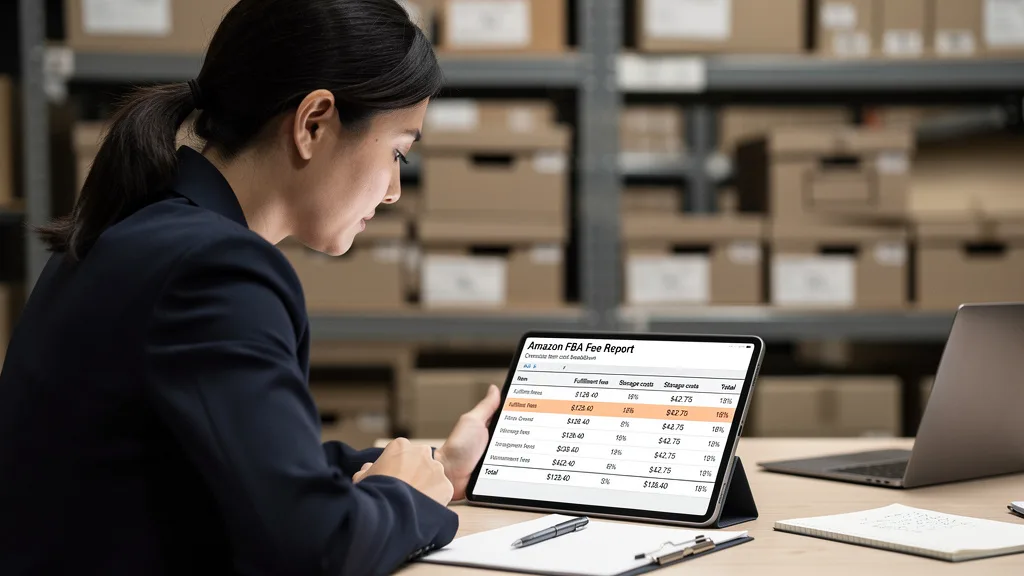
As Amazon adjusts its fee structures annually, staying informed about the latest rates for 2026 is essential. This breakdown covers the primary fees you will encounter when selling oversize inventory through FBA, helping you build a robust financial plan for your products.
Monthly Inventory Storage Fees
Amazon charges monthly inventory storage fees based on the daily average volume of space your inventory occupies in fulfillment centers. The fee is calculated per cubic foot, and the rate varies depending on the time of year. Rates are higher during the peak holiday season, typically from October to December.
For oversize items, these storage fees can add up quickly due to the sheer volume they occupy. A product that is just one inch over the standard-size limit will be charged the much higher oversize storage rate. This makes efficient inventory management and maintaining a healthy sell-through rate absolutely critical for sellers of large goods.
FBA Fulfillment Fees for Oversize Products
The FBA fulfillment fee, also known as the pick and pack fee, covers the cost of picking your product from the shelf, packing it for shipment, and sending it to the customer. For oversize items, this fee is calculated based on the item's shipping weight (the greater of its unit weight or dimensional weight).
The fee is tiered based on the specific oversize category: small, medium, large, and special. It's crucial to know your product's exact shipping weight and size tier to determine the correct fee. Below is a simplified example of how these tiers and fees can differ.
| Size Tier | Max Weight | Example Fulfillment Fee Per Unit |
|---|---|---|
| Small Oversize | 70 lb | $9.73 + $0.42/lb above first lb |
| Medium Oversize | 150 lb | $19.61 + $0.42/lb above first lb |
| Large Oversize | 150 lb | $82.58 + $0.83/lb above 90 lb |
| Special Oversize | Over 150 lb | $158.49 + $0.83/lb above 90 lb |
Long-Term Storage Fees and Surcharges
In addition to monthly storage fees, Amazon penalizes inventory that remains in fulfillment centers for too long. These are known as aged inventory surcharges or long-term storage fees. These fees are assessed monthly for inventory that has been stored for more than 180 days, with progressively higher rates as the inventory ages.
For oversize items, these fees can be particularly damaging to your bottom line. A slow-selling large product can quickly accumulate thousands of dollars in storage surcharges, turning a potentially profitable product into a significant loss. This underscores the importance of accurate sales forecasting and proactive inventory management. Keeping track of recent FBA fee updates is crucial for avoiding these punitive costs.
How to Accurately Calculate Amazon FBA Fees
Guesswork is the enemy of profit on Amazon. To succeed with oversize items, you must be able to calculate your FBA fees with precision. This process involves more than just looking up a rate in a chart; it requires a step-by-step approach to account for all variables that contribute to your total cost.
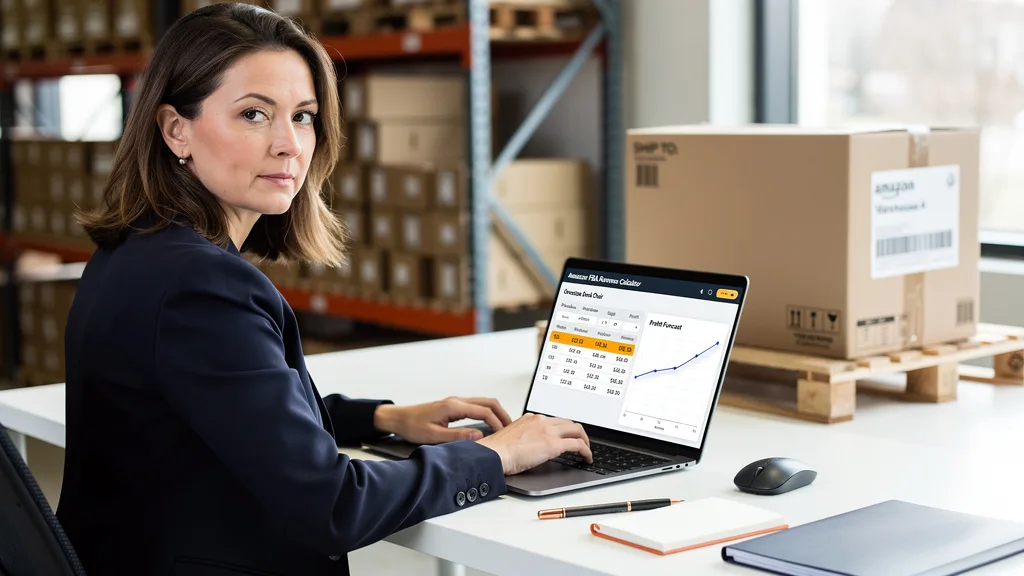
By mastering this calculation, you can confidently set your prices, manage your marketing budget, and make informed decisions about which products to source and scale. This section will walk you through the process and introduce the best tool for the job.
Step-by-Step Calculation Walkthrough
Calculating your total FBA cost per unit involves several key steps. First, you must have the precise dimensions (length, width, height) and weight of your fully packaged product. Use these to determine your product's size tier using Amazon's official guidelines. listing optimization.
Next, find the FBA fulfillment fee for that specific size tier and weight. Then, calculate the monthly storage fee by determining the product's volume in cubic feet and multiplying it by the current storage rate. Finally, don't forget to add Amazon's referral fee, which is a percentage of the total sale price and varies by category. Summing these costs (fulfillment, storage, and referral) will give you a clear picture of your FBA expenses per unit.
Using the FBA Revenue Calculator for Oversize Items
The most efficient and accurate way to perform these calculations is with Amazon's free FBA Revenue Calculator. This online tool allows you to search for your product or a similar one and input your specific numbers, including sale price, inbound shipping cost, and cost of goods.
The calculator will automatically determine the size tier and provide a real-time estimate of the fulfillment fees, storage costs, and referral fees. It presents a clear side-by-side comparison of your revenue and costs for both FBA and Fulfillment by Merchant (FBM), allowing you to see your estimated net profit and margin per unit. Using this tool should be a mandatory step in your research process for any new oversize product.
Best Practices for Preparing and Shipping Oversize Inventory
Getting your oversize product to Amazon's fulfillment centers safely and in compliance with their rules is a major logistical challenge. Proper preparation and shipping are not just about avoiding damage; they are about preventing shipment rejections, ensuring faster check-in times, and controlling your inbound transportation costs.
Following best practices for packaging, labeling, and carrier selection will streamline your operations and protect your inventory. This is a critical part of the supply chain that directly impacts your ability to stay in stock and satisfy customers.
Packaging Requirements for Large and Bulky Goods
Amazon has strict packaging requirements to ensure that large items can withstand the rigors of the fulfillment process. All oversize items must be contained within a single, shippable box made of rigid corrugated cardboard. The box must be securely sealed and strong enough to protect the contents without requiring additional prep work from Amazon.
Products must not be exposed, and the use of staples or nylon filament tape should be done with care to avoid creating safety hazards. It is also important to use appropriate dunnage, like air pillows or bubble wrap, to prevent the item from shifting inside the box during transit. For very heavy items, double-wall corrugated boxes are highly recommended.
Correctly Labeling Oversize Boxes for FBA
Proper labeling is essential for ensuring your inventory is received and processed correctly at the fulfillment center. Each box you send to Amazon must have a unique FBA box ID label, which you generate as part of the shipment creation workflow in Seller Central. This label should be placed on a flat surface of the box, away from any seams or edges, to ensure it can be scanned easily.
In addition to the FBA label, your product itself must have a scannable FNSKU barcode. For boxes that are heavy or require special handling, Amazon may require additional labels. For example, any box weighing over 50 lbs must be clearly marked with 'Team Lift' labels on all sides.
Choosing the Right Carrier for LTL Shipments
For most oversize inventory, you will be shipping to Amazon via Less-Than-Truckload (LTL) freight rather than a small parcel carrier like UPS or FedEx. LTL involves palletizing your boxes and sending them via a freight truck. This is typically far more cost-effective for large, heavy shipments.
Amazon offers a Partnered Carrier Program for LTL shipments, which provides access to discounted shipping rates. When creating your shipment, you can choose this option to get a quote and book the shipment directly through Seller Central. Whether you use a partnered carrier or your own, it's vital to follow all instructions for palletizing and scheduling the pickup to ensure a smooth delivery to the FBA facility. Learning the 6 Tips for Selling Large products can provide additional insight into optimizing this process.
Strategies for Selling Large Products Profitably
Successfully selling oversize items on Amazon requires more than just logistical expertise; it demands a sharp business strategy. The higher costs and slower turnover associated with large products mean that your margin for error is much smaller. Profitability depends on strategic pricing and meticulous inventory management.
By implementing these strategies, you can mitigate the risks associated with oversize inventory and build a sustainable, scalable business around products that many smaller sellers are unable to handle. This can create a significant competitive advantage in the right niche.
Factoring All Fees into Your Pricing Strategy
Your product's sale price must be high enough to cover not only the cost of goods and all FBA fees but also inbound shipping, potential customer returns, and your desired profit margin. A common mistake is to price a product based only on the FBA fulfillment fee, forgetting to account for the substantial monthly storage costs.
"Profitability with oversize items isn't an accident; it's a direct result of meticulous fee calculation and strategic pricing. If you don't account for every dollar in storage and fulfillment, you're just selling for revenue, not profit."
Use the FBA Revenue Calculator to model different price points and understand their impact on your net margin. Remember to also factor in your advertising costs (PPC). A profitable pricing strategy for oversize goods is one that is built on a comprehensive understanding of every single associated cost.
Managing Oversize Inventory to Avoid High Storage Costs
Because storage fees are so high for oversize items, inventory management becomes a top priority. The goal is to maintain just enough stock to meet customer demand without incurring costly aged inventory surcharges. Monitor your Inventory Performance Index (IPI) score and sell-through rate closely.
Consider using a Just-In-Time (JIT) inventory model, where you order smaller, more frequent shipments from your supplier to minimize the amount of stock held at FBA at any given time. If you notice inventory aging, be proactive. Use promotions, coupons, or advertising to boost sales and clear out older stock before it begins to accumulate long-term storage fees. Combining this with effective listing optimization strategies can improve your organic sales velocity and reduce storage risks.
Key Takeaways
Selling large products on Amazon FBA can be a powerful way to grow your business, but it requires careful planning and attention to detail. Here are the most important takeaways from this guide to help you succeed:
- Accuracy is Non-Negotiable: Always use the exact dimensions and weight of your fully packaged product. Miscalculations are the number one source of unexpected fees.
- Calculate Everything First: Before you invest in any oversize product, use the FBA Revenue Calculator to model all associated fees and confirm its profitability.
- Master Prep and Shipping: Follow Amazon's packaging, labeling, and shipping guidelines precisely to avoid rejections, delays, and damage to your valuable inventory.
- Manage Inventory Actively: Due to high storage costs, you must monitor your inventory turnover closely and take action to move aging stock before it incurs punitive long-term storage fees.
- Price for True Profit: Your pricing strategy must account for every cost, including fulfillment, monthly storage, inbound shipping, returns, and advertising, to ensure sustainable profitability.
Frequently Asked Questions
Is FBA still profitable in 2026?
Yes, Amazon FBA remains a highly profitable business model in 2026 for sellers who approach it with a sound strategy. Success now depends less on finding a single 'winning product' and more on building a brand, optimizing listings, managing advertising spend effectively, and meticulously controlling costs.
The key is to focus on profit margins, not just revenue. With rising fees and increased competition, sellers who understand their numbers, from landed cost to net profit per unit, are the ones who will continue to thrive and scale their operations.
Can you make $10,000 a month selling on Amazon?
Achieving a monthly income of $10,000 is a realistic goal for dedicated Amazon sellers, but it requires significant effort, capital, and expertise. It is not a get-rich-quick scheme. Reaching this level typically involves thorough product research, sourcing high-quality products, creating highly optimized listings, and mastering Amazon PPC advertising.
Many 7- and 8-figure sellers far exceed this monthly income, but they do so through continuous learning, data analysis, and often by working with experts to manage complex aspects of their business like supply chain and advertising campaigns.
Is Amazon FBA oversaturated?
While it's true that the Amazon marketplace is more competitive than ever, it is not universally oversaturated. Mass-market categories with low barriers to entry can be crowded, but countless niche opportunities still exist for savvy entrepreneurs. The key to overcoming competition is differentiation.
Sellers can succeed by offering superior quality products, building a strong brand identity, providing excellent customer service, or targeting underserved customer segments. Oversize items, for example, represent a niche where the higher logistical hurdles naturally limit the number of competitors.
What are the most common mistakes with oversize FBA items?
The most frequent and costly mistakes involve underestimating the total fees. Many sellers focus only on the fulfillment fee and are shocked by the impact of monthly and long-term storage costs. Another common error is providing inaccurate product dimensions to Amazon, leading to re-classification and unexpected charges.
Other mistakes include inadequate packaging that results in product damage and returns, failing to plan for more expensive LTL inbound shipping, and poor inventory management that allows stock to age and accumulate massive storage penalties. Avoiding these pitfalls requires diligence and careful planning from the very beginning.
Conclusion
Mastering the rules and costs associated with the Amazon FBA oversize program is a critical skill for any seller looking to scale into larger, potentially less competitive product categories. By understanding the eligibility requirements, meticulously calculating all fees, and implementing smart inventory and shipping strategies, you can turn the challenges of selling large items into a significant competitive advantage and a powerful engine for profitable growth in 2026.
If you're ready to scale your 7-figure brand with a profit-first strategy for all your products, including large and bulky items, we can help. Get your Free Audit today to identify your biggest growth opportunities.