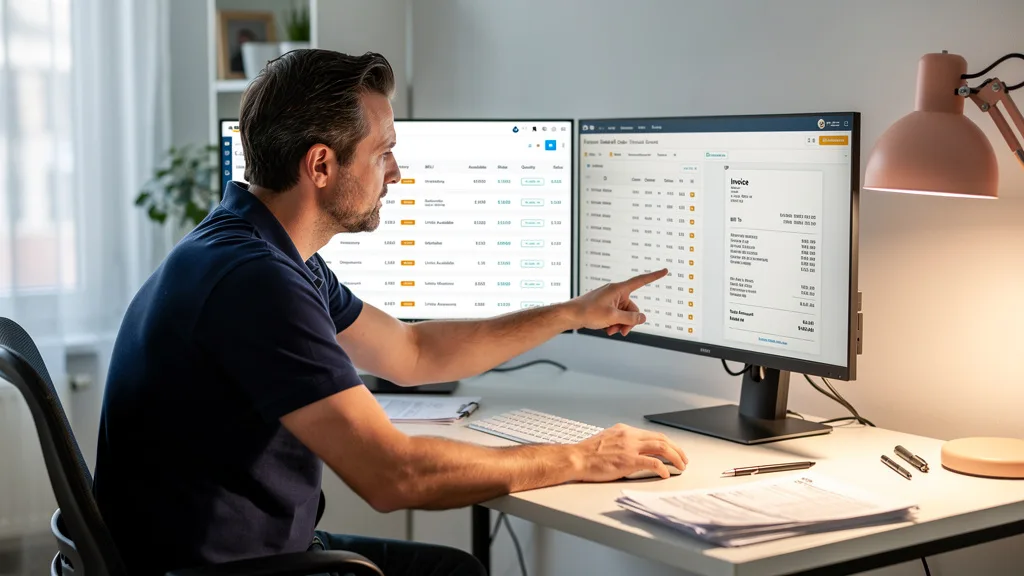
Are you structuring your Amazon business for maximum B2B profitability? Choosing the right fulfillment method is one of the most critical decisions you'll make, directly impacting your margins, scalability, and customer satisfaction. The debate over using Amazon's own logistics network versus handling it yourself becomes even more complex when dealing with business buyers, bulk orders, and custom pricing.
When comparing Amazon FBA vs FBM which fulfillment model wins for B2B, the best choice depends on your product type, order volume, and logistical capabilities. FBA offers streamlined, hands-off fulfillment and the Prime badge, which builds trust with B2B buyers. In contrast, FBM provides greater control over inventory, customer service, and packaging, allowing for customized B2B solutions and potentially higher profit margins on large or specialized orders.
What Is Fulfillment by Amazon (FBA) for B2B?
Fulfillment by Amazon (FBA) for B2B is a service where you store your products in Amazon's fulfillment centers, and Amazon picks, packs, ships, and provides customer service for your business-to-business orders. When a B2B customer places an order, Amazon handles the entire logistics process, including managing returns. This model allows your products to be eligible for the Prime shipping badge, a significant trust signal for business purchasers who need reliable, fast delivery.
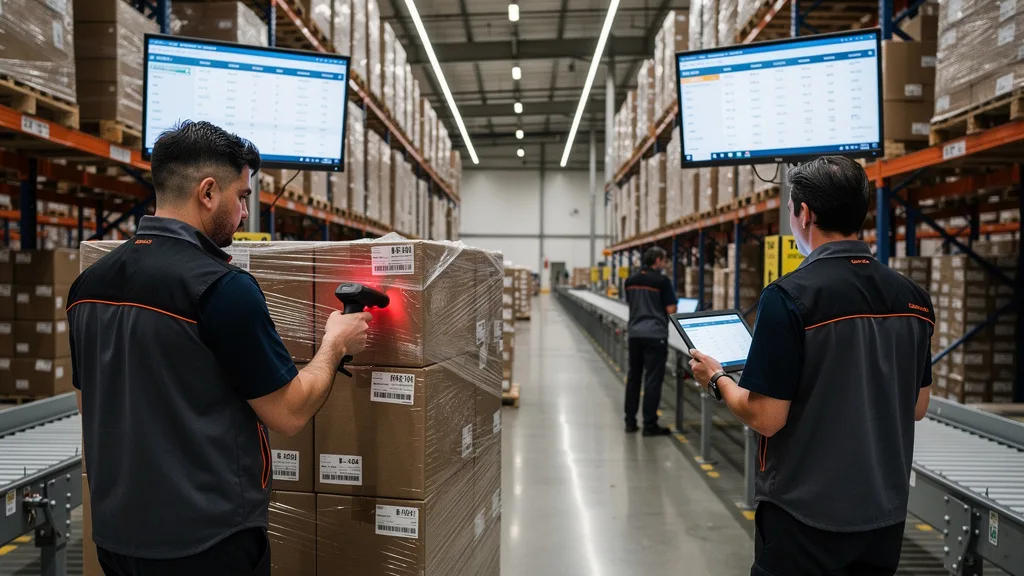
For B2B sellers, using FBA means leveraging Amazon's world-class logistics network to handle large, complex orders that might otherwise be challenging to manage. This includes everything from single-unit business purchases to pallet-sized shipments. By outsourcing fulfillment, you can focus on other critical areas of your business, such as product sourcing, marketing, and scaling your B2B sales channels, knowing that the delivery experience is standardized and managed by Amazon.
Pros of Using FBA for Business Customers
Leveraging FBA for your B2B sales offers several distinct advantages that can accelerate growth. The most significant benefit is the automatic eligibility for the Amazon Prime badge. Business buyers, just like retail consumers, value speed and reliability, and the Prime logo assures them of fast, free shipping, which can be a powerful conversion driver.
- Prime Eligibility: Your B2B offers gain increased visibility and trust with the Prime badge, leading to higher conversion rates.
- Hands-Off Logistics: Amazon manages all aspects of storage, picking, packing, and shipping, freeing up your time and resources.
- Customer Service and Returns Management: Amazon handles customer inquiries and returns, simplifying post-purchase operations for your B2B clients.
- Access to Amazon's Network: You benefit from Amazon's extensive and efficient fulfillment network, capable of handling fluctuating demand and large order volumes.
Despite its benefits, FBA is not without its drawbacks for B2B sellers. The fee structure can become costly, especially for large, heavy, or slow-moving inventory. Storage fees, fulfillment fees, and long-term storage penalties can eat into the margins of bulk B2B sales. These costs are often less flexible than what you might negotiate with a third-party logistics (3PL) provider.
Furthermore, FBA offers limited control over your inventory and branding. Products are shipped in standard Amazon-branded boxes, removing any opportunity for custom packaging or inserts that could strengthen your brand relationship with a business client. Inventory commingling and strict preparation requirements can also create logistical headaches, particularly for products with unique B2B packaging needs or batch-tracking requirements.
What Is Fulfillment by Merchant (FBM) for B2B?
Fulfillment by Merchant (FBM) is the model where you, the seller, are responsible for the entire fulfillment process for your B2B orders. This includes storing your own inventory, packing orders, and shipping them directly to the business customer. You also manage all customer service inquiries and returns. This approach gives you complete control over the end-to-end customer experience, from the moment an order is placed to when it arrives at the customer's facility.
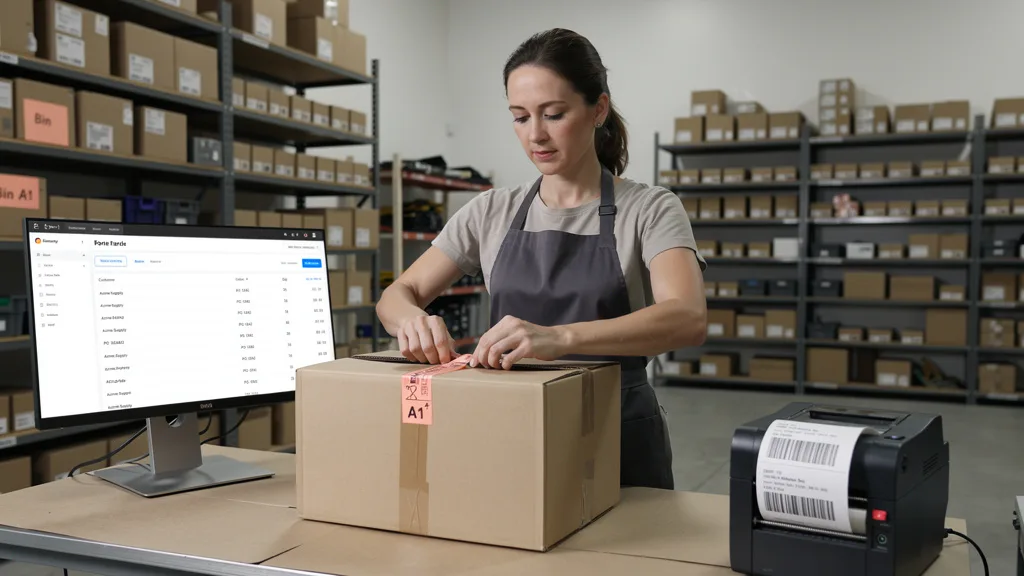
For B2B transactions, FBM is particularly powerful because it allows for a high degree of customization. You can offer custom packaging, include specialized invoices or marketing materials, and arrange unique shipping solutions like Less-Than-Truckload (LTL) freight for pallet-sized orders. This flexibility can be a key differentiator when serving business clients who have specific receiving requirements or who value a more personal, direct relationship with their suppliers.
The primary advantage of FBM for B2B is the unparalleled control it provides. You can build a branded experience through custom packaging and inserts, which is often important when establishing long-term B2B relationships. This control extends to your finances, as you can often achieve better profit margins by avoiding FBA's various fees, especially on oversized or heavy items common in B2B sales.
- Greater Profit Margins: By managing your own logistics or using a cost-effective 3PL, you can avoid Amazon's fees and improve profitability on each sale.
- Inventory Control: You have direct oversight of your stock, making it easier to manage quality control, batch tracking, and multi-channel fulfillment without Amazon's restrictions.
- Branding and Customization: FBM allows for custom packaging, kitting, and personalized communication, enhancing the B2B customer experience.
- Flexibility with Shipping: You can choose the most economical carriers for large freight and offer bespoke delivery solutions tailored to business needs.
Cons of Using FBM for Business Customers
The biggest challenge of the FBM model is the operational burden. Managing fulfillment in-house requires significant investment in space, staff, and systems. The responsibility for meeting Amazon's strict shipping deadlines and performance metrics falls entirely on you. Failing to meet these standards can result in account penalties and a loss of buy box eligibility.
Additionally, FBM listings are typically not eligible for the Prime badge unless you qualify for the rigorous Seller Fulfilled Prime (SFP) program, which currently has a waitlist. Without the Prime badge, your offers may be less attractive to B2B buyers who prioritize fast and guaranteed shipping. Managing customer service and returns for potentially complex B2B orders can also be more time-consuming compared to the hands-off nature of FBA.
FBA vs FBM: B2B Fee Comparison for 2026
Understanding the fee structures for both FBA and FBM is crucial for determining the profitability of your B2B sales on Amazon. For 2026, the costs associated with each model vary significantly, especially when dealing with the large quantities and dimensions typical of B2B transactions. FBA fees are standardized but can add up quickly, while FBM costs are more variable and depend on your own operational efficiency or the rates you negotiate with a 3PL.
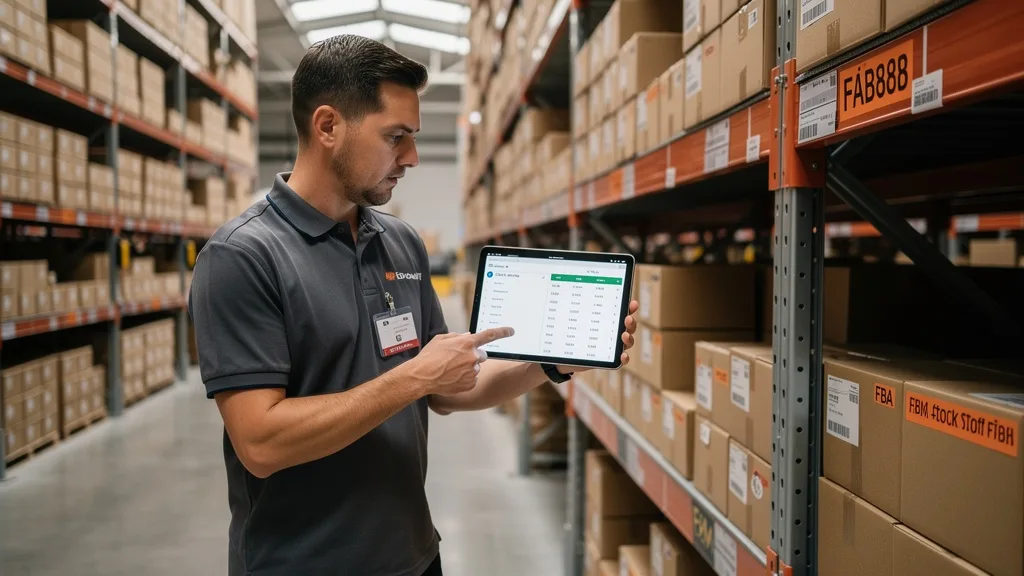
When analyzing costs, you must look beyond the per-unit fulfillment fee. For FBA, this includes monthly inventory storage fees, long-term storage fees, and potential removal or disposal fees. For FBM, your costs include warehousing, packing materials, labor, and shipping rates. A detailed cost analysis is essential before committing to a fulfillment strategy for your B2B products. You can stay informed by checking for any news on Amazon's FBA fee structure updates to ensure your calculations are current.
| Cost Factor | Fulfillment by Amazon (FBA) | Fulfillment by Merchant (FBM) |
|---|---|---|
| Fulfillment Fees | Fixed fee per unit based on size and weight; higher for large/heavy items. | Variable; includes labor, packing materials, and shipping carrier costs. |
| Storage Fees | Monthly fee per cubic foot; higher during Q4. Long-term storage penalties apply. | Cost of own warehouse space or 3PL storage fees, often more negotiable. |
| Shipping Costs | Included in fulfillment fee for customer delivery. You pay to ship to Amazon. | You pay carrier rates directly, allowing for negotiation and freight optimization (LTL/FTL). |
| Return Handling | Included in FBA fees, but returns impact your account health and can incur costs. | You manage the process and absorb the costs of return shipping and restocking. |
| Customization | Not available; standard Amazon packaging. | Fully customizable, but costs for custom materials are your responsibility. |
FBA Fees for Large and Pallet-Sized Orders
For B2B sellers moving significant volume, FBA fees for large and pallet-sized orders require close scrutiny. Amazon's fee structure for oversized and heavy items can make FBA prohibitively expensive for certain products. While Amazon does have programs like FBA LTL (Less-Than-Truckload) to help sellers send inventory to fulfillment centers, the outbound fulfillment fees are still calculated on a per-unit basis, which may not be economical for bulk sales.
It is essential to use Amazon's FBA Revenue Calculator to model your costs accurately for B2B quantity-tier pricing. A single pallet might contain hundreds of units, and the cumulative fulfillment fees can quickly erode your margins. Furthermore, long-term storage fees for pallets of slow-moving inventory can become a significant financial drain, making FBA a better fit for fast-turning B2B products.
FBM Cost Structure and Custom Pricing
With FBM, your cost structure is entirely within your control. You are responsible for all expenses, including warehousing, employee wages, packaging supplies, and shipping. This model allows you to negotiate rates directly with carriers like UPS, FedEx, or freight companies, potentially securing significant discounts for high-volume or palletized shipments that Amazon's FBA model doesn't offer.
This control enables you to build fulfillment costs directly into your B2B pricing strategy. You can offer custom shipping quotes for large orders or bundle shipping costs into quantity discounts. By managing your own logistics or partnering with an efficient 3PL, you can often operate with a leaner cost structure than FBA, leading to more competitive pricing and healthier profit margins on your B2B sales.
Inventory Management and Logistics
Effective inventory management is the backbone of a successful B2B operation on Amazon. The choice between FBA and FBM has profound implications for how you handle stock levels, prepare shipments, and manage the complexities of bulk order logistics. FBA offers simplicity but comes with rigid requirements, while FBM provides flexibility at the cost of increased operational responsibility.
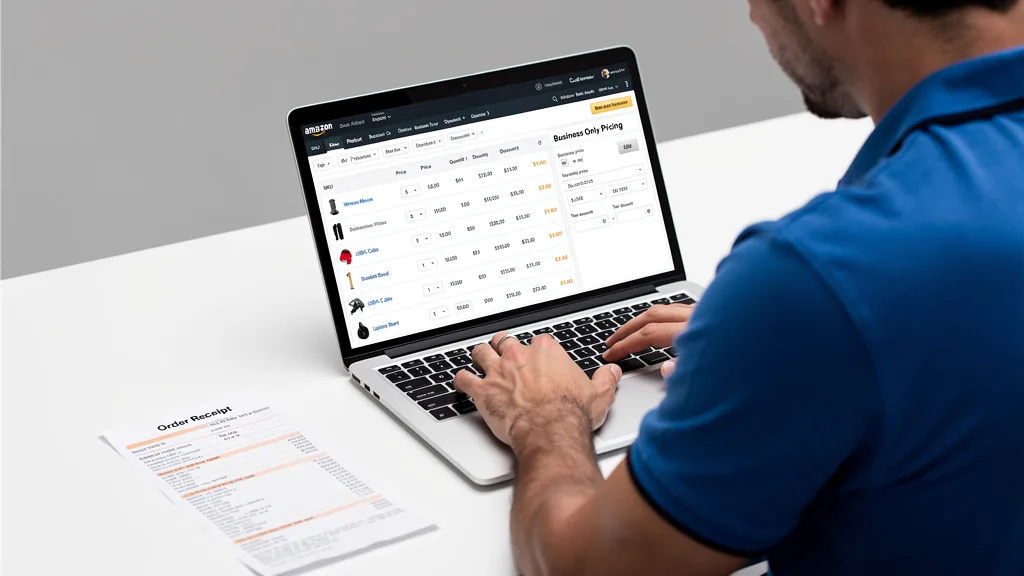
Your ideal model will depend on your product characteristics and supply chain. If you sell standardized, fast-moving products to a wide range of business customers, FBA's streamlined system can be a major asset. However, if you deal in specialized goods, custom kits, or require just-in-time manufacturing, the control offered by FBM is likely a better fit for your logistical needs.
Inventory Challenges for B2B Sellers Using FBA
Using FBA for B2B sales can present unique inventory challenges. Amazon's storage limits, both in terms of cubic footage and restocking quantities, can be restrictive for sellers who need to hold deep inventory for large, unpredictable B2B orders. Running out of stock because of FBA receiving delays or storage caps can lead to lost sales and damage your reputation with business clients.
Additionally, FBA's strict prep and labeling requirements can be cumbersome for B2B shipments. Every case and pallet must conform to Amazon's standards, adding an extra step to your supply chain. Multi-channel sellers also face the challenge of keeping inventory siloed at Amazon, making it unavailable for sales on other platforms without using the costly Multi-Channel Fulfillment (MCF) service.
FBM Flexibility for Complex B2B Logistics
FBM shines when it comes to managing complex B2B logistics. By controlling your own inventory, you can easily assemble custom bundles or kits, apply customer-specific labeling, and manage products with expiration dates or batch codes without navigating Amazon's complex rules. This flexibility is invaluable for serving industrial, medical, or food-service clients with precise requirements.
Furthermore, FBM allows you to operate a centralized inventory pool that can fulfill orders from multiple channels, including your own B2B e-commerce website, other marketplaces, and Amazon. This unified approach simplifies inventory forecasting and reduces the risk of stockouts. For sellers shipping large quantities via LTL freight, managing the process directly through FBM often results in significant cost savings and better coordination with the customer's receiving department.
Support for Amazon Business Features
The Amazon Business program offers a suite of tools designed specifically for B2B transactions, such as quantity discounts, business-only pricing, and tax-exempt purchasing. How well each fulfillment model integrates with these features can significantly impact your ability to attract and retain business customers. Both FBA and FBM support these features, but the execution and management differ.
Your choice of fulfillment model will influence how you implement and manage these B2B-specific settings. FBA provides a more automated experience, while FBM offers a hands-on approach that allows for greater customization in how you present your offers and handle order processing. Understanding these differences is key to optimizing your B2B strategy.
How FBA Handles Business Pricing and Discounts
With FBA, setting up business pricing and quantity discounts is a straightforward process within Seller Central. You can create tiered pricing structures that automatically apply when a registered Amazon Business customer purchases in bulk. Since Amazon handles the fulfillment, the process is seamless for both you and the buyer. The discounted price is shown on the product detail page, and Amazon's system ensures the correct amount is charged and the right number of units are shipped.
The main advantage here is automation. Once you set the rules, Amazon's system takes over. This is highly efficient for sellers with large catalogs or those who want a low-touch approach to managing B2B sales. The combination of automated tiered pricing and the FBA Prime badge creates a powerful, trustworthy offer for business buyers who are looking for both value and convenience.
How FBM Manages B2B-Specific Orders
When using FBM, you also set up business pricing and quantity discounts through Seller Central. However, the responsibility for fulfilling these tiered orders correctly falls on you. This requires a robust internal process to ensure your packing and shipping team accurately picks the right quantity and applies any special handling instructions associated with a B2B order.
The benefit of FBM is the ability to offer more complex, customized B2B solutions. For example, you could communicate with a buyer directly to arrange a custom freight shipment for a large quantity order or include a specific type of invoice in the package. This hands-on management allows for a higher level of service and flexibility, which can be a compelling reason for a business to purchase from you repeatedly. It is a core part of many successful Amazon B2B sales growth strategies.
Which Model Is More Profitable for B2B Sellers?
Ultimately, the choice between FBA and FBM for B2B hinges on profitability. There is no single answer; the more profitable model depends entirely on your product, operational capacity, and target business customer. A thorough analysis of your margins, considering all associated fees and operational costs, is non-negotiable.
To determine the best path, you must model your costs for typical B2B order sizes under both FBA and FBM scenarios. Consider factors like item weight and dimensions, storage duration, and shipping costs. Profitability isn't just about fees; it's about finding the model that best aligns with your business's strengths and growth objectives.
"Many 7-figure sellers I work with find that a hybrid approach is the key to B2B profitability. They use FBA for their fast-moving, standard-sized products to capture Prime buyers, while reserving FBM for oversized, custom, or pallet-sized orders where they can control shipping costs and provide a tailored experience. It's not about choosing one, but about leveraging the strengths of both fulfillment models."
When to Choose FBA for Maximum Growth
FBA is the ideal choice for B2B sellers focused on rapid scaling and capturing the largest possible market share. If your products are relatively standard in size and weight and have a high turnover rate, the benefits of the Prime badge and Amazon's fulfillment machine are hard to beat. The trust and visibility that come with Prime can significantly accelerate your sales velocity.
Choose FBA when your primary goal is growth and market penetration. It's best for sellers who want to minimize their operational overhead and focus on marketing and product development. If you are selling to a broad range of businesses that prioritize speed and convenience over custom solutions, FBA provides the infrastructure to meet that demand effectively and build a strong sales history on the Amazon platform.
When to Choose FBM for Better Margins
FBM is the superior option for B2B sellers who prioritize profit margins and customization. If you sell large, heavy, or irregularly shaped items, FBM allows you to avoid the punitive FBA fees associated with such products. By negotiating your own shipping rates, especially for freight, you can often fulfill bulk orders far more cheaply than Amazon can.
Opt for FBM when you have a strong grasp of your logistics and want to control the customer experience. It is the best model for businesses that offer value-added services like custom kitting, private labeling for B2B clients, or require strict quality control before shipping. If your business thrives on building direct relationships and maximizing profitability on every order, the control offered by FBM is invaluable.
Using a Hybrid Approach: Combining FBA and FBM
For many sophisticated B2B sellers, the optimal strategy is not a choice between FBA and FBM, but a strategic combination of both. A hybrid approach allows you to leverage the best of both worlds. You can have two SKUs for the same ASIN: one fulfilled by Amazon (FBA) and another fulfilled by you (FBM). This gives B2B buyers a choice and allows you to optimize fulfillment based on the order's specific characteristics.
With this model, you can use FBA to capture Prime-eligible sales for smaller quantities, benefiting from the visibility and conversion lift of the Prime badge. Simultaneously, you can use your FBM offer to service large bulk orders, providing custom quotes, freight shipping, and a branded experience. This flexibility ensures you never lose a sale due to fulfillment limitations and can maximize your profitability across all types of B2B transactions. Effective Amazon listing optimization is key to managing these multiple offers effectively.
Key Takeaways
Choosing the right fulfillment model is a critical decision for any Amazon B2B seller. Your choice between FBA and FBM impacts everything from your profit margins and operational workload to your ability to scale. As of 2026, the best strategy often depends on your specific product line and business goals.
- FBA for Speed and Trust: Use FBA to leverage the Prime badge and Amazon's logistics for fast-moving, standard-sized products. It's ideal for sellers prioritizing growth and a hands-off approach.
- FBM for Control and Margin: Use FBM for oversized, heavy, or custom products. It provides greater control over branding, logistics, and costs, leading to higher margins on large B2B orders.
- Fees are Decisive: FBA fees can be high for B2B-sized inventory, while FBM costs are variable but controllable. A detailed cost analysis is essential.
- Hybrid is Often Optimal: Combining FBA and FBM for the same product allows you to capture Prime sales while retaining the flexibility to profitably fulfill large, custom orders yourself.
- Align with Business Goals: The final decision should align with your primary objective, whether it's rapid market penetration (FBA) or maximizing profitability and customer relationships (FBM).
Frequently Asked Questions
Does using FBA or FBM impact eligibility for the Amazon Business Seller program?
No, your choice of fulfillment model, whether FBA or FBM, does not directly impact your eligibility for the Amazon Business Seller program. The program has its own set of performance-based requirements, such as maintaining high seller ratings, low order defect rates, and professional account status. Both FBA and FBM sellers can qualify as long as they meet these criteria.
However, your fulfillment method can influence your success within the program. Using FBA can make your offers more attractive to business buyers due to the Prime badge, potentially leading to more sales and a stronger performance history. Conversely, a well-run FBM operation that provides excellent service on large orders can also build a strong reputation with B2B clients.
What are the best 3PL alternatives to Amazon FBA for B2B fulfillment?
For B2B sellers seeking alternatives to FBA, several types of third-party logistics (3PL) providers specialize in e-commerce fulfillment. Top alternatives include companies like ShipBob, Deliverr (now part of Flexport), and Red Stag Fulfillment. These providers offer services that can be more flexible and cost-effective for B2B needs, such as custom packaging, kitting, and managing LTL freight shipments.
When choosing a 3PL for B2B, look for one with experience in your product category, especially if you sell oversized or hazardous goods. It's also critical to select a partner with robust software that integrates directly with Amazon Seller Central to ensure seamless order processing and inventory synchronization. A good 3PL acts as an extension of your FBM operation, providing expertise and scale without FBA's rigid rules.
Can a seller use a hybrid approach of both FBA and FBM for B2B products?
Yes, absolutely. Using a hybrid approach is a highly effective strategy for many B2B sellers. You can create two separate offers (SKUs) for the same product (ASIN): one fulfilled by Amazon (FBA) and the other fulfilled by you (FBM). This allows you to cater to different types of business buyers simultaneously.
Your FBA offer can capture customers who prioritize the speed and trust of the Prime badge, typically for smaller quantity orders. Meanwhile, your FBM offer can be priced to attract larger bulk purchases, where you can provide custom shipping quotes or pass on freight savings. This dual strategy maximizes your visibility and profitability by using each fulfillment model for what it does best.
How are large B2B returns handled differently by FBA and FBM?
The handling of large B2B returns differs significantly between FBA and FBM. With FBA, Amazon manages the entire returns process. The business customer initiates the return through their Amazon account, and Amazon provides the return shipping label and instructions. The product is sent back to an Amazon fulfillment center, where it is inspected. While convenient, you have little control over the process or the final disposition of the returned goods.
With FBM, you are in complete control of your returns policy and process, within Amazon's guidelines. For a large B2B return, you can communicate directly with the customer to troubleshoot issues or coordinate a freight pickup. This allows you to inspect the returned items yourself, determine the cause of the return, and make a more informed decision about restocking, liquidating, or writing off the inventory. This direct management can be crucial for high-value B2B goods.
What is the difference between Seller Fulfilled Prime and FBM for B2B?
Seller Fulfilled Prime (SFP) is a specialized version of the FBM model that allows sellers to display the Prime badge on their listings while still fulfilling orders from their own warehouse. To qualify, sellers must commit to meeting Amazon's stringent two-day shipping and performance metrics at their own expense. The main difference is that SFP gives an FBM seller the coveted Prime badge, while standard FBM does not.
For B2B sellers, SFP can be a powerful tool, combining the branding control of FBM with the conversion power of Prime. However, the program has very high standards and a long waitlist for new applicants as of 2026. Standard FBM offers more flexibility on shipping speeds and carriers, whereas SFP requires using approved carriers and meeting strict delivery deadlines, which can be costly and operationally demanding.
Conclusion
Choosing between Amazon FBA and FBM for your B2B business in 2026 is not a one-size-fits-all decision. The winning model depends on your product characteristics, operational strengths, and profit goals. FBA offers unparalleled speed and access to Prime customers, making it ideal for scalable growth with standard products. FBM provides the control and flexibility needed to maximize margins on large, heavy, or custom orders. For many established brands, a hybrid strategy that leverages the strengths of both is the most profitable path forward, allowing you to optimize for every type of B2B sale.
Ready to determine the most profitable fulfillment strategy for your 7 or 8-figure brand? An in-depth analysis of your current operations, fees, and listing performance can reveal significant opportunities for growth. Let an expert review your account to identify the right mix of FBA and FBM to scale your B2B sales profitably. Get your comprehensive Free Audit today.