
Table of Contents 10 sections
Are you ready to launch a product on Amazon but worried about choosing a loser that drains your capital? Finding a profitable product is the single most important step in building a successful Amazon business, yet it's where most new sellers fail. Without a structured process, you're navigating a minefield of fierce competition, low margins, and unforeseen challenges.
A successful Amazon FBA product research checklist for new sellers involves four key phases: brainstorming ideas by solving customer problems, conducting deep market and competitor analysis, verifying suppliers and calculating costs, and performing a final risk assessment for patents and policies. This structured approach helps you identify profitable opportunities and minimize risk before investing capital. Following a proven framework is what separates thriving 7-figure brands from the ones that never get off the ground.
Why a Product Research Checklist Is Crucial for Success
A detailed product research checklist removes emotion and guesswork from your decision making process. Instead of falling for a product you personally like, you are forced to validate its potential through objective data and a series of critical checkpoints. This systematic approach ensures you evaluate every potential product against the same high standards, increasing your chances of launching a winner from day one.

Following a comprehensive checklist saves you an immense amount of time and helps you avoid unnecessary challenges. It acts as a roadmap, guiding you through each essential step from idea generation to final viability checks. For anyone just starting out, a well-defined Amazon FBA product research beginners guide is invaluable. By adhering to a proven system, you can confidently invest in inventory, knowing you have thoroughly vetted the product's market demand, competition, and profitability.
Phase 1: Brainstorming Profitable Product Ideas
The first phase is all about generating a broad list of potential product ideas. The goal here is not to find the perfect product immediately, but to cast a wide net and identify categories and niches that show promise. Creativity combined with an analytical mindset is key to uncovering hidden gems in the marketplace.
Identify Customer Problems and Market Gaps
The most successful products solve a problem or fill a gap in the market. A powerful technique is to read the 3-star reviews on your potential competitors' listings. These reviews often contain valuable feedback, with customers detailing what they dislike or what features they wish the product had. This is your blueprint for creating a superior, differentiated product that customers will love.

Look for patterns in customer complaints. Do multiple people mention a product breaking easily, a design flaw, or a missing feature? By addressing these specific pain points, you can create a product with a built-in unique selling proposition (USP). This immediately gives you a competitive edge and a clear angle for your marketing and listing optimization efforts.
Analyze Trends on Amazon and Other Marketplaces
Amazon itself is a goldmine for trend spotting. Regularly browse the "Best Sellers," "New Releases," and "Movers & Shakers" sections in various categories. These lists show you what is currently popular and gaining traction with customers. Pay attention to products that are consistently on these lists but don't yet have thousands of reviews, as this could signal an emerging opportunity.
Don't limit your search to Amazon. Platforms like Pinterest, Etsy, TikTok, and industry-specific blogs can reveal trends before they become mainstream on Amazon. Identifying a rising trend early allows you to enter the market before it becomes saturated, giving you a significant first-mover advantage. Look for products that have growing interest and a passionate community around them.
Conduct Initial Keyword and Niche Research
Once you have some ideas, perform initial keyword research to gauge search interest. Use a product research tool to look up primary keywords related to your product ideas. You're looking for keywords with a healthy amount of monthly searches, which indicates that customers are actively looking for these types of products. This initial check helps you quickly filter out ideas that have little to no existing demand.
This step also helps you understand the niche better. As you explore related keywords, you'll uncover different customer use cases, sub-niches, and long-tail keywords that can be targeted. Having a solid list of potential keywords is not only crucial for validation but will also be essential later for your PPC campaigns and listing SEO. There are many best Amazon niche research tools available to streamline this process.
Phase 2: Deep Dive on Market and Competitor Analysis
With a shortlist of promising ideas, it's time to dig deeper. This phase is about rigorous data analysis to validate demand, understand the competitive landscape, and ensure the product has a realistic path to profitability. This is where you separate the good ideas from the great ones.
Evaluate Market Demand and Search Volume
Use a professional Amazon seller tool to analyze the historical sales data and search volume for your top keywords. You want to see consistent demand throughout the year, not just a seasonal spike. A product with stable, year-round sales provides a more predictable revenue stream, which is ideal for new sellers. Look for markets where the top 10 sellers are collectively generating significant monthly revenue, indicating a healthy market size.
Analyze the depth of the market by looking at search volume for a variety of related keywords. A strong market will have multiple keywords with thousands of monthly searches. This indicates that customers are searching for the product in many different ways, providing you with ample opportunities to capture traffic through both organic ranking and paid advertising.
Assess the Strength of Your Top Competitors
A detailed competitor analysis is critical. Look at the top 10-20 listings for your main keyword. How many reviews do they have? A market dominated by sellers with thousands of high-quality reviews is extremely difficult for a new seller to penetrate. Ideally, you want to find a market where there are at least a few competitors on the first page with fewer than 200-300 reviews.
Beyond review count, evaluate the quality of their listings. Do they have professional photography, compelling copywriting, and A+ Content? Low-quality listings present an opportunity for you to do better and stand out. If the top competitors have weak listings but are still making sales, it's a strong sign that a well-optimized listing can capture a significant market share.
Calculate Potential Profitability and Margins
Profitability is the ultimate test of a product's viability. You must calculate your potential profit margin with as much accuracy as possible. Start by estimating the product's selling price based on competitors. Then, use an FBA profitability calculator to subtract Amazon's fees, which include the referral fee and fulfillment fees. Don't forget to factor in your estimated cost of goods, shipping, and a budget for advertising.
A good target for a net profit margin is 25% or higher. This gives you a healthy buffer to cover unexpected costs and reinvest in growing your business. If your calculations show a margin below 15-20%, the product is likely too risky, as a small increase in ad costs or shipping fees could erase your profits entirely. Understanding the complete Amazon FBA fees structure is essential for this step.
Phase 3: Sourcing, Supplier, and Logistics Verification
Finding a great product idea is only half the battle. You also need to find a reliable supplier who can manufacture it to your quality standards and at a price that allows for healthy profit margins. This phase focuses on the operational side of bringing your product to market.
Find and Vet Reliable Product Suppliers
Platforms like Alibaba are the most common starting point for finding overseas manufacturers. When searching for suppliers, filter for those with multiple years of experience, high ratings, and trade assurance. Create a shortlist of 5-10 potential suppliers and send them a detailed request for quotation (RFQ) that outlines your product specifications, desired quantity, and packaging requirements.

Pay close attention to how they communicate. A professional and responsive supplier is crucial for a smooth production process. Ask them about their production capacity, quality control processes, and lead times. It's wise to conduct a video call to see their factory and build a stronger relationship before placing a large order.
Calculate Your Estimated Landed Costs
Your landed cost is the total price of getting one unit of your product from the factory to an Amazon fulfillment center. This includes the per-unit manufacturing cost, shipping from the factory to the port, ocean or air freight, customs duties and taxes, and local transportation to the Amazon warehouse. Miscalculating this figure is a common mistake that can destroy your profit margins.
Work with a freight forwarder to get an accurate quote for shipping and import duties. They can help you navigate the complexities of international logistics and ensure your shipment complies with all regulations. Add this total logistics cost to your total inventory cost and divide by the number of units to get your final landed cost per unit.
Order and Thoroughly Evaluate Product Samples
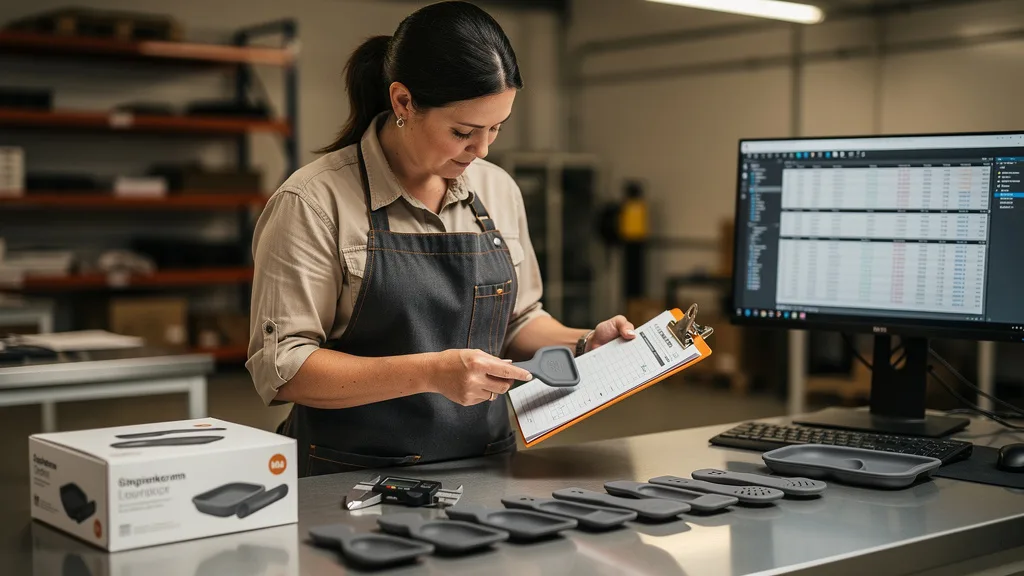
Never, under any circumstances, place a bulk order without first ordering and inspecting samples. This is a non-negotiable step in the process. Order samples from your top 2-3 shortlisted suppliers to compare their quality firsthand. This small investment can save you thousands of dollars and prevent you from getting stuck with a shipment of low-quality inventory.
When you receive the samples, put them through rigorous testing. Use the product as a customer would. Check for defects, assess the material quality, and evaluate the packaging. Compare the physical sample to the specifications you provided. Choose the supplier that delivers the best quality and demonstrates they can meet your standards.
Phase 4: Final Viability and Risk Assessment
Before you commit a large amount of capital to inventory, there's one final phase of due diligence. This involves checking for legal and administrative roadblocks that could prevent you from selling your product or put your account at risk. Skipping these checks can have catastrophic consequences.
Check for Patents, Trademarks, and Certifications
Selling a patented product is a quick way to get your listing shut down and potentially face legal action. Conduct a basic patent search using resources like Google Patents and the USPTO's website. While this isn't a substitute for legal advice, it can help you spot obvious infringements. Also, ensure your brand name and product name don't violate any existing trademarks.
Additionally, research whether your product requires any specific safety certifications to be sold in your target marketplace. For example, electronics often require FCC certification, while children's toys and food-contact items have their own strict regulations. Selling a product without the required certifications can lead to your inventory being destroyed and your account suspended.
Analyze Seasonality and Long-Term Trends
Use a tool like Google Trends to analyze the search interest for your product over the past several years. You're looking for a product with stable or growing demand. Avoid products with extreme seasonal peaks and troughs, as managing cash flow and inventory for these can be very challenging for a new seller. For example, a product that only sells in December requires a large capital outlay with no return for most of the year.
Look for long-term trend data. Is the interest in this product category growing, stable, or declining? Investing in a product within a declining market is an uphill battle. You want to ride a wave of growing consumer interest, not fight against a receding tide. A product with long-term viability will be a much more sustainable asset for your business.
Review Amazon's Gated Categories and Policies
Finally, confirm that your product is not in a restricted or gated category on Amazon. Certain categories, such as Automotive, Grocery, and Jewelry, require pre-approval from Amazon before you can list products. The approval process can be lengthy and is not guaranteed. It's crucial to know this before you invest in inventory.
Also, carefully review Amazon's list of prohibited products and ingredients. Some items are completely banned from the platform. For example, certain types of supplements or weapons accessories are not allowed. Ensuring your product complies with all of Amazon's policies, such as Amazon FBA toys eligibility, is a final, critical check to protect your seller account.
Top Product Research Tools for New Sellers in 2026
While manual research is important, leveraging specialized software is essential for efficiency and accuracy in 2026. These tools provide invaluable data on sales estimates, keyword search volume, competition levels, and profitability, allowing you to make informed decisions much faster. Here are some of the top tools used by successful 7 and 8-figure sellers.
- Helium 10: An all-in-one suite of tools covering everything from product research (Black Box) and keyword research (Magnet) to listing optimization and sales analytics. It's considered an industry standard for serious sellers.
- Jungle Scout: One of the original and most popular product research tools. Its Chrome extension provides a quick snapshot of product data directly on Amazon pages, while its web app offers more in-depth analysis tools.
- Viral Launch: Known for its highly accurate sales estimates and market intelligence tools. It offers robust features for product research, competitor analysis, and launching new products.
- AMZScout: A user-friendly and affordable option that provides essential data for finding and validating product ideas. It's a great starting point for new sellers on a tighter budget.
| Tool | Key Feature | Best For |
|---|---|---|
| Helium 10 | Comprehensive All-in-One Suite | Sellers wanting a single platform for all their needs. |
| Jungle Scout | User-Friendly Interface & Extension | Beginners and those who value ease of use. |
| Viral Launch | Market Intelligence & Sales Accuracy | Data-driven sellers focused on competitive analysis. |
| AMZScout | Affordability & Core Essentials | Sellers on a budget needing fundamental data. |
Common Mistakes to Avoid During Product Research
Navigating the product research phase can be tricky, and several common pitfalls can derail an otherwise promising venture. Being aware of these mistakes is the first step to avoiding them. A disciplined approach grounded in data is your best defense against these costly errors.
"The single biggest mistake I see new sellers make is rushing the research phase. They get excited about an idea and skip crucial validation steps. A successful 8-figure brand is built on a foundation of data, not just passion."
- Choosing a Product Based on Passion, Not Data: While it's great to be passionate about what you sell, your personal interest doesn't guarantee market demand or profitability. Every decision must be backed by solid data.
- Underestimating the Competition: Ignoring the strength of top competitors is a recipe for failure. You must have a clear plan for how you will differentiate your product and realistically compete for sales.
- Miscalculating Profit Margins: Forgetting to include costs like shipping, import duties, storage fees, or advertising will lead to a false sense of profitability. Calculate every single cost before investing.
- Skipping the Product Sample Step: Placing a bulk order without verifying the quality through samples is one of the riskiest moves a seller can make. This often results in receiving inventory that is unsellable.
- Ignoring Patents and Regulations: Launching a product that infringes on a patent or doesn't have required safety certifications can lead to legal trouble and account suspension.
Key Takeaways
Mastering Amazon product research is a skill that directly correlates with your success as a seller. By internalizing a systematic approach, you can significantly de-risk your investment and increase your odds of launching a profitable product. Here are the most important points to remember from this checklist.
- A Checklist is Non-Negotiable: Use a structured, multi-phase checklist to guide every decision and remove emotion from the process.
- Research is a Four-Phase Process: Your research must cover Brainstorming, Market Analysis, Supplier Verification, and Final Risk Assessment. Skipping a phase is not an option.
- Data Drives Decisions: Every assumption about market demand, competition, and profitability must be validated with reliable data from trusted tools.
- Profitability is Paramount: Accurately calculate your landed costs and aim for a net profit margin of at least 25% to build a sustainable business.
- Due Diligence Protects You: Always check for patents, trademarks, and required certifications to protect your investment and your seller account.
Frequently Asked Questions
How much money do you need to start Amazon FBA?
The amount of capital needed to start an Amazon FBA business can vary widely depending on the product's cost and the size of your initial inventory order. However, a common budget for new sellers in 2026 is between $5,000 and $10,000. This amount typically covers your first inventory purchase, shipping, Amazon fees, branding, and an initial advertising budget to get your product launch off the ground.
What are some good product categories for beginners?
Beginners should look for categories with relatively simple products, consistent demand, and lower barriers to entry. Good examples include Home & Kitchen, Office Products, Pet Supplies, and Arts & Crafts. It's wise to avoid complex categories like Electronics, Supplements, or Grocery initially, as they often come with higher competition, more regulations, and greater potential for customer returns and issues.
How long does Amazon product research typically take?
Thorough product research is not a process that should be rushed. For a new seller, it can take anywhere from several weeks to a few months to go from the initial brainstorming phase to being confident enough to place an inventory order. The time invested upfront in meticulous research is the best way to prevent costly mistakes down the road and set your business up for long-term success.
What is a good profit margin for an FBA product?
A healthy target for a net profit margin on an Amazon FBA product is 25% or higher. This is the profit you have left after accounting for all costs: the product's landed cost, Amazon referral and FBA fees, and advertising expenses. A margin of 25% or more provides a solid cushion to absorb unexpected cost increases and allows you to reinvest profits back into growing your brand.
Can you sell on Amazon FBA without a research tool?
While it is technically possible to conduct product research manually, it is extremely difficult, time-consuming, and not recommended in today's competitive market. Professional research tools like Helium 10 or Jungle Scout provide critical data on sales volume, keyword demand, and competitor performance that is nearly impossible to gather accurately on your own. Investing in a tool is one of the best investments a new seller can make.
Conclusion
Following a methodical Amazon FBA product research checklist for new sellers is the most reliable way to launch a successful product in 2026. This guide breaks the complex process down into four manageable phases: brainstorming, deep analysis, sourcing, and risk assessment. By letting data guide your decisions at every step, you transform a risky gamble into a calculated business investment, setting the foundation for a brand that can scale from seven to eight figures.
Feeling overwhelmed by the data? A second pair of expert eyes can reveal opportunities and risks you might have missed. Our brand audit is designed for serious Amazon sellers who are ready to scale with a profit-first strategy. Get a professional analysis of your product's potential or existing listings by claiming your Free Audit today.