
Table of Contents 8 sections
Are you searching for the one product that could unlock 8-figure growth for your Amazon brand in 2026? The foundation of every successful FBA business isn't a massive ad budget or a flashy launch, but a meticulous, data-driven product selection process. Without it, even the best marketing strategies will fall flat.
Effective Amazon FBA product research for beginners in 2026 involves identifying high-demand, low-competition products with strong profit potential. This process requires analyzing market trends, understanding customer needs, and validating your ideas with real data before investing capital. It's the most critical step in building a scalable and profitable ecommerce business on the platform.
Amazon FBA product research is the systematic process of identifying viable products to sell on the Amazon marketplace. It's not about randomly picking items you think will sell. Instead, it's a strategic investigation into market demand, competition levels, profitability, and sourcing feasibility. For established sellers aiming to scale, this process is about finding your next hero product that can add another revenue stream and solidify your brand's market position.
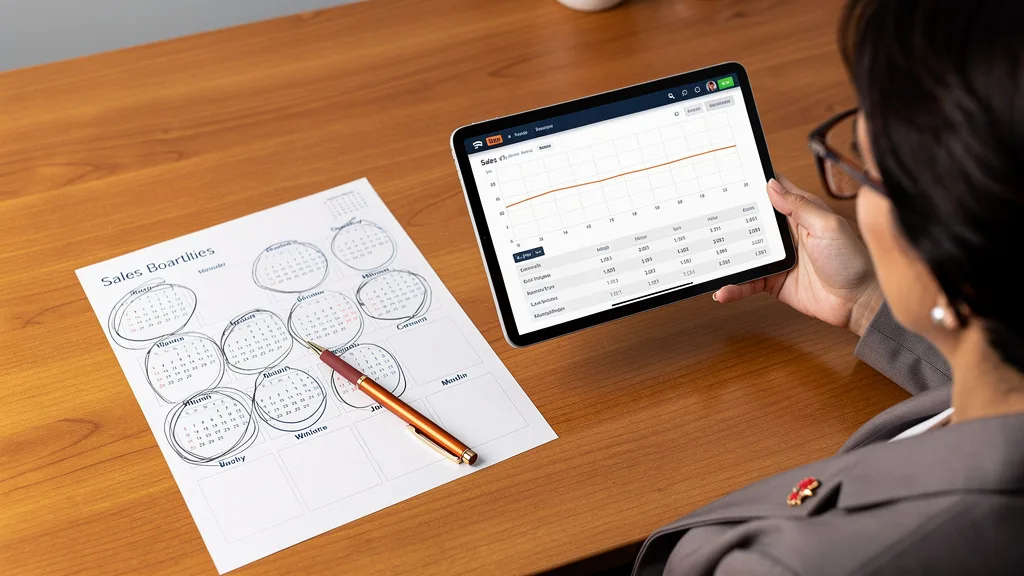
In 2026, the landscape is more competitive than ever. This means your research must be more sophisticated. You need to look beyond basic sales estimates and dig into keyword search volumes, competitor vulnerabilities, and opportunities for differentiation. A successful product launch starts here, long before you ever contact a supplier or create a listing. Getting this stage right minimizes risk and dramatically increases your chances of achieving profit-focused growth.
Key Criteria for a Winning FBA Product
Not all products are created equal. To build a scalable brand, you need to filter your ideas through a strict set of criteria. Focusing on these core pillars will help you separate the fleeting trends from genuine, long-term business opportunities that can propel you from seven to eight figures.
High Demand and Low Competition
The ideal product exists in a sweet spot of high customer demand and manageable competition. High demand is indicated by significant monthly search volume for relevant keywords and strong, consistent sales for top competitors. You can use product research tools to estimate these figures and validate that real customers are actively looking for what you plan to sell.

Simultaneously, you need to assess the competitive landscape. If a niche is dominated by established brands with thousands of reviews, it will be incredibly difficult and expensive to break in. Look for opportunities where the top sellers have visible weaknesses, such as poor quality listings, negative reviews highlighting product flaws, or inconsistent stock. Finding low-competition Amazon niches is key to a successful launch.
Healthy Profit Margins and ROI
Revenue is vanity, profit is sanity. A product might sell thousands of units, but if the profit margin is razor-thin, it's not a sustainable business model. Your goal should be a net profit margin of at least 25-30% after all costs are accounted for. This includes the landed cost of goods, Amazon FBA fees, shipping, customs, marketing expenses, and potential returns.
"Profit is the ultimate goal, not just revenue. Many sellers chase high sales numbers but fail to properly calculate their unit economics. A successful 8-figure brand is built on a portfolio of profitable products, not just high-volume ones."
Calculating your potential return on investment (ROI) is crucial before placing a large inventory order. A comprehensive understanding of your numbers ensures you have enough capital to reinvest in inventory and marketing, fueling the growth of your brand. Accurately forecasting the Amazon PPC cost is a major part of this calculation.
Consistent Year-Round Sales Potential
While seasonal products can be profitable, they create an unstable cash flow cycle with massive peaks and troughs. For a core product in a growing brand, it's far better to choose something with consistent, year-round demand. These products provide a stable revenue base that you can rely on every month, making inventory planning and financial forecasting much simpler.
Use tools like Google Trends or the sales history charts in software suites to analyze a product's demand over the past several years. Look for a relatively stable sales pattern without extreme seasonal spikes. A product that sells well from January to December is a much stronger asset for long-term growth than one that only sells for six weeks before Christmas.
Opportunities for Branding and Differentiation
In 2026, you cannot build an 8-figure brand by selling generic, "me-too" products. The most successful sellers create a distinct brand that customers recognize and trust. Your product research should actively seek out opportunities where you can add value and stand out from the competition. This is your moat against new sellers and price wars.
Differentiation can come in many forms: superior product quality, an innovative feature that solves a common problem, a bundle of complementary items, premium packaging, or a compelling brand story. A strong brand not only commands higher prices but also improves customer loyalty and organic search rankings. Effective Amazon SEO is deeply connected to how well your brand and product stand out.
Core Strategies for Finding Profitable Product Ideas
Generating a steady stream of product ideas is the first step in the research funnel. The key is to look in the right places and train your mind to spot opportunities where others see only a saturated market. These strategies will help you discover promising product ideas to validate.
Analyze Amazon's Best Sellers and Movers & Shakers Lists
Amazon's own data is a goldmine for product ideas. The Amazon Best Sellers lists show you what is currently popular in every category and subcategory. Don't use this list to find products to copy directly, as they are often highly competitive. Instead, use it to understand market trends and identify broader niches that are performing well.

The Movers & Shakers list is even more interesting, as it shows products with the biggest gains in sales rank over the last 24 hours. This can help you spot emerging trends before they become mainstream. Look for products on these lists that have clear room for improvement, such as those with high demand but mediocre reviews, indicating an opportunity for a superior version.
Solve Common Customer Pain Points
One of the most effective ways to find a winning product is to read the negative reviews of existing best-sellers. Customer reviews are a direct line into the market's needs and frustrations. Look for recurring complaints in 2, 3, and 4-star reviews. Do customers consistently say the product breaks easily, is missing a key feature, or is difficult to use?
Each of these pain points is a potential product opportunity. Your goal is to create a product that directly solves these problems. By launching an improved version that addresses the specific shortcomings of the market leader, you can enter the market with a compelling unique selling proposition (USP) and a built-in marketing angle.
Identify and Improve Upon Existing Products
This strategy is closely related to solving pain points but focuses on overall enhancement rather than just fixing flaws. Find a product with steady demand but a generally average execution across the board. The listings might be unoptimized, the photos might be low-quality, and the product itself might be good but not great.
This is where a savvy brand builder can thrive. You can create a superior version by improving the material quality, adding a desirable feature, creating a more attractive design, or offering it in a bundle with a valuable accessory. By pairing this improved product with expert-level marketing and Amazon listing optimization, you can quickly overtake lazy competitors.
Explore Niche Markets and Online Trends
Some of the best product opportunities are found off of Amazon. Platforms like TikTok, Pinterest, Instagram, and YouTube are breeding grounds for new trends and subcultures. By monitoring these platforms, you can identify rising consumer interests before they translate into high search volume on Amazon.
Use tools like Google Trends to validate the growing interest in a niche you've discovered. Being one of the first sellers to serve a new, passionate audience on Amazon can be incredibly lucrative. This approach requires a keen eye for trends, but it can help you get ahead of the competition. For more ideas, you can explore various 4 Boring Amazon FBA Product research methods that still deliver results.
Essential Amazon Product Research Tools for New Sellers
While manual research is important, leveraging the right tools can save you hundreds of hours and provide data that would be impossible to gather on your own. These tools help you validate ideas, analyze competitors, and make informed decisions based on numbers, not guesswork.
All-in-One Software Suites
For serious sellers, an all-in-one software suite is an indispensable investment. Tools like Helium 10, Jungle Scout, and Viral Launch offer a comprehensive set of features for product research and beyond. These platforms include product databases with advanced filters, sales and revenue estimators, keyword research tools, and profitability calculators.
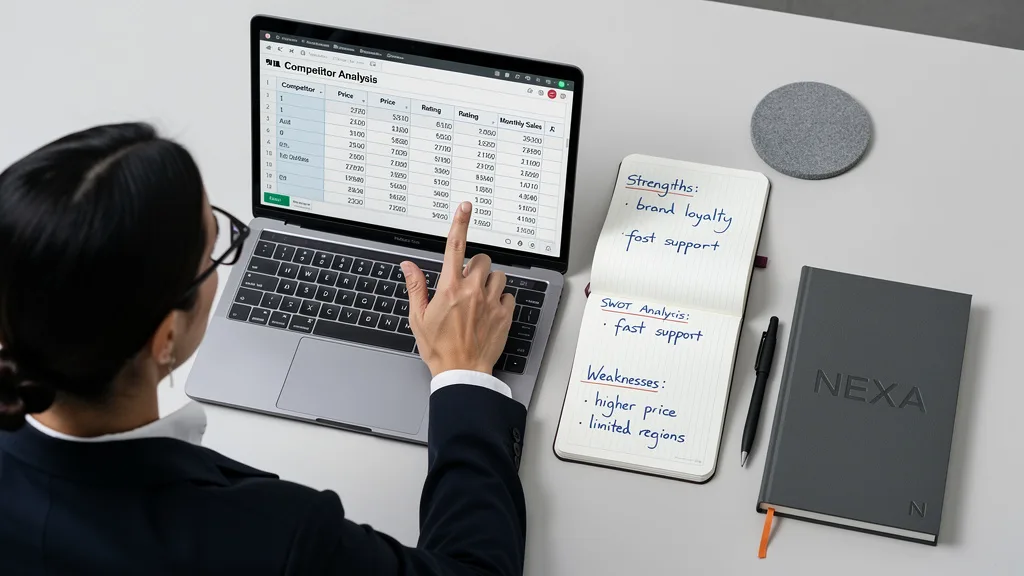
These suites allow you to quickly sift through millions of products to find opportunities that meet your specific criteria, such as monthly revenue, price point, and review count. While they come with a monthly subscription fee, the time they save and the data they provide offer an immense ROI by helping you avoid costly product failures.
| Feature | All-in-One Suites (e.g., Helium 10) | Niche Platforms (e.g., Google Trends) | Free Extensions (e.g., Keepa) |
|---|---|---|---|
| Product Database | Extensive & Filterable | Not Applicable | Limited |
| Sales Estimates | Yes (Algorithm-based) | No | Limited |
| Keyword Research | Advanced | Basic (Interest over time) | No |
| Profit Calculator | Yes | No | No |
| Price History | Often Included | No | Excellent |
Niche and Trend Discovery Platforms
Beyond the mainstream Amazon tools, there are platforms dedicated to trend spotting and niche discovery. Google Trends is a powerful free tool that shows you the relative interest in a search term over time, helping you identify seasonal patterns and growing trends. Other paid tools specialize in analyzing social media and other online sources to predict what products will be in high demand next.
These tools are excellent for the initial idea generation phase of your research. They help you think outside the box and move beyond the same product categories everyone else is looking at. Finding the best Amazon niche research tools can give you a significant competitive advantage in identifying untapped markets.
Free Tools and Browser Extensions
While premium tools are powerful, several free resources can provide valuable insights. Browser extensions like Keepa are essential for tracking the price and sales rank history of any product on Amazon, helping you understand its sales velocity and pricing stability. The Amazon search bar itself is a great tool; its autocomplete suggestions show you what customers are actively searching for.
Google Keyword Planner can also help you gauge demand by providing search volume data for your product ideas. While not as precise for Amazon specifically, it gives a good general indication of market interest. Combining these free tools can create a solid foundation for your research before you invest in a paid subscription. There are many great guides on the Best Amazon Product Research Tools to help you choose.
A Step-by-Step Product Validation Framework
Once you have a promising product idea, you must put it through a rigorous validation process. This framework ensures you're making a data-backed decision, not an emotional one. Skipping these steps is one of the biggest mistakes new sellers make.
Step 1: Conduct In-Depth Competitor Analysis
Go deep on the top 10 competitors for your main keyword. Create a spreadsheet and track their price, monthly sales, review count, review velocity (how many new reviews they get per month), and listing quality. Read their reviews, both positive and negative, to understand what customers love and hate.
Analyze their product photos, titles, bullet points, and A+ Content. Where are they weak? Can you create a better listing? This deep dive will not only help you validate demand but also reveal the exact strategies you'll need to employ to compete effectively from day one.
Step 2: Calculate Unit Economics and Potential Profitability
This is where your idea meets financial reality. Get quotes from multiple potential suppliers for your product, including shipping costs to an Amazon warehouse. Use Amazon's FBA Revenue Calculator to determine the exact fees for your product's size and weight. Factor in estimated costs for PPC advertising, photography, and other launch expenses.
With all these numbers, calculate your final landed cost per unit and your potential net profit margin. Your unit economics check is the most critical calculation you will make. If the numbers don't work on paper, they definitely won't work in practice. Be conservative with your estimates to ensure you have a buffer for unexpected costs.
Step 3: Assess Supplier and Manufacturing Feasibility
Having a great product idea is useless if you can't get it made reliably and at the right price. Reach out to at least 5-10 potential suppliers on platforms like Alibaba. Vet them carefully by checking their business history, certifications, and communication responsiveness.
Discuss your product requirements, potential for customization, and Minimum Order Quantity (MOQ). A high MOQ from all suppliers might make a product unfeasible for a first order. Ensure the supplier understands your quality standards and can meet your production timelines.
Step 4: Order Samples to Verify Product Quality
Never, ever place a bulk order without first ordering and inspecting samples from your top 2-3 supplier candidates. Photos and videos can be misleading. You need to physically hold, use, and test the product to assess its quality, durability, and overall feel.
Does it meet your expectations? Does it feel like a premium product that you would be proud to put your brand name on? This step is your final quality gate before you commit thousands of dollars to inventory. A small investment in samples can save you from a disastrously large investment in a poor-quality product.
Common Product Research Mistakes to Avoid
Navigating the product research process can be tricky, and several common pitfalls can derail even the most promising sellers. Being aware of these mistakes is the first step to avoiding them and setting your product up for success from the start.
- Chasing Passion Over Data: Don't choose a product simply because you like it. Your personal interests don't always align with market demand and profitability. Always let the data guide your final decision.
- Ignoring All-In Costs: Many beginners only calculate the cost of goods and FBA fees, forgetting about shipping, customs, PPC, returns, and other overheads. This leads to a dangerously inaccurate view of profitability.
- Entering Restricted or Patented Categories: Selling in gated categories like supplements or automotive requires extra approvals. Even worse, unknowingly infringing on a design or utility patent can get your listing shut down and your inventory seized. Always conduct a basic patent check.
- Skipping the Sample Step: Trusting supplier photos and placing a bulk order without physically verifying the product quality is a recipe for disaster. This is a non-negotiable step.
- Underestimating Competition: Just because a niche has few sellers doesn't mean it's not competitive. A few highly optimized, professional sellers can be harder to compete with than a dozen amateur ones. Analyze the quality of the competition, not just the quantity.
Key Takeaways
Scaling your Amazon FBA business in 2026 hinges on a methodical and data-centric approach to product selection. Here are the most critical points to remember:
- Data Over Emotion: Base every decision on market data, not personal preference or gut feelings.
- Profit Is Paramount: Focus on healthy profit margins and solid unit economics. High revenue with no profit is a failing business.
- Differentiation Is Your Defense: Avoid generic products. Build a brand by adding value and solving customer pain points.
- Tools Are Your Ally: Leverage software suites to save time, access crucial data, and gain a competitive edge in your research.
- Validation Is Non-Negotiable: Follow a strict framework to analyze competitors, calculate profitability, and verify supplier and product quality before investing.
Frequently Asked Questions
Is Amazon FBA still profitable in 2026?
Yes, Amazon FBA is still highly profitable in 2026, but the barrier to entry has risen. The days of launching any product and making money are over. Success now requires a more strategic approach, focusing on brand building, differentiation, and expert marketing.
Profitability is directly tied to the quality of your product research and your ability to manage costs effectively, especially advertising spend. With the right product in a well-chosen niche, the profit potential remains immense for sellers who treat it like a real business.
What are the best products to sell on Amazon for a beginner?
For a beginner, the best products are typically those that are simple, have steady demand, and offer a clear opportunity for improvement. Look for items that are not in a hyper-competitive or patent-heavy category. Good starting points often have a price point between $20 and $60, are small and lightweight to minimize FBA fees, and are not complex or electronic to reduce the risk of defects and returns.
Focus on solving a specific problem for a niche audience. Instead of selling a generic "yoga mat," consider a "non-slip travel yoga mat for hot yoga." Specificity reduces competition and helps you connect with a passionate customer base.
What is the best product research tool for Amazon FBA?
There is no single "best" tool for everyone, as the ideal choice depends on your budget and specific needs. However, all-in-one suites like Helium 10 and Jungle Scout are widely considered industry standards because of their comprehensive feature sets. They provide everything from a product database and keyword research to a profit calculator and listing optimizer.
For those on a tighter budget, starting with free tools like Keepa for sales history and Google Trends for demand analysis is a great way to begin. Ultimately, the best tool is the one you learn to use effectively to gather accurate data and make informed decisions.
Can you make $10,000 a month selling on Amazon?
Yes, achieving $10,000 per month in profit is an attainable goal for many Amazon FBA sellers, but it requires significant work, capital, and a well-executed strategy. It is not a passive income stream or a get-rich-quick scheme. This level of success typically requires finding a winning product, investing several thousand dollars in inventory, and effectively managing your launch and PPC campaigns.
Reaching this milestone involves scaling successfully. It may take one highly successful product or a small portfolio of 2-3 solid products. Consistency, data analysis, and a willingness to learn and adapt are key to reaching and exceeding this income level.
Conclusion
Mastering Amazon FBA product research for beginners in 2026 is the single most impactful skill you can develop to scale your brand. By prioritizing data-driven validation, focusing on profit-first unit economics, and seeking opportunities to build a real brand, you move beyond the guesswork that holds back most sellers. This methodical approach is your roadmap to finding a winning product that can become the foundation for 8-figure growth.
If you've done the research but want an expert eye to review your product choice, listing, and overall strategy, we can help. A professional audit can uncover blind spots and optimize your plan before you invest heavily in inventory. Get a comprehensive, no-obligation analysis of your Amazon brand's potential. Request your Free Audit today.