
Are you struggling to gain traction in a marketplace crowded with established sellers and dominant brands? Finding a space where you can not only compete but thrive is the key to unlocking scalable, profitable growth on Amazon. The secret isn't just about selling a product; it's about identifying and owning a niche where customer demand exists, but the competition is still beatable.
To find low competition niches on Amazon in 2026, you must combine strategic brainstorming with data-driven research. This involves analyzing key metrics like low review counts on top listings, identifying underserved customer needs through keyword research, and validating that a potential niche has sufficient demand to be profitable. Using specialized research tools is essential to analyze market data and confirm long-term viability before you invest.
What Defines a Low Competition Amazon Niche?
A low competition Amazon niche is a specific product category or sub-category where a few key indicators suggest an opportunity for a new seller to enter and rank successfully. It's not about finding a market with zero sellers, which would likely indicate zero demand. Instead, it's about finding a market where the existing competitors are not fully optimized, have clear weaknesses, or have not yet established insurmountable brand loyalty or review moats.
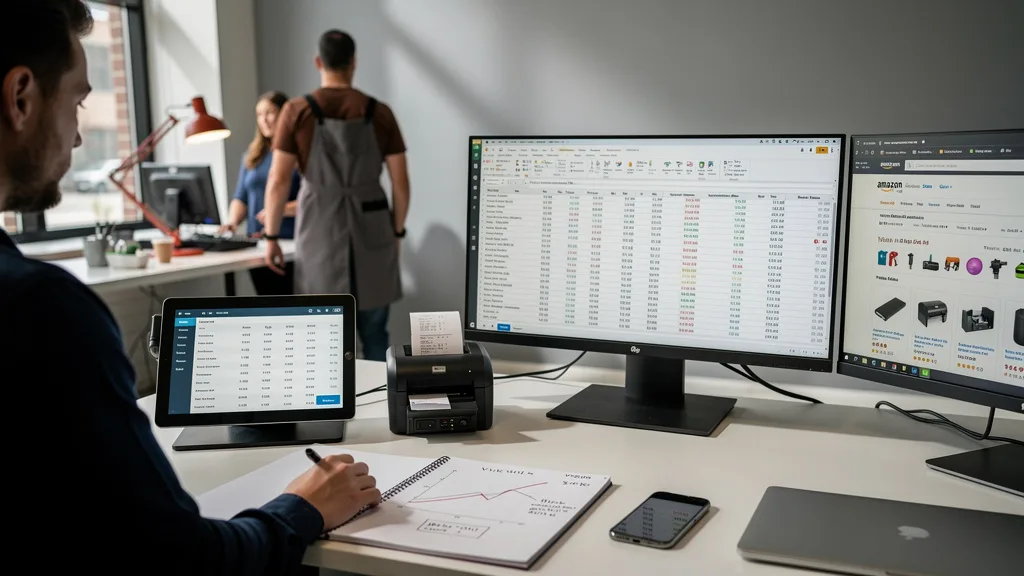
These niches often feature products where the top-ranking sellers have a relatively low number of reviews, mediocre listing quality, or inconsistent sales history. You're looking for an imbalance: clear customer search intent and purchasing behavior, but a lack of professional, high-quality offerings to meet that demand. This gap is your entry point for building a profitable brand.
Key Metrics for Gauging Competition Levels
To accurately gauge competition, you need to look beyond surface-level assumptions and dive into specific data points. The most telling metrics reveal how entrenched the current sellers are and how difficult it would be to overtake them. For example, if the top three listings for a keyword have over 5,000 reviews each, that's a high-competition red flag. Conversely, if top sellers have fewer than 200-300 reviews, the barrier to entry is significantly lower.
Analyze the quality of the listings themselves. Are the product titles keyword-stuffed and unreadable? Are the images low-quality or lacking lifestyle shots? Is the A+ Content generic or nonexistent? These are all signs of weak competition. A new, well-optimized listing can quickly stand out and capture sales. Tracking sales velocity and Best Sellers Rank (BSR) consistency also helps you understand if a few dominant players control the market or if sales are more distributed.
| Metric | High Competition Signs | Low Competition Opportunity |
|---|---|---|
| Average Review Count (Top 5 Listings) | 1,000+ reviews | Under 300 reviews |
| Listing Quality (Images, Copy, A+) | Professional, highly optimized, strong branding | Poor images, weak copy, no A+ Content |
| Dominant Brands | 1-2 major brands occupy most of page one | Multiple different, unknown sellers |
| Main Keyword Search Volume | Extremely high (100,000+) | Moderate but sufficient (2,000-10,000) |
| Sponsored Ad Placement | Highly competitive, expensive bids | Fewer ads, lower cost-per-click (CPC) |
The Balance Between Low Competition and Market Demand
The ultimate goal is to find the sweet spot between low competition and sufficient market demand. A niche with no competition is often a niche with no customers. Your research must validate that real people are actively searching for and buying the products you plan to sell. This is where analyzing market data and demand levels becomes critical.
Use product research tools to estimate monthly sales and revenue for the top sellers in a potential niche. A healthy niche might see the top 10 sellers generating a combined $30,000 to $100,000+ in monthly revenue. If the total market revenue is only a few thousand dollars, it may not be worth pursuing, even with low competition. The ideal scenario is a niche with consistent, proven demand that is currently being served by subpar competitors.
A Step-by-Step Process to Find Low Competition Niches
Finding a winning niche is a systematic process, not a lottery. By following a structured approach, you can methodically filter out saturated markets and identify hidden opportunities for growth. This process moves from broad ideas to granular data analysis, ensuring you make an informed decision based on evidence, not just intuition.

Each step is designed to de-risk your investment of time and capital. From initial brainstorming to deep competitor analysis and profitability validation, this framework helps you avoid common pitfalls and increases your chances of launching a successful product. Let's walk through the four essential steps.
Step 1: Brainstorming and Initial Idea Generation
The journey begins with creative brainstorming. Look for inspiration in your own life. What are your hobbies, passions, or professional experiences? Problems you've solved or products you wish existed are excellent starting points. You can also browse Amazon's own structure for ideas, looking at categories, sub-categories, and Movers & Shakers or Best Seller lists to spot trends.
Consider offline sources as well. Pay attention to conversations around you, browse magazines, and explore social media platforms like Pinterest, Instagram, and TikTok to see what products are gaining traction. The goal at this stage is to create a long list of potential ideas. Don't filter too heavily yet; just gather as many concepts as possible to feed into the next stage of research.
Step 2: Conducting Keyword and Market Data Research
Once you have a list of ideas, it's time to validate them with data. This is where you determine if there's actual customer demand. Using a keyword research tool, you can find the main search terms customers use to find products in your potential niche. Look for keywords with a healthy search volume, typically between 2,000 and 10,000 monthly searches, as this often indicates demand without overwhelming competition.
Beyond search volume, analyze the estimated monthly sales and revenue for products ranking for these keywords. This market data will tell you if the niche is large enough to support a new seller and meet your financial goals. A strong Amazon SEO strategy begins with identifying these valuable keyword targets. As you gather data, you'll start to see which of your brainstormed ideas have real commercial potential.
"Finding a low-competition niche is less about a secret formula and more about a disciplined research process. The data always tells the story. If you see high demand being met with low-quality listings, that's your invitation to enter the market and dominate."
Step 3: Analyzing Competitors on the Amazon SERP
With a list of data-validated ideas, you now need to perform a deep dive on the competition. Go to Amazon and search for your main keywords. Carefully examine the first page of search results. Are the top spots dominated by one or two huge brands, or is there a mix of different sellers? A variety of sellers is a good sign.
Click into the top 5-10 listings. Evaluate everything: the number of reviews, the quality of the main image, the persuasiveness of the bullet points, and the depth of the A+ Content. Look for weaknesses you can exploit. If the average review count is low (under 300), and the listings look amateurish, you have a strong opportunity to create a superior product page that will attract customers and convert sales.
Step 4: Validating Profitability and Long-Term Potential
The final step before committing to a niche is to ensure it can be profitable. This involves more than just looking at revenue; you must calculate your potential profit margins. Use an FBA calculator to estimate Amazon's fees, and research your potential cost of goods (COGS) from suppliers. A healthy product should have a profit margin of at least 25-30% after all costs, including advertising.
Consider the long-term potential as well. Is this a fleeting trend or a stable, evergreen market? Look at Google Trends data for your main keywords to check for seasonality and overall interest over time. A successful brand is built on a solid foundation, so choosing a niche with lasting demand is crucial for scaling from 7 to 8 figures. Understanding your potential Amazon PPC cost is also vital for budgeting your launch and ongoing marketing efforts.
Essential Research Tools for Amazon Sellers in 2026
In 2026, trying to find a profitable, low-competition niche without the right tools is like navigating the ocean without a compass. The Amazon marketplace is too vast and data-rich to rely on guesswork. Professional sellers use a suite of tools to analyze market trends, track competitor performance, and validate product ideas with concrete data.

These tools can be broadly categorized into all-in-one suites that cover the entire research process and specialized tools that focus on specific tasks like keyword analysis or trend spotting. Investing in the right software saves you countless hours and, more importantly, prevents costly mistakes by helping you avoid dead-end niches.
All-in-One Product Research Suites
For most sellers, an all-in-one research suite is the most efficient investment. These platforms bundle multiple tools into a single interface, allowing you to manage the entire process from idea generation to profitability calculation. Leading tools in this category include Helium 10, Jungle Scout, and Viral Launch.
These suites typically offer a Chrome extension for analyzing data directly on Amazon's search and product pages, a product database for filtering millions of items by your criteria (e.g., price, reviews, sales), and a keyword research tool to uncover what customers are searching for. They provide the core data you need, such as estimated sales volume, revenue, BSR history, and keyword search volume, to make informed decisions.
Specialized Keyword and Trend Analysis Tools
While all-in-one suites are powerful, specialized tools can provide deeper insights in specific areas. For trend analysis, Google Trends is an invaluable free tool. It allows you to see the interest in a topic or keyword over time, helping you distinguish between a short-lived fad and a stable, evergreen niche. You can also compare the popularity of different product ideas.
For keyword research, tools like Ahrefs or SEMrush, while primarily for traditional SEO, can uncover related questions and topics that customers are interested in. Free tools like AnswerThePublic can visualize the questions people ask around a central keyword, giving you ideas for product features, marketing angles, and even content for your listing. These tools supplement your core Amazon research by providing a broader view of customer intent.
Adapting Your Niche Strategy for FBA vs. KDP
Your niche research strategy will need to be adapted based on your business model. The criteria for a good physical product sold via Fulfillment by Amazon (FBA) are different from those for a digital book sold via Kindle Direct Publishing (KDP). While the core principles of finding a gap between demand and competition remain the same, the specific metrics and logistics you need to consider will vary significantly.

Understanding these differences is key to success. An FBA seller must focus on sourcing, shipping, and inventory costs, while a KDP publisher is primarily concerned with keyword relevance and cover design. Let's explore the unique research considerations for each model.
Researching Physical Products for Amazon FBA
When researching for FBA, your analysis must include the physical realities of the product. Look for products that are small, lightweight, and durable to minimize shipping costs and FBA storage fees. Avoid complex electronics, fragile items, or products in gated or restricted categories until you are more experienced. The ideal FBA product is simple to source and hard to break.
Profitability calculations are also more complex. You must factor in the landed cost of the product (manufacturing, shipping from the factory, and import duties), Amazon's referral and FBA fees, and your advertising budget. A product might look great on paper, but if the margins are too thin after all these costs, it's not a viable opportunity. Use Amazon's FBA Revenue Calculator extensively during this phase.
Finding Profitable Niches for Amazon KDP Publishing
For Amazon KDP, the focus shifts away from physical logistics and onto intellectual property. The best KDP niches are those where readers are actively searching for specific types of content, such as logbooks, planners, journals, or coloring books for a particular audience. Your research should be almost entirely keyword-focused. Look for keywords with decent search volume but where the top results have amateurish covers or are not perfectly relevant to the search term.
A key metric for KDP is the Best Sellers Rank (BSR) of existing books in the niche. A BSR under 100,000 indicates consistent sales. Since there is no inventory cost, you can test multiple researched KDP niches with less financial risk. The main investment is your time in creating the content and a professional cover design. For a deeper dive into this specific area, many find it useful to study How I Find Low-competition KDP niches that have proven demand.
Common Mistakes to Avoid When Choosing a Niche
Even with the best tools and a solid process, sellers can make critical errors when selecting a niche. Being aware of these common mistakes can help you steer clear of them and save significant time and money. One of the biggest errors is falling in love with a product idea without objectively validating the demand and profitability.
Another frequent mistake is underestimating the competition. A new seller might see high revenue numbers and jump in, only to realize that the niche is controlled by a few dominant brands with massive advertising budgets and thousands of reviews. Avoiding these pitfalls is just as important as finding the right opportunity.
- Ignoring Market Demand: Choosing a niche with zero competition because no one is looking for the product. Always validate with search volume and sales data.
- Choosing an Overly Broad Niche: Trying to sell a generic product like "water bottle" instead of a specific niche like "insulated water bottle with time markers for hiking."
- Miscalculating Profit Margins: Forgetting to account for all costs, including shipping, customs, FBA fees, PPC ad spend, and returns. This can turn a seemingly profitable product into a loss-maker.
- Picking a Fad Product: Investing heavily in a short-term trend (like fidget spinners) that will see demand collapse after a few months. Check long-term trends.
- Underestimating Competition: Focusing only on revenue and ignoring review counts, listing quality, and the brand power of existing sellers.
- Ignoring Patents and Trademarks: Failing to do due diligence and launching a product that infringes on another company's intellectual property, leading to account suspension.
Key Takeaways
Finding a successful niche on Amazon in 2026 requires a methodical, data-first approach. By focusing on the right metrics and avoiding common pitfalls, you can position your brand for profitable growth. Here are the most important points to remember:
- Balance is Key: The ideal niche has a healthy balance of proven customer demand and beatable, low-to-moderate competition.
- Data Over Intuition: Use professional research tools to validate every idea with real market data, including search volume, sales estimates, and competitor review counts.
- Analyze Competitor Weaknesses: Look for opportunities in niches where top sellers have low review counts, poor-quality listings, and weak branding. A superior listing can win.
- Profitability is Paramount: A niche is only good if it's profitable. Meticulously calculate all potential costs to ensure a healthy profit margin of 25% or more.
- Adapt Your Strategy: Your research process must be tailored to your business model, whether it's the logistics-heavy world of FBA or the keyword-driven landscape of KDP.
Frequently Asked Questions
What are some profitable niches with low competition?
While specific niches change constantly, the most promising opportunities in 2026 often lie in sub-categories of larger markets. Instead of "yoga mats," consider "eco-friendly cork yoga mats for travel." Look for products catering to specific hobbies (e.g., specialized tools for miniature painting), unique dietary needs (e.g., gluten-free baking mixes with specific alternative flours), or sustainable and eco-friendly alternatives to common household items.
What are the most profitable KDP niches for Amazon in 2026?
The key is to find a passionate audience that is currently underserved. These niches often have lower search volume but much higher purchase intent, leading to better conversion rates. The best way to find them is to follow the step-by-step research process and look for the data indicators of low competition, like low review counts and unoptimized listings.
How can you tell if a niche is already saturated?
In 2026, profitable KDP niches continue to be those that serve a specific purpose or audience. Low-content and no-content books like specialized logbooks (e.g., 'Beekeeper's Inspection Logbook' or 'Classic Car Maintenance Journal') are very popular. Planners and journals targeted at niche professions or hobbies (e.g., 'Weekly Planner for Freelance Writers') also perform well.
Is it still possible to find untapped niches on Amazon in 2026?
Coloring books for adults remain a strong category, especially when focused on a unique theme like 'Mythical Creatures' or 'Vintage Botanical Illustrations.' The key is to find a keyword phrase that shows buyer intent and has top results with weak covers or low BSRs. To learn more about identifying these opportunities, you can explore resources on How to Find Profitable Niches for KDP.
What is a good Best Sellers Rank (BSR) for a low competition product?
A saturated niche has several clear warning signs. The most obvious is extremely high review counts on the first page of results; if the top five sellers all have 2,000+ reviews, it's saturated. Another sign is the dominance of well-known, established brands that occupy most of the top spots and sponsored ad placements.
You can also look at the launch dates of the top products using a research tool. If all the top sellers have been on the market for several years, it indicates a mature, entrenched market that is difficult for new entrants to penetrate. Finally, high advertising costs (CPC) for the main keywords suggest that many sellers are bidding aggressively, a classic sign of saturation.
Yes, it is absolutely still possible. While finding a completely "untapped" niche with zero sellers is rare and often means there's no demand, finding "underserved" niches is the real goal, and this happens every day. Consumer needs are constantly evolving, new trends emerge, and new technologies create demand for new types of accessories and products.
The key is to think in terms of sub-niches. The market for "phone cases" is saturated, but the market for "biodegradable phone cases for the new iPhone with a built-in cardholder" might be a wide-open opportunity. By drilling down and serving a specific customer with a specific need, you can carve out a profitable space in even the most crowded categories.
A good BSR depends heavily on the product category, as some categories are much larger than others. However, a general rule of thumb for a viable product is a consistent BSR of 100,000 or lower in its main category. A BSR in the range of 20,000 to 60,000 often represents a sweet spot of consistent sales without attracting overwhelming competition.
For a low-competition product, you might find that the top sellers have BSRs in the 30,000-80,000 range, indicating steady but not spectacular sales. This is often a great sign. It proves there is a market, but it's not so large that it has attracted the attention of massive sellers, giving you a chance to enter and capture a significant share of the existing sales.
Conclusion
Mastering how to find low competition Amazon niches in 2026 is not about luck; it's about adopting a disciplined, data-driven methodology. By systematically brainstorming, researching keywords, analyzing competitors for weaknesses, and validating profitability, you can uncover opportunities that others miss. The key is to locate that perfect intersection of proven customer demand and beatable competition, which serves as the foundation for building a scalable and profitable 7 or 8-figure brand on Amazon.
Ready to apply these principles but want an expert eye on your brand to identify your biggest growth opportunities? We help serious Amazon brand owners scale from 7 to 8 figures with profit-focused strategies. Get a comprehensive analysis of your listings, PPC, and overall strategy to uncover your path to scalable growth.
Start your journey to higher profits and market leadership today. Request your Free Audit now.