Table of Contents 9 sections
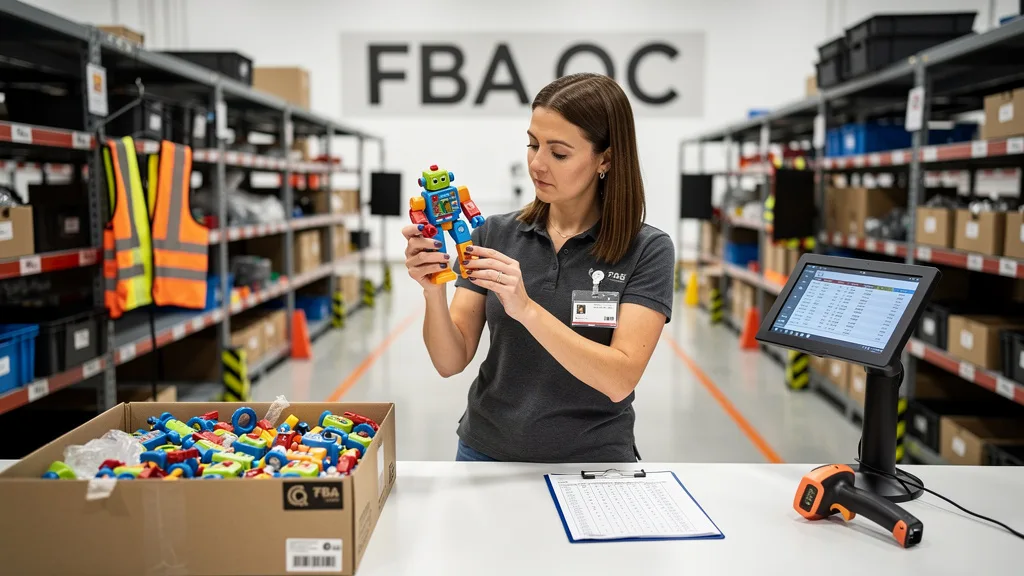
Are you prepared to navigate the complex web of regulations required to sell toys on Amazon in 2026? The Toys & Games category is one of the most profitable, yet most challenging, on the platform. Failing to meet a single compliance checkpoint can lead to inventory rejection, account suspension, and significant financial loss. This guide provides the definitive roadmap for ensuring your products meet every requirement.
To achieve Amazon FBA eligibility for Toys and Games in 2026, sellers must provide compliant invoices from authorized distributors, a valid Children's Product Certificate (CPC), and proof of safety testing that meets ASTM F963 and CPSIA standards. Additionally, all products require precise physical preparation, including correct FNSKU and CPSIA tracking labels, as well as clear safety and suffocation warnings where applicable. Mastering these compliance layers is non-negotiable for approval.
Why the Toys and Games Category Is Highly Regulated
The Toys and Games category on Amazon is subject to intense scrutiny primarily due to child safety concerns. Because the end-users are children, who are a vulnerable population, federal laws and platform policies are extremely strict to prevent injuries. Regulations like the Consumer Product Safety Improvement Act (CPSIA) impose rigorous standards on toy manufacturers and importers, and Amazon enforces these rules to protect both its customers and itself from legal liability.

Furthermore, the high volume of counterfeit products in this category has pushed Amazon to implement stricter verification processes. By requiring detailed documentation like authorized invoices and valid test reports, Amazon aims to ensure that only authentic, safe, and compliant products reach its marketplace. This protects legitimate brands and maintains customer trust, which is paramount for the platform's long-term success. For sellers, this means that meticulous record-keeping and a deep understanding of product safety regulations are essential prerequisites for entry and continued operation.
Core Requirements for Getting Ungated in Toys and Games
Gaining approval to sell in the Toys and Games category, often called 'ungating', involves providing Amazon with specific, verifiable documents that prove your products are safe and your supply chain is legitimate. This process is not a mere formality, it is a critical gatekeeping measure. Amazon's automated systems and human reviewers will scrutinize every document you submit for authenticity, accuracy, and compliance with all stated requirements.
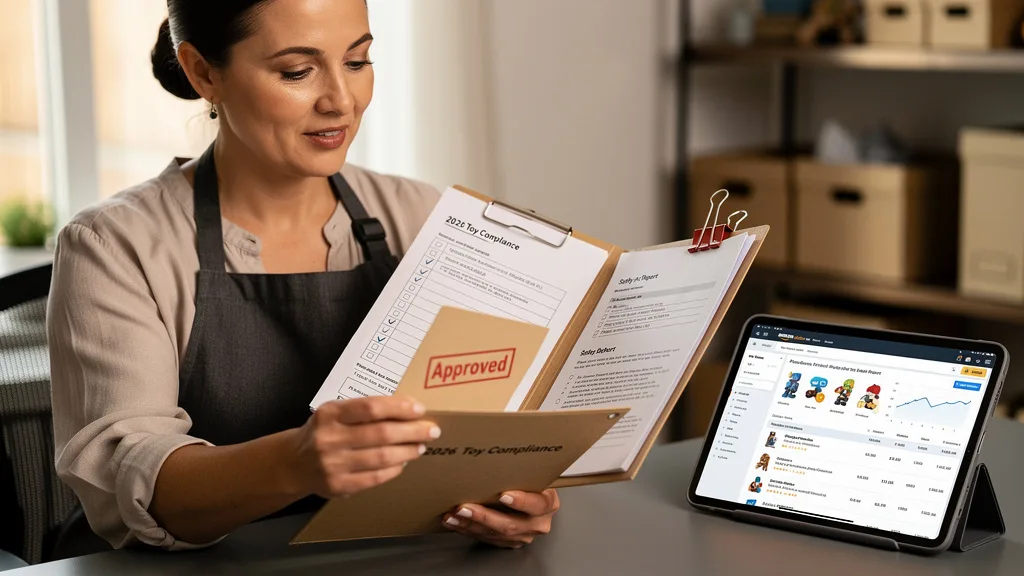
Successfully navigating this process requires a proactive and organized approach. You cannot simply list a toy and hope for the best. You must gather all necessary paperwork before you even create your listing to ensure a smooth approval workflow. Failing to meet these core requirements at the outset will result in immediate rejection and can flag your account for future review.
Submitting Compliant Invoices from Authorized Distributors
One of the most critical pieces of evidence Amazon requires is a compliant invoice from an authorized distributor or the manufacturer. This document proves that you have a legitimate source for your products. The invoice must be dated within the last 180 days and clearly show the names and addresses of both your business and the supplier. This information must match the details in your Seller Central account perfectly.
The invoice must also detail the purchase of at least 10 units of the product you are applying to sell. Vague descriptions or missing quantities are common reasons for rejection. Retail receipts, pro-forma invoices, or documents from online arbitrage sources are not acceptable. Your best strategy is to establish relationships with reputable wholesale distributors who understand Amazon's documentation needs.
Providing a Valid Children's Product Certificate (CPC)
A Children's Product Certificate (CPC) is a self-issued document where the importer or domestic manufacturer certifies that their product complies with all applicable children's product safety rules. While you create this document yourself, it must be based on passing test results from a CPSC-accepted laboratory. The CPC is a mandatory document for nearly all products intended for children 12 years of age and under.
The certificate must include specific information, such as a detailed product description, a list of all safety regulations the product was tested for, and contact information for the person maintaining the test records. It also must cite the specific CPSC-accredited third-party lab that performed the tests. Amazon will reject any CPC that is incomplete, inaccurate, or not supported by valid, corresponding lab reports.
Passing ASTM F963 and CPSIA Safety Testing
Compliance with ASTM F963 and CPSIA is the cornerstone of toy safety in the United States. ASTM F963 is the standard consumer safety specification for toy safety, covering potential hazards like sharp points, small parts (choking hazards), and chemical composition (e.g., lead and phthalates). The CPSIA made many sections of this standard mandatory by law.
To prove compliance, you must have your products tested by a laboratory that is accredited by the Consumer Product Safety Commission (CPSC). These tests are not optional and cannot be bypassed. The resulting lab report is a key piece of compliance documentation that you will need to submit to Amazon and keep on file for your business. Attempting to sell toys without these valid test reports is a serious violation that can lead to immediate account suspension and legal action.
Essential Product Compliance Documentation for 2026
Beyond the initial ungating requirements, maintaining a complete and up-to-date file of compliance documentation is an ongoing responsibility for 2026. Amazon can request these documents at any time, especially if a customer raises a safety concern or if there is a product recall. Having your paperwork organized and accessible is crucial for responding to these requests promptly and avoiding listing deactivation.
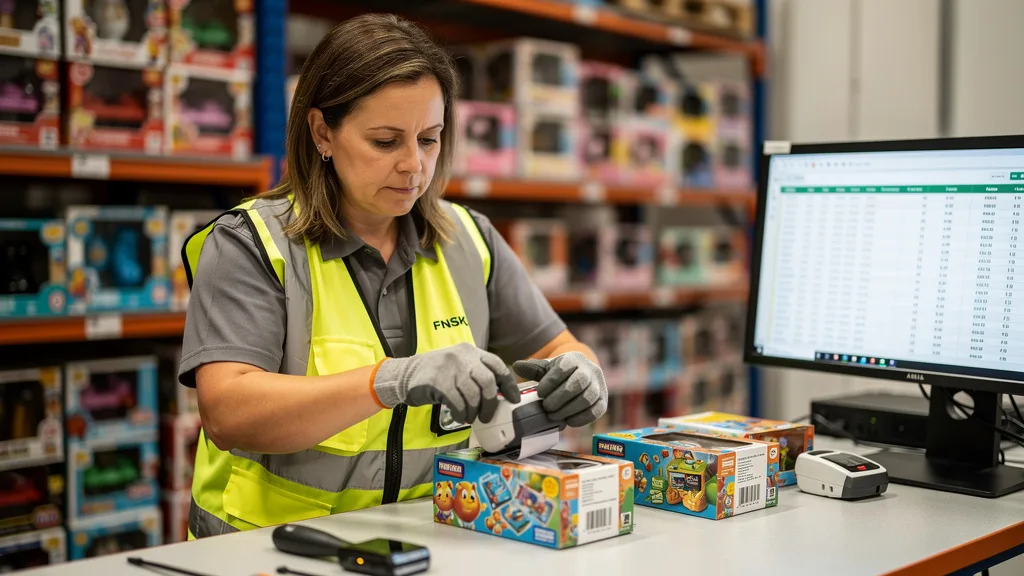
Your compliance file should include everything from supplier invoices and CPCs to detailed lab reports and manufacturing details. Think of it as your product's legal passport. For brands planning to scale, establishing a robust system for managing this documentation from day one is a key operational investment that will prevent major headaches down the road. This is a core part of a professional Amazon SEO strategy, as compliant listings are less likely to be suspended.
Understanding CPSC eFiling for Imported Toys
For sellers importing toys into the United States, the CPSC's eFiling system is becoming increasingly important. The system allows importers to electronically file certificates of compliance with U.S. Customs and Border Protection (CBP) and the CPSC. This initiative aims to streamline the import process by identifying compliant products more efficiently at the border, potentially speeding up customs clearance.
While not yet mandatory for all products, participating in the eFiling beta program can be advantageous. It signals to regulatory bodies that you are a proactive and compliant importer. As this system evolves, it may become a standard requirement, so familiarizing yourself with its processes in 2026 will put your business ahead of the curve and help prevent costly import delays.
Required Safety Testing and Valid Lab Reports
The lab reports you submit to Amazon must be from a CPSC-accepted third-party laboratory. You cannot use a report from an unaccredited lab. The report must be recent and specific to the exact product, including its color, design, and materials. A test report for a blue toy car cannot be used for a red toy car if the paint composition is different.
These reports must show a 'pass' result for all required tests under ASTM F963 and CPSIA. This includes tests for lead content, phthalates, mechanical hazards, and flammability, among others. Amazon's compliance team is trained to spot invalid or forged reports, so ensuring the authenticity and accuracy of your testing documentation is absolutely critical. Any discrepancy can lead to immediate rejection and a permanent ban on selling toys.
Maintaining Accurate Product and Seller Information
Consistency is key across all your documentation and your Amazon listing. The business name and address on your invoices, CPC, and lab reports must exactly match the legal entity information in your Seller Central account. Similarly, the product description, model number, and UPC on your documentation must align with the details on your product detail page.
Even minor discrepancies can trigger a rejection from Amazon's verification systems. Regularly audit your information to ensure it remains consistent and up-to-date. If you change your business address or legal entity name, you must update it in Seller Central and ensure all future compliance documents reflect this change. This attention to detail can be the difference between a smooth operation and a suspended listing. If you encounter issues, knowing how to get help from Amazon Seller Support effectively is a valuable skill.
Physical Prep and Labeling for Every Toy Unit
Once your product is approved, the focus shifts to the physical preparation of each unit before it is sent to an Amazon fulfillment center. This FBA prep is a critical step in the workflow, as improper preparation is a leading cause of inventory being rejected or lost. Every single toy must be prepped and labeled according to Amazon's strict guidelines to be 'scan ready' upon arrival.
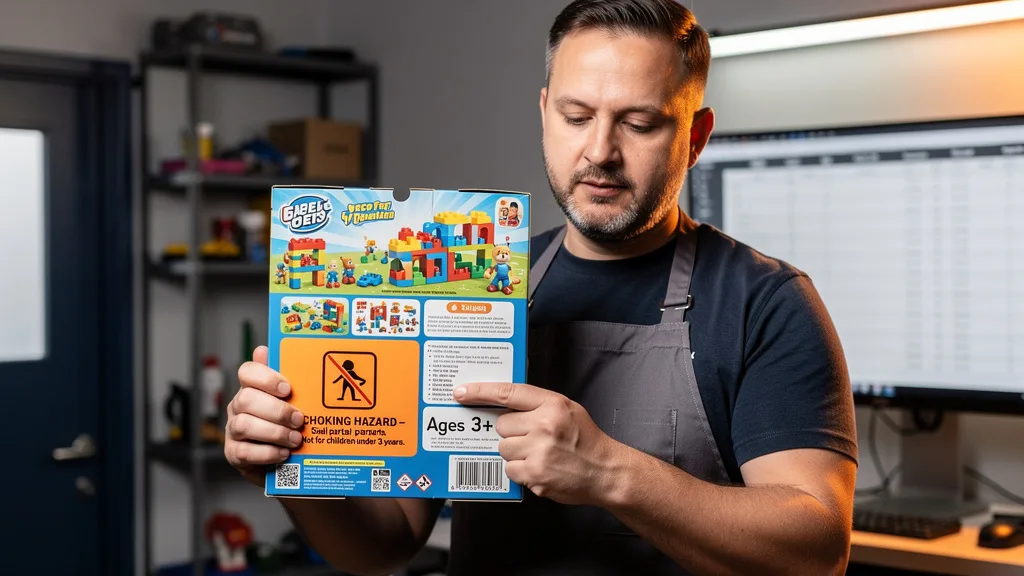
The goal of FBA prep is to ensure that your product can be identified, received, stored, and shipped efficiently and safely. This involves applying the correct labels, packaging the item securely, and including all necessary warnings. Skipping or rushing this stage can create significant downstream problems that cost time and money to resolve.
FNSKU Label Placement and Best Practices
Each unit sent to FBA requires an FNSKU (Fulfillment Network Stock Keeping Unit) label. This label is unique to your product and your seller account, and it is how Amazon tracks your inventory. The FNSKU label must be placed on a smooth, flat surface of the product's packaging and must completely cover any existing UPC or EAN barcode.
The label must be printed clearly and be easily scannable. Smudged, faded, or poorly placed labels can cause receiving errors at the fulfillment center, leading to delays or even lost inventory. For best results, use a thermal label printer and ensure the label is applied without wrinkles or bubbles. The FNSKU is the single most important identifier for your product within the FBA system.
CPSIA Tracking Labels and Information
The CPSIA requires that most children's products have a permanent tracking label affixed to both the product and its packaging. This label provides specific information that helps trace the product back to its source in case of a recall. The label must include the manufacturer's name, the location and date of production, and a batch or cohort number.
This information must be visible and legible. For many sellers, this means working with their manufacturer to have this information printed directly on the product and its box. The tracking label is not optional, it is a federal requirement. Amazon can and will check for these labels during inventory audits, and missing labels are a serious compliance violation.
Required Safety Warnings: Choking Hazards and Age Grading
Any toy that is intended for children over three but contains small parts must have a clear choking hazard warning. This warning must be displayed prominently on the product packaging and on the Amazon detail page. The specific wording and pictogram for this warning are defined by the CPSC.
Similarly, accurate age grading is a legal requirement. You must clearly state the appropriate age range for your toy, based on safety testing and developmental considerations. For example, a toy intended for children ages 3 and up cannot be marketed to toddlers. Both the choking hazard warning and age grading are critical safety communications that Amazon strictly enforces.
Poly Bag and Suffocation Warning Rules
If your toy is packaged in a poly bag, the bag must meet specific safety requirements. Any bag with an opening of 5 inches or more must have a suffocation warning printed on the bag itself or attached as a label. The warning must be legible and placed in a prominent location.
Additionally, the poly bag must be transparent and have a thickness of at least 1.5 mil. These rules are in place to prevent accidental suffocation. Amazon is extremely strict about these requirements, and units arriving in non-compliant bags will be rejected at the fulfillment center, requiring you to pay for removal or remediation.
Navigating Special Categories and Seasonal Restrictions
Beyond the standard requirements, some types of toys have additional layers of compliance. Electronic toys, bundled products, and selling during the busy Q4 holiday season all come with their own unique rules and restrictions. Understanding these nuances is key to avoiding unexpected roadblocks and maximizing your sales potential in these profitable sub-categories.
Proactive planning is essential when dealing with these special cases. For example, battery-powered toys require extra documentation that can take weeks to obtain. Similarly, Q4 selling privileges are based on performance metrics from earlier in the year. Waiting until the last minute to address these requirements is a recipe for missed opportunities.
Rules for Battery-Powered and Electronic Toys
Toys that contain batteries, especially lithium-ion batteries, are classified as dangerous goods (hazmat) by Amazon. To sell these products, you must provide additional documentation, including a Safety Data Sheet (SDS) and a UN 38.3 test summary. These documents prove that the batteries have been tested for safety during transport and use.
The process for getting hazmat approval can be lengthy, so you should start early. Your product listing must also accurately declare that it contains batteries. Failure to do so can result in your inventory being stranded and your listing being suspended. Proper handling of children's toys with batteries is a major safety and compliance focus for Amazon.
Prep for Bundles and Multi-Component Sets
If you are selling a bundle or a set of multiple toys as a single unit, it must be prepped so that it cannot be separated. This typically means packaging all components together in a single box or a sealed poly bag. The outer packaging must have a label that clearly states "Sold as Set" or "This is a Set, Do Not Separate."
The FNSKU label should be placed on this outer packaging, and any barcodes on the individual items inside must be covered or obscured. This ensures that the fulfillment center staff scan and ship the entire bundle as one item. Improperly prepped bundles are a common source of fulfillment errors and negative customer feedback.
Understanding Q4 Holiday Selling Restrictions
The fourth quarter (Q4), which includes Black Friday and the Christmas holiday season, is the busiest time of year for toy sales. To ensure a positive customer experience during this peak period, Amazon often implements temporary selling restrictions in the Toys & Games category for sellers using Fulfillment by Merchant (FBM).
Typically, to be eligible for FBM toy sales in Q4, you must meet certain performance metrics, such as a low pre-fulfillment cancel rate, a low late shipment rate, and a high order volume in the months leading up to the holidays. These restrictions generally do not apply to sellers using FBA. This is a major incentive to use FBA for toy sales, as it guarantees your eligibility to sell during the most profitable time of the year, provided your account is in good standing.
Common Mistakes That Lead to Rejection or Suspension
Many promising toy brands fail on Amazon not because of a bad product, but because of avoidable compliance and prep mistakes. Understanding these common pitfalls is the first step to ensuring you don't fall into the same traps. The most frequent errors often stem from a lack of attention to detail or trying to cut corners on documentation and preparation.
From mismatched invoices to incorrect labeling, a single mistake can halt your entire operation. Amazon's systems are largely automated and unforgiving. Below are some of the most common errors that lead to application rejections, inventory issues, and account suspensions for toy sellers.
"In 2026, the single biggest mistake we see brands make is treating compliance as a one-time checklist. Amazon FBA eligibility for toys and games is an ongoing process. You must have a system for tracking test report expirations and maintaining perfect documentation, or you risk suspension during your peak season."
- Inconsistent Information: Submitting invoices or CPCs where the business name or address does not exactly match your Seller Central account information.
- Invalid Invoices: Providing retail receipts, handwritten invoices, or documents from unauthorized liquidators instead of official distributor invoices.
- Expired or Incomplete Test Reports: Using a lab report from a previous year or one that doesn't test for all required ASTM F963/CPSIA standards.
- Improper FNSKU Labeling: Failing to cover the original UPC barcode or using a low-quality, unscannable FNSKU label.
- Missing Safety Warnings: Neglecting to add required choking hazard or suffocation warnings to packaging.
- Incorrect Product Categorization: Listing a toy in a different category to circumvent the Toys & Games approval process.
Key Takeaways
Successfully selling in the Toys & Games category on Amazon FBA requires a deep commitment to compliance and preparation. Below is a summary of the most critical points for achieving and maintaining eligibility in 2026.
| Requirement Area | Key Action Item | Why It's Critical |
|---|---|---|
| Documentation | Secure compliant invoices, a valid CPC, and recent ASTM/CPSIA lab reports. | Forms the basis of your ungating application and ongoing compliance. |
| Physical Prep | Apply FNSKU labels correctly, ensure CPSIA tracking info is present, and use required warning labels. | Ensures inventory is accepted and processed correctly at FBA centers. |
| Special Cases | Obtain SDS/UN 38.3 for battery toys and prep bundles as a single unit. | Prevents rejection for products with additional compliance layers. |
| Consistency | Ensure all seller, supplier, and product information is identical across all documents and your listing. | Prevents automated rejections due to data mismatches. |
Frequently Asked Questions
Is FBA still profitable for toy sellers in 2026?
Yes, selling toys through FBA can be highly profitable in 2026 for sellers who manage their costs and compliance effectively. The key is to source products with healthy margins, account for all FBA fees and advertising costs, and maintain a compliant operation to avoid costly disruptions. Profitability hinges on strong business fundamentals and a deep understanding of the category.
Many sellers find success by focusing on niche segments within the broader toy market. By conducting thorough product research, you can find low-competition Amazon niches where you can establish a strong brand presence. This strategy, combined with efficient operations, remains a viable path to profitability.
How much are Amazon FBA fees for toys in 2026?
Amazon FBA fees for toys consist of a referral fee (typically 15% of the sale price) and FBA fulfillment fees, which are based on the product's size and weight. Additional costs include monthly inventory storage fees, which increase during the Q4 holiday season, and potential long-term storage fees for slow-moving inventory.
It is crucial to use Amazon's FBA Revenue Calculator to estimate the precise fees for your specific product before setting your price. Rates are subject to change, so sellers should regularly review the official Amazon FBA Fees for Toy schedule to ensure their financial models are accurate for 2026.
Can I use a test report from a previous year for my toy?
Generally, no. Amazon and the CPSC require that safety testing be reasonably current. While a report doesn't expire on a specific date, you are required to re-certify your product periodically, especially if there have been any material changes to the product or manufacturing process. Best practice is to have your product re-tested at least annually to ensure ongoing compliance.
If a material change occurs, such as switching paint suppliers or altering a plastic component, you must immediately have the product re-tested. Using an outdated report is a significant risk that can lead to your products being deemed non-compliant, resulting in listing removal and potential legal issues.
Where can I find authorized toy distributors for Amazon?
Finding authorized distributors requires industry research and networking. A good starting point is attending major toy trade shows like the New York Toy Fair or the ASTRA Marketplace & Academy. You can also research brands you are interested in and contact them directly to ask for a list of their authorized wholesale distributors.
Online wholesale directories can be a resource, but you must vet them carefully to ensure they are legitimate and not merely liquidators. Building direct relationships with manufacturers or their primary distribution partners is the most reliable way to secure a compliant and stable supply chain for Amazon.
What happens if a battery-powered toy arrives without proper documentation?
If a battery-powered toy arrives at an FBA fulfillment center without the required hazmat documentation (like an SDS) being pre-approved in Seller Central, it will be flagged and set aside as 'unfulfillable'. Amazon will not accept the inventory into your stock and may require you to create a removal order to have it sent back to you at your expense.
In more serious cases, or for repeat offenses, Amazon may suspend your ability to send in new shipments or even suspend your selling account. The platform treats dangerous goods compliance very seriously, so it's critical to complete the hazmat approval process before your inventory ever leaves your warehouse.
Conclusion
Mastering Amazon FBA eligibility for Toys and Games in 2026 is a meticulous process that rewards diligence and punishes shortcuts. By focusing on three core pillars, authentic documentation, flawless physical prep, and ongoing compliance vigilance, you can build a sustainable and scalable toy business on the world's largest marketplace. The regulations are strict for a reason: to protect children. Embracing these standards not only grants you access to a lucrative market but also establishes your brand as a trustworthy and reputable seller in the eyes of both Amazon and its customers.
Navigating these complex requirements can be daunting, especially when you're focused on scaling your brand from 7 to 8 figures. An expert audit can identify hidden compliance gaps and optimization opportunities in your listings and processes before they become costly problems. If you're ready to ensure your toy brand is built on a solid foundation for profitable growth, consider getting a professional review of your account. Get your Free Audit today.