
Are you spending countless hours researching products only to hit dead ends? Finding a winning product on Amazon can feel like searching for a needle in a haystack, but identifying the right niche is the single most important step toward building a profitable, scalable brand. The key isn't just finding a product; it's about finding a dedicated market with unmet needs.
The easiest methods to find profitable Amazon niches involve a combination of exploring Amazon's own data, analyzing social trends, and using specialized tools to validate demand against competition. By focusing on sub-categories with passionate audiences and clear pain points, you can uncover opportunities that larger brands often overlook. This strategic approach minimizes risk and maximizes your potential for profit-focused growth in 2026.
What Is an Amazon Niche and Why Is It Important?
An Amazon niche is a specialized segment of a larger market, defined by a specific audience with unique needs, preferences, or identity. Instead of selling generic "water bottles," you might target the niche of "insulated hiking water bottles for long-distance trekkers." This focus allows you to tailor your product, branding, and marketing directly to a highly engaged group of customers who are actively searching for a solution you provide.
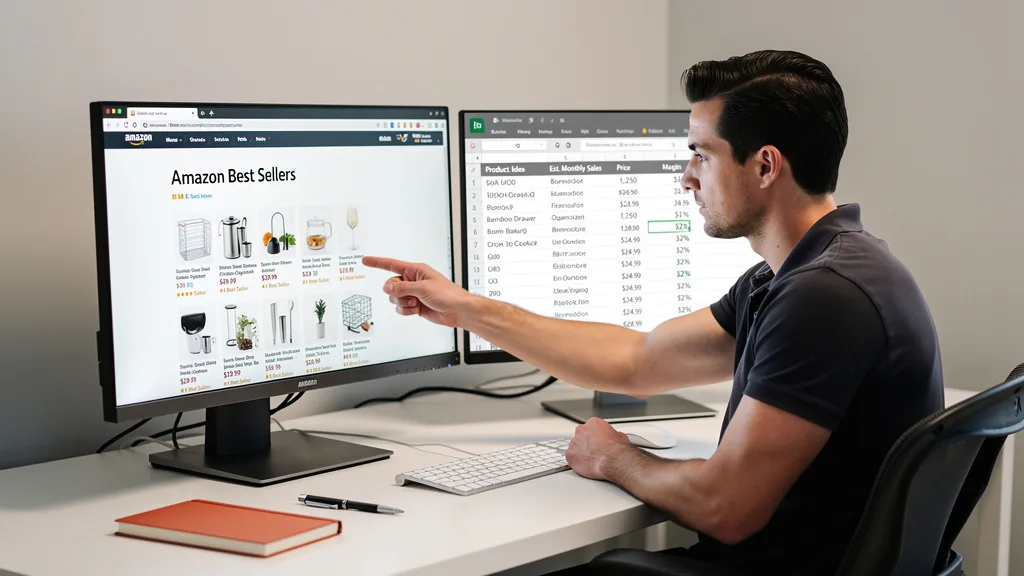
Focusing on a niche is crucial for success, especially for new or growing sellers. It allows you to sidestep the intense competition found in broad categories dominated by established brands. By serving a specific audience well, you can build a loyal customer base, command higher prices, and achieve better conversion rates. A well-chosen niche becomes the foundation for a sustainable and scalable eCommerce business, making your marketing efforts, such as PPC campaigns, more targeted and cost-effective.
Top Methods for Finding Profitable Product Niches
Uncovering a profitable product niche doesn't require reinventing the wheel. It involves using a systematic process to identify opportunities where customer demand is high and direct competition is manageable. The most effective strategies combine creative exploration with data-driven validation. By leveraging the right resources, from Amazon itself to broader market trend tools, you can build a list of promising ideas ready for deeper analysis. The following methods provide a clear roadmap for your research journey.
Explore Amazon's Own Platform for Ideas
Amazon is a goldmine of product data if you know where to look. Start by exploring the 'Best Sellers', 'New Releases', and 'Movers & Shakers' lists in categories that interest you. These pages show you what is currently selling well, what's new and gaining traction, and which products have seen the biggest jumps in sales rank recently. Pay close attention to products in the top 100 that have fewer than 500 reviews, as this can signal an opportunity with lower competition.

Another powerful technique is to dive into the customer reviews and 'Customers Also Bought' sections of existing products. Reviews often reveal customer pain points, feature requests, and gaps in the market that you could fill with an improved product. The 'Customers Also Bought' section can help you identify related items and potential bundles, giving you a clearer picture of the entire ecosystem around a particular niche.
Analyze Social Media and Online Communities
Online communities are treasure troves of unfiltered consumer opinions and emerging trends. Platforms like Reddit, with its countless niche subreddits (e.g., r/BuyItForLife, r/SkincareAddiction), are perfect for discovering what people are passionate about, complaining about, and wishing they could buy. Look for threads where users ask for product recommendations or discuss problems that a new product could solve.
Pinterest and TikTok are also invaluable for visual trend spotting. Search for terms like "home office setup" or "eco-friendly kitchen" to see what products are trending visually. The comment sections on popular videos and pins often contain direct feedback and purchase intent. Engaging with these communities helps you understand the language and priorities of your target audience before you even develop a product.
Use Google Trends to Spot High-Growth Areas
Before investing in a product, you need to know if the interest is growing, shrinking, or just a temporary fad. Google Trends is an essential free tool for this analysis. By entering a keyword related to your niche idea, you can visualize the search interest over time. Look for products with a steady, upward trend over the last several years, as this indicates a stable and growing market.
This tool also helps you identify seasonality. For example, a search for "pool floats" will show massive spikes in the summer. While seasonal products can be profitable, they require careful inventory management. For a more stable business, especially when starting, focus on evergreen products that have consistent demand throughout the year. Comparing several niche ideas in Google Trends can quickly show you which has the most long-term potential.
Leverage Specialized Niche Finder Tools
While manual research is important, specialized software can accelerate the process and provide data that is impossible to find on your own. Tools like Helium 10, Jungle Scout, and Viral Launch are designed specifically for Amazon sellers. They allow you to filter Amazon's entire product database by category, price, sales volume, review count, and more to quickly uncover opportunities that meet your specific criteria.
These platforms offer features like keyword research tools, profitability calculators, and competition analyzers. Using a dedicated niche finder can save you dozens of hours and help you avoid costly mistakes by basing your decisions on concrete data, not just intuition. Many sellers find that the investment in one of these tools pays for itself by helping them find a single profitable product. You can explore a comparison of the best Amazon niche research tools to see which one fits your strategy.
How to Analyze and Validate Your Niche Idea
Once you have a shortlist of potential niches, the next critical step is validation. A great idea on paper can fail if the market dynamics aren't right. This phase involves a deep dive into the data to confirm that there is sufficient demand, the competition is beatable, and the potential for profit is real. Thorough validation separates successful sellers from those who launch products into an empty or overly saturated market.
Assess Market Demand and Search Volume
The first validation checkpoint is confirming that a significant number of people are actually searching for your product. Use Amazon-specific keyword research tools to find the monthly search volume for your main keywords. A healthy niche typically has multiple keywords with a combined search volume of several thousand searches per month. This indicates that there is active buyer intent on the platform.

Don't stop at Amazon. Also, check search volumes on Google to gauge broader market interest. High search volume is a positive sign, but it must be balanced with the other factors. A product with 100,000 monthly searches might seem great, but it will likely come with overwhelming competition. The sweet spot is often a niche with enough demand to generate significant sales but not so much that it attracts major corporations.
Evaluate the Level of Low-Competition Niches
Finding a high-demand niche is only half the battle; you also need to be able to compete effectively. To evaluate the competition, search for your main keyword on Amazon and analyze the top 10 results. Look for signs of a beatable market: Are the top sellers dominated by a few brands with thousands of reviews? Or is there a mix of sellers with lower review counts (e.g., under 500)? The latter suggests there's room for a new player.
Also, examine the quality of the listings. Do they have professional photography, compelling copy, and A+ Content? If the top results are weak, you have an opportunity to stand out with superior branding and optimized product listings. The goal is to find low-competition Amazon niches where you can realistically claim a spot on the first page. As one researcher noted after extensive analysis, a deep dive is often required, a process detailed in an article about spending I Spent 120 Hours Finding profitable niches.
Calculate Potential Profitability and Margins
A product that sells well is only great if it's profitable. You must calculate your potential profit margin before committing to a niche. Start by estimating your landed cost per unit, which includes the manufacturing cost, shipping from the supplier, and any import duties. Then, use an FBA calculator to estimate Amazon's fees, which include referral fees and fulfillment fees based on the product's size and weight.
Your target selling price minus the landed cost and Amazon fees will give you your gross profit. From there, you must also account for marketing costs, primarily for PPC advertising. A healthy profit margin after all expenses is typically 25% or higher. Understanding your numbers is non-negotiable for building a sustainable business. You can learn more by reading a guide on How Much Does Amazon PPC Cost to budget effectively.
Consider Seasonality and Long-Term Viability
When validating your niche idea, think beyond the initial launch. Consider the long-term potential of the product and the brand you can build around it. Is this a one-off gadget, or can you expand into a full line of related products for the same audience? Building a brand is far more defensible and valuable than selling a single product. I Spent 120 Hours Finding.
Revisit Google Trends to confirm the niche isn't a declining fad. Look for steady or growing interest over a five-year period. While seasonal products can be lucrative, they pose cash flow and inventory challenges. For your first few products, it's often wiser to choose an evergreen niche with consistent, year-round demand. This creates a stable foundation from which you can expand and experiment later on.
How to Monetize Your Chosen Profitable Product Niche
Finding a great niche is the first step, but monetization is where strategy meets execution. Once you've validated your product idea, the path to profitability involves three core pillars: sourcing a high-quality product, creating a fully optimized listing, and driving targeted traffic through strategic advertising. This is how you turn a promising niche into a consistent revenue stream and scale your brand from seven to eight figures.

First, secure a reliable supplier who can produce a product that delights customers. Next, invest heavily in professional photography and compelling copywriting to create a retail-ready Amazon listing. This is your digital storefront, and it needs to convert browsers into buyers. Finally, implement a profit-focused advertising strategy. A well-managed launch using Profitable Campaigns can help you gain initial traction, gather reviews, and begin to Rank Products on Page One. This holistic approach ensures your hard work in research translates directly into sales and long-term success.
Key Takeaways
Successfully finding and launching a product on Amazon hinges on a methodical research and validation process. Rushing this stage is one of the most common mistakes new sellers make. By implementing these easy methods to find profitable Amazon niches, you can build a strong foundation for a scalable and successful brand.
- Start with a Niche Focus: Avoid broad, competitive markets. A targeted niche allows you to serve a specific audience better, leading to higher conversions and brand loyalty.
- Use a Multi-Faceted Research Approach: Combine insights from Amazon's platform, social media trends, Google Trends, and specialized software for a comprehensive view of the market.
- Data-Driven Validation is Non-Negotiable: Always validate your ideas by assessing market demand, competition level, and potential profitability before investing any capital.
- Think Long-Term: Prioritize evergreen niches with brand potential over seasonal fads. A sustainable business is built on a solid foundation of consistent demand.
- Monetization Requires Strategy: A great niche is only profitable with excellent execution, including high-quality sourcing, optimized listings, and profit-focused PPC management.
"The difference between a seven-figure and an eight-figure Amazon brand often comes down to mastering the fundamentals: rigorous niche selection and relentless optimization. Don't just find a product; find a problem to solve for a specific audience."
Frequently Asked Questions
What niche sells the most on Amazon?
Broad categories like Home & Kitchen, Electronics, and Clothing, Shoes & Jewelry have the highest overall sales volume on Amazon. However, these categories are also the most competitive, making it difficult for new sellers to gain traction. The most profitable opportunities are not in these broad categories themselves but in the sub-niches within them.
Can I make $1000 a month selling on Amazon?
For example, instead of "kitchen tools," a profitable niche might be "ergonomic kitchen tools for people with arthritis" or "sustainable, zero-waste food storage solutions." Success on Amazon in 2026 is about identifying these highly specific, underserved customer segments and creating a product that perfectly meets their needs.
What are the most profitable Amazon KDP niches?
Yes, making $1000 a month in profit is a very achievable goal for sellers who choose the right product and execute a solid strategy. This typically requires finding a product with a healthy profit margin (ideally $10-$20 per unit) and generating enough sales to meet that profit target. For instance, selling 100 units a month of a product with a $10 profit margin would achieve this goal.
How do you identify low-competition niches on Amazon?
Reaching this milestone involves careful product selection, negotiating good costs with suppliers, creating a compelling listing, and using targeted Amazon PPC to drive initial sales and reviews. It requires initial investment and effort, but it is a realistic first benchmark for a new Amazon FBA business. Profitable Campaigns.
What are the best tools for Amazon niche research?
For Amazon Kindle Direct Publishing (KDP), the most profitable niches are often in the low-content and no-content book categories. These include items like journals, planners, logbooks, coloring books, and activity books. The key to profitability is targeting a passionate audience with a specific need or interest.
Examples of profitable KDP niches include gratitude journals for busy moms, fitness and meal planners for specific diets (like keto or vegan), logbooks for hobbies (e.g., gardening, fishing, or bird watching), and activity books for children focused on specific holidays or educational themes. Success depends on unique cover design and targeted keyword research to stand out.
Identifying low-competition niches involves looking for specific markers on the Amazon search results page. First, look for keywords where the top-ranking products have a low number of reviews, for example, several sellers on page one with under 200-300 reviews. This indicates that the market is not yet dominated by established players.
Second, analyze the quality of the top listings. If you see poor-quality photos, weak titles, and uninformative bullet points, it's a sign that a more professional and optimized listing can easily compete. Using niche finder tools can also help by allowing you to filter for products based on review count and sales volume, quickly highlighting these underserved areas.
The best tools for Amazon niche research combine data analytics with trend-spotting capabilities. All-in-one software suites like Helium 10 and Jungle Scout are industry standards, offering comprehensive features for product discovery, keyword research, competition analysis, and profitability calculation. They provide the hard data needed to validate a niche idea.
In addition to these specialized tools, it's crucial to use broader market research tools. Google Trends is essential for understanding long-term interest and seasonality. Tools for spying on social media trends, like those for Pinterest or TikTok, can also help you spot emerging product ideas before they become saturated on Amazon.
Conclusion
Finding a profitable niche is the cornerstone of a successful Amazon business. By moving beyond generic product hunting and adopting a strategic framework that combines market exploration with rigorous data validation, you can significantly increase your chances of success. The methods outlined here provide a clear path to identifying underserved customer segments, analyzing market viability, and ultimately choosing a product with genuine potential for profit-focused growth. Remember that thorough research is not a step to be rushed; it is the investment that pays the highest dividends.
Once you've identified a promising niche, the next step is ensuring your product listing is perfectly optimized to convert and that your launch strategy is built for profitability. If you're ready to scale your brand and want an expert analysis of your current strategy or a potential product, consider a professional review. You can get started with a completely Free Audit to uncover your brand's biggest opportunities.