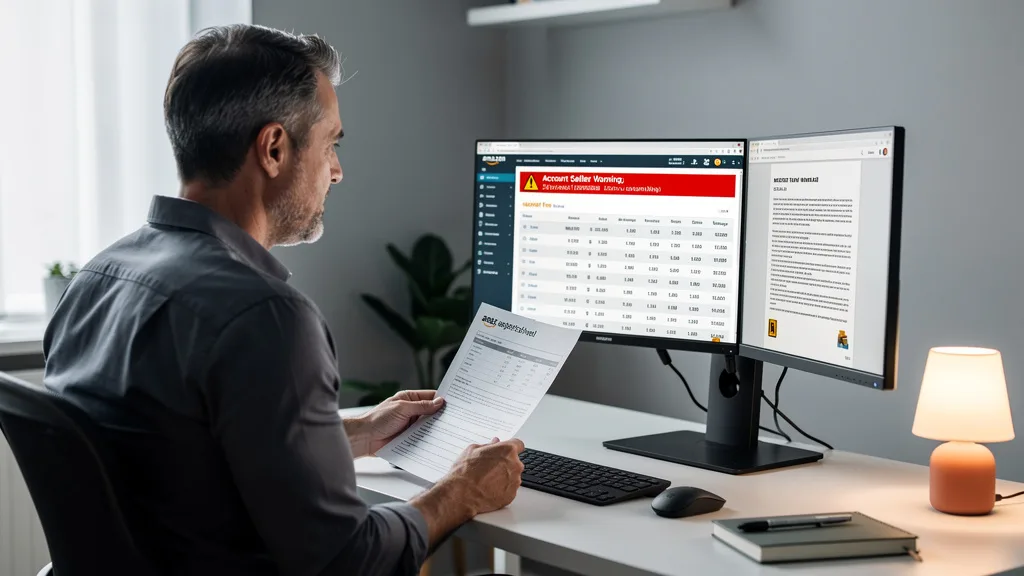
Are confusing and costly hazmat fees eating into your Amazon FBA profits? For many seven-figure sellers, these unexpected surcharges can become a significant drain on profitability, turning a winning product into a logistical headache. Understanding these fees is the first step to controlling them and protecting your margins as you scale.
Minimizing Amazon FBA hazmat fees requires a proactive approach focused on providing accurate product information, optimizing your packaging, and maintaining compliance with Amazon's policies. By correctly classifying your products with a Safety Data Sheet (SDS) and enrolling in the FBA Dangerous Goods program, you can avoid costly penalties and reduce surcharges for storage and fulfillment, ensuring your business remains profitable and scalable.
What Are Dangerous Goods (Hazmat) on Amazon?
Dangerous goods, also known as hazmat, are substances or materials that may pose a risk to health, safety, property, or the environment when stored, handled, or transported. Amazon classifies any product containing flammable, pressurized, corrosive, or otherwise harmful substances as a dangerous good. This classification is not just for obviously hazardous materials like chemicals but also applies to thousands of common consumer products.
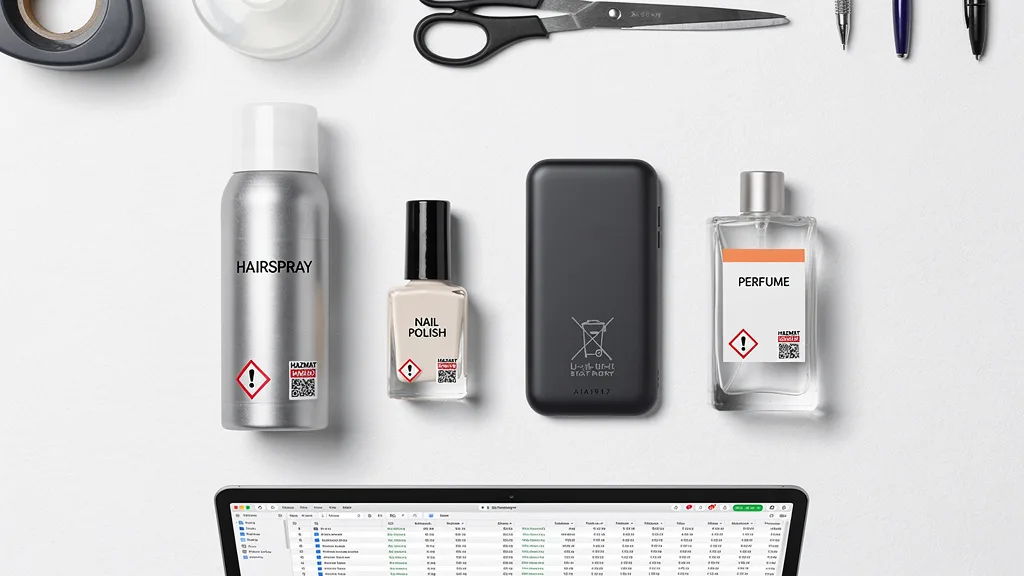
The reason for this strict classification is safety. Amazon's fulfillment centers are vast, automated environments, and a leaking aerosol can or a short-circuiting lithium battery could cause significant disruption or danger. To mitigate this risk, Amazon requires that these products classified as hazmat are stored and shipped according to specific protocols, which incurs additional costs passed on to you, the seller.
Common Examples of Everyday Hazmat Products
You might be surprised to learn which of your products fall under the hazmat category. Many sellers are unaware that they are selling dangerous goods until they face a listing suspension or unexpected fees. It is crucial to review your entire catalog for items that might be flagged.
Here is a list of everyday products often considered dangerous goods by Amazon:
- Perfumes and body sprays with high alcohol content
- Aerosol cans, such as hairspray, cooking sprays, or deodorants
- Nail polish and polish remover
- Laptops, cell phones, and power banks containing lithium-ion batteries
- Certain cleaning solutions and disinfectants
- Pest control products and insecticides
- Beard oils or essential oils that may be flammable
- Some cosmetics and beauty products
How Amazon Identifies and Reviews Hazmat Items
Amazon uses a combination of machine learning algorithms and manual reviews to identify potential hazmat products. The system scans product titles, bullet points, descriptions, and even customer reviews for keywords like "flammable," "battery," "aerosol," or "alcohol." When a potential hazmat item is flagged, it enters a mandatory hazmat review process.
During this review, your listing may be suppressed, and you will be required to provide documentation. This typically involves submitting a Safety Data Sheet (SDS) from the manufacturer or, for products that are not dangerous goods, a completed Exemption Sheet. Passing this review is a prerequisite to selling the item through FBA, and failure to provide accurate information can lead to long delays and lost sales.
A Breakdown of Amazon FBA Hazmat Fees for 2026
Understanding the fee structure is critical for any FBA seller dealing with hazmat products. For 2026, Amazon continues to apply specific surcharges for the storage and fulfillment of dangerous goods on top of the standard FBA fees. These additional costs cover the specialized handling, storage facilities, and shipping requirements necessary to manage these items safely. Knowing these numbers helps you accurately calculate your product's profitability.
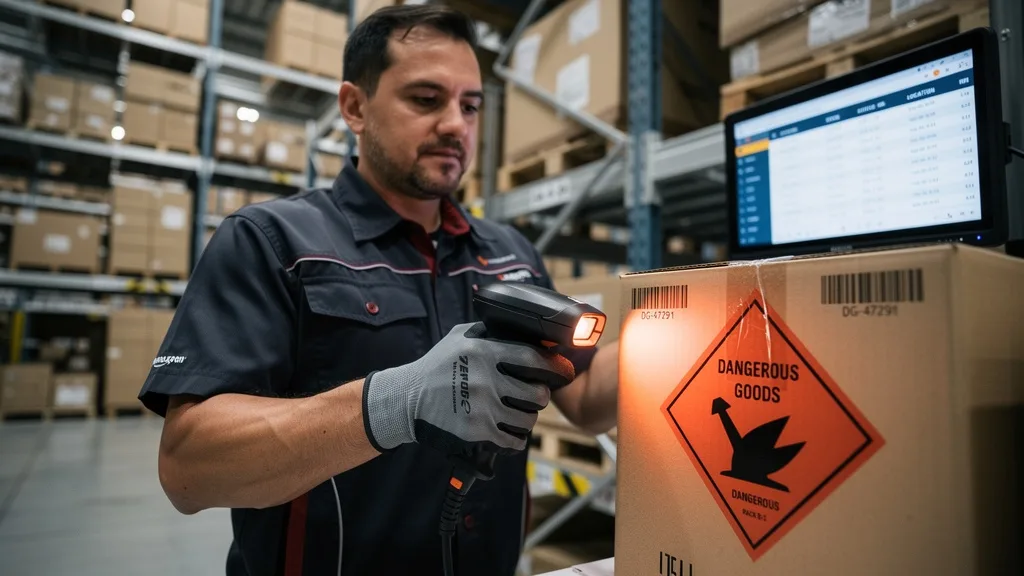
The fees can be broken down into three main categories: monthly storage, fulfillment and handling, and long-term storage or disposal fees. Each of these is higher for items classified as dangerous goods. Keeping track of how Amazon's fee structure evolves is important, as even minor changes can impact your bottom line. You can find more details on general fee updates in our guide to the latest Amazon FBA fee structure.
Monthly Storage Fees for Dangerous Goods
Amazon operates specialized fulfillment centers equipped to handle hazmat items, and space in these facilities comes at a premium. As a result, the monthly storage fees for dangerous goods are significantly higher than for standard products. This fee is calculated based on the daily average volume in cubic feet your product occupies.
The table below provides an illustrative comparison of standard versus dangerous goods storage fees for 2026. Note how the costs increase, particularly during the peak Q4 season from October to December.
| Product Size Tier | Standard Goods (Jan-Sep) | Standard Goods (Oct-Dec) | Dangerous Goods (Jan-Sep) | Dangerous Goods (Oct-Dec) |
|---|---|---|---|---|
| Standard-size | $0.87 | $2.40 | $2.05 | $3.60 |
| Oversize | $0.56 | $1.40 | $1.70 | $2.90 |
Fulfillment and Handling Surcharges
In addition to higher storage costs, Amazon applies a per-item fulfillment and handling surcharge for dangerous goods. This fee covers the extra labor and safety measures required to pick, pack, and ship your product. The exact surcharge varies depending on the item's size and weight, but it is a direct addition to the standard fulfillment fee you would otherwise pay.
"For 7-figure sellers, even a small per-item hazmat surcharge can erode margins by thousands of dollars annually. Proactive management is not optional; it's essential for profitable scaling."
This surcharge is non-negotiable once a product is classified as hazmat, making it all the more important to ensure your products are classified correctly from the start. For sellers with large volumes, this handling fee can quickly become one of the most significant line items in their FBA cost analysis. This is a crucial factor when considering low-competition Amazon niches, as hazmat requirements can be a barrier to entry.
Long-Term Storage and Disposal Fees
Just like with standard inventory, dangerous goods that remain in a fulfillment center for more than 365 days are subject to long-term storage fees. However, these fees are also inflated for hazmat items, providing a strong incentive to maintain a healthy inventory sell-through rate. Slow-moving hazmat inventory can become extremely costly to hold.
Furthermore, if you need to dispose of unsellable hazmat inventory, the fees are much higher than for standard products. Hazardous materials require special disposal procedures to comply with federal and local regulations, and Amazon passes this cost directly to you. A simple removal order for a standard item might cost pennies, while a disposal order for a hazmat item can cost several dollars per unit.
Why Your FBA Hazmat Fees Might Be Higher Than Expected
Discovering that your FBA fees are unexpectedly high can be a frustrating experience, especially when it targets your best-selling products. Often, the culprit is a hidden or incorrect hazmat classification that has inflated your storage and fulfillment costs without your knowledge. Identifying the root cause is the first step toward correcting the issue and reclaiming your profit margins.

Several factors can lead to inflated fees, ranging from simple data entry errors to inefficient operational practices. By systematically reviewing your product information, packaging, and compliance history, you can pinpoint the source of the excess charges and take corrective action. This is a key part of the ongoing account management required to succeed on the platform.
Incorrect Product Information or Classification
The most common reason for excessive hazmat fees is an incorrect product classification. This can happen in two ways: either your non-hazmat product is mistakenly flagged as a dangerous good, or your hazmat product is placed in a more expensive or incorrect category. This often occurs when a product listing contains ambiguous keywords that trigger Amazon's automated review system.
For example, a listing for an "alcohol-free" cleaner might still be flagged because the word "alcohol" is present. Without a proper SDS or exemption sheet to clarify the product's composition, Amazon's system will err on the side of caution and apply hazmat fees. Regularly auditing your listings for these false positives is a critical task for any serious FBA seller.
Inefficient Packaging and Dimensional Weight
FBA fees are heavily influenced by a product's size and weight, and this is especially true for hazmat items. Amazon uses dimensional weight (DIM) to calculate fees, which considers a package's volume. If you are using oversized boxes with a lot of empty space for a small product, you are paying for that wasted volume in both storage and fulfillment fees.
This issue is compounded with dangerous goods because the base rate for storage and fulfillment is already higher. A poorly packaged hazmat item can see its fees skyrocket. Optimizing your packaging to be as compact and efficient as possible is a direct and effective way to lower these variable costs and improve your product's overall profitability.
Non-Compliance With Amazon's Policies
Failing to adhere to Amazon's strict hazmat policies can lead to penalties that manifest as higher fees or outright inventory loss. If you send undeclared dangerous goods to a fulfillment center, Amazon may dispose of the inventory at your expense and without reimbursement. You could also face account-level penalties, including the suspension of your selling privileges.
Furthermore, incorrect labeling or preparation can cause shipments to be rejected, leading to additional shipping and handling costs to fix the issue. Consistent non-compliance signals to Amazon that you are a high-risk seller, which can lead to greater scrutiny and fewer privileges, such as reduced storage limits for the FBA Dangerous Goods program.
7 Actionable Strategies to Minimize Your FBA Hazmat Fees
While hazmat fees are a reality for many sellers, they are not entirely outside of your control. By implementing a series of strategic actions, you can effectively manage and minimize these costs. The following seven strategies provide a clear roadmap for reducing your Amazon FBA hazmat fees and how to minimize them, protecting your margins and supporting profitable growth.
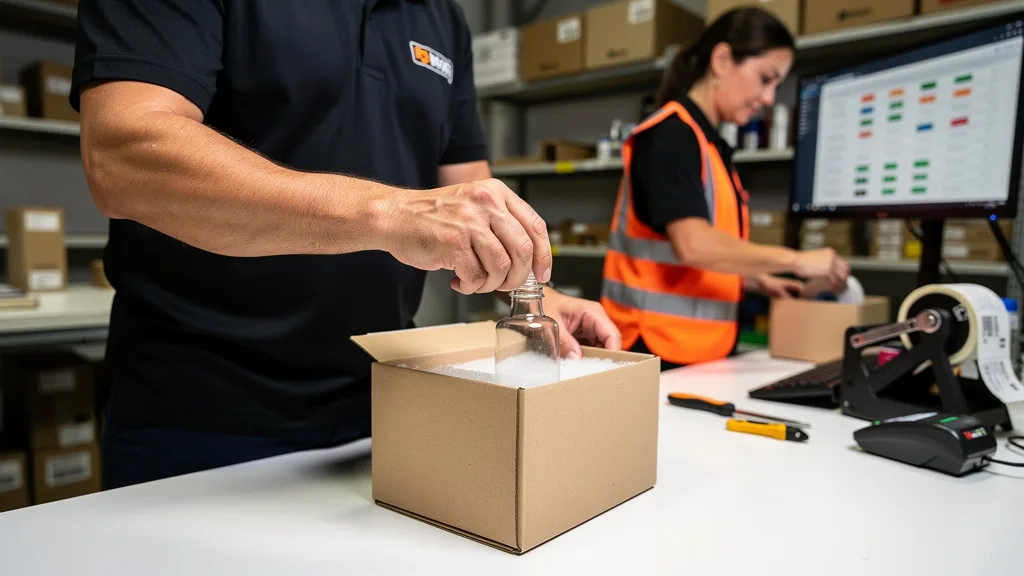
These steps range from providing accurate data upfront to optimizing your physical logistics and staying on top of your inventory health. Each one addresses a key pressure point in the hazmat fee structure, allowing you to systematically reduce unnecessary expenses across your operations.
1. Provide Accurate Dangerous Goods Information
The single most effective strategy is to be proactive and accurate with your product information from day one. When creating a new listing for a product that might be considered hazmat, upload a valid and complete Safety Data Sheet (SDS). If you are certain your product is not a dangerous good but it might get flagged, complete and upload a hazmat exemption sheet.
Providing this documentation during the listing creation process can prevent your product from being incorrectly classified, saving you from suppressed listings, lost sales, and the headache of appealing a wrong decision later. This ties directly into a strong foundation of Amazon listing optimization and SEO, where accuracy is paramount.
Never underestimate the impact of packaging on your FBA fees. Work with your supplier to design product packaging that is as compact and lightweight as possible without compromising safety. Eliminate unnecessary empty space inside the box, as this directly contributes to higher dimensional weight calculations.
Consider using poly bags instead of boxes for smaller, durable items where appropriate. Even a reduction of half an inch on each side of a box can translate into significant savings on monthly storage and fulfillment fees, especially for a fast-moving product. This is a one-time effort that pays dividends on every single unit sold.
3. Enroll in the FBA Dangerous Goods Program
If you plan to sell hazmat products long-term, enrolling in the FBA Dangerous Goods (DG) Program is essential. This program gives you access to Amazon's specialized fulfillment centers designed to handle these items. While enrollment used to be a pilot program, it is now open to more sellers, though there is often a waitlist.
Once accepted, you typically gain higher inventory storage limits for hazmat products than non-enrolled sellers. This allows you to scale your hazmat business more effectively and avoid stockouts. Check your eligibility in Seller Central and apply as soon as possible, as the approval process can take several weeks or even months.
4. Maintain Healthy Inventory and Sell-Through
Given the high storage costs for hazmat items, strong inventory management is non-negotiable. Strive to maintain a lean inventory with a high sell-through rate to avoid incurring expensive monthly and long-term storage fees. Aim for an inventory level that covers 30 to 60 days of sales to balance availability with cost.
Use inventory management tools and closely monitor your sales velocity and IPI (Inventory Performance Index) score. If a product is not selling well, it is better to run an aggressive promotion or create a removal order than to let it sit and accumulate fees. This is particularly true for hazmat items, where holding costs are substantially higher.
5. Comply With All Labeling Requirements
Incorrect labeling is a common and easily avoidable mistake that leads to shipment rejections and delays. All hazmat products sent to FBA must be prepared and labeled according to both Amazon's policies and legal transportation regulations. This often includes applying specific hazmat pictograms (like the flammable liquid symbol) and UN numbers on the outer shipping carton.
Ensure your supplier or prep center understands these requirements perfectly. Double-check that all necessary labels are present, visible, and correctly applied before your inventory leaves the factory. Failure to do so will result in your shipment being stopped at the fulfillment center door, costing you time and money to rectify.
6. Appeal Incorrect Hazmat Rejections or Classifications
If you believe your product has been incorrectly classified as a dangerous good, do not simply accept the fees. Open a case with Seller Support to appeal the classification. To be successful, you must provide clear and compelling evidence to support your claim.
The most effective piece of evidence is a valid SDS from the manufacturer that explicitly states the product is not regulated for transport. If an SDS is not available, a letter from the manufacturer or a lab report can also work. Be persistent and professional in your communications, clearly stating why you believe the classification is incorrect and providing all requested documentation promptly.
7. Choose Cost-Effective Hazmat-Certified Carriers
Your strategy for minimizing costs should also include how you ship your inventory to Amazon's fulfillment centers. Not all shipping carriers are certified to transport dangerous goods, and those that are have different pricing structures. It is wise to get quotes from multiple certified carriers, such as FedEx Hazmat or UPS Dangerous Goods services.
When shipping LTL or FTL, work with a freight forwarder experienced in handling hazmat. They can ensure all paperwork and labeling are correct, preventing costly delays at the carrier's terminal or Amazon's dock. For more insights from other sellers, it can be helpful Seeking Advice on Shipment Carriers on official forums.
Key Takeaways
Successfully navigating Amazon's hazmat regulations is a critical skill for scaling your FBA business in 2026. By treating hazmat compliance as a core part of your operations rather than an afterthought, you can protect your profits and maintain a competitive edge. Here are the most important points to remember:
- Accuracy is Paramount: The most effective way to control hazmat fees is by providing accurate and complete product information, including a Safety Data Sheet (SDS), during listing creation.
- Packaging Matters: Optimizing your product packaging to reduce dimensional weight directly lowers both storage and fulfillment fees, which are already higher for dangerous goods.
- Monitor Inventory Health: High storage costs for hazmat items make it crucial to maintain a strong sell-through rate and avoid long-term storage fees.
- Use the DG Program: Enrolling in the FBA Dangerous Goods program provides access to specialized facilities and higher storage limits, enabling scalable growth.
- Audit and Appeal: Regularly review your fee reports for inaccuracies and be prepared to appeal any incorrect hazmat classifications with clear evidence.
Frequently Asked Questions
How can I lower my overall Amazon FBA fees?
Lowering your overall FBA fees involves a multi-faceted approach. Start by optimizing your product packaging to reduce its size and weight, which lowers both storage and fulfillment costs. Improve your inventory sell-through rate to avoid long-term storage fees. You should also regularly audit your fee statements for any errors or incorrect charges, such as misclassified hazmat statuses.
Is selling on Amazon FBA still profitable in 2026?
Additionally, consider using the FBA Small and Light program for eligible products and explore strategies for bundling items to reduce per-unit fulfillment costs. For a deeper dive, there are many resources that detail How To Reduce Amazon FBA fees across the board, beyond just hazmat concerns.
What happens if I send undeclared dangerous goods to FBA?
Yes, selling on Amazon FBA is absolutely still profitable in 2026, but the landscape is more competitive than ever. Success requires a sophisticated strategy that goes beyond simply launching a product. Profitability hinges on meticulous financial management, effective PPC campaigns with a focus on profit, and superior Amazon listing optimization.
How long does the Amazon hazmat review process typically take?
Sellers who treat their FBA business as a scalable enterprise, focusing on brand building and operational efficiency, are the ones thriving. It is no longer a passive income stream but a dynamic business that rewards expertise and strategic planning. As an Amazon consultant, I see brands scale from 7 to 8 figures by focusing on these core principles.
Can I sell all types of dangerous goods through the FBA program?
Sending undeclared dangerous goods to an Amazon fulfillment center is a serious violation of policy and can have severe consequences. At a minimum, Amazon will likely dispose of the inventory at your expense, without any reimbursement. This means you lose the entire cost of your goods and pay a disposal fee on top. Amazon FBA profits.
In more serious or repeated cases, Amazon may suspend your ability to send shipments to FBA or even suspend your entire seller account. This puts your entire business at risk. It is always better to be transparent and follow the correct hazmat declaration process to avoid these costly and damaging outcomes.
Once you have submitted all the required documentation, such as a Safety Data Sheet (SDS) or an exemption sheet, the Amazon hazmat review process typically takes between two and four business days. However, this timeline can vary depending on the complexity of the product and the current volume of reviews in the queue.
If you fail to provide complete or accurate information, the process will be delayed as Amazon will request additional details. To ensure a swift review, double-check that your SDS is complete, up-to-date (within the last 5 years), and matches the product listing details exactly.
No, you cannot sell all types of dangerous goods through FBA. Amazon has a list of prohibited products and specific categories of hazmat that are not eligible for fulfillment. For example, items classified as explosive, toxic gas, or radioactive materials are strictly forbidden. Additionally, some products may be eligible for FBA but have quantity or storage limitations.
Before sourcing a new product, it is crucial to check Amazon's Restricted Products policy and the specific guidelines for dangerous goods. Even if a product is permitted, you must be enrolled in the FBA Dangerous Goods program to sell it. Always conduct thorough research to ensure your product is eligible for FBA.
Conclusion
Mastering the complexities of Amazon FBA Hazmat Fees and How to Minimize Them is not just about saving money; it's about building a resilient and scalable business on the platform. By embracing proactive compliance, optimizing your logistics, and diligently monitoring your account, you can transform a potential financial drain into a manageable operational cost. The key is to move from a reactive to a strategic mindset, treating hazmat management as a core pillar of your FBA strategy. The most impactful steps you can take today are to audit your listings for misclassifications and optimize your packaging for efficiency.
If you're a 7-figure brand owner looking to eliminate these profit leaks and scale efficiently to 8 figures, identifying hidden fee issues is the first step. A comprehensive audit can uncover opportunities you may have missed. I offer a detailed brand analysis to pinpoint these exact problems.
Ready to see how much you could be saving? Get your Free Audit today.