
Are you treating Amazon SEO and listing optimization as the same task? Many seven-figure sellers do, and it costs them the crucial momentum needed to scale to eight figures. Understanding the distinct roles these two disciplines play is fundamental to dominating your category and maximizing profit on the world's largest marketplace.
The core difference between Amazon SEO and listing optimization is their primary goal. Amazon SEO focuses on discoverability, using keywords and performance metrics to rank your product higher in search results so more customers can find it. Listing optimization, on the other hand, focuses on conversion, persuading the shoppers who land on your page to make a purchase through compelling images, copy, and enhanced content.
How Amazon's A10 Ranking Algorithm Works
To master both SEO and optimization, you first need to understand how Amazon's search engine, the A10 algorithm, thinks. Unlike Google, which prioritizes answering questions, Amazon's algorithm is singularly focused on one thing: generating sales. It's designed to show customers the products they are most likely to buy based on a complex web of factors. The A10 algorithm continuously analyzes data to connect a customer's search query with the most relevant and highest-converting products available.

The algorithm weighs two main categories of factors: relevance and performance. Relevance factors tell Amazon what your product is, ensuring it shows up for the right searches. These include your title, bullet points, backend keywords, and product description. Performance factors tell Amazon how well your product sells once it's found. Key performance indicators include click-through rate (CTR), conversion rate (CVR), sales velocity, and customer reviews. A product that is highly relevant and has strong performance signals will be rewarded with higher search rankings.
What Is Amazon SEO? The Big Picture for Sellers
Amazon SEO is the comprehensive process of making your product discoverable to potential buyers within Amazon's platform. Think of it as the top of your sales funnel. Its sole purpose is to increase your product's visibility in organic search results for relevant keywords. When a customer types a search term into the Amazon search bar, you want your product to appear as high up on the first page as possible. This is the domain of Amazon SEO.
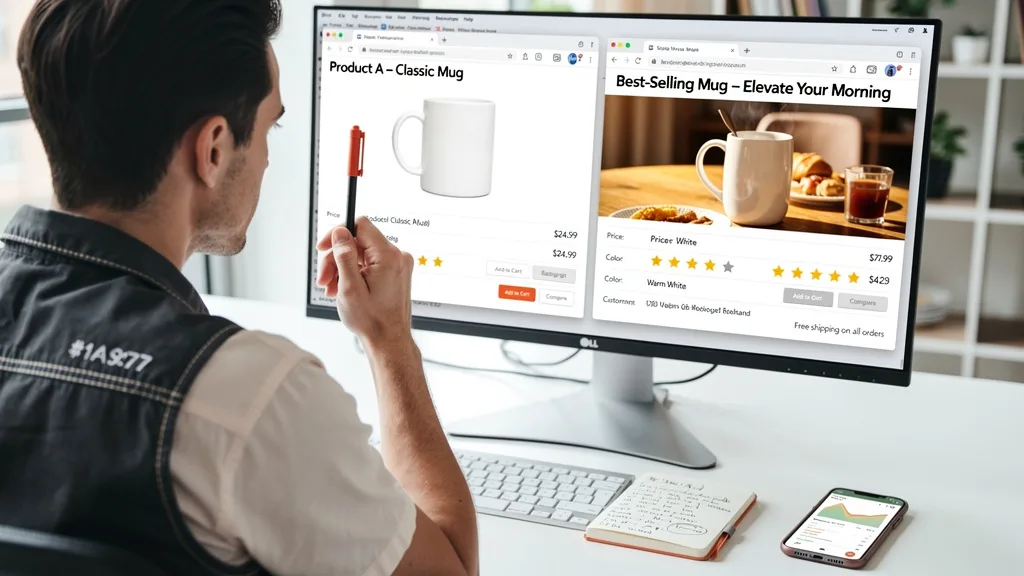
A successful SEO strategy ensures that the A10 algorithm understands exactly what your product is and considers it a relevant match for a wide range of customer queries. This involves meticulous keyword research to find what your customers are searching for and strategically placing those terms throughout your listing. It also involves influencing performance metrics that the algorithm values, creating a positive feedback loop where higher visibility leads to more sales, which in turn leads to even higher visibility.
Core Components of On-Page Amazon SEO
On-page Amazon SEO refers to all the optimization activities you perform directly on your product detail page. These are the foundational elements that tell the A10 algorithm how to categorize and rank your product. Getting these right is non-negotiable for gaining initial traction and building a sustainable presence in search results. Your primary focus here is keyword relevance and placement.
The most critical on-page elements include:
- Product Title: The single most important place for your top keywords. It should be readable, informative, and packed with the most relevant search terms.
- Backend Search Terms: These hidden keywords are invisible to customers but are indexed by Amazon. This is the place for synonyms, long-tail variations, and competitor terms you couldn't fit in your visible copy.
- Bullet Points (Key Product Features): A prime area to embed secondary keywords while highlighting your product's key benefits and features to engage shoppers.
- Product Description and A+ Content: While having a lesser weight for keyword ranking, this area allows you to use long-tail keywords and answer customer questions, which contributes to relevance signals.
Understanding Off-Page Amazon SEO Factors
Off-page Amazon SEO includes all the factors that influence your ranking but occur outside of your direct listing content. These are primarily performance and authority signals that show the A10 algorithm that customers not only find your product but also like it and buy it. These factors are powerful because they are based on real customer behavior, which Amazon considers the ultimate proof of a product's quality and desirability.
Key off-page factors include sales velocity, which is the speed and volume of your sales over time. A strong sales history proves to Amazon that your product is popular. Customer reviews and seller feedback also play a huge role in building trust and authority. Furthermore, your click-through rate (CTR) from the search results page and your conversion rate on the detail page are critical. A high conversion rate is the strongest signal you can send that your product satisfies customer needs, which directly boosts your organic ranking. Even your Amazon PPC management strategy influences off-page SEO, as paid sales contribute to overall sales history and can improve organic rank.
What Is Amazon Listing Optimization? A Focused Approach
If Amazon SEO is about getting found, Amazon listing optimization is about getting chosen. This is the art and science of refining every element of your product detail page to persuade visitors to click the "Add to Cart" button. While SEO casts a wide net to attract shoppers, optimization focuses on the crucial moment when a potential buyer is on your page, evaluating whether your product is the right solution for their needs. It is entirely focused on maximizing your conversion rate.
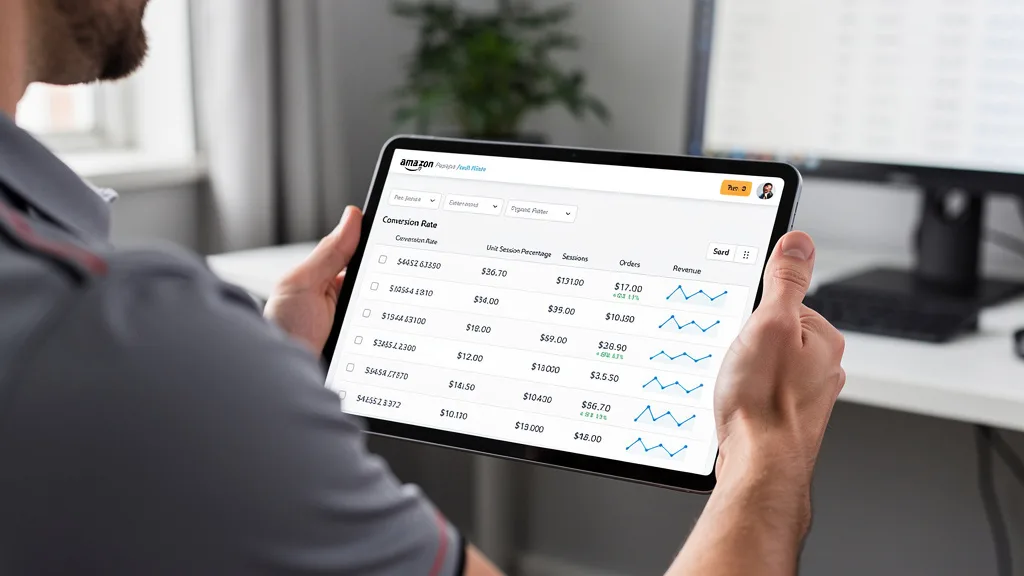
A fully optimized listing does more than just present facts; it tells a story, builds trust, and overcomes objections. It uses high-quality visuals and compelling copy to create an emotional connection with the shopper. In the context of the Amazon Listing Optimization vs SEO What's the Difference? debate, optimization is what monetizes the traffic that SEO generates. Without strong optimization, even a top-ranking product will fail to achieve its full sales potential, leading to wasted ad spend and a declining sales velocity over time.
Optimizing for Relevance and Keywords
While keyword integration is a core part of SEO, its role in listing optimization is more nuanced. Here, the goal isn't just to include keywords for the algorithm but to use them to create a highly relevant and persuasive experience for the human shopper. This means weaving your researched keywords into benefit-driven copy that speaks directly to the customer's pain points and desires. The title must grab attention, and the bullet points must quickly answer the question, "What's in it for me?"
This is where you move beyond simple keyword placement and focus on crafting compelling narratives. Your copy should use the customer's language, mirroring the terms they use to search and describe their problems. By doing this, you not only reinforce relevance for the A10 algorithm but also build immediate rapport with the shopper. They feel understood, which increases their confidence in your product and their likelihood to convert. The ultimate goal is a listing that is both algorithmically sound and psychologically persuasive.
Optimizing for Conversion and Customer Engagement
This is where the magic of listing optimization truly happens. Beyond text, this aspect focuses on the visual and interactive elements that drive customer engagement and purchase decisions. High-quality product imagery is paramount. Your main image must be scroll-stopping, and your secondary images should showcase the product from all angles, highlight key features, demonstrate its use in a lifestyle context, and provide important information like size or scale.
Furthermore, A+ Content (or Premium A+ for brand-registered sellers) is a powerful tool for conversion. It allows you to use rich media, comparison charts, and branded storytelling to differentiate your product from competitors and build a premium brand perception. Adding a product video can increase conversion rates significantly by demonstrating the product in action. Finally, actively managing your customer questions section and responding to reviews shows that you are an engaged seller, which builds trust and helps convert shoppers who are on the fence. You can learn more in our complete Amazon listing optimization guide.
Amazon SEO vs. Listing Optimization: The Core Differences
For Amazon sellers aiming to scale, understanding the distinction between SEO and listing optimization is critical. While they are interconnected, they have different goals, metrics, and timelines. Confusing the two can lead to a disjointed strategy where you get traffic but no sales, or you have a beautiful listing that no one ever sees. The key is to see them as two separate disciplines that must work in perfect harmony.

To clarify these differences, let's break them down by their primary scope, goals, and impact. This comparison will help you allocate your resources effectively and build a holistic strategy that drives both visibility and profitability.
| Aspect | Amazon SEO | Amazon Listing Optimization |
|---|---|---|
| Primary Goal | Increase visibility and organic traffic by ranking higher in search results. | Increase sales and profitability by converting visitors into customers. |
| Focus | Algorithm-facing: Keywords, relevance signals, search performance. | Customer-facing: Persuasion, trust-building, user experience. |
| Key Metrics | Keyword Rank, Organic Impressions, Click-Through Rate (CTR), Organic Sessions. | Conversion Rate (CVR), Unit Session Percentage, Add to Carts, Sales, Profit. |
| Core Activities | Keyword research, title and backend optimization, monitoring rank. | Copywriting, A/B testing images, creating A+ Content, managing reviews. |
| Timeline | Long-term strategy; results build gradually over weeks and months. | Can produce short-term wins; changes can impact conversion rates quickly. |
Scope and Focus: Broad Visibility vs. Page-Level Conversion
The most fundamental difference lies in their scope. Amazon SEO has a broad focus: it's concerned with your product's performance across the entire Amazon search ecosystem. The goal is to make your product visible to the largest possible audience of relevant shoppers. It answers the question: "How can more people find my product?" The focus is on satisfying the A10 algorithm's requirements for relevance and performance to earn a top spot in search.
Listing optimization, in contrast, has a narrow and deep focus. Its scope is confined to the product detail page itself. It takes over once a shopper clicks on your product from the search results. Its goal is to provide a compelling, frictionless experience that guides the visitor from consideration to purchase. It answers the question: "How can I convince this person to buy my product right now?" The focus is entirely on the human shopper's psychology and decision-making process.
Primary Goals and Key Performance Metrics
Because their goals are different, you must use different Key Performance Indicators (KPIs) to measure their success. For Amazon SEO, the primary goal is to improve search ranking. Success is measured by tracking your keyword rank for target terms, the number of organic impressions your listing receives, and your click-through rate (CTR) from the search results page. A rising rank and increasing impressions mean your SEO efforts are working.
For listing optimization, the primary goal is to increase the conversion rate (also known as Unit Session Percentage). Success is measured by your CVR, total sales, and ultimately, profit. If you make changes to your images or bullet points and see your conversion rate increase from 10% to 15%, your optimization efforts are successful. While SEO brings people to the door, optimization is what determines how many of them actually come inside and make a purchase.
Timeline and Impact: Short-Term Gains vs. Long-Term Authority
The timeline for seeing results also differs significantly. Listing optimization can often produce quick wins. For example, changing your main image to one that is more eye-catching or rewriting your title to be more benefit-oriented can sometimes lead to an almost immediate lift in CTR and conversion rate. You can often see the impact of these changes within days or weeks.
Amazon SEO, however, is a long-term investment. Building authority and climbing the search rankings takes time and consistent effort. It involves accumulating sales history, gathering reviews, and proving to the algorithm over months that your product is a top performer. While you might see small shifts, significant, lasting improvements in organic rank for competitive keywords typically take 3-6 months to materialize. SEO is a marathon, not a sprint.
Why Both Are Essential for Your Success in 2026
In the competitive landscape of 2026, you cannot choose between Amazon SEO and listing optimization. They are two halves of a whole, and neglecting one will cripple the other. Driving a huge amount of traffic to a poorly optimized listing that doesn't convert is like pouring water into a leaky bucket. You'll see high impressions but low sales, and your A10 rank will eventually suffer because of the poor conversion rate.
Treating Amazon SEO and listing optimization as separate tasks is a 7-figure mistake. SEO brings the horse to water; optimization makes it drink. For 8-figure growth, you need to master both.
Conversely, having the world's most beautiful, persuasive product page is useless if no one ever sees it. Without a solid SEO foundation, your perfectly optimized listing will be buried on page 10 of the search results, invisible to the vast majority of potential customers. True success on Amazon is only possible when a steady stream of qualified traffic from your SEO efforts is met with a high-converting listing that maximizes the value of every single visitor.
A Unified Framework for Optimization and SEO
Instead of viewing them as separate tasks, successful 8-figure brands integrate SEO and optimization into a single, unified workflow. This holistic approach ensures that your efforts are aligned and build on each other, creating a powerful growth engine for your brand. This framework can be broken down into three core steps that cycle continuously.
This process begins with deep research, moves to implementation on the listing itself, and is finalized by driving the performance signals that the algorithm needs to see. By following this structured approach, you ensure no stone is left unturned and that your strategy is both data-driven and customer-centric, setting you up for sustainable, profitable growth.
Step 1: Comprehensive Keyword and Competitor Research
Everything starts with understanding the landscape. This foundational step involves using advanced tools to identify the full spectrum of keywords your target customers are using. This includes high-volume "head" terms, specific long-tail phrases, and everything in between. It's not just about finding keywords; it's about understanding the intent behind them. What problem is the customer trying to solve?
At the same time, you must conduct a thorough analysis of your top competitors. What keywords are they ranking for? What does their pricing and review strategy look like? How are they using images and A+ Content? This research provides the raw data for your entire strategy, informing both the keywords you'll target for SEO and the angles you'll use in your copy to outperform competitors. Our in-depth Amazon SEO guide can walk you through this process.
Step 2: Crafting a Fully Optimized Product Listing
With your research complete, you can now build or refine your product listing. This is where SEO and optimization merge. You'll strategically weave your target keywords into the title, bullet points, description, and backend search terms to maximize SEO relevance. This is the technical part of the process.
Simultaneously, you'll apply optimization principles to craft compelling, benefit-driven copy that resonates with your ideal customer. You'll create a stunning set of product images and a video that tells your product's story and builds trust. You will design A+ Content that reinforces your brand and handles common objections. The end result should be a product page that is perfectly optimized for both the A10 algorithm and the human shopper.
Step 3: Building Performance Signals and Sales Velocity
A perfectly optimized listing is not enough; you need to prove its worth to the A10 algorithm. This step is about generating the performance signals that drive ranking. The most effective way to do this is through a strategic product launch or promotion, often powered by Amazon SEO vs PPC campaigns. PPC allows you to instantly drive targeted traffic to your new listing, generating those crucial initial sales.
These initial sales create sales velocity, which is a powerful ranking signal. As sales increase, you should also have a system in place to encourage customer reviews, which builds social proof and further boosts your conversion rate. You might also drive external traffic from social media or email lists to supplement your on-Amazon efforts. This step kickstarts the positive feedback loop: sales improve rank, which leads to more organic visibility, which drives more sales.
Common Mistakes to Avoid in Your Amazon Strategy
Even with a solid framework, it's easy to make mistakes that can sabotage your growth. One of the most common is keyword stuffing, where sellers cram unnatural keywords into their listings, making them unreadable and hurting the customer experience. Another is neglecting visual assets; low-quality images are a primary reason for low conversion rates. Many sellers also forget to optimize their backend search terms, leaving valuable ranking potential on the table.
Another critical error is a "set it and forget it" mentality. The Amazon marketplace is dynamic, with competitors and algorithms constantly changing. You must regularly monitor your performance, track your keyword rankings, and continually test new images, copy, and pricing strategies. Failing to perform a regular Amazon PPC audit or listing review will cause your performance to degrade over time. Finally, many sellers focus too much on traffic and not enough on conversion, leading to a high Advertising Cost of Sale (ACoS) and low profitability.
Key Takeaways
To scale your Amazon brand from seven to eight figures, you must master the relationship between SEO and listing optimization. Here are the most important points to remember:
- Different Goals: Amazon SEO is for discoverability and traffic. Listing Optimization is for persuasion and conversion.
- Different Metrics: Measure SEO with keyword rank and impressions. Measure optimization with conversion rate and sales.
- Synergistic Relationship: They are not mutually exclusive. Great SEO is wasted without great optimization, and a great listing is useless if no one sees it.
- A10 Algorithm Focus: Amazon's algorithm prioritizes products that are both highly relevant (SEO) and have a proven history of converting customers (Optimization).
- Unified Workflow: The most successful sellers integrate both into a continuous cycle of research, implementation, and performance marketing.
- Customer is King: While SEO targets the algorithm, both disciplines ultimately serve the customer. A listing that delights customers will be rewarded by Amazon.
Frequently Asked Questions
Is SEO optimization still a thing on Amazon?
Yes, absolutely. In 2026, Amazon SEO is more critical than ever. With increasing competition on the platform, having a strong SEO strategy is the only way to ensure your products are visible to potential customers in organic search results. Without it, you are essentially invisible to the majority of shoppers and will be forced to rely entirely on paid advertising, which is not a sustainable model for profitable growth.
SEO is the foundation upon which all other success is built. It ensures you attract qualified traffic, and it provides the A10 algorithm with the relevance signals needed to understand and rank your product. It is not an optional task but a fundamental requirement for any serious Amazon seller.
Which Amazon listing optimization service is the best?
The best Amazon listing optimization service is one that goes beyond simply writing copy and instead acts as a strategic growth partner. Look for a service or consultant with a proven track record of scaling brands to the 8-figure level. They should have a profit-first methodology, focusing on metrics like conversion rate and Unit Session Percentage, not just vanity metrics like traffic.
A top-tier service will use a data-driven approach, combining deep keyword research, competitor analysis, and customer psychology to craft listings that convert. They should offer transparent reporting and be able to explain how their changes directly impact your sales and profitability. The best service is a partner who understands your business goals and has the expertise to achieve them.
How does Amazon SEO differ from Google SEO?
The biggest difference is search intent. Google is primarily an informational search engine where users look for answers, while Amazon is a transactional search engine where users have high buyer intent. Consequently, their algorithms prioritize different factors. Google values backlinks, domain authority, and content depth, whereas Amazon's A10 algorithm heavily prioritizes sales-related metrics like conversion rate, sales velocity, and customer reviews.
While both use keywords, the application is different. On Amazon, conversion rate is a direct ranking factor; a product that converts well will rank higher. On Google, conversion rate is an indirect signal. Therefore, strategies that work for Google, like extensive blog content, do not directly translate to success on Amazon's product-focused platform. You can learn more about this by watching A Simple Guide to What works on Amazon.
What are the main types of SEO for e-commerce?
For e-commerce, particularly on a platform like Amazon, SEO can be broken down into three main categories. First is On-Page SEO, which involves optimizing elements on your product page like the title, bullet points, and description with relevant keywords. Second is Off-Page SEO, which includes factors that build your product's authority and performance, such as sales velocity, customer reviews, and signals from PPC campaigns.
The third is Technical SEO. On a personal website, this would involve site speed and mobile-friendliness. On Amazon, this is largely handled by the platform, but sellers can influence it by ensuring their listings are properly indexed, have no suppressed ASINs, and use features like A+ Content correctly. A comprehensive strategy addresses all three areas to maximize visibility and authority.
How long does it take to see results from Amazon SEO?
The timeline for Amazon SEO results varies. You may see initial movement in keyword rankings for less competitive, long-tail terms within a few weeks of optimizing your listing. However, for significant, stable ranking improvements on high-volume, competitive keywords, it is a much longer game. Most sellers should expect to see meaningful results within 3 to 6 months of consistent effort.
This timeframe is because Amazon's algorithm needs to collect data over time to trust your product. It looks for sustained sales velocity and a positive trend in conversion rates and reviews. Quick fixes do not build long-term authority. Patience and a consistent, data-driven strategy are key to winning the long-term SEO game on Amazon.
Conclusion
Ultimately, the debate over Amazon Listing Optimization vs SEO What's the Difference? reveals a simple truth: you cannot have one without the other. They are two essential pillars supporting the same goal of profitable growth. Amazon SEO is your engine for discovery, ensuring a constant flow of potential customers find your products. Listing optimization is your conversion machine, turning that traffic into sales with maximum efficiency.
For 7-figure brand owners aiming for the next level, mastering this synergy is the key to unlocking scalable growth. It requires moving beyond simple tactics and adopting a holistic framework that begins with deep research, translates into a perfectly crafted listing, and is powered by performance-driving activities like PPC and review generation. This integrated approach is what separates stagnant brands from market leaders.
By understanding that SEO brings the traffic and optimization closes the deal, you can build a powerful, self-reinforcing system. Higher conversion rates from optimization tell the A10 algorithm your product is a winner, which boosts your SEO ranking, leading to even more traffic. This is the flywheel that will carry your brand to 8-figures and beyond in 2026.
If you're ready to stop leaving money on the table and implement a unified strategy that drives both traffic and profitable conversions, it may be time for an expert review. We can analyze your current listings to identify the critical gaps in your SEO and optimization efforts. Get started with a complimentary Free Audit today.