Table of Contents 10 sections
Key LinkedIn Features for Amazon Sellers to Drive Sales in 2026
Are you leveraging every possible tool to scale your Amazon business from seven to eight figures? While you focus on PPC and listing optimization, a powerful networking and brand-building platform often goes underutilized. LinkedIn is more than just a resume site; it's a strategic asset for serious brand owners.
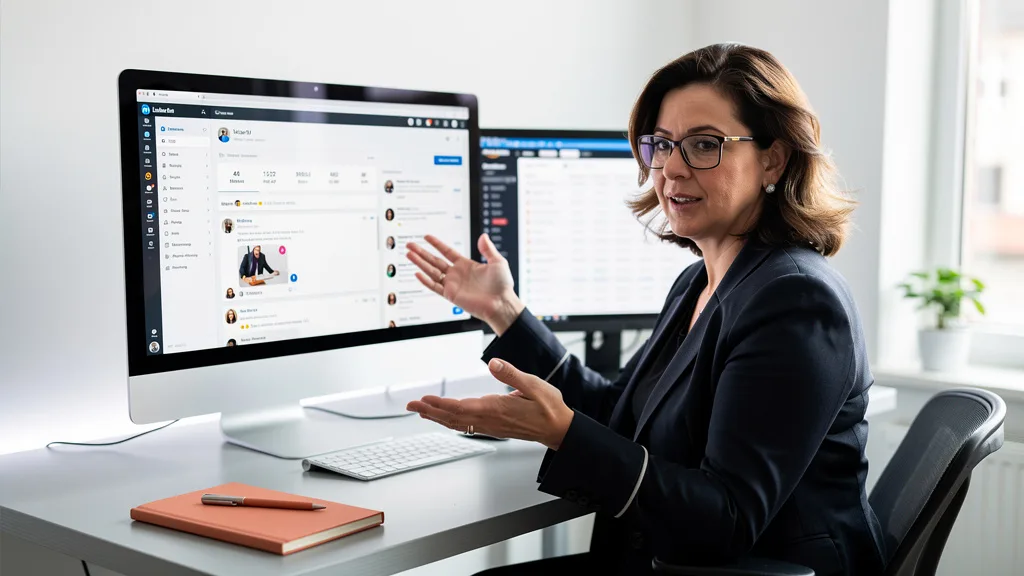
The most helpful LinkedIn features for Amazon sellers include optimized Personal Profiles for credibility, Company Pages to showcase products, content publishing tools like Articles and posts to establish expertise, and LinkedIn Groups for networking with suppliers and partners. These features work together to build brand authority, foster B2B connections, and drive off-Amazon traffic and awareness, contributing to long-term growth.
Why LinkedIn Is a Powerful Tool for Amazon Sellers
LinkedIn offers a unique environment where you can build professional credibility that extends beyond the Amazon marketplace. Unlike customer-facing platforms like Instagram or TikTok, LinkedIn allows you to connect with industry peers, potential B2B clients, suppliers, and even future employees. For an Amazon seller, this professional network is an invaluable resource for sourcing, logistics, and staying ahead of industry trends.

Furthermore, the platform serves as a powerful tool for building brand authority. By sharing insights about your niche, your journey as an entrepreneur, and the values behind your brand, you create a narrative that resonates on a deeper level. This brand story helps differentiate you in a crowded marketplace, making your products more memorable and attractive to both B2C shoppers and potential B2B partners who discover you through the platform.
Optimize Your Personal Profile to Build Credibility
Your personal LinkedIn profile is your digital business card and the foundation of your professional brand. Before you even think about outreach or content, this profile must communicate your expertise and success instantly. For Amazon sellers, this means positioning yourself not just as a retailer, but as a brand builder, a product expert, and a leader in your specific niche. A polished and professional profile is the first step toward building trust with potential partners, suppliers, and high-value customers.
Craft a Standout Headline and Summary
Your headline is the first thing people see. Instead of a generic title like "Amazon Seller," be specific and value-driven. Consider something like, "8-Figure Amazon Brand Builder | Scaling CPG Brands with Sustainable Products" or "Founder of [Your Brand] | Expert in High-Performance Outdoor Gear on Amazon." This immediately tells visitors who you are, what you do, and the value you bring. It's essential to craft standout headlines that capture attention.
Your summary, or "About" section, is where you tell your story. Don't just list your skills. Explain your mission, your passion for your product category, and your commitment to a positive customer experience. This is your chance to connect on a human level. Share a brief story about why you started your brand and what problems you solve for your customers. This narrative helps build an emotional connection and makes your profile more memorable.
Showcase Your Experience and Success Stories
The "Experience" section should detail your journey as an Amazon brand owner. For your current role at your brand, use bullet points to highlight key achievements. Instead of just stating responsibilities, quantify your success. For example, use metrics like "Grew brand revenue from $1M to $5M in 24 months" or "Achieved and maintained a 4.8-star seller rating with over 5,000 reviews."
Use the "Featured" section to add rich media that validates your success. You can link to your brand's website, a popular product listing on Amazon, a media feature, or a case study. Visual proof of your brand's quality and success is far more impactful than text alone. This section acts as a portfolio, giving visitors tangible evidence of your capabilities and the quality of your products.
Leverage a LinkedIn Company Page for Your Brand
While your personal profile builds your individual authority, a LinkedIn Company Page establishes your brand's official presence. This page acts as a central hub for your business, allowing you to share company news, highlight products, and attract followers who are interested in your brand's journey. It legitimizes your business in a professional context and provides a platform to communicate directly with a B2B audience, including potential retail partners or corporate buyers.
Highlight Your Products and Customer Experience
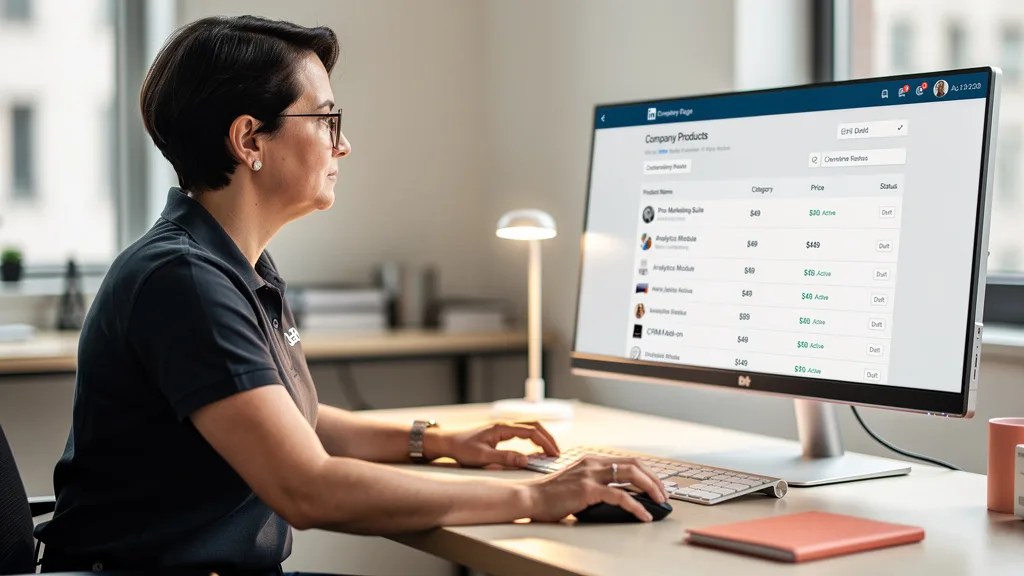
Your Company Page is the perfect place to showcase your products in a professional light. Use the "Products" tab to create dedicated pages for your key items, complete with high-quality images, detailed descriptions, and links to your Amazon listings. Unlike Amazon's transactional environment, here you can focus on the story behind the product: the design process, the materials used, and the problem it solves. This helps build brand value beyond just price and features.

Use posts to share customer testimonials, user-generated content, and stories that illustrate the positive buyer experience. You can create short videos or graphics that showcase your products in action. Emphasizing top-notch service and the positive feelings your product creates can attract a loyal following and reinforce your brand's reputation for quality and customer satisfaction. An excellent Amazon listing optimization checklist can guide your content creation here as well.
Share Updates and Company Milestones
Keep your followers engaged by regularly sharing company updates. This could include hitting a sales milestone, launching a new product line, expanding into a new market like the UAE or Australia, or receiving a positive media mention. These updates build momentum and show that your brand is active and growing.
You can also share behind-the-scenes content about your team and company culture. Celebrating a work anniversary, highlighting a team member's contribution, or sharing your company's involvement in a community event humanizes your brand. This makes your company more relatable and attractive to potential employees, partners, and customers who value corporate responsibility and culture.
Create Engaging Content to Showcase Expertise
Content is the currency of LinkedIn. By consistently creating and sharing valuable, relevant content, you position yourself as a thought leader in your industry. This isn't about direct selling; it's about educating, informing, and engaging your audience. For an Amazon seller, this means sharing your expertise on e-commerce, product development, marketing, and the specific niche your brand operates in. This strategy attracts followers who are genuinely interested in your knowledge and, by extension, your brand.
"As a consultant scaling brands to 8 figures, I've seen firsthand how a strategic LinkedIn presence can unlock partnerships and build brand authority far beyond the Amazon marketplace. Consistently sharing your expertise transforms you from just another seller into a recognized industry leader." listing optimization.
Publish Articles on Industry Trends
LinkedIn Articles are a powerful feature for sharing long-form content. Use them to write about trends affecting your product category, challenges in the e-commerce world, or your predictions for the future of Amazon selling. For example, a seller of eco-friendly home goods could write an article on "The Rise of Sustainable Materials in Consumer Products for 2026."
These articles are indexed by search engines and can be discovered by people outside your immediate network, expanding your reach significantly. They establish deep subject matter authority and provide a valuable resource that you can share across other platforms. Publishing thoughtful articles demonstrates a commitment to your industry beyond just selling products. This is a great way to learn Amazon selling from LinkedIn posts and expert articles.
Post Behind-the-Scenes Visuals and Updates
Regular posts are perfect for shorter, more frequent updates. Share high-quality visuals like photos and short videos of your product development process, your team at work, or your products being unboxed. These behind-the-scenes glimpses build authenticity and trust, helping your audience feel more connected to your brand.
You can also post quick tips, ask questions to engage your audience, or share interesting news related to your industry. The key is consistency and providing value. Not every post needs to be a major announcement. Simple, authentic updates that show the human side of your business can be incredibly effective at building a loyal community around your brand.
Use LinkedIn Groups for Networking and Research
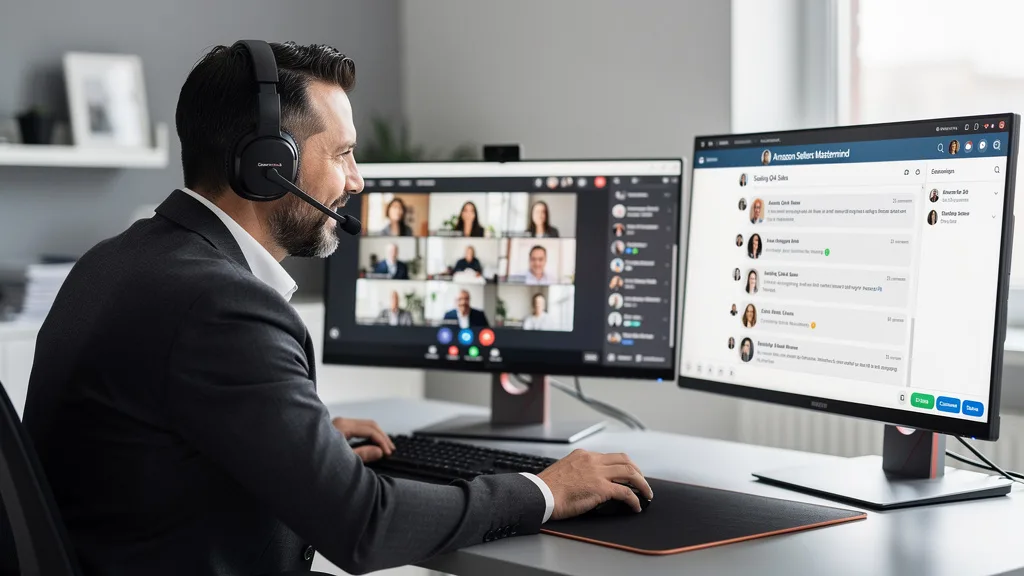
LinkedIn Groups are dedicated forums for professionals with shared interests, industries, or goals. For Amazon sellers, these groups are a goldmine of information, networking opportunities, and potential partnerships. Participating actively in relevant groups allows you to learn from others' experiences, ask for advice, and establish yourself as a helpful and knowledgeable member of the e-commerce community. This is a proactive way to build relationships that can lead to tangible business benefits.
Connect With Other Amazon Sellers
Joining groups for Amazon FBA sellers, private label brand owners, or e-commerce entrepreneurs allows you to connect with a community that understands your challenges. In these groups, you can discuss everything from new Amazon policies and PPC strategies to software recommendations and logistics hurdles. Engaging in these conversations helps you stay informed and build a support network.
By contributing valuable advice and insights, you can quickly build a reputation as an expert. This can lead to collaboration opportunities, guest post invitations, or even referrals. Remember to focus on providing value first rather than promoting your products directly. Authentic engagement is key to building meaningful connections.
Identify Potential Suppliers and Partners
LinkedIn is also an excellent tool for supply chain management. You can find and join groups related to manufacturing, sourcing, and logistics in your specific industry. This allows you to identify and vet potential new suppliers, 3PL providers, or freight forwarders. You can observe their interactions, see recommendations from other business owners, and make initial contact in a professional setting. what kind of features do.
Beyond suppliers, you can find potential marketing partners, affiliates, or even B2B customers. For example, if you sell office organization products, you could connect with office managers or corporate procurement specialists. This B2B outreach can open up new revenue streams and growth opportunities for your brand outside of the traditional Amazon B2C model. For those looking to expand, exploring Amazon B2B sales growth strategies can be highly effective.
Develop a Cohesive LinkedIn Strategy for Growth
Simply having a presence on LinkedIn is not enough; you need a clear, intentional strategy to achieve your business goals. A cohesive strategy ensures that your activities on the platform are purposeful and aligned with your brand's growth objectives. This involves defining what you want to achieve, creating a sustainable plan for content and engagement, and regularly measuring your results to refine your approach. Without a strategy, your efforts can become scattered and ineffective.
Define Your Goals on the Platform
What do you want to achieve with LinkedIn? Your goals will dictate your entire strategy. Are you looking to build brand awareness, generate B2B sales leads, recruit top talent, or establish yourself as an industry thought leader? Be specific. For example, a goal could be "Connect with 20 potential suppliers in my niche within the next quarter" or "Increase followers on my Company Page by 25% in six months."
Clearly defined goals help you focus your efforts. If your goal is B2B lead generation, you'll spend more time identifying and connecting with potential corporate buyers. If it's thought leadership, your focus will be on publishing high-quality articles and engaging in industry discussions. Knowing your destination is the first step in drawing the map to get there.
Create a Consistent Content and Engagement Schedule
Consistency is the most critical factor for success on LinkedIn. The algorithm favors users who are active regularly. Create a content calendar that outlines what you will post and when. Aim for a mix of content types: personal insights, company news, industry articles, and engaging questions. You don't need to post every day, but a consistent schedule of 2-3 times per week is a good starting point.
Engagement is a two-way street. Block out time in your schedule each day to interact with your network. This includes responding to comments on your posts, commenting on others' content, and participating in group discussions. This active engagement shows that you are a genuine member of the community, not just a broadcaster, which helps build stronger relationships and increases your visibility.
| Content Type | Primary Goal | Frequency | Example for an Amazon Seller |
|---|---|---|---|
| Personal Insight Post | Build Personal Brand & Authenticity | 1-2 times/week | Sharing a lesson learned from a recent product launch or a supply chain challenge. |
| LinkedIn Article | Establish Thought Leadership | 1-2 times/month | A 1,000-word analysis of how AI is changing Amazon PPC management. |
| Company Page Update | Promote Brand & Culture | 2-3 times/week | Announcing a new product feature or highlighting a positive customer review. |
| Video Content | Increase Engagement & Showcase Products | 1 time/week | A short behind-the-scenes video of your product being manufactured or packaged. |
| Group Engagement | Networking & Research | Daily | Answering a question about international shipping in an FBA sellers group. |
Measure Your Performance and Refine Your Approach
LinkedIn provides analytics for both your personal profile and your Company Page. Regularly review these metrics to understand what's working and what isn't. Key metrics to track include post views, engagement rate (likes, comments, shares), profile views, and follower growth. Pay attention to which types of content receive the most engagement and which posts drive the most traffic to your website or Amazon listings.
Use these insights to refine your strategy. If you notice that video posts get twice the engagement of text-only posts, prioritize creating more video content. If an article on a particular topic goes viral, consider writing a follow-up piece. This data-driven approach to data management ensures that you are continuously optimizing your efforts for the best possible results, turning your LinkedIn presence into a predictable growth engine for your Amazon brand.
Key Takeaways
For Amazon sellers aiming to scale, LinkedIn is an indispensable tool for building brand authority and professional networks beyond the confines of the Amazon marketplace. Success on the platform hinges on a multi-faceted approach that integrates personal branding with corporate messaging. By implementing these strategies, you can transform your LinkedIn presence from a passive profile into an active asset that drives tangible business growth.
- Optimize Your Profile: Your personal profile is your foundation. Use a value-driven headline and a compelling summary to establish credibility and tell your brand's story.
- Leverage a Company Page: Create a dedicated page for your brand to showcase products, share milestones, and build a community of followers interested in your business.
- Create Valuable Content: Consistently publish articles and posts that demonstrate your expertise. Share behind-the-scenes visuals and industry insights to engage your audience and build authority.
- Network Strategically: Use LinkedIn Groups to connect with other sellers, suppliers, and potential partners. Focus on providing value to build meaningful professional relationships.
- Develop a Cohesive Strategy: Define clear goals, create a consistent content schedule, and use analytics to measure your performance and refine your approach for continuous improvement.
Frequently Asked Questions
What is the 95-5 rule on LinkedIn?
The 95-5 rule is a content strategy guideline suggesting that 95% of your content should be valuable, educational, or entertaining for your audience, while only 5% should be directly promotional or sales-oriented. This approach focuses on building trust and authority over the long term rather than immediate sales.
What other digital tools are helpful for Amazon sellers?
For an Amazon seller, this means most of your posts should be about industry trends, business lessons, or helpful tips related to your niche. Only occasionally should you post a direct link to your product. This builds a loyal audience that is more receptive when you do share a promotional post.
Can using LinkedIn directly increase my Amazon sales?
Beyond LinkedIn, successful Amazon sellers use a suite of digital tools to manage and grow their business. These often include inventory management software, keyword research tools for SEO and PPC, and analytics platforms. Many sellers are also turning to AI for help with everything from writing engaging descriptions to optimizing ad campaigns.
How much time should an Amazon seller spend on LinkedIn?
There are many automated software solutions available, and it's important to understand what kind of features do they offer to best suit your needs. Additionally, exploring the best AI tools for Amazon sellers can provide a significant competitive advantage in 2026 by improving efficiency and decision-making across your operations.
Does Jeff Bezos use LinkedIn?
While it's difficult to draw a direct line from a LinkedIn post to an Amazon sale, using the platform strategically can indirectly drive sales and long-term growth. LinkedIn helps by building brand awareness and trust. When a potential customer sees you as a credible expert, they are more likely to trust your products.
Additionally, LinkedIn can drive traffic to your off-Amazon assets, such as your brand's blog or website, where you can capture emails or direct customers to your Amazon store. The platform is also invaluable for securing B2B deals or retail partnerships that can lead to large, recurring orders, significantly boosting your overall revenue.
The amount of time depends on your goals, but consistency is more important than duration. A good starting point is to dedicate 15-30 minutes per day to LinkedIn. This time can be split between creating a post, engaging with your network's content (liking and commenting), and participating in one or two relevant groups.
You can be more efficient by batching your content creation, such as writing a week's worth of posts in one session and scheduling them. The key is to make it a regular habit. Consistent, focused effort over time will yield much better results than sporadic, lengthy sessions.
Yes, Jeff Bezos has a LinkedIn profile. However, he is not an active user on the platform. His profile exists primarily as a professional placeholder, listing his role at Amazon and his other ventures like Blue Origin and The Washington Post. He does not regularly post updates or engage with other users.
While it's an interesting piece of trivia, his activity (or lack thereof) shouldn't influence your strategy. For active brand builders and entrepreneurs, LinkedIn is a powerful engagement tool, and its value comes from active participation, not just having a profile.
Conclusion
Ultimately, the LinkedIn features that help Amazon sellers most are those that build credibility, foster connections, and establish brand authority. By transforming your profile into a resource, leveraging a Company Page to tell your brand's story, creating valuable content, and networking in Groups, you build a powerful asset that supports long-term, profitable growth. Your next step is to move from passive observation to active participation by implementing a consistent strategy that aligns with your scaling goals.
Ready to see how your brand's online presence stacks up and identify hidden growth opportunities? We help serious 7-figure Amazon sellers scale to 8 figures with profit-focused strategies. Get a comprehensive analysis of your listings and brand positioning. Claim your Free Audit today.