
Are you trying to scale your Amazon business but feel overwhelmed by outdated advice and generic courses? You can master the art of selling on Amazon by strategically using a platform you likely already have: LinkedIn. By following the right experts, decoding their content, and engaging intelligently, you can transform your LinkedIn feed into a powerful, real-time business education that drives profitable growth.
Learning how to learn Amazon selling from LinkedIn posts is about filtering signal from noise. It involves identifying genuine 7 and 8-figure sellers and consultants, analyzing their case studies for actionable tactics, and participating in professional communities. This approach provides current, real-world strategies for PPC, listing optimization, and scaling that you won't find in static courses, helping you stay ahead of platform changes and competition in 2026.
Why LinkedIn Is a Goldmine for Aspiring Amazon Sellers
LinkedIn has evolved far beyond a simple resume and job search platform. For the modern amazon seller, it has become an indispensable hub for high-level education, networking, and trend-spotting. Unlike forums that can be filled with anonymous, unverified advice, LinkedIn connects you directly to the profiles of proven consultants, brand owners, and even Amazon corporate employees. This transparency allows you to vet the source of information before you decide to trust and implement their strategies.
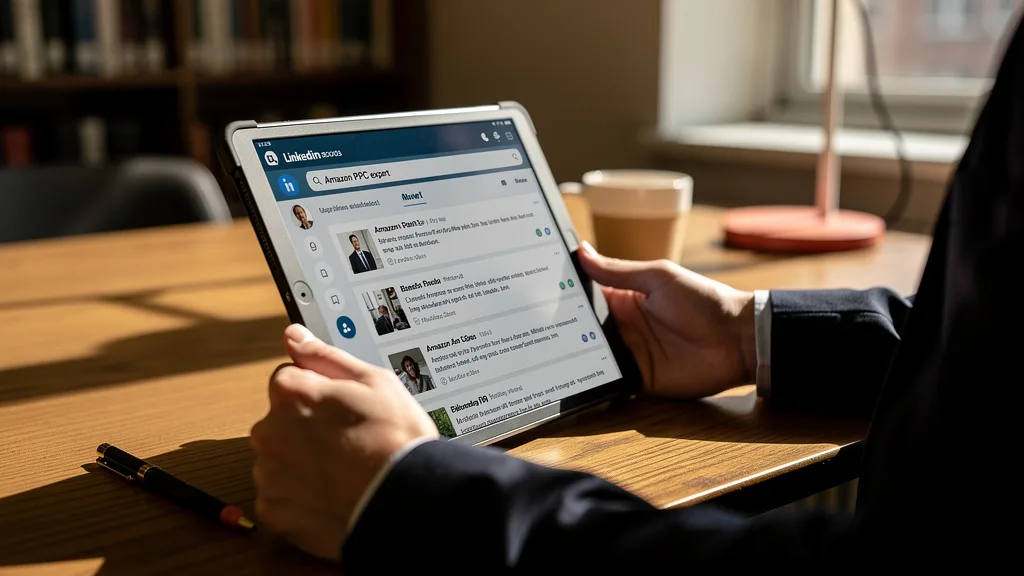
The platform's value lies in the quality and timeliness of the content. Top experts share real-time insights on algorithm changes, new advertising features, and supply chain solutions. You can find detailed breakdowns of successful product launches, profit-focused PPC campaigns, and advanced listing optimization techniques. This constant stream of fresh, actionable intelligence is critical for any seller aiming to scale from seven to eight figures in today's competitive marketplace.
How to Find Amazon Experts and Influencers on LinkedIn
Locating credible Amazon experts on LinkedIn is the first step toward building a valuable educational feed. A targeted approach will help you connect with professionals who share practical knowledge rather than just sales pitches. By refining your search and joining the right communities, you can curate a network that accelerates your learning curve.
Using LinkedIn Search to Find Seller Content
The LinkedIn search bar is your most powerful tool for discovery. Start with specific, long-tail keywords relevant to your challenges and goals. Instead of just searching for "Amazon seller," try more targeted phrases like "Amazon PPC expert," "FBA logistics," "Amazon listing optimization," or "8-figure Amazon brand owner." Use the "Content" filter to see posts related to these topics and the "People" filter to find individuals with these keywords in their headlines or job descriptions.

Pay attention to the hashtags used in relevant posts, such as #amazonfba, #amazonppc, or #ecommerce. Following these hashtags will automatically bring trending content and new expert voices into your feed. This method ensures you are consistently exposed to a diverse range of perspectives and strategies within the Amazon ecosystem.
Identifying Genuine Experts vs. Sales Pitches
Distinguishing authentic experts from perpetual salespeople is crucial for effective learning. A genuine expert provides value first, often sharing detailed insights, case studies with specific (even if anonymized) data, and actionable tips without demanding anything in return in every post. Their content aims to educate and build authority, trusting that business will follow from their demonstrated expertise.
Conversely, be wary of profiles that exclusively post motivational quotes, vague success claims without proof, and constant calls to book a discovery call. A credible consultant's feed will show a healthy mix of educational content, industry commentary, and professional engagement. Look for individuals who actively answer questions in their comments and participate in discussions, as this demonstrates a true passion for the industry and a willingness to help others succeed.
Joining Relevant Amazon Seller Groups and Communities
LinkedIn Groups are focused forums where you can ask specific questions and learn from the collective experience of other sellers. Search for groups like "Amazon FBA Sellers," "eCommerce Leaders," or "Private Label Brand Owners." When you join, take time to observe the quality of the conversation before you participate.
The best groups are actively moderated and feature discussions that go beyond basic questions. They are excellent places to get feedback on a specific problem, learn about new tools, and see what challenges sellers at different stages are facing. Participating thoughtfully in these groups not only provides answers but also helps you build your professional network and establish your presence as a serious seller online.
Decoding Content to Learn Amazon Selling Effectively
Once you've curated your feed with experts and groups, the next skill is to decode their content for maximum educational value. This means moving beyond passive scrolling and actively analyzing the information presented to extract strategies you can apply directly to your own Amazon business.
Analyzing Case Studies and Success Stories
Case studies are one of the most valuable content types on LinkedIn, but they require critical analysis. When an expert shares a success story, look past the headline revenue numbers. Focus on the "how": What specific changes did they make to the product listing? What was their PPC bidding strategy? How did they improve their conversion rate or ACoS? A good case study provides a glimpse into the process, not just the result.

Pay close attention to the metrics mentioned. If a post discusses improving ACoS, you can learn more about what is considered good with a complete Amazon ACoS guide. Save posts that detail a clear before-and-after scenario with specific, replicable actions. These are the gold nuggets that can inform your own experiments and strategic decisions.
Following Tactical Guides and How-To Posts
Many consultants and agencies share tactical guides directly in their LinkedIn posts, often as carousels or short articles. These posts break down complex processes into manageable steps, covering everything from keyword research to creating defensive ad campaigns. Look for guides that are specific, current, and provide clear instructions.
For example, a post might detail a 5-step process for optimizing a product title or a guide on setting up a new type of Sponsored Brands video ad. When you find a high-quality tactical post, don't just read it. Save it and, more importantly, schedule time to implement it. Applying these tactics is how you turn passive learning into active skill-building and tangible results for your business. An expert's Amazon PPC management strategy can provide a framework for your own campaigns.
Staying Current With Industry News and Amazon Updates
The Amazon marketplace is constantly changing, and LinkedIn is one of the fastest ways to learn about important updates. Top sellers and consultants are motivated to quickly understand and explain changes, from shifts in the A9 algorithm to new features in Seller Central. Following these experts is like having a team of analysts working for you.
When Amazon announces a new program or a change to its terms of service, look for posts from trusted experts that translate the corporate jargon into practical advice. They will often explain what the update means for sellers, what actions you need to take, and what opportunities or risks it presents. This real-time analysis, such as understanding how Amazon expands AI in Sponsored Ads, is crucial for staying compliant and competitive.
A Strategic Approach to Engaging With Content and Experts
Simply consuming content is not enough. To truly leverage LinkedIn, you must engage strategically with the material and the people who create it. This transforms you from a passive observer into an active participant in the professional Amazon community, unlocking deeper learning and valuable connections.
Applying the 4-1-1 Rule for Professional Networking
The 4-1-1 rule is a powerful guideline for building a positive professional presence on LinkedIn. For every six posts you make or share, four should be sharing valuable content from other experts in your field, one should be your own original (non-promotional) content, and only one should be a direct promotional post about your business or services. This approach establishes you as a helpful curator and a valuable member of the community, rather than just a self-promoter.

By sharing others' high-quality content, you build goodwill and get on the radar of the experts you follow. When you do share your own insights or ask questions, people will be more receptive. This balanced strategy is key to building authentic relationships that can lead to mentorship, partnerships, and advanced knowledge sharing.
"Effective networking on LinkedIn isn't about how loud you can shout; it's about how much value you can share. The 4-1-1 rule ensures you give more than you take, which is the foundation of any strong professional relationship and a key part of learning how to learn Amazon selling from LinkedIn posts."
Asking Smart Questions to Deepen Your Knowledge
Engaging with an expert's post is your opportunity to get free consulting. However, you must ask smart questions to get a valuable response. Avoid generic questions like "How do I start selling?" which can be easily Googled. Instead, ask specific, contextual questions that show you've understood their post and thought critically about it.
For example, if an expert posts about a successful PPC campaign, you could ask, "Thanks for sharing this case study. You mentioned using a 'Top of Search' placement strategy. Did you find that this significantly impacted your conversion rate compared to other placements for this specific product category?" This type of question is more likely to receive a detailed answer and can spark a valuable public discussion for everyone's benefit.
Saving and Organizing Key Posts for Future Reference
Your LinkedIn feed will quickly become a firehose of information. To prevent valuable insights from getting lost, use the "Save" feature on LinkedIn to bookmark important posts. Click the three dots in the top-right corner of a post and select "Save." This adds the post to a private list you can access later from your profile.
For even better organization, consider using a third-party tool like Evernote, Notion, or even a simple spreadsheet. Create categories like "PPC Strategies," "Listing Optimization," and "Supply Chain Tips." When you find a great post, save the link and add your own notes about the key takeaways. This creates a personalized, searchable knowledge base of proven Amazon strategies that you can refer back to as you grow your business.
Top Amazon Seller Influencers to Follow on LinkedIn in 2026
Identifying the right people to follow is essential for curating a high-value feed. Instead of focusing on specific names which can change, it's more effective to look for archetypes of experts who provide different types of value. The table below outlines key influencer types to seek out in 2026 to get a well-rounded education on Amazon selling.
| Expert Archetype | What They Post | Why You Should Follow Them |
|---|---|---|
| The PPC Specialist | Detailed breakdowns of campaign structures, bid optimization tactics, new ad formats, and ACoS/TACOS analysis. | To master the most critical and complex part of Amazon advertising and drive profitable sales. |
| The 8-Figure Brand Owner | High-level strategy on scaling, team building, brand positioning, and exiting a business. | To learn the mindset and operational systems required to scale beyond the 7-figure mark. |
| The Logistics & Supply Chain Guru | Updates on FBA fees, inventory management strategies, 3PL recommendations, and international shipping. | To optimize your operations, protect your profit margins, and avoid costly stockouts. |
| The Agency/Consultant | Case studies from multiple client accounts, industry-wide trends, and tactical guides. | To gain a broad perspective across different niches and benefit from a team's collective knowledge. |
| The Amazon Insider | Official announcements, explanations of new policies, and participation in programs like Amazon Accelerate. | To get information directly from the source and understand the "why" behind platform changes. |
Common Pitfalls to Avoid When Learning on Social Media
While LinkedIn is a fantastic resource, it's not without its pitfalls. Aspiring sellers must navigate the platform with a healthy dose of skepticism and critical thinking to avoid common traps that can lead to wasted time and money. The first and most significant danger is the prevalence of "get-rich-quick" narratives. Be highly skeptical of anyone promising easy, passive income or guaranteed success on Amazon. Building a real business takes capital, hard work, and a deep understanding of the market.
Another pitfall is focusing on vanity metrics. Impressive revenue numbers shared in a post mean nothing without the context of profit margin, ad spend, and return on investment. A seller boasting $1 million in sales could be losing money. Always look for discussions around profitability, contribution margin, and TACOS (Total Advertising Cost of Sale) to identify experts who are focused on building sustainable, healthy businesses. True success is measured in profit, not just revenue.
Key Takeaways
Learning how to sell on Amazon effectively using LinkedIn requires a strategic and disciplined approach. By focusing on the right people and content, you can turn the platform into a powerful, real-time educational tool. Here are the key takeaways to remember:
- LinkedIn is a professional education hub: It offers direct access to vetted experts, consultants, and 8-figure brand owners who share timely, actionable advice on everything from PPC to logistics.
- Curation is key: Use targeted searches and follow relevant hashtags to build a feed of high-value content. Learn to distinguish genuine experts who provide value from those who only post sales pitches.
- Analyze, don't just consume: Actively decode case studies to understand the strategy behind the results. Focus on replicable tactics and posts that discuss profit and key performance metrics, not just revenue.
- Engage strategically: Use the 4-1-1 rule to build your professional presence. Ask specific, thoughtful questions in comments to get free, high-level advice from top performers in the industry.
- Organize your learning: Use LinkedIn's "Save" feature and external note-taking apps to create a personal, searchable knowledge base of proven strategies for future reference.
Frequently Asked Questions
Can I make $1000 a month selling on Amazon?
Yes, making $1000 a month in profit from selling on Amazon is an achievable goal for many new sellers, but it requires dedication, capital, and a solid strategy. It is not a passive or guaranteed income source. Success depends on factors like product selection, sourcing costs, competition, and your ability to effectively market your product through tools like Amazon PPC.
Is there a course that teaches you how to sell on Amazon?
Reaching this milestone typically involves thorough product research to find a profitable niche, investing in initial inventory, optimizing your product listing for conversions, and managing advertising spend carefully. Following experts on LinkedIn can help you learn the specific tactics needed to improve your chances of success and avoid common, costly mistakes that new sellers often make.
How can you make money on Amazon without selling physical products?
Yes, there are many courses available that teach you how to sell on Amazon, ranging from free resources to expensive multi-day programs. A great place to start is the official Amazon Seller University, which provides a wealth of free training videos and articles directly from Amazon.
What are the best LinkedIn groups for new Amazon sellers?
While structured courses can provide a good foundation, they often become outdated quickly. Supplementing any course with real-time learning from LinkedIn is essential. The strategies and data shared by active, successful sellers on LinkedIn provide the most current insights into what is working on the platform right now in 2026, which is something a pre-recorded course cannot offer.
There are several ways to generate income on Amazon without handling physical inventory. One popular method is Amazon's Merch on Demand, where you upload designs for t-shirts and other products, and Amazon handles all the printing, shipping, and customer service, paying you a royalty on each sale. Another option is Kindle Direct Publishing (KDP), which allows you to self-publish e-books and paperbacks with no upfront cost.
Additionally, you can join the Amazon Associates program, which is their affiliate marketing platform. By recommending products and linking to them from your blog, social media, or YouTube channel, you earn a commission on qualifying purchases made through your links. These methods offer a lower barrier to entry compared to private label selling, though they come with their own unique challenges and strategies for success.
The best LinkedIn groups for new Amazon sellers are those that are active, well-moderated, and focused on sharing practical advice. Instead of looking for one single "best" group, search for a few that match your business model. Use search terms like "Amazon FBA Sellers," "Amazon Private Label," "eCommerce Strategy," and "Amazon PPC Advertising."
When you find a potential group, review its recent posts. Look for substantive discussions, helpful answers from experienced members, and moderation that keeps spam and self-promotion in check. A quality group will have members asking specific questions and receiving detailed, actionable answers from a community of their peers and established experts.
Conclusion
Mastering the Amazon marketplace is an ongoing process, not a one-time course. By leveraging LinkedIn, you can create a dynamic and powerful learning environment that keeps you at the forefront of the industry. The key to successfully learning how to learn Amazon selling from LinkedIn posts is to move from passive consumption to active, strategic engagement. This means curating your feed with genuine experts, critically analyzing their content for actionable strategies, and participating in the community by sharing value and asking intelligent questions.
The actionable takeaways from this guide are simple but transformative. First, build a network based on value, following specialists in PPC, logistics, and branding. Second, analyze every case study for the process, not just the impressive revenue numbers. Finally, use organizational tools to save and categorize key insights, creating a personalized playbook for your brand's growth. This disciplined approach will provide you with a real-world business education that far surpasses any static training material.
While self-education on LinkedIn is powerful, applying these advanced strategies correctly can be daunting, especially when you are scaling a 7-figure brand. An expert eye can help you interpret the data, prioritize actions, and avoid costly implementation errors. If you're a serious brand owner ready to accelerate your growth with a profit-focused approach, getting a professional analysis of your current standing is the logical next step. A comprehensive audit can reveal hidden opportunities and provide a clear roadmap for scaling to 8 figures.
Ready to see what's possible for your brand? I offer a detailed analysis of your listings, PPC, and overall account health to identify your biggest opportunities for profitable growth. Get your no-obligation Free Audit today.