Table of Contents 9 sections
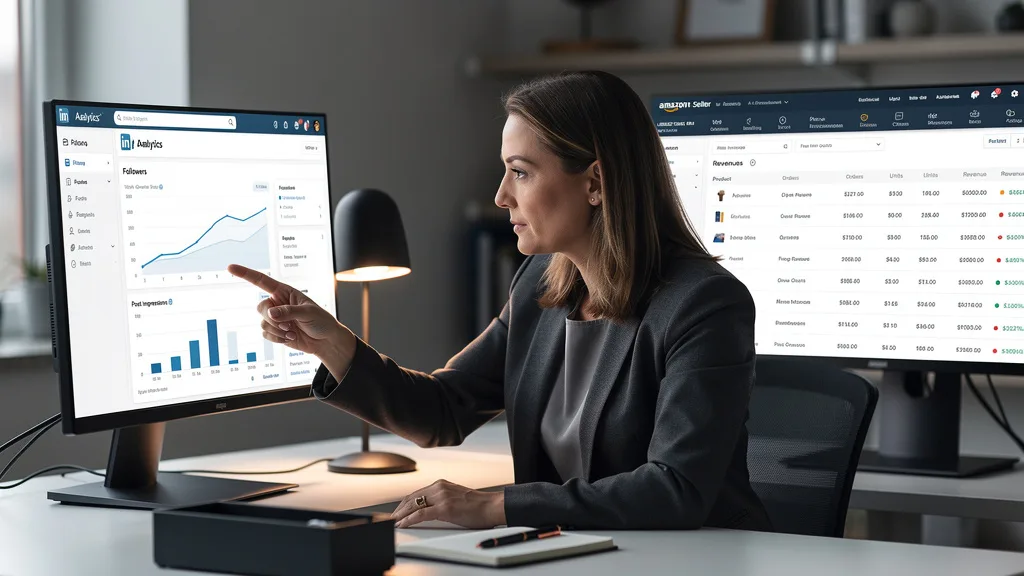
Are you leveraging every available channel to scale your Amazon brand from seven to eight figures? While you focus on optimizing listings and managing PPC campaigns, a powerful, often overlooked platform could be the key to unlocking a new segment of high-value customers: LinkedIn.
Using LinkedIn Analytics for Amazon Sellers: Track Your Reach is a strategic method for understanding your professional audience, building brand authority, and driving qualified, off-Amazon traffic to your storefront and product pages. By tracking key metrics on this professional network, you can gather valuable data to inform your Amazon marketing strategy, refine your customer avatars, and ultimately increase conversions and revenue. This approach transforms LinkedIn from a simple networking site into a powerful business intelligence tool.
Why LinkedIn Analytics Is a Crucial Tool for Amazon Sellers
For ambitious Amazon sellers, growth requires looking beyond the Amazon ecosystem. While Amazon provides its own suite of tools, external platforms like LinkedIn offer a unique advantage: access to a professional audience. LinkedIn analytics allows you to understand who is engaging with your brand in a business context. This includes potential B2B buyers, industry influencers, and high-income professionals who may not be your typical target on platforms like Instagram or Facebook.
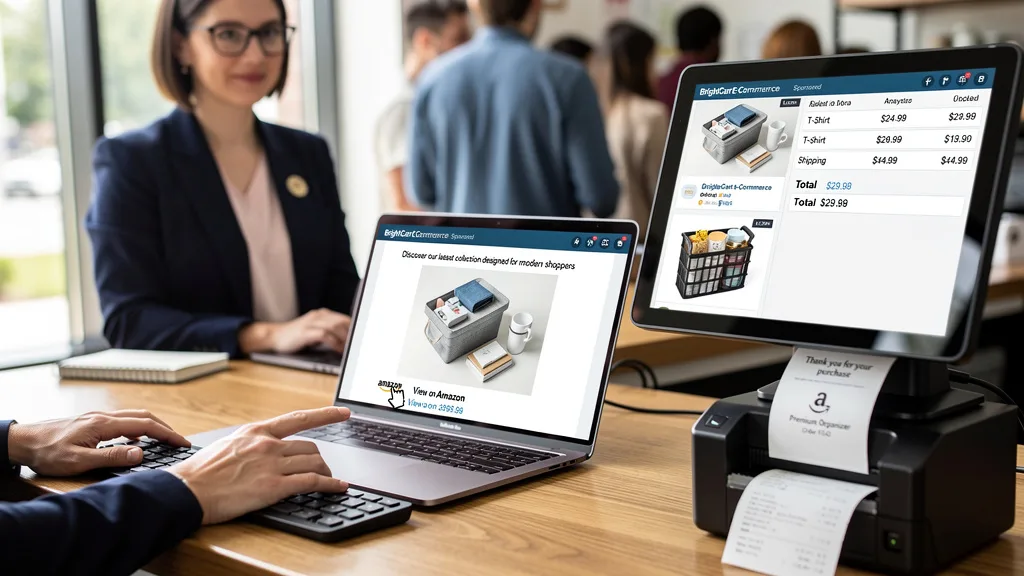
This data is more than just vanity metrics. It provides a window into the professional demographics of your audience, including their job titles, industries, and company sizes. By analyzing this information, you can identify new market opportunities, refine your product positioning, and create content that resonates with a more affluent and professionally-oriented customer base. Ultimately, a strong LinkedIn presence builds brand credibility and trust, which can directly influence purchasing decisions on Amazon.
Key LinkedIn Metrics to Track for Your Amazon Business
To effectively use LinkedIn for your e-commerce brand, you need to focus on the metrics that truly matter. Tracking the right data points allows you to measure the ROI of your efforts and make informed decisions. Instead of getting lost in a sea of numbers, prioritize the following key performance indicators to gauge your brand's impact and reach.
Profile Views and Follower Growth
Profile views and follower growth are foundational metrics that indicate your brand's increasing visibility and appeal on the platform. A steady increase in followers suggests your content is resonating and that more professionals are interested in your brand's story and products. Profile views show how many people are actively seeking out your company page, which is a strong indicator of brand curiosity.

Think of your follower count as your captive audience on LinkedIn. Each new follower is another person who will see your updates in their feed, increasing the potential reach of every post. Monitoring these numbers over time helps you understand what content or campaigns are most effective at attracting new interest and expanding your professional network.
Post Impressions and Engagement Rates
Impressions measure the total number of times your content is displayed to users, while the engagement rate (likes, comments, shares, and clicks) reveals how compelling that content is. A high number of impressions is good for brand awareness, but a high engagement rate is far more valuable. It signals that your content is not just being seen, but is actively capturing the attention of your audience.
Analyzing which posts receive the highest engagement helps you identify the topics, formats, and messaging that connect with your target market. For an Amazon seller, this could be behind-the-scenes content about product development, posts highlighting your brand's mission, or tutorials showcasing your product's unique features. This feedback loop is essential for refining your content strategy and ensuring your efforts are productive.
Click-Through Rates to Your Amazon Storefront
The click-through rate (CTR) is one of the most critical metrics for any Amazon seller using LinkedIn. It measures the percentage of people who saw your post and clicked the link to your Amazon storefront, product page, or other landing page. This is a direct measure of your ability to drive off-Amazon traffic, a key factor in Amazon's ranking algorithm.
A low CTR may indicate that your call-to-action isn't strong enough or that your content isn't effectively creating a desire to learn more about your products. To accurately track this, it is essential to use custom URLs with UTM parameters. This allows you to isolate traffic coming specifically from LinkedIn and measure its direct impact on your Amazon sessions and, with tools like Amazon Attribution, even sales.
Audience Demographics and Key Data Insights
LinkedIn's audience demographics are its superpower. The platform provides detailed insights into your followers' job functions, seniority levels, industries, and geographic locations. This is an invaluable source of market research that can directly influence your Amazon strategy. For example, if you discover a large portion of your followers work in the tech industry, you could tailor your messaging or even develop new products to meet their specific needs.
This demographic data can also enhance your Amazon PPC campaigns. You can use these insights to build more accurate customer personas and refine targeting for Sponsored Display ads. Understanding the professional profile of your most engaged audience members allows you to create more effective advertising that speaks directly to their interests and pain points, leading to a better return on ad spend.
| LinkedIn Metric | What It Measures | Impact on Your Amazon Business |
|---|---|---|
| Follower Growth | Brand interest and audience size | Increases brand authority and organic reach for product announcements. |
| Engagement Rate | Content resonance and audience connection | Provides insights for creating more effective A+ Content and ad copy. |
| Click-Through Rate (CTR) | Effectiveness of calls-to-action | Directly drives external traffic, which can boost Amazon search ranking. |
| Audience Demographics | Who your audience is (professionally) | Informs customer personas and refines Amazon PPC targeting strategies. |
Setting Up Your LinkedIn Profile for Effective Data Tracking
Before you can gather meaningful data, your LinkedIn presence must be properly configured to support your e-commerce goals. A well-optimized Company Page acts as a hub for your brand, attracting followers and funneling them toward your Amazon listings. This setup is foundational to any successful tracking strategy.
Optimizing Your Company Page for E-commerce
Your LinkedIn Company Page should function as a professional storefront. Start with a high-quality logo and a compelling banner image that showcases your products or brand lifestyle. Your "About" section should clearly state your brand's mission and value proposition, using keywords that your target audience might search for. Critically, include a clear call-to-action button that links directly to your Amazon storefront or a key product category.

Regularly use the "Products" tab to feature your top-selling items. Each product listing can include images, descriptions, and a direct link to its Amazon page. This turns your page from a simple profile into an interactive catalog. A complete and professional page not only looks more credible but also provides more opportunities for users to click through to your Amazon listings, a process you can refine with an Amazon listing optimization checklist.
Creating Content That Drives Relevant Traffic
Content is the engine of your LinkedIn strategy. To drive traffic, your posts must be engaging, valuable, and relevant to a professional audience. Avoid hard-selling in every post. Instead, focus on building a narrative around your brand. Share stories about your company's origins, introduce the team behind the products, and post high-quality videos demonstrating your products in action.
Balance promotional content with posts that provide industry insights or solve a problem for your target audience. For example, if you sell ergonomic office accessories, you could share articles about workplace wellness. This positions your brand as a knowledgeable authority, building trust that encourages users to explore your products. You can find inspiration and learn Amazon selling from LinkedIn posts by observing what top brands in your niche are doing successfully.
Using UTM Parameters to Monitor Amazon Clicks
This is arguably the most important technical step for tracking your success. UTM parameters are short text codes added to a URL to help you track the performance of campaigns and content. When a user clicks a link with UTMs, that data is sent to your analytics platform, allowing you to see exactly where the click came from.
For Amazon sellers, this is best paired with Amazon Attribution, a tool that measures the impact of non-Amazon marketing channels. By creating attribution tags for your LinkedIn links, you can see not only how many clicks you generated but also how that traffic behaved on Amazon, including metrics like detail page views, add to carts, and purchases. This provides a clear view of your LinkedIn marketing ROI and is a cornerstone of effective `revenue tracking`.
A Guide to Using the LinkedIn Analytics Dashboard
LinkedIn's native analytics dashboard provides a wealth of information for free. Understanding how to navigate this tool is key to extracting actionable insights. The dashboard is typically divided into three main sections: Visitors, Followers, and Content. Each tab offers a different perspective on your page's performance and audience.
Navigating Visitor, Follower, and Content Analytics
The "Visitors" tab shows you traffic to your Company Page, including unique visitors and page views. More importantly, it provides demographic data about these visitors, such as their job function and industry, even if they don't follow you. The "Followers" tab offers a similar demographic breakdown but focuses on the audience you've already captured, allowing you to track follower growth over time and understand the makeup of your core community.
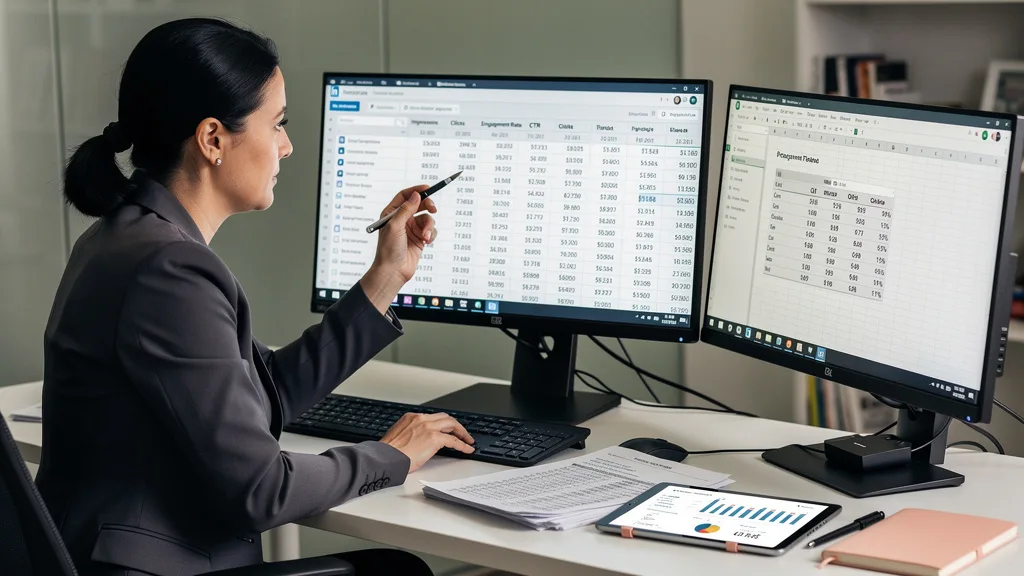
The "Content" tab is where you'll measure the performance of your individual posts. Here you can see impressions, clicks, comments, shares, and engagement rates for everything you share. Use this section to identify your top-performing content and understand what resonates most with your audience. Regularly reviewing these three tabs will give you a comprehensive picture of your LinkedIn marketing effectiveness.
Exporting Data to Build Custom Dashboards
For sellers who want to go deeper, LinkedIn allows you to export your analytics data as a CSV file. This feature is incredibly powerful because it lets you merge LinkedIn performance data with your other business metrics in a spreadsheet or a business intelligence tool like Google Data Studio or Power BI. This allows you to `build dashboards` that are fully customized to your needs.
By combining LinkedIn data with your Amazon sales data, PPC performance, and information from other marketing channels, you can get a holistic view of your business. This enables you to spot correlations you might otherwise miss, such as a spike in Amazon sales for a product featured heavily on LinkedIn that week. This level of `customizable analytics` is what separates casual sellers from strategic brand builders.
Evaluating Your Advertising Performance
If you choose to run paid campaigns on LinkedIn, the platform offers a separate, more detailed Campaign Manager analytics dashboard. This tool allows you to track key advertising metrics like cost per click (CPC), cost per impression (CPM), and conversion rates. While direct conversion tracking for Amazon sales is complex, you can still measure success based on CTR to your Amazon page and use Amazon Attribution to connect the dots.
Analyzing your `advertising performance` helps you optimize your ad spend by showing which ad creatives, copy, and audience targeting options are most effective. You can A/B test different ad versions to see what drives the most clicks for the lowest cost, ensuring your advertising budget is spent efficiently to drive qualified traffic to your Amazon listings.
Translating LinkedIn Insights Into Amazon Growth Strategies
Data is only useful if you act on it. The true value of LinkedIn analytics lies in its ability to inform and enhance your core Amazon strategies. By connecting the dots between your professional audience and your e-commerce goals, you can unlock significant growth opportunities.
Informing Your Amazon PPC Targeting with Audience Data
The demographic data from LinkedIn is a goldmine for refining your Amazon PPC campaigns. If your analytics show that a significant portion of your audience consists of project managers in the construction industry, you can use this insight to target your Amazon Sponsored Display ads. This allows you to reach a highly relevant audience directly on Amazon, increasing the efficiency of your ad spend.
This strategy is especially powerful as Amazon expands AI in Sponsored Ads, as providing the algorithm with a well-defined target audience can lead to better performance. Your LinkedIn data provides a proven customer profile, removing much of the guesswork from your PPC targeting and leading to more profitable campaigns.
"Using LinkedIn audience insights to refine our Amazon PPC targeting was a game-changer. We discovered a B2B audience we never knew we had, which opened up a completely new revenue stream and improved our overall ad efficiency."
Building Brand Authority to Increase Conversion Rates
A strong, professional presence on LinkedIn builds trust and credibility. When potential customers see your brand actively engaging with an industry community, sharing valuable content, and showcasing positive testimonials, it elevates your status from just another seller to a legitimate, authoritative brand. This trust is a powerful asset that transfers directly to your Amazon listings.
Customers who discover your brand through a professional channel like LinkedIn are often more likely to convert once they land on your Amazon page. They arrive with a pre-established sense of your brand's quality and mission, which can lead to higher conversion rates and a greater willingness to purchase at a premium price point. This brand-building effort is a long-term investment in the health of your Amazon business.
Simplifying Revenue Tracking from Off-Amazon Channels
One of the biggest challenges for Amazon sellers is tracking the effectiveness of external marketing. Using the combination of LinkedIn analytics, UTM parameters, and Amazon Attribution `simplifies revenue tracking` significantly. This setup provides a closed-loop system where you can launch a campaign on LinkedIn and see its direct impact on your Amazon sales.
This clear attribution model allows you to confidently invest in your LinkedIn strategy, knowing you can measure the return. It transforms your marketing spend from an expense into a measurable investment in growth, allowing you to scale your efforts on channels that are proven to deliver results. This data-driven approach is a key part of scaling to an eight-figure brand.
Common Mistakes to Avoid When Tracking Your Reach
While LinkedIn analytics can be powerful, several common pitfalls can undermine your efforts. One of the biggest mistakes is focusing solely on vanity metrics like follower count without considering engagement or click-through rates. A large but unengaged audience is far less valuable than a smaller, highly active community.
Another frequent error is failing to use UTM parameters. Without them, all your traffic from LinkedIn gets lumped into "direct" or "referral" traffic, making it impossible to know if your efforts are actually working. Finally, avoid being inconsistent. Building a presence and gathering meaningful data on LinkedIn requires a consistent posting schedule and regular engagement with your audience. Sporadic activity will yield poor results and unreliable data.
- Ignoring Audience Demographics: Failing to analyze who your followers are is a missed opportunity to refine your marketing personas.
- Not Using UTMs: Without proper tagging, you cannot attribute Amazon sessions or sales to your LinkedIn activities.
- Focusing on Vanity Metrics: Prioritizing follower count over engagement and CTR gives a misleading picture of your performance.
- Inconsistent Posting: Irregular content updates lead to low engagement and slow audience growth.
- Hard-Selling Constantly: A purely promotional approach alienates a professional audience that values authentic content and industry insights.
Key Takeaways
Effectively using LinkedIn Analytics for Amazon Sellers: Track Your Reach is a strategic imperative for brands looking to scale in 2026. It provides a unique lens into a professional audience segment, offering data that can sharpen your marketing, product development, and customer targeting strategies both on and off Amazon.
- Go Beyond Amazon: LinkedIn provides access to a valuable professional audience, including potential B2B customers and industry influencers.
- Track Actionable Metrics: Focus on engagement rates, click-through rates (CTR), and audience demographics, not just follower counts.
- Use Tracking Tools: Combine LinkedIn's native analytics with UTM parameters and Amazon Attribution for a clear view of your marketing ROI.
- Inform Your PPC: Leverage demographic insights from LinkedIn to create highly targeted and more profitable Amazon PPC campaigns.
- Build Brand Authority: A professional presence on LinkedIn builds trust and credibility, which can lead to higher conversion rates on your Amazon listings.
Frequently Asked Questions
Can LinkedIn analytics directly show my Amazon sales?
No, LinkedIn analytics cannot directly show sales that occur on Amazon. The platform's native tools can only track on-platform metrics like impressions, engagement, and clicks on your links. It has no visibility into what happens after a user leaves LinkedIn and lands on Amazon's website.
However, you can bridge this gap by using Amazon's own tool, Amazon Attribution. By creating special tracking links within Amazon Attribution and using them in your LinkedIn posts, you can measure how many detail page views, add-to-carts, and purchases were generated by the traffic you sent from LinkedIn. This combination of tools provides the clear `profit analytics` you need.
How often should an Amazon seller check LinkedIn analytics?
The ideal frequency depends on your goals and activity level. A good practice is to check your analytics on a weekly basis to monitor short-term trends, see which recent posts are performing well, and respond to comments. This allows you to stay agile and make quick adjustments to your content strategy.
For a more in-depth analysis, you should conduct a monthly review. This is the time to look at follower growth trends, overall engagement rates, and demographic shifts. Exporting the data monthly to your own dashboards will help you evaluate your long-term strategy and report on your progress toward key business objectives.
Is a LinkedIn Premium account necessary for useful analytics?
No, a LinkedIn Premium account is not necessary to access the most important analytics for your Company Page. All the core features, including visitor and follower demographics, as well as content performance metrics, are available with a free LinkedIn account. These tools provide more than enough data for most Amazon sellers to build an effective strategy.
LinkedIn Premium offers benefits primarily for individual profiles, such as seeing who has viewed your profile and enhanced search capabilities. While these can be useful for networking or lead generation, they are not required for tracking the performance of your brand's Company Page content.
What is the difference between reach and impressions on LinkedIn?
Though often used interchangeably, reach and impressions measure two different things. Impressions refer to the total number of times your content was displayed on a screen. If one person sees your post three times, that counts as three impressions. It is a measure of total content visibility.
Reach, on the other hand, refers to the number of unique people who saw your content. If that same person sees your post three times, it only counts as one person reached. Reach is a better metric for understanding the actual size of the audience your content is connecting with, while impressions can help gauge the frequency of that connection.
What content types work best for Amazon sellers on LinkedIn?
The best content on LinkedIn is authentic, valuable, and tailored to a professional audience. Instead of constant product promotions, focus on storytelling and providing value. Behind-the-scenes content showing your manufacturing process or product design journey can perform very well, as it builds transparency and trust.
Founder stories, posts about your company culture, and celebrating business milestones also resonate deeply on the platform. Additionally, educational content related to your product's niche, such as tutorials or posts that solve a customer's problem, can position your brand as an expert. High-quality video content, in particular, tends to have high engagement rates.
Conclusion
Integrating LinkedIn into your marketing mix is a strategic move that provides invaluable data for scaling your Amazon business. By moving beyond vanity metrics and focusing on the insights that inform your customer personas, PPC targeting, and brand narrative, you can build a more resilient and profitable brand. The key is to consistently track your performance, translate data into action, and build a genuine community around your brand's professional identity.
Ready to see how a data-driven, off-Amazon strategy can accelerate your growth? Our team specializes in scaling brands from 7 to 8 figures with profit-focused strategies. Let us analyze your brand's full potential with a comprehensive audit. Get your Free Audit today and discover your path to profitable scaling.