
Table of Contents 7 sections
Are you struggling to generate the social proof needed to scale your Amazon brand? In the competitive 2026 marketplace, product reviews are more critical than ever, acting as the lifeblood of your listings and a key driver of conversions. Yet, navigating Amazon's strict policies can feel like walking a tightrope. One wrong move could put your entire account at risk.
To how to acquire customer reviews on Amazon in 2026, you must use compliant methods that build trust and follow Amazon's Terms of Service. The most effective strategies include leveraging Amazon's internal tools like the 'Request a Review' button and the Vine program, optimizing product inserts, using approved third-party automation software, and driving high-quality external traffic to your listings. These methods focus on encouraging authentic feedback from genuine customers without violating any rules.
Understanding Amazon's Customer Review Policies in 2026
Before you can effectively gather reviews, you must have a rock-solid understanding of Amazon's rules. The platform's primary goal is to maintain trust with its customers, and that trust is built on authentic, unbiased feedback. As of 2026, Amazon's enforcement of these policies is stricter than ever, utilizing sophisticated AI to detect manipulation and penalize non-compliant sellers.
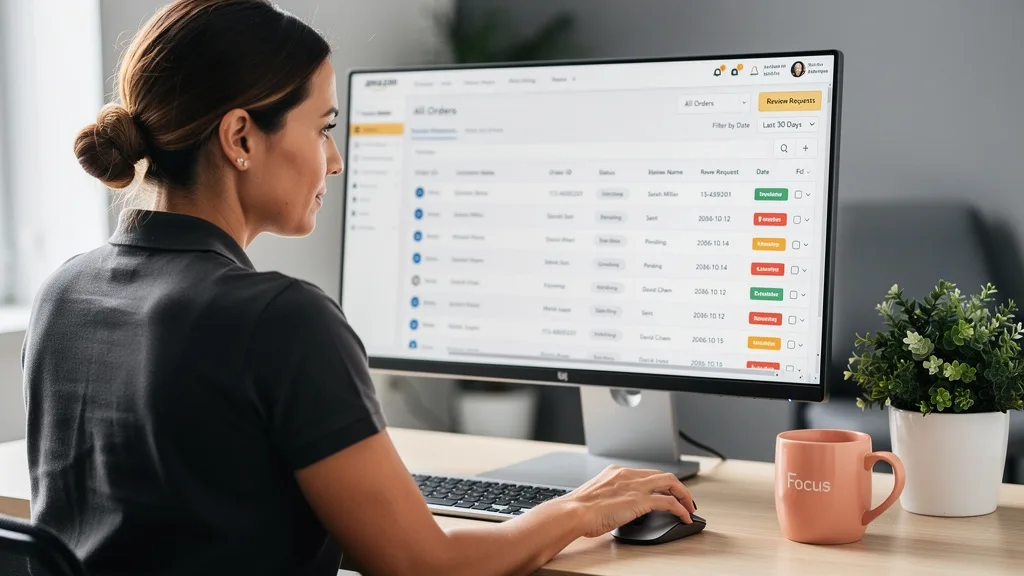
Ignoring these guidelines is not an option for serious brands aiming for 8-figure growth. A single policy violation can lead to review deletion, listing suppression, or even permanent account suspension. Staying informed is the first step in building a sustainable review generation strategy that supports long-term success on the platform.
The Zero-Tolerance Policy Against Review Manipulation
Amazon has a zero-tolerance policy against any attempt to manipulate or falsify customer reviews. This policy is designed to protect the integrity of the platform and ensure all product feedback is genuine. Prohibited actions include offering a financial reward, discount, or any other compensation in exchange for a review. This applies to both positive and negative review scenarios, such as paying someone to leave a negative review on a competitor's product.
The policy also forbids creating reviews for your own products or having family members, employees, or anyone with a financial interest in the product do so. Amazon's systems are adept at identifying connections and patterns that suggest biased or inauthentic reviews. Violating this policy can have severe consequences, making it essential to stick to white-hat tactics only. For a deeper dive, staying updated on the latest Amazon customer review policy updates is critical.
Differentiating Between Seller Feedback and Product Reviews
A common point of confusion for sellers is the difference between seller feedback and product reviews. Seller feedback is about the buyer's experience with you as the seller. It covers aspects like shipping speed, packaging quality, and customer service. This feedback contributes to your overall Seller Feedback Rating, which is visible on your seller profile.
Product reviews, on the other hand, are specifically about the product itself. Customers share their opinions on its quality, features, performance, and whether it met their expectations. These reviews appear on the product detail page and result in the star rating that heavily influences a shopper's purchase decision. Understanding this distinction is crucial for directing your efforts and communications correctly.
Permitted Communication With Buyers
While Amazon restricts many forms of communication, you are still permitted to contact buyers for specific reasons. You can send one proactive message per order to request a review or seller feedback. This communication must be neutral and cannot pressure the customer or attempt to influence their rating. You cannot, for instance, ask only for positive reviews or offer help only if a customer leaves a five-star rating.
The language you use must be straightforward and free of marketing content, external links (except for secure Amazon links), or requests to contact you outside of Amazon's messaging system. The safest way to communicate is by using Amazon's own templates or the 'Request a Review' feature, which guarantees compliance.
5 Compliant Methods to Acquire More Amazon Reviews
Generating a steady stream of reviews is a key component of scaling your brand. The following five methods are fully compliant with Amazon's policies for 2026 and can help you build the social proof needed to increase conversions and drive sales velocity.
Method 1: Use Amazon's 'Request a Review' Button
The simplest and safest way to ask for reviews is by using the 'Request a Review' button found on the Order Details page in Seller Central. This feature sends a standardized, Amazon-branded email to the customer that asks for both a product review and seller feedback. Because Amazon controls the template and messaging, it is 100% compliant with their communication guidelines.
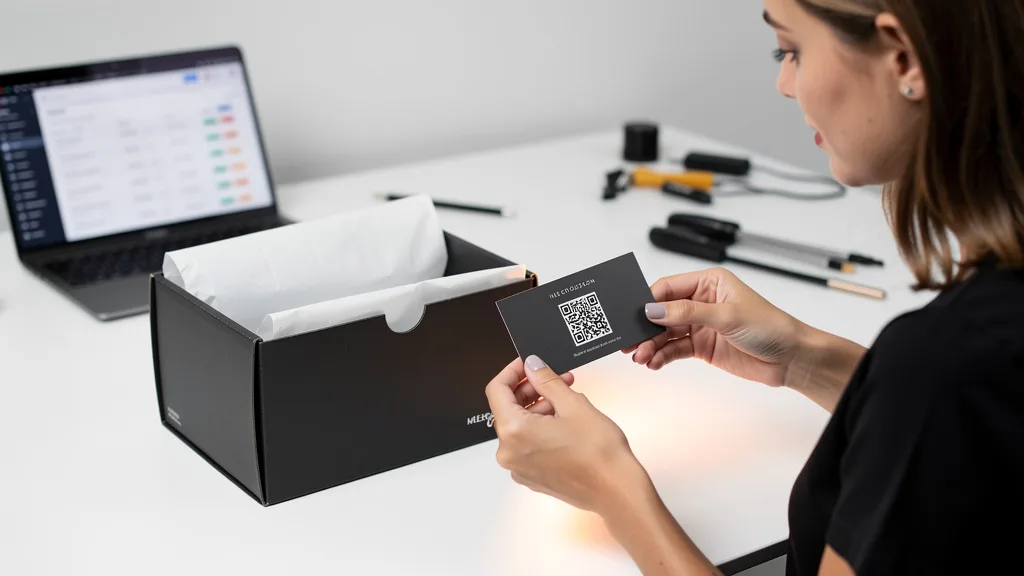
You can manually press this button for each order within 5 to 30 days of the delivery date. While effective, this manual process can be time-consuming for high-volume sellers. However, its guaranteed compliance makes it an essential tool in any seller's arsenal. Following a dedicated guide to safely request Amazon reviews can help streamline this process.
Method 2: Enroll Products in the Amazon Vine Program
The Amazon Vine program is an invitation-only service that allows sellers to get reviews for new products. Amazon invites its most trusted reviewers, known as Vine Voices, to receive free products in exchange for their honest and unbiased opinions. This is a powerful way to generate up to 30 high-quality reviews quickly, which is especially valuable for new product launches to gain initial traction.
Enrolling a product in Vine comes with a fee, and you must provide the products for free. However, the investment can pay off significantly by providing the early social proof needed to start generating organic sales. Vine reviews are clearly marked with a green stripe, adding a layer of credibility for potential buyers.
Method 3: Optimize Your Product Packaging and Inserts
Product inserts are an effective way to engage with customers post-purchase, but they must be used carefully. A compliant insert can include a thank you message, branding information, and a neutral request to leave a review on Amazon. You cannot offer any discount, gift, or other incentive in exchange for a review. The language must not direct customers to leave only a positive review.
Instead of saying "Get a 10% discount for your 5-star review," a compliant insert might say, "Thank you for your purchase! We'd love to hear your feedback. Please consider leaving a review on Amazon to help fellow shoppers." This subtle, brand-building approach encourages feedback without violating policies and enhances the customer experience.
Method 4: Leverage Third-Party Email Automation Tools
For sellers with high order volumes, manually clicking the 'Request a Review' button for every order is impractical. Several third-party software solutions (like Helium 10, Jungle Scout, and FeedbackWhiz) can automate this process. These tools connect to your Seller Central account via Amazon's API and can be configured to automatically send the review request on your behalf.
It is crucial to ensure the tool you choose uses Amazon's official 'Request a Review' system to send the message. Some older tools used custom email templates, which carry a higher risk of non-compliance. By sticking to tools that trigger the official Amazon template, you get the benefit of automation without the risk of violating communication guidelines.
Method 5: Drive External Traffic to Your Amazon Listing
Driving traffic from external sources like social media, blogs, or email lists can lead to more sales, which in turn creates more opportunities for reviews. When you run campaigns on platforms like TikTok, Instagram, or Google, you are reaching a new audience that may not have found your product otherwise. These engaged buyers are often more likely to leave feedback.
This strategy also improves your listing's sales velocity and keyword ranking, creating a flywheel effect of increased visibility and more sales. A well-managed external traffic campaign, often paired with an effective Amazon PPC management strategy, can be a powerful engine for both sales and review acquisition. The key is to drive qualified traffic that is genuinely interested in your product.
Practices to Avoid When Seeking Product Feedback
Knowing what not to do is just as important as knowing what to do. Engaging in prohibited practices, even unintentionally, can lead to severe penalties from Amazon. Protecting your account's health should always be your top priority.
Never Offer Financial Rewards or Incentives
This is the cardinal sin of review acquisition on Amazon. You cannot offer any form of compensation for a review. This includes discounts on future purchases, gift cards, free products, reimbursements, or any other monetary reward. This rule applies whether you ask for a positive review or any review at all.

Amazon's systems are designed to detect these schemes, and the consequences are severe. Even phrasing like "We'll send you a free gift for your honest feedback" is a clear violation. The only exception is the Amazon Vine program, which is a controlled environment managed by Amazon itself.
Avoid Asking Friends, Family, or Employees for Reviews
Reviews must come from unbiased shoppers. Asking people with a close personal relationship or financial connection to your business to leave a review is strictly prohibited. Amazon considers these reviews biased and will likely remove them. In many cases, their algorithm can detect relationships based on shipping addresses, IP addresses, and purchase history.
Attempting to circumvent this by using different accounts or networks is a risky game that can lead to account suspension. The goal is to build a base of authentic reviews from real customers who have purchased and used your product.
Do Not Selectively Request Only Positive Reviews
You cannot filter your customers and only ask the happy ones to leave a review. This practice, known as "review gating," is a direct violation of Amazon's policies. Any review request you send must be sent neutrally to all customers (or a random subset) regardless of their experience.
For example, you cannot send an email asking, "Are you happy with your purchase?" and then direct happy customers to leave a review while sending unhappy customers to your support team. All communications must provide customers with the same set of choices. The 'Request a Review' button is inherently compliant because it goes to all eligible customers without any filtering on your part.
How to Manage and Respond to Your Customer Reviews
Acquiring reviews is only half the battle. How you manage and respond to them publicly demonstrates your brand's commitment to customer satisfaction and can influence future buyers. A proactive approach to review management can help mitigate damage from negative feedback and amplify the impact of positive comments.
Responding to Positive Reviews to Build Community
When a customer leaves a glowing review, take a moment to thank them publicly. You can do this by adding a comment to their review. A simple message like, "Thank you so much for your feedback! We're thrilled you love the product," shows that you appreciate your customers and are actively engaged. This small gesture can foster a sense of community around your brand.
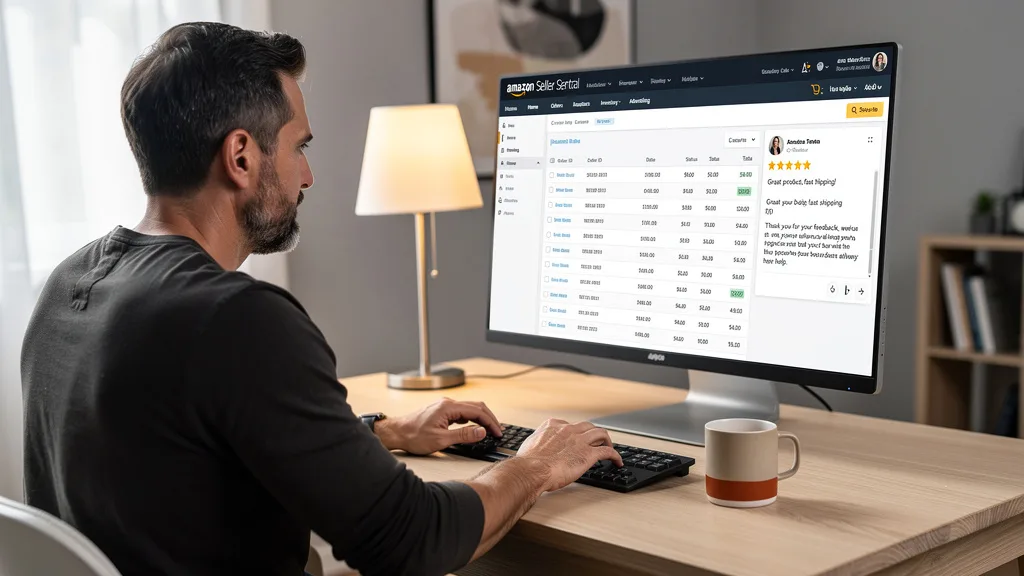
This engagement is visible to all future shoppers browsing the reviews. Seeing a brand that actively communicates with its customers can build trust and confidence, potentially tipping the scales in your favor when a shopper is deciding between you and a competitor.
Addressing Negative Reviews Professionally and Helpfully
Receiving a negative review can be frustrating, but your response is critical. Always respond publicly with a professional and helpful tone. Apologize for the customer's poor experience, offer a solution if possible (like a replacement or a refund, handled through official channels), and provide contact information for your customer support. A thoughtful response shows other shoppers that you stand behind your product and care about customer satisfaction.
Never get into an argument or be defensive in your public comments. The goal is not just to solve one customer's issue but to show everyone else that you are a responsible and trustworthy seller. For more strategies, consider implementing a robust Amazon customer service plan to handle these situations effectively.
Using Review Insights to Improve Your Products
Your customer reviews are a goldmine of data. They provide direct, honest feedback about what customers love and hate about your product. Regularly analyze your reviews, especially the 3- and 4-star ones, to identify recurring themes, feature requests, or common points of failure. This feedback is invaluable for your product development cycle.
By using these insights to improve your product, update your listing to clarify instructions, or enhance your packaging, you can proactively address issues and improve your overall customer experience. This leads to better reviews in the future and is a key part of a successful Amazon SEO strategy, as higher ratings lead to better conversion rates and rankings.
| Method | Compliance Level | Cost | Effort Level | Best For |
|---|---|---|---|---|
| 'Request a Review' Button | Very High | Free | High (Manual) / Low (Automated) | All sellers, especially for ongoing review generation. |
| Amazon Vine Program | Very High | $$$ (Enrollment Fee + Free Product) | Low | New product launches needing initial reviews. |
| Product Inserts | Medium (If done correctly) | $ (Printing Costs) | Low | Building brand and encouraging organic feedback. |
| Third-Party Automation | High (If using official template) | $$ (Software Subscription) | Very Low | High-volume sellers needing to save time. |
| External Traffic | Very High | $-$$$ (Ad Spend) | Medium-High | Scaling brands looking to increase sales and reviews. |
"In 2026, the most successful Amazon sellers aren't the ones finding loopholes. They are the ones building great products and using Amazon's own compliant tools to generate authentic social proof. Focusing on how to acquire customer reviews on Amazon through programs like Vine and the 'Request a Review' feature is the only sustainable path to 8-figure growth."
Key Takeaways
- Compliance is Non-Negotiable: Always prioritize following Amazon's strict review policies. The risk of suspension for manipulating reviews is too high.
- Use Amazon's Tools: The 'Request a Review' button and the Amazon Vine program are your safest and often most effective methods for generating compliant reviews.
- Never Incentivize Reviews: Offering any form of compensation, including discounts or free products (outside of Vine), for reviews is a direct violation that can lead to severe penalties.
- Leverage Automation Wisely: For high-volume sellers, using approved third-party tools to automate the 'Request a Review' process is a major time-saver and a smart investment.
- Manage All Feedback: Respond professionally to both positive and negative reviews to build customer trust and use the feedback as valuable data for product improvement.
Frequently Asked Questions
How do you get picked to write reviews for Amazon?
Customers are chosen to become Amazon Vine Voices based on the quality and helpfulness of their past reviews. Amazon invites shoppers who consistently write insightful, detailed reviews that other customers find valuable. There is no application process; it is an invitation-only program based on a customer's review history.
These Vine Voices are then given access to a selection of free products from participating sellers. They are expected to provide honest and unbiased feedback within a specific timeframe. This system helps new products get their first crucial reviews from trusted sources.
Why is Amazon limiting or removing some customer reviews?
Amazon actively limits or removes reviews to maintain the integrity and trustworthiness of its platform. This is typically done when a review is suspected of violating community guidelines. Reasons for removal include reviews that are fake, incentivized, written by someone with a financial interest in the product, or contain inappropriate content.
The platform uses a combination of automated systems and human moderators to detect and act on policy violations. This strict enforcement helps ensure that the reviews customers see are from genuine, unbiased shoppers, which protects both buyers and legitimate sellers.
Can I ask a buyer to change or remove a negative review?
No, you are strictly prohibited from asking a buyer to change or remove a negative review. This is considered review manipulation and is a serious violation of Amazon's policies. You can, however, respond publicly to the review and work to solve the customer's problem through official channels.
If you provide excellent customer service and resolve the issue, the customer may choose to update their review on their own, but you cannot request it. Focusing on a helpful, professional response is the only compliant course of action.
How long does it take for a new Amazon review to appear?
Typically, a new customer review will appear on your product detail page within 72 hours of being submitted. However, this timeframe can vary. Amazon's systems vet each review for compliance with their guidelines before it goes live, and this process can sometimes take longer, especially during peak shopping seasons.
If a review seems to be taking an unusually long time to appear, it may be under additional scrutiny or may have been rejected for a policy violation. There is no way for sellers to expedite this process.
Is it okay to send customers an email asking for a review?
Yes, it is okay to send a single, neutral email per order to request a review, but you must follow Amazon's communication guidelines strictly. The safest way to do this is by using the 'Request a Review' button in Seller Central, which sends an Amazon-approved email template.
If using a third-party service, ensure it uses Amazon's official messaging system. Your message cannot contain marketing promotions, links to external websites, or any language that attempts to persuade the customer to leave a positive review. Neutrality is key to compliance.
Conclusion
Successfully acquiring customer reviews on Amazon in 2026 comes down to a simple formula: create a fantastic customer experience and use Amazon's approved channels to ask for feedback. By focusing on compliant methods like the 'Request a Review' button, the Vine program, and brand-building inserts, you can generate the social proof needed to scale without putting your account at risk. Treat every review, positive or negative, as a gift of data to improve your products and build a brand that customers trust for the long term.
Are you ready to optimize your listings and implement a compliant review strategy that drives profitable growth? Our team specializes in scaling 7-figure brands to 8 figures by focusing on the fundamentals that matter. Get a comprehensive analysis of your Amazon listings to uncover hidden opportunities. Book your Free Audit today.