Table of Contents 9 sections
Are you struggling to connect with decision-makers at successful Amazon brands? While forums and Facebook groups are noisy and crowded, LinkedIn offers a direct, professional channel to engage the exact seven and eight-figure sellers you want to work with. It's a platform built for business, where brand owners, founders, and ecommerce directors gather to network and grow.
LinkedIn is a goldmine for finding Amazon sellers because it provides unparalleled access to professional data, allowing you to filter by job title, company size, industry, and keywords like "Amazon FBA" or "Private Label." This precision targeting eliminates guesswork, connecting you directly with qualified prospects who are actively managing and scaling their ecommerce businesses. It transforms your lead generation from a random search into a strategic operation.
Why LinkedIn Is the Smartest Way to Find Amazon Sellers
In the competitive landscape of ecommerce services, finding the right clients is paramount. LinkedIn stands out as the most effective platform to find Amazon sellers for several key reasons. Unlike other social networks, LinkedIn is inherently professional. Users are there to conduct business, share industry insights, and build their professional network, making them more receptive to well-crafted, relevant outreach.
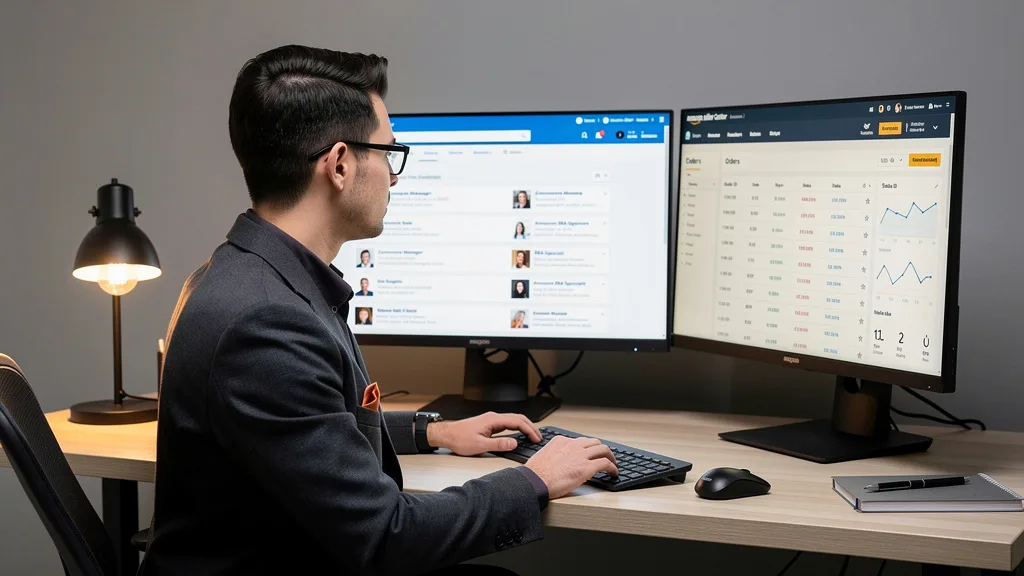
The platform's detailed professional profiles provide a wealth of information. You can quickly identify a person's role, their company's size, how long they've been in their position, and even see their past experience. This context is invaluable for personalizing your approach and ensuring you're speaking to an actual decision-maker, not a gatekeeper. For anyone serious about connecting with established Amazon brand owners, LinkedIn is not just an option, it's a necessity.
Step 1: Define Your Ideal Amazon Seller Profile
Before you begin your search, you must have a crystal-clear picture of who you're looking for. A vague search for "Amazon seller" will yield thousands of irrelevant results. Instead, create a detailed ideal client profile (ICP) that outlines the specific characteristics of the brands and individuals you want to connect with. This initial step is the foundation of a successful outreach campaign.
Think about revenue, product category, company size, and geographic location. Are you targeting 7-figure sellers in the US beauty market? Or perhaps 8-figure brands in the UK home goods space? The more specific you are, the more effectively you can use LinkedIn's filters to narrow down the vast user base to a manageable and highly relevant list of prospects.
Key Identifiers and Keywords to Look For
To pinpoint your ideal prospects, you need to use the right language in your searches. This involves combining job titles with industry-specific keywords. These identifiers act as signals, helping you filter out noise and focus on the most promising contacts. Start by building a list of these terms before you even open the LinkedIn search bar.
Here are some of the most effective keywords and titles to use when searching for Amazon sellers:
- Job Titles: Founder, Co-Founder, CEO, Owner, President, eCommerce Manager, Director of eCommerce, Brand Manager, Head of Marketplaces.
- Keywords in Profile/About Section: Amazon FBA, Private Label, Amazon Seller, Fulfilled by Amazon, eCommerce Brand Owner, Shopify, Direct to Consumer.
- Company Industry: Retail, Consumer Goods, Health, Wellness and Fitness, Apparel & Fashion, Sporting Goods.
- Company Size: 1-10 employees (often founder-led), 11-50 employees (scaling brands with small teams).
Understanding Different Types of Seller Roles
Not all profiles with "Amazon" in them belong to your ideal client. It's crucial to differentiate between the various roles within the Amazon ecosystem. For example, a "Founder" or "CEO" of a company with 5-20 employees is likely the key decision-maker for services like PPC management or listing optimization. They are hands-on and directly invested in the brand's growth.
In contrast, an "eCommerce Manager" at a larger corporation (50+ employees) might be your point of contact, but they may need to get budget approval from a Director or VP. Understanding this hierarchy helps you tailor your messaging. You might approach a founder with a high-level strategic growth proposition, whereas your message to a manager might focus on tactical solutions that make their job easier and deliver measurable results they can report upwards.
Step 2: Master LinkedIn Search Techniques
Once you have defined your ideal seller profile, the next step is to use LinkedIn's powerful search tools to find them. There are two primary methods: using the platform's native search functionality and leveraging the advanced capabilities of LinkedIn Sales Navigator. Both can be effective, but they serve different levels of intensity and precision in your prospecting efforts.

Mastering these techniques is the key to unlocking why LinkedIn is a goldmine for Amazon sellers. It's not just about finding profiles, it's about finding the right profiles efficiently. A systematic approach will save you countless hours and dramatically improve the quality of your lead list. Start with the basics and consider upgrading as your outreach strategy matures.
Leveraging LinkedIn's Native Search Filters
The standard LinkedIn search bar is more powerful than many users realize. After entering a primary keyword like "Amazon FBA Owner," click on the "People" filter. This will open up a panel of additional filters, including Connections, Locations, and Current Company. Click "All filters" to access the most valuable options: Title, Industry, and Keywords (which searches the entire profile).
By combining these filters, you can create highly specific queries. For example, you could search for people with "Founder" in their title, located in the "United States," who also have "Private Label" mentioned in their profile. This multi-layered filtering helps you build a targeted list without any additional software. It's an excellent starting point for anyone new to LinkedIn prospecting.
Using Sales Navigator for Precision Targeting
For those serious about scaling their client acquisition, LinkedIn Sales Navigator is an essential investment. It's a premium tool that provides access to a much deeper set of filters and organizational features. You can filter by company headcount, years in current position, and even recent job changes. These advanced filters allow for hyper-targeting that is impossible with the standard search.
One of the most powerful features is the "Lead and Account Lists." You can build lists of target individuals and companies, and Sales Navigator will provide you with updates and insights about them. For example, it can notify you when a prospect posts content or is mentioned in the news, giving you a perfect, timely reason to reach out. This level of intelligence turns cold outreach into a warm, informed conversation. You can also explore advanced LinkedIn features for Amazon sellers to further refine your strategy.
"Sales Navigator transforms your search from a wide net into a surgical spear. For finding high-growth Amazon sellers, that precision is everything. It allows you to focus your energy on brands that are truly ready to scale." – Kamran Shahzad, Amazon Growth Consultant
Step 3: Validate Contacts and Maintain Data Quality
Finding potential contacts on LinkedIn is only half the battle. The next critical step is to validate that these profiles represent real, active Amazon sellers and to enrich their data for effective outreach. Poor data quality leads to wasted time, bounced emails, and a low response rate. A clean, verified, and well-organized prospect list is the engine of a successful lead generation machine. Amazon consulting for beginners.
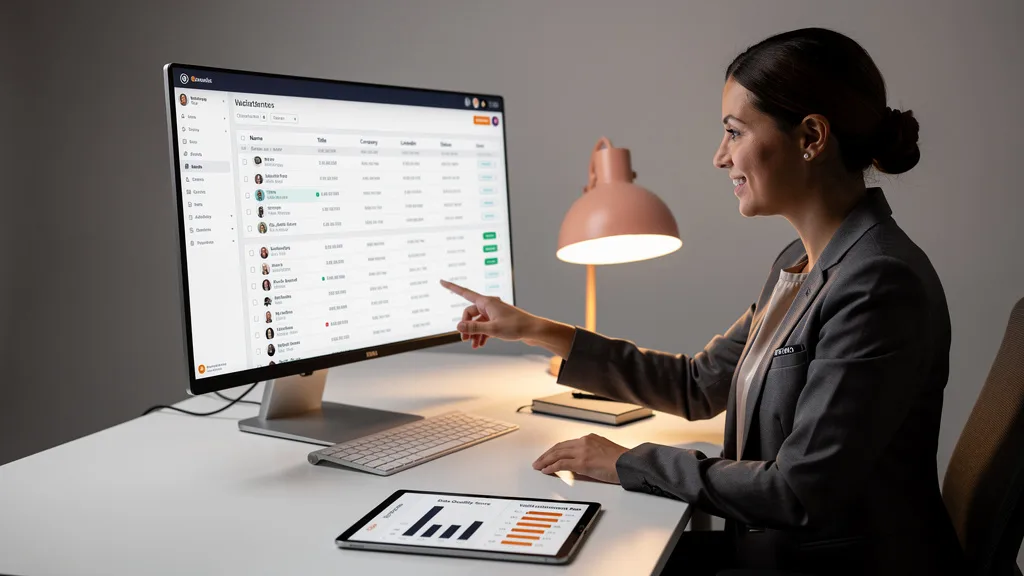
This process involves cross-referencing information and using specialized tools to confirm details. For instance, you can search for the person's name and their brand on Google to see if their Amazon store or company website appears. This simple verification step can save you from reaching out to inactive sellers or irrelevant contacts.
Tools and Methods for Data Enrichment
Once you have a list of promising LinkedIn profiles, data enrichment tools can help you find their business email addresses and gather additional context. Services like Hunter, Seamless.AI, or ZoomInfo integrate with LinkedIn and can often provide verified corporate email addresses with a single click. This allows you to move the conversation to a more direct channel if needed.
Beyond email finders, you can use Amazon-specific tools to analyze their brand. Look at their product listings, estimated sales volume, and number of reviews. This research not only validates them as a seller but also gives you valuable information to use in your personalized outreach. Mentioning a specific observation about their brand shows you've done your homework and aren't just sending a generic template.
Building a Clean and Actionable Prospect List
As you gather and validate contacts, it's essential to keep them organized. A simple spreadsheet in Google Sheets or Excel can work well to start. Create columns for Name, Title, Company, LinkedIn Profile URL, Email Address, Outreach Status (e.g., Connected, Messaged, Replied), and Notes. This system allows you to track every interaction and ensure no prospect falls through the cracks.
For more advanced operations, a Customer Relationship Management (CRM) tool like HubSpot or Pipedrive is ideal. A CRM can automate parts of the tracking process and provide deeper analytics on your campaign performance. Whichever tool you choose, the key is consistency. A well-maintained list is a valuable asset that will fuel your business development for months and years to come.
Step 4: Personalize Your Outreach for Better Responses
With a validated list of high-quality prospects, the final step is to reach out. On LinkedIn, this begins with a connection request. Generic, empty connection requests have a very low acceptance rate. To stand out, you must personalize your approach and give the recipient a compelling reason to connect with you. The goal is to start a conversation, not to make a hard sale in the first message.
Successful outreach is about demonstrating value and relevance. Your initial messages should focus on the prospect, their business, and their potential challenges. By showing genuine interest and providing insight, you build trust and position yourself as an expert resource rather than just another service provider.
Crafting Connection Requests That Get Accepted
The key to a successful connection request is a short, personalized note. Always add a note, and make it about them, not you. Mention a piece of content they shared, a mutual connection, or a shared LinkedIn group. If you're targeting them based on their brand, a simple, genuine compliment can work wonders.
For example, instead of a generic "I'd like to connect," try something like: "Hi [Name], I was impressed by the branding of your [Product Category] line on Amazon. As someone who also operates in the ecommerce space, I'd love to connect and follow your brand's journey." This type of message is respectful, relevant, and much more likely to be accepted. For more tips, you can learn how to connect with Amazon sellers on LinkedIn effectively.
Follow-Up Strategies for Engaging Sellers
Once a seller accepts your connection request, don't immediately pitch your services. The goal is to nurture the relationship. Start by thanking them for connecting. A day or two later, you can follow up with a piece of value. This could be a link to an insightful article, a comment on one of their recent posts, or a brief observation about an industry trend.
A simple, low-pressure follow-up sequence might look like this: Message 1 (Day 1): Thank you for connecting. Message 2 (Day 3): Share a valuable resource. Message 3 (Day 7): Ask a thoughtful question about their business or a challenge they might be facing. Only after you've established some rapport should you ask if they are open to discussing how your services might help them achieve their goals. This patient, value-first approach yields far better results than an aggressive sales pitch.
Comparing Manual vs. Automated Discovery Tools
When it comes to finding Amazon sellers on LinkedIn, you have a spectrum of tools at your disposal, from purely manual searching to sophisticated automation platforms. Each approach has its own set of advantages and disadvantages regarding cost, efficiency, and risk. Understanding these differences will help you choose the right strategy for your business goals and resources.
| Feature | Manual Search (Free LinkedIn) | LinkedIn Sales Navigator | Third-Party Automation Tools |
|---|---|---|---|
| Cost | Free | Monthly Subscription Fee | Higher Monthly Subscription Fee |
| Precision | Low to Medium (Limited Filters) | Very High (Advanced Filters) | High (Based on Sales Navigator) |
| Speed & Scale | Slow and labor-intensive | Moderate (Efficient but still manual) | Very Fast (Automated sequences) |
| Risk | Low | Low (Intended use of platform) | High (Risk of account restriction) |
Key Takeaways
Finding and connecting with high-value Amazon sellers on LinkedIn is a strategic process that can yield significant returns. By focusing on quality over quantity and leading with value, you can build a powerful network of potential clients. Remember these key points to guide your efforts:
- Define Your Target: Create a detailed Ideal Client Profile before you start searching. Specificity is your greatest advantage.
- Master the Search: Use a combination of job titles, keywords, and filters in both native LinkedIn search and Sales Navigator for precision targeting.
- Validate and Organize: Always verify that a prospect is an active seller and maintain a clean, organized list to track your outreach efforts.
- Personalize Everything: Generic messages get ignored. Personalize your connection requests and follow-ups to show genuine interest and build rapport.
- Lead with Value: Don't pitch immediately. Share insights, offer help, and build a relationship before you ask for their business. This approach establishes you as a trusted expert.
Frequently Asked Questions
Is LinkedIn Sales Navigator required to find Amazon sellers?
No, LinkedIn Sales Navigator is not strictly required, but it is highly recommended for anyone serious about prospecting at scale. The free version of LinkedIn allows you to use basic filters to find sellers. However, Sales Navigator offers advanced filters (like company size and growth signals), saved searches, and list-building capabilities that dramatically increase your efficiency and the quality of your leads.
For casual prospecting, the free version can suffice. For a consistent and scalable client acquisition strategy, Sales Navigator provides a clear return on investment by saving you time and connecting you with more relevant, high-intent prospects who are actively growing their brands on Amazon.
How can I verify if a LinkedIn profile belongs to a real Amazon seller?
Verification is a crucial step. Start by looking for clear indicators on their LinkedIn profile, such as a job title like "Founder" or "eCommerce Manager" and keywords like "Amazon FBA" in their summary. Next, search for their company name on Google. A legitimate brand will typically have a website, social media presence, and most importantly, an Amazon storefront you can review.
You can also use tools that estimate a brand's Amazon sales volume to gauge their size and activity level. Cross-referencing their LinkedIn profile with their brand's public presence is the most reliable way to confirm you are targeting a real and active Amazon seller.
Can I find product suppliers for my Amazon business on LinkedIn?
Yes, LinkedIn can be an excellent resource for finding B2B suppliers, manufacturers, and sourcing agents. You can use the search filters to look for titles like "Sales Manager" or "Account Executive" at companies in industries such as manufacturing, wholesale, or logistics. Specify the product category and geographic location (e.g., "Apparel Manufacturing China") to narrow your search.
Engaging with suppliers on LinkedIn provides a more professional context than platforms like Alibaba. It allows you to vet the company and the individual representative's professional history, leading to potentially more reliable and higher-quality partnerships for sourcing your products.
What kind of response rate can I expect from LinkedIn outreach?
Response rates on LinkedIn can vary widely based on the quality of your targeting and the personalization of your outreach. Highly personalized, well-researched messages sent to a targeted list of ideal clients can see response rates of 20-30% or even higher. In contrast, generic, templated messages sent in bulk may yield response rates of 1-5% or less.
The key factors are relevance and value. If your message clearly demonstrates that you understand the seller's business and are offering something of genuine interest, your response rate will be significantly higher. Focus on quality over quantity for the best results.
Are there specific LinkedIn groups for Amazon sellers to join?
Yes, there are numerous LinkedIn groups dedicated to Amazon sellers, FBA, and general ecommerce. Joining these groups is a great way to listen to conversations, understand common pain points, and identify active sellers. You can find them by searching for terms like "Amazon FBA Sellers," "eCommerce Network," or "Private Label Sellers" in the LinkedIn search bar and filtering by "Groups."
Engaging thoughtfully in group discussions by answering questions and sharing insights can establish your credibility and attract inbound connection requests. For a curated list, you can check out the best LinkedIn groups for Amazon sellers in 2026.
Conclusion
Ultimately, LinkedIn is more than just a database of professionals; it's a dynamic ecosystem for building real business relationships. By implementing a structured approach that involves defining your ideal prospect, mastering search tools, validating contacts, and personalizing every interaction, you can consistently connect with high-growth Amazon brand owners. This strategy transforms lead generation from a frustrating numbers game into a predictable system for growing your agency or service business.
If you're ready to stop chasing unqualified leads and start building a pipeline of seven and eight-figure Amazon brands, this process is your roadmap. Are you looking to scale your Amazon business with a profit-first approach? My team and I specialize in helping established brands break through to the next level with expert PPC and listing optimization. Request your Free Audit today to uncover hidden growth opportunities.