Table of Contents 8 sections
Are you struggling to find and build relationships with the right Amazon sellers to grow your business? In a crowded digital landscape, LinkedIn remains the most powerful platform for professional networking, yet many fail to harness its full potential. The key is moving beyond random connection requests and adopting a strategic, value-driven approach.
To effectively connect with Amazon sellers on LinkedIn, you must first define your ideal prospect and use advanced search filters or Sales Navigator to build targeted lists. Then, engage them with personalized connection requests and value-first messages that address their specific business challenges. By joining relevant groups and sharing insights, you can build authority and attract high-value sellers organically. This strategy transforms cold outreach into warm, professional conversations.
Best Strategies for Finding Amazon Sellers on LinkedIn in 2026
Identifying high-potential Amazon sellers on LinkedIn requires a multi-faceted strategy that goes beyond a simple keyword search. The goal is to create a repeatable process that consistently surfaces qualified leads who are likely to be receptive to your outreach. This involves a combination of smart search techniques, company-level analysis, and community engagement. As of 2026, the most successful networkers are those who treat LinkedIn as a relationship-building tool, not just a lead database.
Start by creating a detailed profile of your ideal Amazon seller. Consider factors like their annual revenue, product category, team size, and the specific pain points they face, such as scaling PPC campaigns or optimizing listings for conversion. This clarity will guide your search efforts and ensure you focus your energy on prospects who can truly benefit from your expertise. A targeted approach always outperforms a high-volume, generic one.
Leveraging Advanced Search and Boolean Operators
LinkedIn's standard search bar is more powerful than most users realize, especially when combined with Boolean operators. You can use commands like AND, OR, and NOT to refine your search results with precision. For example, searching for `"Amazon Seller" AND "Private Label" NOT "Consultant"` will help you filter out service providers and focus on actual brand owners. This is a fundamental step in cleaning your initial prospect list.
Beyond Boolean logic, utilize the "All Filters" option to narrow your search by location, industry (e.g., Retail, Consumer Goods), and keywords in their profile. Use titles like "Founder," "CEO," "E-commerce Manager," or "Owner." Combining these filters helps you zero in on decision-makers within your target market. Experiment with different keyword combinations like "Amazon FBA," "eCommerce Brand Owner," and "Marketplace Seller" to capture a wider range of relevant profiles.
Identifying Sellers Through Company Pages and Job Titles
Another effective strategy is to search at the company level before drilling down to individuals. Look for company pages that mention selling on Amazon in their description or list e-commerce as their industry. Once you identify a promising company, navigate to its 'People' tab to find the key employees. This method is particularly useful for finding leaders at larger, more established brands.
Focus on job titles that indicate decision-making authority in the e-commerce side of the business. Titles like "Head of E-commerce," "Brand Manager," or "Director of Marketplace Growth" are strong indicators. By starting with the company, you gain valuable context about the brand's size and market presence, which allows you to tailor your outreach message more effectively and demonstrate that you've done your homework.
Engaging in Relevant E-commerce and FBA Groups
LinkedIn Groups are virtual hubs where Amazon sellers congregate to discuss challenges, share wins, and seek advice. Joining groups like "Amazon FBA Sellers," "E-commerce Experts," or private label-focused communities places you directly in your target audience's environment. The key here is to contribute value before you ask for anything. Participate in discussions, answer questions, and share insightful content.
Avoid joining a group and immediately messaging its members with a sales pitch. This is a quick way to get ignored or removed. Instead, focus on building a reputation as a helpful expert. When you do reach out to a member, you can reference your shared group and a specific post they made, making your connection request much warmer and more relevant. This community-based approach is a long-term strategy for building a strong, referral-generating network.
LinkedIn Sales Navigator vs. a Regular Account for Prospecting
While a standard LinkedIn account can be effective for basic prospecting, it has significant limitations for anyone serious about lead generation. LinkedIn Sales Navigator is a premium subscription designed specifically for sales and business development professionals, offering a suite of advanced tools to find, track, and engage prospects far more efficiently. Understanding the differences is crucial for deciding which tool aligns with your business growth goals in 2026.
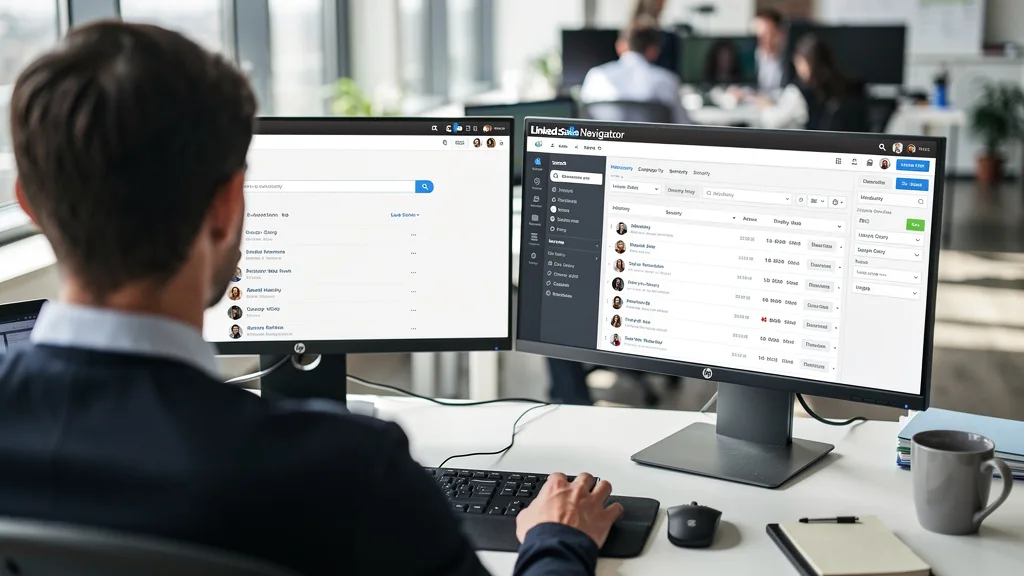
The primary distinction lies in the depth of search filters, the ability to save and organize leads, and the volume of outreach you can perform without restriction. A regular account is designed for personal networking, while Sales Navigator is a dedicated prospecting engine built to drive business results. For consultants and service providers targeting Amazon sellers, the investment in Sales Navigator often pays for itself through time savings and access to higher-quality leads.
Finding Sellers With a Regular LinkedIn Account
With a free or standard Premium LinkedIn account, you can still find Amazon sellers using the advanced search techniques mentioned earlier. You can filter by keywords, titles, locations, and industries. However, you will face limitations. LinkedIn imposes a commercial use limit on searches, and you may find your ability to search restricted if you perform too many in a short period. You also have a limited number of profile views outside your network.
Furthermore, managing your prospects is a manual process. You'll need to use external tools like a spreadsheet or CRM to track who you've contacted and when to follow up. While workable for small-scale outreach, this becomes cumbersome and inefficient as you scale your efforts. A regular account is a good starting point, but it lacks the robust features needed for a systematic and scalable outreach campaign.
Advanced Targeting With LinkedIn Sales Navigator
LinkedIn Sales Navigator transforms your prospecting capabilities. It provides access to a much wider range of search filters, including company size, revenue, headcount growth, and technology used. This allows you to create hyper-targeted lead lists, such as "Founders of consumer goods companies with 11-50 employees that have grown their headcount by 20% in the last year." This level of precision is impossible with a regular account.
Sales Navigator also allows you to save leads and accounts into organized lists, receive alerts on their activity, and send InMail messages to users outside your network. The platform operates separately from your personal LinkedIn profile, keeping your prospecting activities organized. For anyone serious about how to use LinkedIn messaging to connect with Amazon sellers, Sales Navigator is an essential tool for efficiency and effectiveness.
| Feature | Regular LinkedIn Account (Free/Premium) | LinkedIn Sales Navigator |
|---|---|---|
| Search Filters | Basic (Keywords, Title, Industry, Location) | Advanced (Company Size, Revenue, Headcount Growth, Seniority Level, Years in Role) |
| Lead Management | Manual tracking required (e.g., spreadsheets) | Built-in Lead and Account Lists with custom notes and tags |
| Outreach | Limited weekly connection requests; messaging only 1st-degree connections | Higher connection limits, plus monthly InMail credits to message out-of-network profiles |
| Alerts | Basic notifications on network activity | Custom alerts on saved leads and accounts (e.g., job changes, company news) |
| Commercial Use Limit | Yes, search activity is monitored and can be restricted | No commercial use limit; designed for high-volume prospecting |
Effective LinkedIn Message Templates for Seller Outreach
Once you've identified your target Amazon sellers, the next critical step is your outreach. A poorly crafted message can undo all your hard work in finding the right person. The goal is to be personal, professional, and value-oriented. Avoid generic templates and instead focus on starting a genuine conversation. Your message should make it clear that you've taken the time to understand their business and have a legitimate reason for connecting.

The most successful outreach sequences consist of three key parts: a personalized connection request, a value-driven first message, and a gentle follow-up. Each step has a distinct purpose designed to build trust and rapport. Remember that 7- and 8-figure brand owners are busy and receive dozens of pitches daily; your message needs to stand out by being relevant and respectful of their time.
The Personalized Connection Request
The connection request is your first impression. Never send a blank request. Always add a short, personalized note. This note should be concise and explain why you want to connect with them specifically. Reference a shared connection, a piece of content they posted, their company's recent achievement, or your shared membership in a LinkedIn group.
"Hi [First Name], I saw your post in the Amazon FBA Sellers group about scaling international marketplaces and found your insights on logistics really valuable. I specialize in helping brands like yours optimize for global growth and would love to connect and follow your work."
This type of request is specific, complimentary, and relevant. It immediately sets you apart from the flood of generic "I'd like to add you to my professional network" requests they receive. Keep it under 300 characters to ensure it's fully visible and easy to read.
The Value-Driven First Message
After your connection request is accepted, your first message should continue the conversation, not immediately pivot to a sales pitch. The goal is to offer value upfront. This could be a relevant article, a quick observation about their Amazon listing, or an invitation to a webinar. Frame it as a helpful gesture, not a transaction. This builds credibility and shows you're invested in their success.
For example, you could say: "Thanks for connecting, [First Name]. I took a quick look at your [Product Name] listing and was impressed by your branding. I noticed a small opportunity to improve visibility with a few keyword tweaks in the backend. I put together a quick Amazon listing optimization checklist for new sellers that might be helpful. No strings attached, just thought I'd share. Cheers!" This approach provides immediate value and opens the door for a future conversation.
The Gentle Follow-Up Sequence
Many conversations will require a follow-up. Busy entrepreneurs may see your message and forget to reply. A gentle, polite follow-up a few days later can re-engage them without being pushy. Your follow-up should be short and reference your previous message. Avoid phrases like "just bumping this up" or "following up on my last message."
Instead, try adding another piece of value. For instance: "Hi [First Name], hope you're having a productive week. I just came across this article about Amazon's latest A+ Content updates and thought it might be relevant to your brand. Let me know if you're open to a brief chat next week about how these changes could impact your strategy." This positions you as a helpful resource rather than a persistent salesperson.
Common Mistakes to Avoid When Messaging Amazon Sellers
Knowing what not to do is just as important as knowing what to do. When you connect with Amazon sellers on LinkedIn, a single misstep can damage your reputation and close the door on a potential relationship. High-level sellers are particularly adept at spotting low-effort, automated outreach and will quickly ignore, delete, or even report it. Avoiding these common mistakes will significantly increase your response rates and the quality of your connections.
The core principle is respect. Respect their time, respect their intelligence, and respect the platform's purpose as a professional network. Every interaction should be tailored and authentic. Automation has its place, but it should never come at the expense of genuine human connection. Successful outreach is a blend of efficiency and empathy. optimizing listings for conversion.
Sending Generic or Spammy Pitches
This is the most common and damaging mistake. Sending a generic, copy-and-pasted message that starts with "I see you're an Amazon seller" is an instant red flag. It shows you've done zero research and are just playing a numbers game. These messages are impersonal and focus entirely on what you want, not what the prospect needs.
Your message should never be a long block of text detailing all your services. Instead, it should be short, personalized, and focused on starting a conversation. Mention their brand by name, a specific product, or a recent achievement. Personalization shows you see them as an individual, not just another name on a list.
Failing to Research Your Prospect
Before you even write your message, spend at least two minutes on the person's profile and their company's website or Amazon storefront. What products do they sell? Who is their target audience? Have they been featured in the news recently? Have they posted any content on LinkedIn? This information is gold for personalization.
Referencing a specific detail shows genuine interest. For example: "I saw your new line of sustainable pet toys on Amazon, and as a dog owner, I love the mission." This simple sentence proves you've done your homework and makes your outreach infinitely more compelling than a generic pitch. Failing to do this basic research is a sign of disrespect for the prospect's time.
Ignoring LinkedIn's Connection and Messaging Limits
In an effort to combat spam, LinkedIn has implemented limits on the number of connection requests you can send per week (currently around 100). Exceeding these limits or having a high rate of ignored requests can lead to restrictions on your account. This is why a targeted, high-quality approach is superior to a high-volume, low-quality one.
Focus on your connection acceptance rate. A high acceptance rate signals to LinkedIn that you are a valuable networker. If your rate is low, it's a sign that your targeting or messaging is off. Prioritize quality over quantity to stay in good standing with the platform and ensure your outreach efforts are sustainable in the long term. You can find more information on this via the official LinkedIn help pages.
Top LinkedIn Outreach Tools for Contacting Amazon Sellers
While manual, personalized outreach is highly effective, leveraging the right tools can help you scale your efforts without sacrificing quality. The best tools for LinkedIn outreach are designed to automate repetitive tasks, manage your pipeline, and provide data to optimize your campaigns. These platforms can help you stay organized and consistent, which is key to long-term success in connecting with busy Amazon sellers.
It is crucial to choose tools that prioritize safety and operate within LinkedIn's terms of service. Overly aggressive automation can put your account at risk. The goal is to use technology to enhance your personal outreach, not to replace it entirely. Think of these tools as assistants that handle the administrative work, freeing you up to focus on building genuine relationships. scaling PPC campaigns.
Automation and CRM Integration Platforms
Several platforms specialize in LinkedIn outreach automation. Tools like Expandi, Dripify, and MeetAlfred allow you to build automated sequences that can include profile views, connection requests, and a series of follow-up messages. These tools use custom variables to personalize messages at scale, pulling information like the prospect's name, company, and title directly from their profile.
Many of these platforms also integrate with popular CRMs like HubSpot or Salesforce. This integration is vital for tracking your entire sales pipeline, from the initial LinkedIn connection to a closed deal. It ensures that no lead falls through the cracks and provides a single source of truth for all your client interactions. This is particularly useful for consultants managing a large volume of prospects. You can also leverage some of the best AI tools for Amazon sellers to help with prospect research and message crafting.
Tools for Finding and Verifying Contact Information
Sometimes, you may want to move the conversation from LinkedIn to email for a more direct approach or a multi-channel sequence. Tools like Hunter.io, Apollo.io, and Lusha are designed to find and verify the professional email addresses of your LinkedIn prospects. These tools often work as browser extensions that integrate directly with LinkedIn, allowing you to find contact information with a single click.
Using a multi-channel approach can significantly increase your response rates. If a prospect doesn't respond to your LinkedIn message, a polite and relevant email a few days later might get their attention. However, always ensure your email outreach is compliant with anti-spam regulations like CAN-SPAM and GDPR. The goal is to create more touchpoints, not to spam your prospects across every available channel.
Key Takeaways
Mastering LinkedIn outreach to Amazon sellers is a powerful skill that can significantly grow your business. By focusing on strategy, personalization, and value, you can build a strong network of high-quality prospects. Here are the most important points to remember:
- Define Your Ideal Prospect: Before you start, create a detailed profile of the Amazon seller you want to work with, including their revenue, category, and challenges.
- Use Advanced Search Techniques: Leverage Boolean operators, advanced filters, and company page searches to build highly targeted prospect lists.
- Sales Navigator is a Game-Changer: For serious prospecting, LinkedIn Sales Navigator offers unparalleled targeting and organizational tools that a regular account cannot match.
- Personalize Every Interaction: Avoid generic templates at all costs. Your connection requests and messages must be personalized to the individual to stand out.
- Lead with Value, Not a Pitch: Your initial messages should offer something helpful, like an insight, a resource, or a relevant article, to build trust before you ask for a meeting.
- Avoid Common Mistakes: Never send spammy pitches, always research your prospects, and respect LinkedIn's platform limits to protect your account.
- Leverage Tools Wisely: Use automation and contact-finding tools to scale your efforts efficiently, but never at the expense of genuine, human-to-human connection.
Frequently Asked Questions
Navigating the specifics of LinkedIn outreach can bring up many questions. Here are answers to some of the most common queries about connecting with Amazon sellers on the platform.
How much does LinkedIn Sales Navigator cost for prospecting in 2026?
As of September 2026, LinkedIn Sales Navigator Core (formerly Professional) typically costs around $99 per month, or slightly less if you opt for an annual subscription. The Sales Navigator Advanced (formerly Team) and Advanced Plus (formerly Enterprise) editions have higher price points and are designed for sales teams requiring CRM integration and advanced administrative features.
LinkedIn often offers a one-month free trial, which is an excellent way to test its features and determine if the investment is right for your business. Given its powerful filtering and lead management capabilities, most consultants and agencies targeting Amazon sellers find the cost provides a significant return on investment through time saved and higher-quality leads.
Are there specific LinkedIn groups for high-volume Amazon sellers?
Yes, there are numerous LinkedIn groups catering to experienced and high-volume Amazon sellers. While some are public, many of the most valuable groups are private and require approval to join. Look for groups with names like "Amazon FBA High Rollers," "7-Figure Seller Club," or niche-specific groups like "E-commerce Brand Owners."
To find them, search for keywords related to your target audience and filter the results by "Groups." When requesting to join private groups, be sure to fill out any required questions thoroughly to demonstrate your expertise and genuine interest in contributing to the community. These exclusive groups are often where top-tier sellers share advanced strategies.
What are some good alternatives to LinkedIn for networking with Amazon sellers?
While LinkedIn is the top platform for professional networking, other channels can be highly effective. Industry conferences and trade shows, both virtual and in-person, are excellent for meeting motivated brand owners. Niche-specific Facebook Groups can also be valuable, as many sellers use them for community support and tactical discussions.
Additionally, platforms like X (formerly Twitter) can be useful for following and engaging with e-commerce thought leaders and brand founders. Finally, don't underestimate the power of other content platforms. For example, many sellers are now leveraging visual platforms, making an Instagram marketing strategy for Amazon sellers a relevant topic and a potential networking channel.
What is a good connection acceptance rate on LinkedIn?
A good connection acceptance rate for personalized, cold outreach typically falls between 20% and 40%. If your acceptance rate is below 20%, it's a strong indicator that you need to refine either your targeting or your connection request message. Your message may not be personalized enough, or you might be targeting an audience that isn't a good fit.
Rates can vary based on industry and seniority. C-level executives are generally harder to connect with than managers. The key is to continuously track your acceptance rate and A/B test different message templates and targeting criteria to see what resonates best with your ideal Amazon seller profile.
How do you measure the success of your LinkedIn outreach campaigns?
Measuring success goes beyond just counting new connections. The key metrics to track for your LinkedIn outreach campaigns include: Connection Acceptance Rate (the percentage of requests that are accepted), Reply Rate (the percentage of new connections who respond to your first message), and Positive Reply Rate (the percentage of replies that are favorable or open to a conversation).
Ultimately, the most important metric is the number of qualified meetings or calls booked. This is the bottom-line result that demonstrates a true return on your time and investment. Use a simple spreadsheet or a CRM to track these metrics over time, allowing you to identify trends and optimize your approach for better results. You can also gain insights by observing what successful sellers learn from LinkedIn posts and engagement patterns.
Conclusion
Mastering how to connect with Amazon sellers on LinkedIn is a strategic imperative for any consultant or service provider in the e-commerce space. It requires moving beyond simple sales tactics and embracing a methodology rooted in research, personalization, and genuine value exchange. By implementing advanced search strategies, leveraging tools like Sales Navigator, and crafting compelling, human-centric messages, you can build a powerful pipeline of high-value clients and establish yourself as a trusted authority in the industry.
If you're ready to transform your LinkedIn presence from a passive profile into a proactive client-generation engine, the next step is to take action. Begin by refining your ideal customer profile and start practicing personalized outreach today. For serious Amazon brand owners looking to scale from 7 to 8 figures with profit-focused strategies, ensuring your listings are perfectly optimized is the first step. A comprehensive audit can reveal hidden opportunities for growth that you might be missing. Get your complimentary, no-obligation Free Audit to see how your brand stacks up.