
Are you an experienced Amazon seller wondering how to turn your expertise into a profitable business? The world of e-commerce is booming, and brands are desperately seeking skilled professionals who can navigate the complexities of the Amazon marketplace. This guide provides the definitive roadmap for launching your own successful consulting practice this year.
An Amazon consultant is an expert advisor who helps brands increase their sales, visibility, and profitability on the Amazon platform. They achieve this by managing key areas like product listing optimization, Pay-Per-Click (PPC) advertising, inventory management, and overall account strategy. For those looking into Amazon consulting for beginners: start your journey in 2026, it means leveraging your platform knowledge to provide high-value services to businesses aiming to scale.
What Is an Amazon Consultant and What Do They Do?
An Amazon consultant is a specialist who provides strategic guidance and hands-on management to help businesses succeed on Amazon. Think of yourself as a strategic partner for a brand, responsible for navigating the ever-changing landscape of the world's largest online marketplace. Your primary goal is to drive profitable growth, improve brand presence, and solve complex operational challenges that sellers face daily.

Unlike a general marketing agency, an Amazon consultant possesses deep, platform-specific knowledge. This includes understanding Amazon's A10 search algorithm, advertising platform nuances, and fulfillment network intricacies. For brands, hiring a consultant is an investment in expertise that can save them time, prevent costly mistakes, and ultimately accelerate their path to scaling from seven to eight figures and beyond.
Core Responsibilities of an Amazon Seller Consultant
The day-to-day tasks of an Amazon consultant are diverse and depend on the client's specific needs. However, most responsibilities fall into a few key categories that directly impact a brand's performance. These tasks range from high-level strategy to detailed, operational execution.
Your work will directly influence a brand's visibility, conversion rates, and profitability. Here are some of the core responsibilities you can expect to handle:
- Account Audits: Conducting a comprehensive review of a seller's account to identify weaknesses, strengths, and opportunities for growth in areas like listing quality, ad performance, and operational health.
- Listing Optimization: Enhancing product detail pages through keyword research, compelling copywriting, high-quality imagery, and A+ Content to improve organic rank and conversion rates.
- PPC Campaign Management: Creating, managing, and optimizing Amazon PPC campaigns to increase sales while maintaining a target Advertising Cost of Sale (ACoS).
- Inventory Management: Advising on inventory forecasting, replenishment strategies, and managing FBA (Fulfillment by Amazon) stock to avoid stockouts or long-term storage fees.
- Strategic Planning: Developing long-term growth strategies, including new product launches, international expansion, and brand protection through Amazon Brand Registry.
- Reporting and Analytics: Tracking key performance indicators (KPIs) and providing clients with clear, actionable reports on their account's performance and the ROI of your services.
Key Skills Needed for Success in 2026
To thrive as an Amazon consultant in 2026, technical knowledge of the platform is just the starting point. The most successful consultants blend analytical prowess with strong communication and business acumen. Brands are not just hiring a technician; they are hiring a strategic growth partner.
Analytical skills are paramount. You must be comfortable diving deep into data from various sources, including Amazon's own reports and third-party tools, to uncover actionable insights. Being able to translate complex data into a clear, compelling story for your clients is what separates a good consultant from a great one. Additionally, staying current with Amazon's frequent updates and the broader e-commerce trends is non-negotiable for providing relevant, effective advice.
A great Amazon consultant doesn't just manage tasks; they drive profitable growth. In 2026, the focus is on data-driven strategy, not just checking boxes. Brands want a partner who understands their bottom line and can deliver measurable results.
The Most In-Demand Amazon Consulting Services in 2026
As the Amazon marketplace becomes more saturated and competitive, brands are increasingly seeking specialized expertise to gain an edge. While full account management is always valuable, certain high-impact services have become particularly in-demand. Focusing your offerings on these areas can help you attract high-quality clients and deliver significant value from day one.
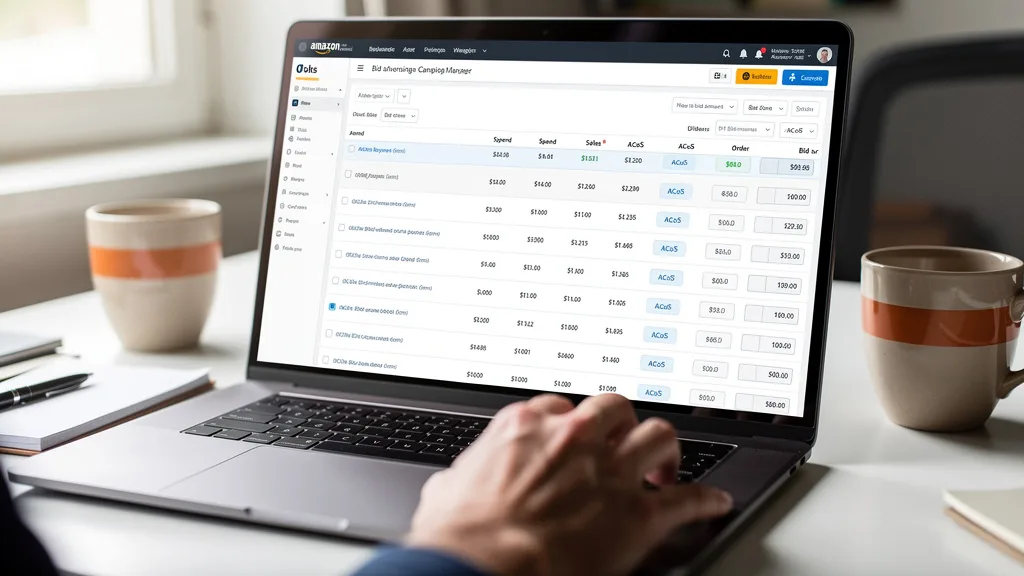
These services directly address the biggest pain points for most Amazon sellers: getting seen, converting shoppers, and managing advertising spend effectively. By mastering these domains, you position yourself as an indispensable asset to any serious Amazon brand looking to scale their business.
Product Listing Optimization and SEO Strategy
Product listing optimization is the foundation of all success on Amazon. If your client's product pages are not fully optimized for both the search algorithm and human shoppers, any advertising spend is wasted. This service involves a deep dive into keyword research, crafting compelling titles and bullet points, and creating visually appealing A+ Content. A well-optimized listing not only ranks higher organically but also dramatically increases conversion rates.
A comprehensive Amazon SEO strategy goes beyond just keywords. It includes optimizing backend search terms, analyzing competitor listings to find gaps, and ensuring all images and videos meet Amazon's best practices. As a consultant, you can offer this as a one-time project or an ongoing service, continually testing and refining listings to maximize performance and adapt to market changes. This is often the first service a new client will request.
Amazon PPC and Advertising Campaign Management
Amazon PPC management is arguably the most sought-after service in the consulting space. Many sellers struggle to run profitable ad campaigns, often wasting thousands of dollars with little to show for it. As a consultant, you can step in to create a structured, data-driven advertising strategy that aligns with the brand's overall business goals, whether that's launching a new product, increasing market share, or liquidating inventory.
Effective management involves more than just setting up campaigns. It requires continuous monitoring, bid adjustments, keyword harvesting, and negative keyword implementation to improve efficiency and lower ACoS. Providing clients with transparent reporting that clearly shows ad spend, sales generated, and total advertising cost of sale (TACoS) is crucial for demonstrating your value. This is a highly technical skill that commands premium rates. For a deeper dive, our complete guide to profitable campaigns offers advanced strategies.
Supply Chain, Inventory, and FBA Management
While less glamorous than marketing, supply chain and inventory management are critical to a brand's profitability. Stocking out on a best-selling product can be devastating for its sales rank and momentum. Conversely, overstocking leads to costly long-term storage fees and tied-up capital. An expert consultant can help businesses avoid these pitfalls.
This service involves creating inventory forecasting models, setting reorder points, and advising on the most efficient shipping and replenishment strategies for FBA. You can help clients maintain a healthy Inventory Performance Index (IPI) score, which is essential for avoiding storage limits. For brands that use both FBA and FBM (Fulfillment by Merchant), you can provide strategic advice on which fulfillment method makes the most sense for different products in their catalog.
Transitioning from an expert seller to a professional consultant requires a shift in mindset and a structured approach. You are no longer just managing products; you are building a service-based business. This involves establishing a legal framework, defining your unique value proposition, and creating a professional brand that attracts your ideal clients.

Taking the time to set up these foundational elements correctly will save you significant headaches down the road. A clear business structure protects you legally, a well-defined niche makes your marketing efforts more effective, and a strong brand builds the trust necessary to close high-ticket consulting deals.
Choosing a Business Structure and Handling Legalities
One of the first steps in formalizing your business is choosing a legal structure. For most solo consultants, forming a Limited Liability Company (LLC) is a popular choice because it provides personal liability protection, separating your personal assets from your business debts. Other options include a sole proprietorship, which is simpler but offers no liability protection.
Regardless of the structure you choose, it's essential to handle the legalities properly. This includes registering your business name, obtaining any necessary local or federal licenses, and opening a separate business bank account to keep your finances organized. Consulting with a legal professional or using a service like LegalZoom can be a wise investment. For U.S. based consultants, the Small Business Administration (SBA) offers excellent resources on this topic.
Defining Your Niche and Core Service Offerings
Trying to be a jack-of-all-trades is a common mistake for new consultants. Instead, focus on defining a specific niche where you can become the go-to expert. Your niche could be based on a product category (e.g., supplements, apparel), a business model (e.g., private label brands, wholesalers), or a specific problem (e.g., launching brands in the EU, recovering suspended listings).
Once you have your niche, clearly define your core service offerings. Start with two or three high-impact services you are confident you can deliver with excellent results, such as PPC Management and Listing Optimization. You can package these services into clear, easy-to-understand offers. This focus not only makes your marketing easier but also allows you to build a portfolio of impressive results in a specific area, which is invaluable for attracting future clients looking to find low-competition Amazon niches.
Building Your Professional Brand and Online Presence
Your online presence is your digital storefront. A professional website is essential, serving as a central hub where potential clients can learn about your services, see your results, and contact you. Your website should clearly articulate who you help and how you help them. Include testimonials and case studies as soon as you have them to build credibility.
Beyond your website, a strong LinkedIn profile is crucial for B2B networking. Position yourself as an expert by sharing valuable insights, engaging with other professionals in the e-commerce space, and connecting with potential clients. Consistently providing value through content, whether on a blog or social media, helps build trust and establishes you as an authority in your niche long before a potential client ever reaches out.
How to Price Your Services as a Beginner Consultant
Pricing is one of the most challenging aspects for new consultants. If you price too low, you risk devaluing your expertise and attracting low-quality clients. If you price too high, you might struggle to land your first few projects. The key is to find a balance that reflects the value you provide while being competitive enough to get your foot in the door.

Your pricing strategy will likely evolve as you gain experience and build a portfolio of results. Initially, your goal should be to set rates that are fair and allow you to build a track record of success. Don't be afraid to adjust your prices as your skills and reputation grow.
Common Pricing Models: Hourly, Retainer, and Project-Based
There are three primary models for pricing consulting services, each with its own pros and cons. Understanding these will help you create offers that align with both your business goals and your clients' needs. Many consultants use a mix of these models depending on the scope and type of work.
Choosing the right model often depends on the service itself. For example, an account audit is a perfect fit for a project-based fee, while ongoing PPC management is well-suited to a monthly retainer. As a beginner, offering a small project-based service like a listing optimization package can be a great way to start a relationship with a new client.
| Pricing Model | Best For | Pros | Cons |
|---|---|---|---|
| Hourly Rate | Undefined scope, small tasks, initial consultations | Simple to track, ensures you are paid for all time worked | Can be hard to sell, clients may fear spiraling costs, income is not predictable |
| Project-Based Fee | Clearly defined deliverables like a listing optimization or brand audit | Clear scope and price for the client, rewards efficiency | Risk of scope creep if not managed well, requires accurate time estimation |
| Monthly Retainer | Ongoing services like full account management or PPC management | Predictable, recurring revenue for you; ongoing support for the client | Requires demonstrating continuous value, can be a harder initial sell |
Setting Your Initial Rates to Attract Clients
When you're just starting, your primary goal is to get experience and build a portfolio. This may mean setting your initial rates slightly lower than more established consultants. Research what other consultants with similar experience levels are charging to get a baseline. However, avoid competing solely on price, as this can attract clients who do not value your expertise.
A good strategy is to offer a high-value, lower-cost introductory service, such as a detailed account audit or a single product listing optimization. This allows a client to experience your work with minimal risk. Once you deliver exceptional results on that initial project, you are in a much stronger position to upsell them to a higher-priced monthly retainer. Focus on delivering an incredible ROI, and your rates will quickly become a non-issue.
How to Get Your First Client for an Amazon Consulting Business
Landing your first client is often the biggest hurdle, but it's the milestone that transforms your business from an idea into a reality. The process requires proactive outreach, strategic networking, and effectively showcasing your skills, even if you don't have a long list of past clients. Your first client is a stepping stone to building the social proof and case studies you need to grow.
Don't wait for clients to come to you. In the beginning, you need to be proactive and go where your potential clients are. Combine different strategies to maximize your chances of connecting with a brand owner who needs your help.
Leveraging Professional Networks and Online Communities
Your existing network is one of your most valuable assets. Let friends, former colleagues, and contacts on LinkedIn know about your new venture. You never know who might be connected to an Amazon seller in need of help. Be specific about the problems you solve and the type of client you are looking for.
Beyond your personal network, become an active, helpful member of online communities where Amazon sellers gather. This includes Facebook groups, Reddit subreddits like r/FulfillmentByAmazon, and industry forums. Answer questions genuinely and provide value without a hard sales pitch. This builds your reputation as an expert and can lead to inbound inquiries from brand owners who are impressed by your knowledge.
Creating Case Studies from Personal or Spec Projects
You might be thinking, "How can I create a case study without a client?" If you have experience as an Amazon seller, use your own account as your first case study. Document the results you achieved through your own efforts, such as improving a listing's conversion rate or lowering your ACoS. A detailed Amazon PPC audit of your own campaigns can become a powerful marketing asset.
If you don't have your own seller account, consider doing a "spec" (speculative) project. Choose a product on Amazon with a poorly optimized listing and create a detailed presentation showing exactly how you would improve it. You can then use this as a work sample to show potential clients your thought process and capabilities. It demonstrates your skills in a tangible way, even without a paid project behind it.
Finding Leads on Freelance Marketplaces
Platforms like Upwork and Fiverr can be excellent places to find your first few clients. While these platforms can be competitive and sometimes price-sensitive, they are filled with brand owners actively looking for help. Create a highly detailed and professional profile that highlights your specific skills and niche.
When applying for jobs, write a personalized proposal for each project. Avoid generic, copy-pasted responses. Reference specific details from the client's job post and explain exactly how you can solve their problem. Landing a few small projects on these platforms can provide you with the initial testimonials and portfolio pieces needed to start attracting clients through other channels like your own website. You can find more information about these platforms through a simple search on a site like Upwork.
Essential Tools for Amazon Seller Consultants in 2026
To operate efficiently and deliver professional-level results, you need to invest in a suite of software tools. These tools automate tedious tasks, provide critical data that isn't available directly from Seller Central, and allow you to uncover insights that can give your clients a competitive advantage. While they represent an investment, the right tools pay for themselves many times over in efficiency and improved client outcomes.
Your toolkit will likely expand as your business grows, but starting with a core set of tools for research, advertising, and reporting is essential. These platforms are the industry standard and what your clients will expect you to be proficient in using.
Keyword Research and Product Discovery Tools
Comprehensive keyword research is the backbone of both SEO and PPC. Tools like Helium 10, Jungle Scout, and SellerApp are indispensable for this. They allow you to find high-volume keywords, analyze competitor strategies, and estimate the sales volume of potential products or niches. These platforms provide a level of data granularity that is simply not possible with Amazon's native tools alone.
These tools help you make data-driven decisions rather than guessing. You can use them to validate product ideas for your clients, identify underserved keyword opportunities, and track your clients' keyword rankings over time. Proficiency in at least one of these major tool suites is a must-have skill for any serious Amazon consultant.
PPC Management and Automation Software
While you can manage PPC campaigns directly within Amazon's advertising console, specialized software can provide a significant edge. Tools like Perpetua, Teikametrics, or the advanced PPC features within Helium 10 offer automation rules, AI-powered bidding, and more sophisticated analytics. These platforms can save you hours of manual work each week.
This software helps you automate tasks like bid adjustments based on target ACoS, harvesting converting search terms into new campaigns, and identifying wasteful ad spend. For consultants managing multiple client accounts, these tools are not just a convenience; they are a necessity for scaling your services effectively while delivering superior results.
Analytics and Reporting Platforms
Clear and insightful reporting is how you demonstrate your value to clients. While you can create reports manually using spreadsheets, dedicated analytics platforms can make this process much more efficient and professional. Tools like SellerBoard or Data Dive connect directly to a seller's account and pull in data on sales, profit, ad spend, and inventory.
These platforms calculate true profitability by factoring in all of Amazon's various fees, ad costs, and cost of goods sold. This allows you to provide clients with a clear picture of their bottom line. Using a professional reporting tool elevates the perceived value of your service and reinforces the data-driven nature of your strategic recommendations.
Key Takeaways
Starting an Amazon consulting business in 2026 is a significant opportunity for those with the right skills and a strategic mindset. Success hinges on more than just knowing your way around Seller Central. It requires defining a clear niche, building a professional brand, and mastering the art of client acquisition and management. By focusing on high-demand services like PPC and listing optimization, you can deliver immediate value and build a reputation for driving profitable growth. Remember to establish a solid business foundation from the start, including a legal structure and a clear pricing model. As you gain experience and collect case studies, you can confidently raise your rates and attract larger clients, turning your expertise into a scalable and rewarding business.
Frequently Asked Questions
How much should a beginner Amazon consultant charge per hour?
For a beginner Amazon consultant in 2026, a common starting hourly rate is between $50 and $100 per hour. This range depends on your prior experience, the complexity of the task, and your geographical location. If you have a proven track record as a successful 7-figure seller, you can justify starting at the higher end of this range.
However, it's often more strategic to move away from hourly billing as quickly as possible. Consider offering fixed-price project packages (e.g., $500 for a comprehensive listing optimization) or a monthly retainer for ongoing management. This provides clients with cost certainty and allows you to price based on the value you deliver, not just the hours you work.
Is a specialization in FBA vs FBM more profitable for consultants?
A specialization in FBA (Fulfillment by Amazon) is generally more profitable and in higher demand for consultants. The vast majority of successful private label brands and scaling sellers rely heavily on FBA to leverage Prime eligibility and Amazon's logistics network. These sellers often face complex challenges with inventory management, storage fees, and IPI scores, creating a strong need for expert guidance.
While FBM (Fulfillment by Merchant) has its place, particularly for oversized items or sellers with their own logistics capabilities, the client pool is smaller. A deep understanding of FBA is a core competency that most high-value clients will expect. You can always offer FBM strategy as a secondary skill, but leading with FBA expertise will open more doors.
What are some reviews of popular Amazon consulting courses?
There are many popular courses available, each with different strengths. Courses from organizations like the Amazing Selling Machine (ASM) are often reviewed as being very comprehensive for beginners but can be expensive. The Freedom Ticket course by Helium 10 is frequently praised for its depth and is included with a software subscription, offering great value.
When evaluating reviews, look for feedback on the course's recency, the instructor's real-world experience, and the community support offered. Many reviews suggest that the best approach is to combine a structured course with hands-on experience. No course can replace the learning that comes from actually managing an account, but they can provide a fantastic framework and accelerate your learning curve.
What are the typical profit margins for a solo Amazon consultant?
The profit margins for a solo Amazon consultant can be exceptionally high, often ranging from 70% to 90%. This is because the primary business expenses are software tools, marketing, and potentially professional services like accounting. Unlike a product-based business, you have no cost of goods sold or inventory to manage.
Your main costs will be your software stack (e.g., Helium 10, Perpetua), which might run a few hundred dollars per month, and any advertising you do for your own business. As you scale and deliver high-value retainer services, your revenue grows significantly while your fixed costs remain relatively stable, leading to very healthy profit margins.
Do I need to be a successful Amazon seller to be a consultant?
While being a successful Amazon seller yourself provides immense credibility and practical experience, it is not an absolute requirement. Some excellent consultants have backgrounds in digital marketing, data analysis, or brand management and have applied those skills specifically to the Amazon ecosystem. They learned the platform through courses, managing accounts for others, or working at an agency.
However, if you haven't been a seller, you must be able to demonstrate your expertise in other ways. This means having strong case studies (even from spec work), glowing testimonials from your first few clients, and a deep, demonstrable knowledge of the tools and strategies involved. Your clients care about your ability to get them results, and there is more than one path to acquiring that ability.
Conclusion
Embarking on the path of Amazon consulting is a rewarding way to capitalize on your marketplace expertise. This guide on Amazon consulting for beginners: start your journey in 2026 has shown you the critical steps, from defining your services and setting up your business to acquiring your first clients. Success lies in combining technical skill with business acumen, focusing on high-impact services, and consistently demonstrating your value through tangible results. Your next step is to take action, build your brand, and start networking to land that pivotal first client.
Ready to see what an expert eye can uncover in your Amazon business or a potential client's account? I offer a comprehensive audit that analyzes listing quality, PPC performance, and overall growth opportunities. This is the perfect tool to showcase value to a potential client or to refine your own strategy. Get your completely free, no-obligation audit today and take the first step towards data-driven growth. Claim your Free Audit now.