Table of Contents 7 sections
Are you struggling to find a profitable product that stands out in the crowded Amazon marketplace? The right product choice is the foundation of a 7 or 8-figure brand, yet many sellers get stuck in analysis paralysis or pick overly competitive items. Success on Amazon in 2026 isn't about finding just any product; it's about finding the right niche product with a clear path to profitability.
An effective Amazon niche product finder strategy combines manual research techniques with powerful software tools. This approach allows you to uncover products with high consumer demand but low seller competition, analyze their profit potential, and validate your idea before investing significant capital. By leveraging data and understanding market gaps, you can confidently select products that are positioned for growth and brand building.
What Defines a Winning Amazon Niche Product in 2026
A winning product is more than just a top seller; it's a strategic asset that can sustain growth and profitability. In 2026, the key is to identify items that not only meet current market needs but also offer a unique value proposition that competitors cannot easily replicate. This involves a careful evaluation of demand, profitability, and branding potential to ensure your choice has long-term viability.
"A winning product in 2026 isn't just about sales volume; it's about building a defensible brand in a niche you can own. Profitability follows brand equity, not the other way around."
High Demand with Low Competition
The ideal niche product exists at the intersection of strong customer interest and a manageable competitive landscape. High demand can be verified by looking for products with a consistent Best Sellers Rank (BSR) and significant search volume for relevant keywords. Aim for keywords with thousands of monthly searches, indicating a healthy market size.
Low competition doesn't mean no competition. Instead, it means finding markets where the top sellers have weaknesses you can exploit. Look for competitors with low review counts (under 500), poor quality listings, or negative customer feedback that highlights unsolved problems. This is your entry point to find low competition Amazon niches and establish a foothold.
Strong Profitability and Margin Potential
A product can sell thousands of units, but if it isn't profitable, your business won't grow. A winning product must have a healthy profit margin, typically at least 25-30% after all costs are considered. This includes the cost of goods sold (COGS), shipping, Amazon FBA fees, and marketing expenses like PPC advertising.
When evaluating potential products, use Amazon's FBA Revenue Calculator to estimate fees and potential net profit. A higher price point (ideally over $25) often provides more room for profit and helps absorb fluctuations in advertising costs. Avoid products in a race to the bottom on price, as this erodes margins and makes scaling impossible.
Opportunities for Branding and Differentiation
Commoditized products are difficult to win with because the only lever you can pull is price. A truly great niche product offers opportunities for you to build a brand around it. This could mean creating a unique design, improving on an existing product's flaws, offering a bundle of complementary items, or providing superior packaging and customer experience.
Differentiation allows you to command a premium price and build customer loyalty. Ask yourself: Can I add value to this product? Can I create a brand story that resonates with a specific audience? If the answer is yes, you have a much stronger chance of long-term success than if you were simply reselling a generic item.
Manual Techniques for Finding Niche Opportunities
Before you invest in expensive software, manual research techniques can help you develop an intuition for what makes a good product. These methods are free, accessible, and an excellent way to generate an initial list of product ideas by observing real customer behavior and market trends directly on and off Amazon.
Analyzing Amazon's Bestseller and Movers & Shakers Lists
Amazon's own data is a goldmine for product ideas. The Best Sellers list shows you what is consistently popular in every category and sub-category. Drill down into niche sub-categories to find less obvious opportunities that still have significant sales volume. The Movers & Shakers list is even more powerful, as it highlights products with the biggest gains in sales rank over the last 24 hours, giving you a real-time look at emerging trends.

When browsing these lists, don't just look at the products themselves. Analyze the categories they belong to and the customer needs they fulfill. A trending product might be part of a larger lifestyle shift or a new hobby gaining popularity, which could open up an entire category of related product opportunities.
Mining Customer Reviews for Product Gaps
Your future customers are already telling you what they want. Go to the listings of popular products in a niche you're interested in and read the 1, 2, and 3-star reviews. These negative reviews are a roadmap for product improvement. Customers will explicitly state what they dislike, what features are missing, and what problems the product failed to solve.
Create a list of these complaints and look for recurring themes. If multiple people are complaining about a product's durability, size, or a specific missing feature, you have found a clear opportunity. Your new product can be designed to solve these exact problems, giving you a powerful marketing angle and a superior product from day one.
Using Keyword Modifiers to Uncover Hidden Niches
Think about how people search for products. They don't just type "water bottle"; they type "insulated water bottle for hiking" or "glass water bottle with time markers." These extra words are keyword modifiers, and they reveal specific customer needs and underserved niches. Start with a broad product idea and add modifiers related to materials (wooden, silicone), use cases (for travel, for office), target audience (for kids, for seniors), or features (eco-friendly, rechargeable).
Use Amazon's search bar to see what auto-suggestions appear as you type. These suggestions are based on real customer searches. Each long-tail keyword variation represents a potential micro-niche. By targeting these more specific keywords, you can face less competition and attract highly motivated buyers looking for exactly what you offer.
Exploring External Trend Platforms like Pinterest and Google Trends
Amazon trends often start elsewhere. Platforms like Pinterest, Instagram, and TikTok are leading indicators of what will be popular in the coming months. Use Pinterest Trends to see what users are searching for and saving in categories like home decor, fashion, and hobbies. Look for visual trends that could translate into physical products.
Similarly, Google Trends allows you to see the search interest for a topic over time. You can identify seasonal patterns and, more importantly, spot keywords with a rising trajectory. Finding a product with increasing search interest on Google before it becomes saturated on Amazon gives you a significant first-mover advantage.
Best Amazon Product Research Tools Ranked for 2026
While manual research is essential, dedicated software tools provide the data you need to validate your ideas and make informed decisions. These platforms aggregate sales data, track competitors, and estimate revenue, saving you hundreds of hours of work. Choosing the right tool depends on your budget and the specific data you need to analyze.
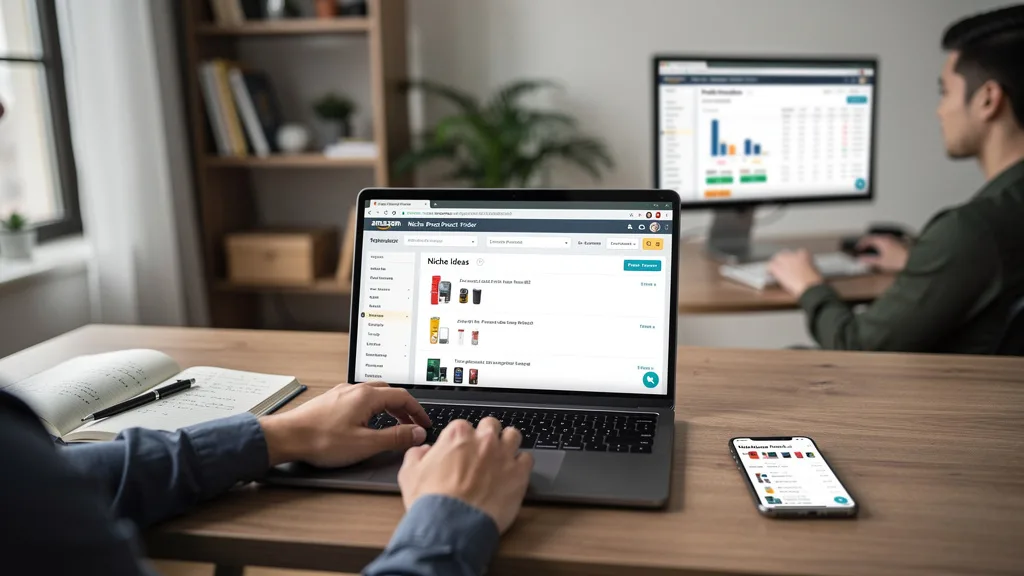
To help you decide, here is a comparison of the top amazon product research tools available for sellers in 2026. These platforms are consistently rated as the best in the market based on usability and accuracy.
| Tool | Best For | Key Feature |
|---|---|---|
| Helium 10 | All-in-one functionality from research to marketing | Black Box product finder & Xray browser extension |
| Jungle Scout | Data accuracy and market opportunity validation | Opportunity Finder & Supplier Database |
| Viral Launch | Product launches and competitive intelligence | Market Intelligence & Launch Services |
Helium 10: The Comprehensive All-in-One Suite
Helium 10 is widely regarded as the most comprehensive software suite for Amazon sellers. It offers a vast array of tools that cover nearly every aspect of the selling process, from product research to keyword tracking and listing optimization. Its flagship product research tool, Black Box, allows you to filter Amazon's entire product database using dozens of specific criteria like price, review count, monthly revenue, and more.
The Xray Chrome extension is another powerful feature, providing a detailed data overlay directly on Amazon search results and product pages. This allows for quick analysis of a market's health, including average revenue, sales trends, and competitor performance. For sellers who want a single platform to manage their entire business, Helium 10 is an excellent investment.
Jungle Scout: For Data-Driven Market Analysis
Jungle Scout is one of the original and most trusted names in Amazon product research. It is particularly known for the accuracy of its sales estimation data, making it a favorite among sellers who prioritize data-driven decisions. The Opportunity Finder tool helps you uncover promising niches by searching for high-demand, low-competition keywords.
Jungle Scout also includes a robust Supplier Database, which can help you find and vet potential manufacturers for your product idea. This integration of research and sourcing streamlines the process of bringing a product to market. Its user-friendly interface makes it a great choice for both beginners and experienced sellers who need reliable market data.
Viral Launch: For Product Launch and Market Intelligence
Viral Launch offers a powerful suite of tools with a particular focus on gaining a competitive edge during the product launch phase. Its Market Intelligence tool provides in-depth data on market trends, sales estimates, and a unique product idea score to help you quickly assess a niche's viability. This tool helps you understand the historical sales data to avoid products with only temporary spikes in demand.
Where Viral Launch truly shines is with its integrated launch services. You can use the platform to run promotional giveaways to a targeted audience, helping you generate initial sales and reviews to build momentum. For sellers who want to ensure their product gets a strong start, Viral Launch provides a distinct advantage.
Free Product Research Tools for New Sellers
If you're on a tight budget, several free tools can help you get started. As mentioned, Google Trends and Pinterest Trends are excellent for spotting off-Amazon demand. Within Amazon, simply using the search bar and observing the auto-complete suggestions can reveal popular long-tail keywords.
Another useful free tool is the Amazon FBA Revenue Calculator, which is essential for estimating profitability. While these free methods require more manual effort, they can be surprisingly effective for generating a list of initial ideas that you can later validate more deeply if you decide to invest in a paid tool. Combining these with a deep dive into the best Amazon niche research tools can create a powerful strategy.
How to Validate Your Niche Product Idea
Finding a promising product idea is only half the battle. The next critical step is validation, where you rigorously test your idea against real-world data to confirm its potential before investing thousands of dollars in inventory. This process mitigates risk and significantly increases your chances of success.
Conducting a Thorough Competitor Analysis
A deep dive into your potential competitors is non-negotiable. Look at the top 10 sellers for your main keyword. Analyze their listing quality: do they have professional photos, compelling copywriting, and A+ Content? Read their reviews to understand their strengths and weaknesses. Also, assess their pricing strategy and estimate their daily and monthly sales using a research tool.

Your goal is to determine if you can realistically compete and offer a superior product or marketing message. If the top sellers are all established brands with thousands of positive reviews and perfectly optimized listings, the barrier to entry may be too high. Look for markets where the competition is lazy or has clear, solvable flaws.
Calculating Estimated Profitability and ROI
Once you have a product idea, you must run the numbers to ensure it's financially viable. Start by getting an estimated sourcing cost per unit from a platform like Alibaba. Then, use the Amazon FBA Revenue Calculator to input your potential sale price, product cost, and shipping costs. The calculator will break down the various Amazon fees and show you your net profit per unit and margin.
Don't forget to factor in other costs, such as PPC advertising, photography, and branding. Your target should be a net margin of at least 25%. A detailed understanding of your Amazon PPC costs is crucial for accurate profit forecasting. This calculation will tell you if the product is worth pursuing or if the margins are too thin to build a sustainable business.
Contacting Suppliers to Verify Sourcing Costs
The cost you see on Alibaba is often just a starting point. To truly validate your profitability, you must contact multiple potential suppliers and request quotes (RFQs). Provide them with detailed specifications for your product, including any improvements or customizations you plan to make. Ask for tiered pricing based on order volume (e.g., for 500, 1000, and 2000 units).
Also, inquire about sample costs, production lead times, and shipping options. This direct communication will give you a much more accurate picture of your landed cost per unit, which is the total cost to get the product from the factory to an Amazon warehouse. Without this step, your profit calculations are just guesswork.
Key Takeaways
Finding a profitable niche product on Amazon requires a structured approach. Here are the key takeaways to guide your research in 2026:
- Focus on the Trifecta: A winning product has high demand, low-to-medium competition, and strong branding potential. Don't compromise on any of these three pillars.
- Combine Manual and Tool-Based Research: Use free, manual techniques to generate ideas and develop market intuition. Then, use powerful software like Helium 10 or Jungle Scout to validate those ideas with hard data.
- Solve a Problem: The best products improve upon what's already on the market. Mine customer reviews to find pain points and design a product that offers a clear solution.
- Validate Before You Invest: Never order inventory without doing your due diligence. Conduct a thorough competitor analysis, calculate your profitability with real numbers, and verify sourcing costs with actual suppliers.
- Think Long-Term: Avoid trendy, flash-in-the-pan products. Focus on finding a niche where you can build a sustainable brand, create a product line, and foster customer loyalty over time.
Frequently Asked Questions
What is a good profit margin for an Amazon FBA product?
A good target profit margin for an Amazon FBA product is between 25% and 30% after all costs. This includes the cost of goods, shipping, Amazon referral and FBA fees, and advertising expenses. A margin in this range provides a healthy buffer for unexpected costs and allows you to reinvest profits back into growing your business through marketing and inventory expansion.
Margins below 20% can be risky, as a small increase in ad spend or shipping costs can quickly erase your profits. Always calculate your potential margin carefully before committing to a product to ensure the financial model is sustainable for scaling your brand.
How long does Amazon product research usually take?
The timeline for Amazon product research can vary significantly, but most successful sellers spend anywhere from a few weeks to a few months on the process. The initial idea generation phase might take 1-2 weeks of consistent effort. Validating a shortlist of ideas through competitor analysis, profitability calculations, and supplier communication can take another 2-4 weeks.
It's crucial not to rush this stage. The time you invest in thorough research is the single most important factor in determining your future success. Rushing to launch a poorly vetted product is a common and costly mistake for new sellers.
Can you find a profitable niche on Amazon without paid tools?
Yes, it is possible to find a profitable niche on Amazon using only free methods, but it requires significantly more time and manual effort. You can use techniques like analyzing Amazon's Best Sellers and Movers & Shakers lists, mining customer reviews for product gaps, using keyword modifiers in the search bar, and tracking trends on Google and Pinterest.
However, paid tools provide invaluable sales data, revenue estimates, and competitive insights that are nearly impossible to gather manually. While you can start with free methods, investing in a tool like Helium 10 or Jungle Scout for at least one month is highly recommended to properly validate your final product choice.
What are the biggest mistakes to avoid when choosing a product?
The biggest mistakes include picking a product based on personal passion rather than data, entering an overly saturated market with dominant competitors, and failing to calculate profitability accurately. Other common errors are choosing products with patent or liability issues (e.g., supplements, baby products), selecting items that are oversized or fragile, and not planning for differentiation.
Perhaps the most critical mistake is skipping the validation phase. Many sellers fall in love with an idea and order inventory without confirming demand, analyzing competition, or verifying sourcing costs. Always trust the data over your gut feeling to avoid a costly failure.
Conclusion
Mastering the art of product selection is the cornerstone of building a scalable Amazon business in 2026. By blending manual research techniques with the analytical power of leading software, you can systematically uncover and validate niche opportunities that others overlook. The key is to move beyond generic products and focus on creating a differentiated brand that solves a specific customer problem. This strategic approach minimizes risk and lays the foundation for long-term, profitable growth.
If you've identified a potential product but want an expert eye to review its viability and your overall strategy, we can help. Our team specializes in scaling Amazon brands from 7 to 8 figures by focusing on profit-first principles. We can analyze your product choice, competitors, and listing to ensure you're set up for success. Get in touch for a Free Audit today.