Table of Contents 8 sections
Are you looking to expand your ecommerce business into the lucrative office supplies market on Amazon, but feel uncertain about which of your products qualify for their fulfillment program? Navigating the rules can be complex, but understanding them is the first step toward scaling your brand effectively.
Meeting Amazon FBA eligibility for office products and supplies requires an active professional seller account, adherence to product listing standards, and compliance with Amazon's restricted products policy. While most standard office items like pens and paper are eligible, electronics and items with batteries or inks have specific requirements you must verify in Seller Central before sending inventory to a fulfillment center.
This guide will walk you through the core requirements, specific rules for different types of office products, and how to confirm your items are eligible. By mastering these guidelines, you can leverage Amazon's powerful logistics network to reach more customers and grow your business profitably in 2026.
What Is Fulfillment by Amazon (FBA)?
Fulfillment by Amazon (FBA) is a service that allows sellers to outsource their order fulfillment to Amazon's global network of warehouses. When you use FBA, you send your products to Amazon's fulfillment centers, and they handle the rest. This includes storing your inventory, picking and packing orders as they come in, and shipping them to the customer. Amazon also manages customer service and processes returns for all FBA orders.

The primary advantage of using FBA is that your products become eligible for Amazon Prime free two-day shipping, a major draw for millions of shoppers. This not only increases the visibility and appeal of your listings but also offloads the logistical burden of storage and shipping. For brands aiming to scale from seven to eight figures, FBA provides the infrastructure needed to handle a high volume of orders without investing in your own warehouse space and staff.
Core Requirements for Amazon FBA Eligibility
Before you can send any products to an Amazon fulfillment center, your business and your listings must meet several core requirements. These standards are in place to ensure a consistent and high-quality experience for customers. Meeting these prerequisites is the foundational step in successfully using the FBA program for your office supply products.
General Seller Account Requirements
First and foremost, you must have a Professional Seller Account to use FBA. This type of account is designed for businesses planning to sell more than 40 items per month. Beyond the account type, Amazon requires you to maintain good account health. This involves monitoring key performance metrics like the Order Defect Rate (ODR), Pre-fulfillment Cancel Rate, and Late Shipment Rate, although FBA helps automate the latter two.
Consistently meeting Amazon's performance targets demonstrates that you are a reliable seller, which is crucial for long-term success on the platform. Any significant issues with your account health can put your FBA privileges at risk, so it's essential to monitor your dashboard regularly and address any warnings promptly.
Product Listing and Information Standards
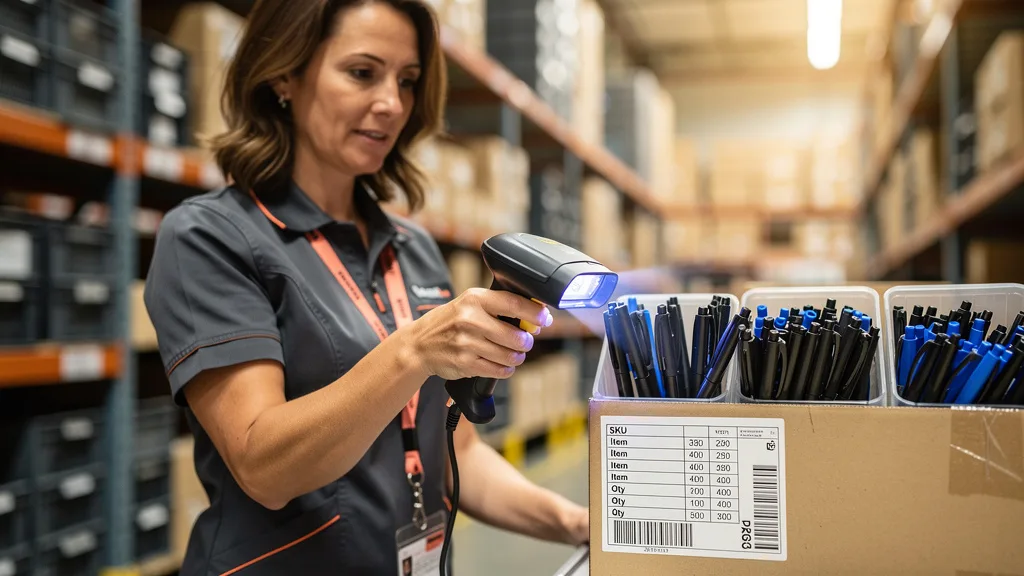
Every product you send to FBA must have a single, scannable barcode (like a UPC, EAN, or Amazon's FNSKU) so it can be tracked throughout the fulfillment process. Your product listings must also be complete and accurate, including a clear title, detailed bullet points, a comprehensive description, and high-quality images. Following Amazon's listing guidelines helps customers make informed purchasing decisions and reduces the likelihood of returns.
Optimizing your product detail pages is not just a requirement; it's a critical component of driving sales. Using the best Amazon listing optimization tools can help ensure your products are discoverable and compelling to potential buyers. Accurate information prevents customer confusion and protects your account from policy violations related to inaccurate product details.
Adherence to Amazon's Restricted Products Policy
Amazon maintains a strict policy on products that are prohibited or require special approval for sale. As a seller, it is your responsibility to review this policy thoroughly to ensure your office supplies are compliant. While most office products are permitted, certain items like powerful magnets, specific cleaning chemicals, or products making unsubstantiated claims could be restricted.
Ignoring this policy can lead to serious consequences, including the suspension of your selling privileges and the disposal of your inventory at your expense. Always research and confirm that your products are allowed on the platform before investing in inventory. You can find the full list of restricted products within the help pages of your Seller Central account. Understanding what Amazon FBA Supplies for Third-party sellers are allowed is a crucial step.
While the general requirements apply to all sellers, the Office Products category has its own set of nuances. Different types of supplies, from simple notebooks to complex electronics, have distinct eligibility criteria and preparation guidelines that you must follow to avoid issues at the fulfillment center.
Standard Supplies: Paper, Pens, and Notebooks
For the most part, standard office supplies like paper, pens, notebooks, and folders are straightforward to sell via FBA. The main considerations for these items are related to packaging and bundling. If you are selling a multi-pack, such as a box of 12 pens, it must be sealed in a single package and labeled as a set to prevent it from being separated at the warehouse.

Each sellable unit must have its own scannable barcode. If the manufacturer's barcode applies to a single pen but you are selling a pack of 12, you must cover the original barcodes and apply a new FNSKU label that corresponds to your multi-pack listing. Proper preparation prevents receiving errors and ensures customers get exactly what they ordered.
Office Electronics and Peripherals
Items like printers, monitors, keyboards, and computer mice fall under the office electronics category and often require more careful handling. These products must meet all applicable safety and compliance standards for the marketplace you are selling in, such as UL certification in the United States. You may be required to provide documentation proving compliance.
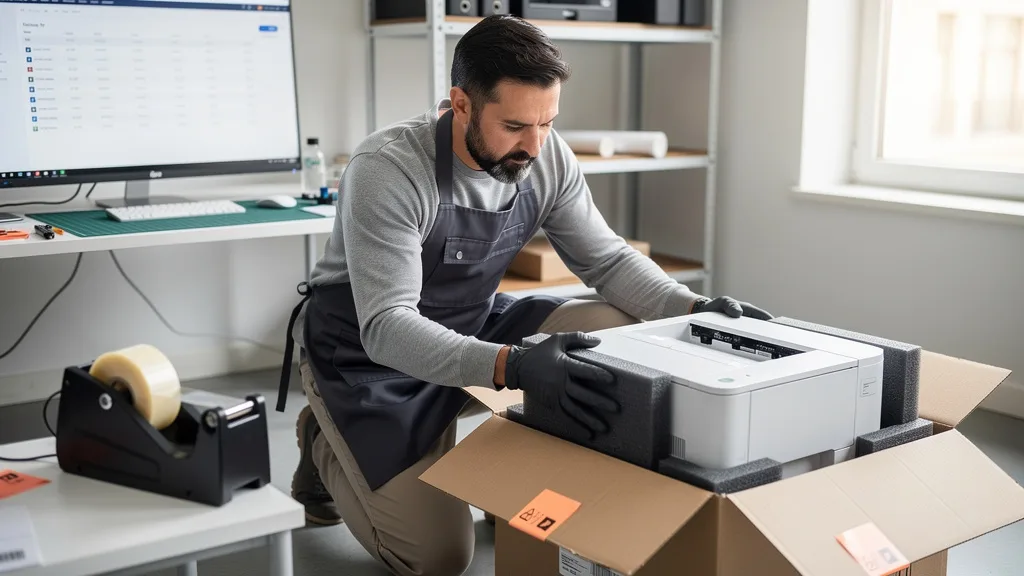
Packaging is also critical for electronics. Products must be packed securely to withstand the rigors of shipping and handling within Amazon's fulfillment network. Using sturdy boxes with adequate protective cushioning like foam inserts is essential to prevent damage and costly returns.
Items with Special Requirements: Inks and Batteries
Office supplies that contain batteries (especially lithium-ion) or are considered potentially hazardous materials, such as printer ink and toner cartridges, are subject to additional scrutiny. These items often fall under Amazon's FBA Dangerous Goods (Hazmat) program. To sell them, you must provide detailed product information, including a Safety Data Sheet (SDS) from the manufacturer.
Once you submit the required documentation, Amazon will review your product to determine if it can be handled by their fulfillment centers. Not all warehouses are equipped to store dangerous goods, so your inventory may be routed to specialized facilities. While this process adds an extra step, it is manageable and allows you to sell a wider range of in-demand products.
Navigating Gated Categories and Brand Restrictions
Within the broader Office Products category, some sub-categories or specific brands may be "gated." This means you need to apply for and receive approval from Amazon before you can list items in that category or under that brand name. For example, selling major electronics or printer brands like HP, Canon, or Epson almost always requires authorization.
To get ungated, you typically need to provide invoices from an authorized distributor showing recent, large-quantity purchases, along with a letter of authorization from the brand itself. This process helps Amazon ensure that only authentic products from legitimate supply chains are sold on the platform. It's a barrier to entry that, once overcome, can provide a significant competitive advantage. complete and accurate.
"Navigating brand and category gating is a common hurdle for sellers scaling to eight figures. Success here isn't just about having the right invoices; it's about presenting a professional case to Amazon that proves your supply chain is legitimate and your business is trustworthy."
How to Check Eligibility for Your Specific Office Product
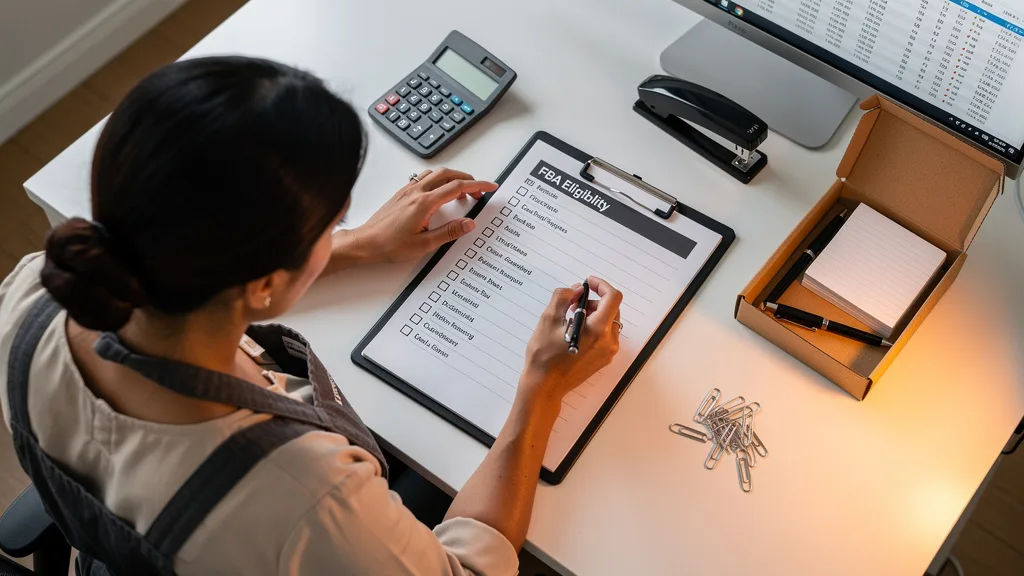
Before you invest heavily in inventory, it is crucial to verify that your specific product is eligible for FBA. Fortunately, Amazon provides tools within Seller Central to help you check for any restrictions or approval requirements. Following this process can save you from costly mistakes.
Using the 'Add a Product' Tool in Seller Central
The easiest way to check a product's eligibility is by using the 'Add a Product' tool. From your Seller Central homepage, navigate to 'Inventory' and select 'Add a Product.' You can then search for the product using its name, UPC, EAN, or ASIN. The search results will show you the product listing if it already exists on Amazon.
Next to the listing, you will see a button that says 'Sell this product.' If there are any restrictions, it will instead say 'Apply to sell' and will guide you through the application process. If the item is in a restricted category or has other limitations, the tool will display a notification explaining the issue.
Reviewing Category-Specific Guidelines
For a more comprehensive understanding, you should review Amazon's category-specific guidelines. Within Seller Central's help section, you can find detailed pages that outline the rules, requirements, and examples for the Office Products category. These pages are updated regularly and provide the most accurate information on what is and isn't allowed.
Taking the time to read these guidelines can help you understand the nuances of the category, such as specific packaging requirements or product types that require pre-approval. This proactive research is a hallmark of successful, large-scale Amazon sellers.
Contacting Seller Support for Clarification
If you have reviewed the guidelines and used the 'Add a Product' tool but still have questions about a specific item, your next step is to contact Seller Support. When creating a case, be as specific as possible. Include the product's ASIN, UPC, a link to the manufacturer's website, and a clear question about its FBA eligibility.
Providing all the necessary information upfront will help the support team give you a faster and more accurate answer. While it can sometimes take time to get a definitive response, it is always better to wait for clarification than to risk sending in non-compliant inventory.
Profitability with FBA depends on a thorough understanding of its fee structure. As Amazon updates its FBA fee structure periodically, staying current on the costs for 2026 is essential for pricing your office supplies correctly and maintaining healthy margins. The main costs to consider are fulfillment fees, storage fees, and other potential charges.
FBA Fulfillment Fees Based on Size and Weight
The FBA fulfillment fee, also known as the pick and pack fee, is charged per unit sold and covers the cost of picking, packing, and shipping the order. This fee is determined by the product's size tier and shipping weight. Most office supplies fall into the 'Standard Size' tiers.
Here is an illustrative table of potential FBA fulfillment fees for 2026. Note that these are examples and you should always check the official FBA fee schedule in Seller Central for the most current rates.
| Size Tier | Max Dimensions | Max Weight | Example Fee per Unit |
|---|---|---|---|
| Small Standard | 15" x 12" x 0.75" | 1 lb | $3.22 - $4.08 |
| Large Standard | 18" x 14" x 8" | 20 lb | $4.75 - $7.17+ |
| Small Oversize | 60" x 30" | 70 lb | $9.73+ |
Monthly and Long-Term Inventory Storage Fees
Amazon charges a monthly fee for storing your inventory in their fulfillment centers, calculated based on the daily average volume (in cubic feet) your products occupy. Storage fees are higher during the peak holiday season from October to December. Efficient inventory management is key to minimizing these costs.
Additionally, Amazon charges a long-term storage fee for any inventory that has been in a fulfillment center for more than 365 days. These fees can be substantial, making it crucial to manage your stock levels effectively and remove slow-moving products before they incur these charges. A good inventory turnover rate is vital for FBA profitability.
Other Potential Costs: Removal and Disposal Orders
If you have inventory that is not selling or is unfulfillable, you will need to have it sent back to you or disposed of by Amazon. Both of these actions incur a per-item fee. Creating a removal order is often more cost-effective than letting items accumulate long-term storage fees. Other potential costs include returns processing fees for certain categories and optional services like FBA Label Service or FBA Prep Service.
Key Benefits of Using FBA for Your Ecommerce Business
Leveraging FBA for your ecommerce business offers numerous advantages that can be instrumental in scaling your brand. For sellers of office products, these benefits directly address customer expectations and logistical challenges, allowing you to focus on growth strategies rather than day-to-day operations. listing guidelines.
- Prime Eligibility: Your products automatically qualify for the Amazon Prime badge, offering customers fast, free shipping. This is a powerful conversion driver and can significantly increase sales.
- Outsourced Logistics: FBA eliminates the need for your own warehouse, staff, and shipping infrastructure. Amazon's world-class logistics network handles storage, picking, packing, and shipping, saving you time and operational overhead.
- Customer Service and Returns Management: Amazon manages all customer service inquiries and returns for your FBA orders. This 24/7 service enhances the customer experience and frees up your resources.
- Increased Customer Trust: The "Fulfilled by Amazon" tag on your listing builds trust with buyers, who associate it with fast shipping and reliable service.
- Multi-Channel Fulfillment (MCF): You can use your FBA inventory to fulfill orders from other sales channels, such as your own website, centralizing your stock and simplifying your fulfillment process.
FBM vs FBA: Which Is Better for Office Supplies?
When selling on Amazon, you have two primary fulfillment options: Fulfillment by Amazon (FBA) and Fulfillment by Merchant (FBM). For office supplies, the right choice depends on your product type, business model, and growth objectives. Understanding the differences is key to making a profitable decision.
FBA is generally the superior model for standard, fast-moving office supplies. The access to Prime shipping, outsourced logistics, and customer service provides a competitive edge that is difficult to replicate independently. It is the ideal choice for sellers focused on scaling quickly and reaching the largest possible audience. However, FBM can be a better option for certain niche scenarios. If you sell very large, heavy, or slow-moving items (like specialty office furniture), the FBA storage fees could become prohibitive, making self-fulfillment more cost-effective. FBM also gives you more control over your packaging and branding experience. For a deeper dive into how fulfillment works, you can explore resources that explain What Is Amazon FBA And how it functions.
Key Takeaways
To succeed with FBA for office products, focus on these critical points. Mastering these areas will help you avoid common pitfalls and position your brand for scalable growth on the Amazon platform.
- Eligibility is Foundational: Your Amazon FBA eligibility for office products and supplies hinges on a healthy seller account, accurate listings, and strict policy compliance.
- Know Your Product Type: While standard supplies are simple, electronics, batteries, and inks require navigating the Dangerous Goods program and providing extra documentation.
- Verify Before You Buy: Always use the 'Add a Product' tool in Seller Central to check for brand or category restrictions before you invest in inventory.
- Master the Costs: A deep understanding of all FBA fees, including fulfillment, monthly storage, and long-term storage, is non-negotiable for ensuring profitability.
- FBA is for Scaling: For most standard office supplies, FBA is the superior model for growth due to the Prime badge, outsourced logistics, and enhanced customer trust.
Frequently Asked Questions
Is FBA still profitable for sellers in 2026?
Yes, FBA remains a highly profitable model for sellers in 2026, but success requires a more sophisticated approach than in previous years. With rising fees and increased competition, profitability hinges on careful product selection, strong inventory management to avoid long-term storage fees, and optimized advertising campaigns.
Brands that focus on maintaining healthy profit margins through efficient operations and data-driven decisions will continue to thrive. It is less about just being on FBA and more about how effectively you use the program to your advantage.
Can you make $10,000 a month selling office supplies on Amazon?
Absolutely. Achieving $10,000 per month in profit is a realistic goal for a well-run Amazon business selling office supplies, but it requires a solid strategy. This level of success typically involves selling a portfolio of products with healthy margins, achieving significant sales volume, and effectively managing advertising spend.
It is not a get-rich-quick scheme; it demands diligent product sourcing, excellent listing optimization, and a deep understanding of marketing tools like Amazon Sponsored Brands vs. Products. For established brands, this is an attainable milestone on the path to eight-figure revenues. listing guidelines.
What supplies do I need to start selling with FBA?
To prepare your products for shipment to Amazon's fulfillment centers, you will need a few basic supplies. The essentials include sturdy shipping boxes, packing tape to seal them securely, a shipping scale to weigh your boxes accurately for carrier charges, and a thermal label printer.
A thermal printer is highly recommended for printing FNSKU product labels and shipping labels, as it is much more efficient and reliable than a standard inkjet or laser printer. These supplies are a necessary investment to ensure your shipments are compliant and processed smoothly upon arrival at the warehouse.
Are there specific brands of office supplies that are restricted on Amazon?
Yes, many well-known brands in the office supply category are restricted or "gated" by Amazon. This means you cannot sell them without first obtaining approval from Amazon, and often, from the brand itself. Brands like HP, Canon, 3M, and Sharpie frequently have these restrictions in place to combat counterfeiting.
To get approval, you typically need to prove you are an authorized reseller by providing official invoices from a legitimate distributor. Always use the 'Add a Product' tool to check for brand restrictions before sourcing inventory to avoid purchasing products you cannot sell.
How does Amazon handle customer service and returns for FBA items?
One of the most significant benefits of FBA is that Amazon's world-class customer service team manages all customer interactions for your orders. They handle customer inquiries, process returns, and issue refunds 24/7 in the local language of the marketplace. This is included in your FBA fees.
This service not only saves you an immense amount of time and resources but also ensures your customers receive prompt and professional support, which helps protect your seller feedback and account health. You are freed from the daily tasks of customer support to focus on strategic business growth.
Conclusion
Successfully navigating Amazon FBA eligibility for office products and supplies in 2026 is a critical first step for any brand looking to scale. By understanding the core account requirements, adhering to product-specific guidelines for items like electronics and batteries, and diligently using the tools in Seller Central to verify eligibility, you can build a strong foundation for growth. Mastering FBA is not just about logistics; it is about leveraging Amazon's ecosystem to build a profitable, scalable ecommerce business.
If you're a 7-figure brand ready to navigate these complexities and scale your office products business to 8-figures, a professional audit can reveal your biggest opportunities. Let's ensure your listings and account are perfectly optimized for FBA success. Ready to unlock your brand's full potential on Amazon? Get your Free Audit today.