Table of Contents 5 sections
Are your Amazon listings getting clicks but failing to convert browsers into buyers? The problem might not be your product or your price, but how you visually present them. In the crowded digital aisles of Amazon, exceptional design is no longer a luxury, it's a fundamental requirement for success.
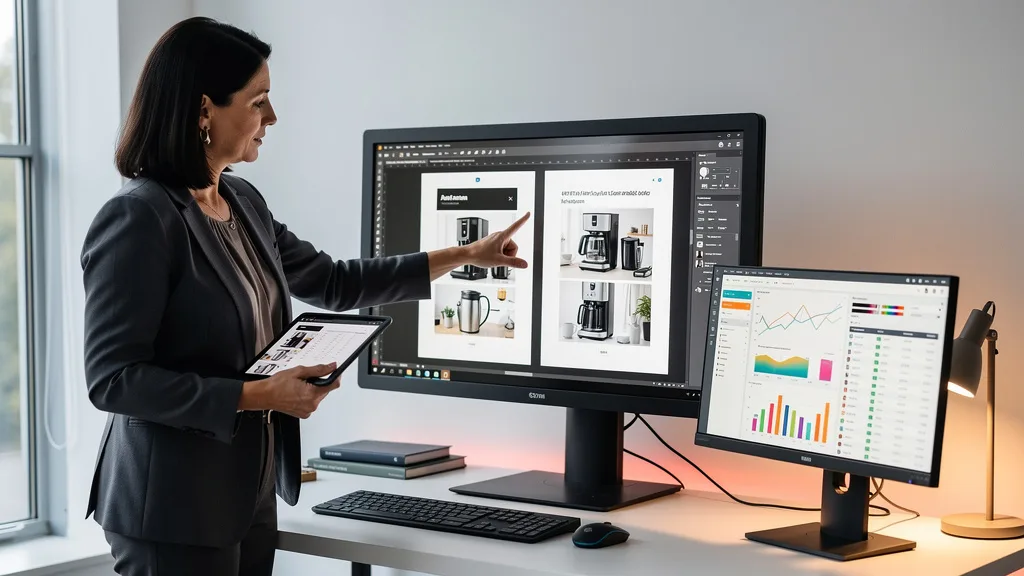
The core marketing design principles that boost Amazon sales involve a strategic combination of visual hierarchy, color psychology, high-quality imagery, and consistent branding applied directly to your product listings, A+ Content, and Brand Store. By implementing these principles, you can capture attention, build trust, communicate value instantly, and guide customers toward the 'Add to Cart' button. This approach transforms your product page from a simple catalog entry into a compelling sales experience.
Marketing design principles are the foundational rules that guide how visual elements are arranged to create an effective and aesthetically pleasing composition for promotional purposes. When applied to Amazon, these principles are tailored to the platform's specific formats, including product images, Enhanced Brand Content (EBC) or A+ Content, and Brand Stores. The goal is to create a cohesive and persuasive visual narrative that stops scrollers, communicates product benefits quickly, and builds brand credibility.

This isn't just about making things look pretty. It's a calculated strategy that leverages psychology and user behavior. Key components include visual hierarchy, which directs the customer's eye to the most important information first, and color theory, which can evoke specific emotions and actions. Other crucial elements are typography that ensures readability on all devices, consistent branding that fosters recognition, and high-quality lifestyle and infographic images that tell a story your bullet points alone cannot.
"On Amazon, your product's design is its digital handshake. A strong first impression built on clear, compelling visuals doesn't just attract customers, it builds the trust necessary to make a sale."
In the hyper-competitive Amazon marketplace of 2026, customers are inundated with choices. Their attention spans are shorter than ever, and they make snap judgments based on visuals. Strong design principles are what make your product stand out in a sea of sameness. A professionally designed listing signals quality and trustworthiness, justifying a premium price and encouraging a purchase over a cheaper, less polished competitor. listing optimization.

Effective design directly impacts your conversion rate. When customers can quickly understand your product's features and benefits through clear infographics and see it in action through compelling lifestyle photos, their purchase anxiety decreases. This improved conversion rate, in turn, positively affects your Best Seller Rank (BSR) and can even lower your advertising costs. A higher conversion rate means your PPC campaigns are more effective, leading to a better return on ad spend. To avoid common pitfalls, it's wise to review Amazon PPC budget mistakes that can undermine even the best design efforts.
Furthermore, design is the cornerstone of building a memorable brand on a platform that often commoditizes products. By maintaining visual consistency across your product images, A+ Content, and Brand Store, you create a recognizable brand identity. This helps foster customer loyalty and encourages repeat purchases, moving you from a simple seller to a trusted brand in the eyes of your audience. This brand-building is especially critical for those exploring Amazon B2B sales growth strategies, where trust and professionalism are paramount.
How to Get Started with Marketing Design Principles That Boost
Implementing marketing design principles on your Amazon listings is a multi-step process that begins with a thorough evaluation and ends with a cohesive brand presentation. The first step is to conduct a comprehensive audit of your existing listings. View them as a customer would on both desktop and mobile. Are the images clear? Is the most important information easy to find? Do the visuals tell a consistent story?

Once you have a baseline, you can begin to build a structured design strategy. This involves creating a mini brand style guide for your Amazon presence, even if it's just a one-page document. Define your primary and secondary colors, select one or two easy-to-read fonts for your infographics, and establish guidelines for how your logo should be used. This guide ensures consistency across all your visual assets. With this foundation, you can start planning the specific assets you need, from your main image to your A+ Content modules. Utilizing the best Amazon listing optimization tools can significantly streamline this process, helping you manage and deploy your new designs effectively.
Here is a step-by-step approach to apply these principles:
- Step 1: Audit Your Current Listings: Analyze your main image, secondary images, and A+ content for clarity, consistency, and impact.
- Step 2: Research Your Competitors and Audience: Identify what visual approaches are working in your niche and what your target customer expects to see.
- Step 3: Develop a Brand Style Guide: Define your color palette, typography, and logo usage for a consistent look and feel.
- Step 4: Plan Your Image Stack: Strategically plan each image slot, including a compliant main image, lifestyle photos, infographics highlighting features, and comparison charts.
- Step 5: Design A+ Content Modules: Use A+ Content to tell your brand story, showcase product details, and cross-promote other items in your catalog.
- Step 6: Build or Refine Your Brand Store: Create an immersive shopping experience that functions as your brand's home on Amazon.
Best Practices for Marketing Design Principles That Boost
Adhering to best practices ensures your design efforts translate into tangible results like higher traffic and sales. A primary rule is to design for mobile-first. The majority of Amazon shoppers browse and buy on their phones, so your images and text must be clear and legible on a small screen. This means using large fonts, high-contrast colors, and avoiding cluttered infographics. Your main image should be instantly recognizable and compelling even when viewed as a tiny thumbnail in search results. PPC campaigns.
Another best practice is to use your visual assets to tell a story. Your image stack should walk the customer through the product experience. Start with a perfect hero shot, then show the product in a lifestyle context, use infographics to explain key benefits, and perhaps include a comparison chart against competitors. This narrative approach helps customers visualize themselves using the product and answers their questions before they even have to ask. For more on how design impacts search, exploring the difference between Amazon listing optimization and SEO provides valuable context.
The table below outlines key design elements and the best practices for applying them to your Amazon listings. Amazon SEO.
| Design Element | Best Practice for Amazon | Why It Boosts Sales |
|---|---|---|
| Main Image | Use a high-resolution photo on a pure white background. The product should fill 85% of the frame. A/B test variations. | Increases click-through rate from search results and complies with Amazon's Terms of Service. |
| Infographics | Use 3-5 key benefit-driven icons with minimal text. Ensure high contrast and large, readable fonts for mobile. | Communicates value propositions quickly to skimmers and overcomes language barriers. |
| Lifestyle Images | Show the product in use by your target demographic in an aspirational setting. Ensure authentic and high-quality photography. | Helps customers visualize the product in their own lives, increasing emotional connection and purchase intent. |
| A+ Content | Use a mix of modules to tell a brand story, compare products, and highlight features. Maintain brand consistency. | Increases conversion rates by providing a richer, more engaging shopping experience and building brand trust. |
| Color Palette | Use a consistent palette of 2-3 brand colors. Leverage color psychology to evoke desired emotions (e.g., green for eco-friendly). | Strengthens brand recognition and can subconsciously influence purchasing decisions. For more insights, you can review design principles from sources like Adobe's guide on design principles. |
Common Mistakes to Avoid
Many sellers inadvertently sabotage their success by making common design mistakes. One of the most frequent errors is inconsistent branding. Using different logos, color schemes, and fonts across your listings and storefront confuses customers and weakens your brand identity. A cohesive visual language is essential for building recognition and trust. Ensure that every visual touchpoint, from the first image to the last A+ module, feels like it comes from the same brand.
Another critical mistake is overloading infographics with text. While it's tempting to list every single feature, this results in a cluttered graphic that is impossible to read, especially on mobile devices. The purpose of an infographic is to communicate key information at a glance. Stick to a few main benefits, use clear icons, and keep text to a minimum. Remember, less is more. A clean, simple design is always more effective than a busy, confusing one.
Finally, ignoring Amazon's technical requirements and terms of service is a recipe for disaster. For your main image, this means no text, no badges, and no graphics, just the product on a pure white background. Violating these rules can lead to your listing being suppressed, making all your design efforts worthless. Always stay updated on Amazon's style guides to ensure your beautiful designs are also compliant. According to a study by Nielsen Norman Group, users form first impressions in milliseconds, and non-compliant or poor imagery can create an immediate negative bias. This underscores the importance of getting the basics right.
Key Takeaways
To successfully leverage marketing design principles that boost Amazon sales, it's essential to focus on a few core concepts that deliver the most impact. Mastering these will set you apart from the competition and create a foundation for sustainable growth on the platform. Remember that every visual element on your listing is a piece of marketing material.
- Prioritize a Mobile-First Approach: The majority of your customers will see your listing on a smartphone. Design all visuals, especially infographics, to be clear and impactful on a small screen.
- Consistency is King: Use a consistent brand style guide (colors, fonts, logo) across all your Amazon assets, including images, A+ Content, and your Brand Store, to build recognition and trust.
- Tell a Story with Your Images: Your image stack should be more than a collection of photos. It should be a visual narrative that shows the product, explains its benefits, and helps the customer imagine it in their life.
- Communicate Value Instantly: Use design hierarchy and clean infographics to highlight your product's most important features and benefits. Shoppers skim, so make your value proposition impossible to miss.
- Test and Optimize: Don't assume your first design is the best. Use tools like Amazon's Manage Your Experiments to A/B test your main image and A+ Content to find what truly resonates with your audience and drives conversions.
Conclusion
Ultimately, implementing strategic marketing design principles is a critical investment in your Amazon business's success in 2026. By moving beyond basic product photography and embracing a holistic design strategy that includes visual hierarchy, brand consistency, and mobile-first thinking, you create a superior customer experience that builds trust and drives conversions. The next step is to audit your top-selling product and identify one key visual element, like your main image or an infographic, that you can improve this week.
Are you ready to see how professional design can transform your Amazon sales? Our team specializes in creating compelling visual assets that capture attention and convert shoppers. Get a comprehensive review of your current listings to identify your biggest opportunities for improvement. For a detailed analysis, claim your Free Audit today.