Table of Contents 9 sections
Are your Amazon PPC campaigns stuck, delivering clicks but failing to drive the exponential growth needed to scale your brand from seven to eight figures? Many sellers master the basics but hit a plateau, unsure how to unlock the next level of profitability and market dominance. It's time to move beyond simple keyword bidding and embrace a more sophisticated, data-driven approach.
Advanced Amazon PPC strategies for scaling involve structuring campaigns for precision, implementing dynamic bidding rules, isolating high-performing search terms, and leveraging automation. These tactics shift the focus from merely managing ad spend to strategically investing it for maximum return on ad spend (ROAS) and total advertising cost of sale (TACoS), accelerating your brand's growth and profitability in 2026.
Beyond the Basics: Structuring Campaigns for Scalability
A scalable PPC foundation is not built on a single, oversized automatic campaign. To truly grow, you need a deliberate structure that allows for control, learning, and efficient budget allocation. This means creating a system where you can easily identify what works, what doesn't, and how to reinvest your ad spend for the highest possible return.

Effective structuring separates campaigns by their strategic purpose: discovery, research, and performance. This segmentation prevents high-performing keywords from having their budgets drained by exploratory terms and ensures that you can apply different bidding strategies based on the goal of each campaign, from broad market research to aggressive sales conversion.
Moving from Auto to Manual Targeting with Precision
Automatic campaigns are excellent for discovering new, customer-driven search terms that you might have missed during your initial keyword research. However, relying on them exclusively for scaling is a common mistake. The true power of auto campaigns lies in their ability to feed proven keywords into more controlled manual campaigns.
The process involves regularly mining your Search Term Report from auto campaigns for queries that convert profitably. Once identified, these high-performing search terms should be moved into a manual campaign as exact match keywords. Simultaneously, you should add them as negative exact match keywords to the original auto campaign to prevent your campaigns from competing against each other and to ensure your budget is spent efficiently.
Establishing a Tiered Campaign Structure
A tiered or 'waterfall' campaign structure is a powerful way to organize your PPC efforts for scale. This typically involves three layers. The top layer consists of broad and automatic campaigns designed for discovery and research, catching a wide net of potential customer searches. The goal here is not immediate profitability but data collection.
The middle tier contains manual campaigns with phrase and broad match keywords harvested from the discovery campaigns. These are your 'research' or 'testing' grounds. The final, most important tier consists of manual campaigns with exact match keywords that have a proven track record of converting. These 'performance' campaigns receive the most aggressive budgets and optimization, as they are your primary profit drivers.
Advanced Amazon PPC Bidding and Budget Optimization
Once your campaigns are properly structured, the next step is to master bidding and budget allocation. Static bids and fixed daily budgets are insufficient for a brand aiming for 8-figure sales. Advanced optimization requires a dynamic approach that responds to market competition, customer behavior, and your own profitability targets in real time.

Profit-focused growth means being strategic about every dollar spent. This involves leveraging Amazon's dynamic bidding options, controlling when your ads are shown with day parting, and having a clear methodology for scaling budgets without sacrificing your Advertising Cost of Sale (ACoS). A well-managed budget is the fuel for your scaling engine. To learn more about common pitfalls, review these Amazon PPC budget mistakes and how to avoid them.
Mastering Dynamic Bidding Strategies for Profitability
Amazon offers several dynamic bidding strategies that automatically adjust your bids based on the likelihood of a conversion. While 'Fixed bids' offer maximum control, they are not ideal for scaling. 'Dynamic bids – down only' is a conservative option that lowers your bid when a conversion is less likely. This is a safe starting point for protecting your budget.
For aggressive growth, 'Dynamic bids – up and down' is the most powerful option. This strategy allows Amazon to increase your bid by up to 100% for top-of-search placements and up to 50% for all other placements when a conversion is highly likely. Mastering this requires careful monitoring of your ACoS, but it can significantly increase visibility and sales velocity for your most important keywords.
| Bidding Strategy | How It Works | Best For | Risk Level |
|---|---|---|---|
| Dynamic bids – down only | Amazon lowers your bid in real time for clicks less likely to convert. | Protecting ACoS, campaigns with tight profit margins. | Low |
| Dynamic bids – up and down | Amazon increases bids (up to 100%) for high-conversion opportunities and decreases for low ones. | Aggressive growth, scaling proven campaigns, product launches. | Medium to High |
| Fixed bids | Amazon uses your exact bid without adjustment. | Maximum control, brand defense campaigns. | Medium |
Implementing Day Parting to Maximize Ad Spend
Not all hours of the day are created equal when it comes to customer purchasing behavior. Day parting, or ad scheduling, is the practice of turning ads on and off or adjusting bids at specific times of the day or days of the week to align with your peak conversion periods. This ensures your budget is spent when shoppers are most likely to buy.
To implement day parting, you must first analyze your hourly sales and conversion rate data from your brand analytics or advertising reports. Identify the time slots with the highest conversion rates and lowest ACoS. You can then use third-party PPC software or manual adjustments to increase bids during these peak times and reduce or pause them during low-performing hours, such as the middle of the night.
Best Practices for Amazon PPC Budget Scaling
Scaling your budget effectively is more than just increasing your daily spend. A sudden, large increase can disrupt the algorithm's learning and lead to wasteful spending. The key is to scale incrementally and methodically based on performance. A solid understanding of how much Amazon PPC costs is fundamental to this process.
Follow these best practices for sustainable budget scaling:
- Scale Incrementally: Increase the budget of a profitable campaign by 15-20% at a time. Monitor performance for several days before making another adjustment.
- Focus on Winners: Allocate increased budget to the campaigns, ad groups, and keywords that are already performing well and meeting your target ACoS. Don't waste money trying to force a losing keyword to work.
- Set Budget Rules: Use Amazon's budget rules or third-party tools to automatically increase the daily budget on specific days or for special events like Prime Day, preventing you from running out of budget during peak traffic.
- Monitor TACoS: As you scale PPC, keep an eye on your Total Advertising Cost of Sale (TACoS). This metric shows the relationship between ad spend and total revenue (both organic and ad-driven), giving you a truer picture of your growth. For more on this, check out this guide on Amazon PPC Budget Scaling best practices.
Sophisticated Keyword and Targeting Tactics
Scaling successfully on Amazon requires moving beyond broad keyword targeting to a more surgical approach. Advanced sellers don't just find keywords; they sculpt their campaigns to control exactly which customer searches trigger their ads. This level of precision minimizes wasted ad spend and maximizes conversion rates.

This involves advanced techniques like search term isolation, aggressive negative keyword strategies, and leveraging Amazon's powerful product and category targeting options. By mastering these tactics, you can dominate your niche, defend your brand space, and steal market share from competitors.
Utilizing Search Term Isolation to Control Spend
Search term isolation is a core principle of the tiered campaign structure mentioned earlier. The goal is to have one specific customer search term trigger an ad from only one campaign. This gives you complete control over the bid and budget for that exact term.
When you find a winning search term in a 'research' campaign (phrase or broad match), you create a new exact match ad group or campaign for it. You then add that term as a negative exact match to the original research campaign. This forces all traffic for that high-value term to flow to the dedicated exact match campaign, where you can manage its bid and budget with unparalleled precision.
Advanced Negative Keyword Sculpting Techniques
Negative keywords are just as important as the keywords you bid on. Basic negative keyword management involves blocking irrelevant terms like 'free' or 'used'. Advanced sculpting goes deeper, using negative keywords to direct traffic between your own campaigns and eliminate cannibalization.
For example, if you sell 'leather dog collars' and 'nylon dog collars', you would add 'nylon' as a negative phrase in the leather collar campaign and 'leather' as a negative phrase in the nylon collar campaign. This ensures the most relevant product ad is shown for each search, improving click-through rates and conversion rates. Regularly mining your search term reports for even slightly irrelevant or underperforming terms is a continuous process for any scaling brand.
Leveraging ASIN and Category Targeting Effectively
Beyond keywords, Sponsored Display and Sponsored Products ads offer powerful Product Attribute Targeting (PAT) options. You can target specific ASINs (your competitors' products) or entire product categories. This is a crucial strategy for both offense and defense.
Offensively, you can target competitors' listings that are poorly optimized, have bad reviews, or are frequently out of stock. By placing your ad on their page, you can capture their potential customers. Defensively, you should run ASIN-targeted ads on your own product detail pages. This creates a 'brand wall' that prevents competitors from advertising on your listings and stealing your hard-earned traffic.
PPC Strategies That Drive Sales, Not Just Clicks
Traffic is meaningless without conversions. The ultimate goal of any Amazon PPC advanced strategies for scaling your sales is to drive profitable revenue growth. This requires a holistic view where your PPC campaigns and product listings work together seamlessly to turn a click into a sale.
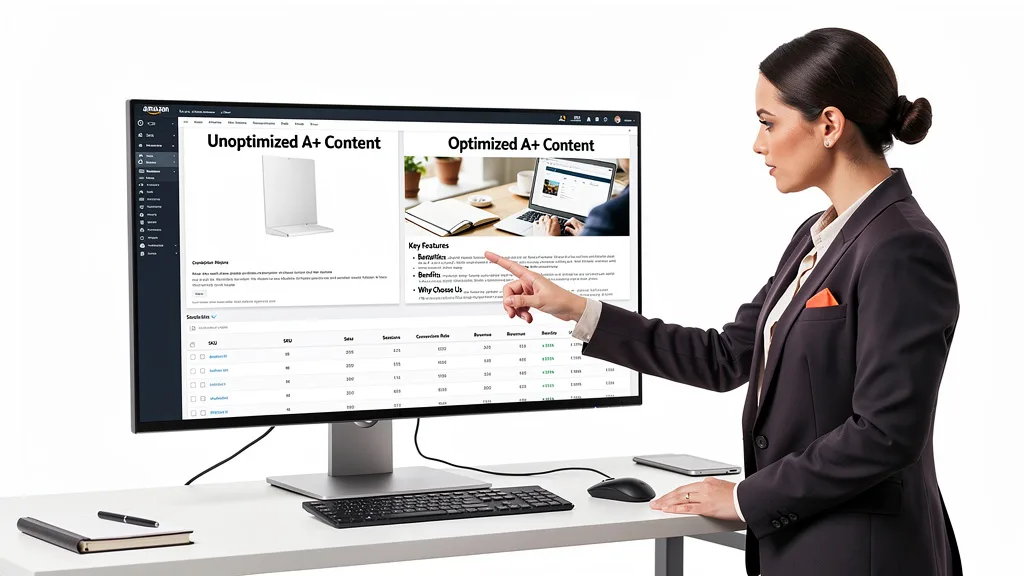
Many sellers focus so intensely on bid optimization that they neglect the single most important factor in conversion: the product detail page. A high-converting listing not only increases your sales from paid traffic but also improves your organic rank, creating a powerful growth flywheel. Integrating different ad types and continuously testing your creative assets are also critical components of a sales-focused strategy.
"Scaling on Amazon isn't just about spending more on ads. It's about creating a superior customer experience from the ad click to the checkout. Your PPC strategy is only as strong as your listing's ability to convert that click into a sale. They are two sides of the same coin."
Optimizing Listings for Higher Conversion Rates
Before you pour more money into PPC, ensure your listing is fully optimized. A high conversion rate will lower your ACoS and increase your ad profitability, allowing you to bid more aggressively and scale faster. This is a crucial part of the interplay between Amazon listing optimization vs. PPC.
Your listing optimization checklist should include high-quality images and video, a benefit-driven title, compelling bullet points that address customer pain points, and robust A+ Content. Ensure your main keywords are present in your title, bullets, and backend search terms to maximize relevance for both paid and organic traffic. A well-optimized listing is the foundation of a profitable ad campaign.
Integrating Sponsored Brands and Display Ads
Scaling beyond seven figures requires a full-funnel approach. While Sponsored Products ads are great for capturing bottom-of-funnel demand, Sponsored Brands and Sponsored Display ads are essential for building brand awareness and reaching customers earlier in their buying journey. These ad types are crucial for driving Amazon B2B sales growth strategies as well as B2C.
Sponsored Brands ads appear at the top of search results and allow you to showcase a custom headline, your brand logo, and multiple products or a link to your storefront. Sponsored Display ads can retarget customers who have viewed your products but not purchased, or target shoppers browsing competitor or complementary product pages, keeping your brand top-of-mind.
A/B Testing Ad Creatives and Copy for Performance
Continuous improvement is the hallmark of an advanced advertiser. You should always be testing elements of your campaigns to find what resonates most with your audience. For Sponsored Brands, this means A/B testing your headline copy and the primary product images you feature.
Even for Sponsored Products, which have less creative control, you can test different primary images by swapping them on your listing and monitoring the click-through rate (CTR) in your ad reports. A higher CTR indicates a more engaging image, which can lead to more traffic and a better quality score for your ads. Small, incremental improvements from testing can lead to significant gains in performance over time.
Automating Growth with Advanced Rules Configurations
As you scale, managing bids and keywords across dozens or even hundreds of campaigns manually becomes impossible. Automation is not a luxury; it's a necessity for efficient growth. Leveraging automated rules allows you to implement your strategy consistently and at a scale that human management cannot match.
This can be done through Amazon's own rules-based bidding or through more sophisticated third-party software. The key is to create rules that align with your strategic goals, whether it's hitting a specific ACoS target, harvesting new keywords, or adjusting bids based on performance over a specific lookback window.
Setting Up Automated Rules for Bid Management
Amazon's advertising console allows you to create performance-based rules to automate bid adjustments. For example, you can set a rule to 'increase the bid by 15% if ACoS is below 20% over the last 14 days'. This allows you to automatically and safely increase investment in what's working.
Conversely, you can set rules to decrease bids or pause keywords that are performing poorly, such as 'decrease bid by 20% if ACoS is above 45% and there are no orders'. Setting up a portfolio of these 'if-then' rules ensures your campaigns are being optimized 24/7, even when you are not actively managing them.
When to Use Third-Party PPC Automation Software
While Amazon's native rules are useful, they can be limited. Third-party PPC automation software offers more advanced capabilities, such as AI-powered bidding algorithms, hourly day parting, and automated keyword harvesting and negating workflows. These tools can significantly accelerate your growth and free up your time for higher-level strategy.
You should consider investing in a third-party tool when the complexity of your account makes manual management impractical, or when you want to leverage more sophisticated algorithms than what Amazon provides. These platforms are particularly valuable for brands managing large product catalogs or advertising in highly competitive categories. A comprehensive Amazon PPC management strategy often incorporates these tools.
Measuring Performance and Scaling Winning Campaigns
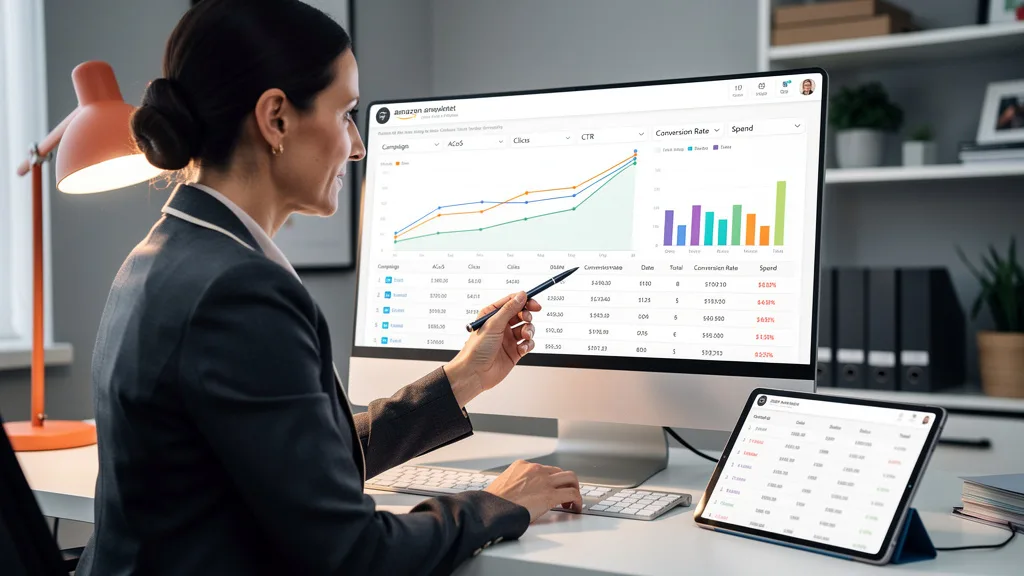
You cannot scale what you cannot measure. A data-driven approach is fundamental to all advanced PPC strategies. This means moving beyond vanity metrics like clicks and impressions and focusing on the Key Performance Indicators (KPIs) that truly reflect the health and profitability of your business.
Once you have defined your KPIs, you need a repeatable framework for identifying winning campaigns, ad groups, and keywords and a system for scaling them methodically. This creates a predictable and profitable growth engine for your brand.
Defining Your Key Performance Indicators for Scale
While ACoS is an important metric, it doesn't tell the whole story. To scale effectively, you need to track a broader set of KPIs. Your primary KPI should be Total Advertising Cost of Sale (TACoS), which measures your ad spend against your total sales. A decreasing TACoS indicates that your PPC efforts are successfully boosting organic sales and your overall brand presence.
Other critical KPIs include Return on Ad Spend (ROAS), which is the inverse of ACoS and frames performance in terms of revenue generated per dollar spent, and conversion rate. Tracking these metrics provides a holistic view of your advertising performance and its impact on your business's bottom line. Conducting a thorough Amazon PPC audit can help establish your baseline for these KPIs.
A Repeatable Framework for Scaling Ad Groups
Scaling should not be a haphazard process. Develop a clear, repeatable framework for identifying and scaling successful ad groups. This could be a weekly or bi-weekly process where you review performance against your target KPIs.
A simple framework could be: 1. Identify ad groups that have met or exceeded your target ROAS over the last 14 days. 2. For these winning ad groups, increase the daily budget by 20%. 3. Simultaneously, review the search term report within these ad groups to isolate new exact match keywords. 4. For ad groups that are significantly underperforming, decrease bids or pause them to reallocate budget to the winners. This systematic approach ensures you are consistently fueling your most profitable campaigns.
Key Takeaways
Scaling your Amazon sales from seven to eight figures requires moving beyond basic PPC tactics. By implementing a sophisticated, multi-layered approach, you can drive profitable growth and build a defensible brand. Here are the key takeaways for 2026:
- Structure for Scale: Implement a tiered campaign structure (Discovery, Research, Performance) to control spend and harvest winning keywords effectively.
- Optimize Bids and Budgets: Utilize dynamic bidding strategies, implement day parting to capture peak traffic, and scale budgets incrementally based on performance.
- Target with Precision: Master search term isolation and advanced negative keyword sculpting to eliminate wasted spend and direct traffic with surgical accuracy.
- Focus on Conversions: Remember that PPC and listing optimization are linked. A high-converting listing is the foundation of a profitable ad campaign.
- Automate and Measure: Leverage automated rules and third-party software to manage campaigns at scale. Track holistic KPIs like TACoS to measure true business impact.
Frequently Asked Questions
How often should you adjust advanced Amazon PPC campaigns?
For scaling campaigns, you should review performance at least 2-3 times per week. Bid adjustments can be made this frequently, but it's important to allow enough time for changes to gather data, typically 3-7 days. Budget increases on winning campaigns can be made weekly, while search term report analysis for new keywords and negatives should be a weekly or bi-weekly task.
Avoid making drastic, knee-jerk reactions based on one or two days of data. Look at trends over a 7, 14, or 30-day window to make informed decisions. Automation rules can handle minor, daily adjustments while you focus on the broader strategic shifts.
What is a good target ACoS when scaling campaigns?
There is no single 'good' target ACoS; it depends entirely on your product's profit margin and your strategic goal. To find your break-even ACoS, you need to calculate your pre-ad profit margin (Sale Price - Cost of Goods - Amazon Fees). Your target ACoS must be below this number to be profitable.
When scaling or launching a product, you might accept a higher ACoS (closer to your break-even point) to gain market share and improve organic rank. For mature, profitable products, you would aim for a much lower ACoS to maximize profit.
Can these advanced PPC strategies work for new product launches?
Yes, absolutely. In fact, they are crucial for a successful launch. Using a tiered structure from day one allows you to cast a wide net with auto and broad match campaigns to discover how customers are searching for your new product. This is essential information you won't have at launch.
You can then quickly move converting search terms into exact match campaigns to capitalize on early momentum. Strategies like ASIN targeting are also powerful for launching, as you can target your direct competitors from the start. For more on this, consider exploring The Best Amazon PPC Strategy for new products.
What is the difference between ACoS and TACoS?
ACoS (Advertising Cost of Sale) measures the efficiency of your ad campaigns. It is calculated as Ad Spend / Ad Sales. It only tells you how profitable your advertising is in isolation. A low ACoS is generally good, but it doesn't show the overall impact on your business.
TACoS (Total Advertising Cost of Sale) provides a more holistic view. It is calculated as Ad Spend / Total Sales (including organic). A declining TACoS over time indicates that your advertising is successfully increasing your organic sales and brand visibility, which is the ultimate goal of scaling.
Are third-party PPC tools necessary for advanced optimization?
While not strictly necessary to start, third-party PPC tools become increasingly valuable as your brand scales. They can save you dozens of hours per week by automating repetitive tasks like bid adjustments, keyword harvesting, and negative keyword management. Their advanced algorithms and day parting features often provide a level of optimization that is difficult to achieve manually.
For a 7-figure brand looking to scale to 8 figures, the efficiency gains and performance improvements from a quality PPC software platform almost always provide a significant positive return on investment. They empower you to focus on high-level strategy rather than getting bogged down in manual campaign tweaks.
Conclusion
Implementing these advanced Amazon PPC strategies is the key to breaking through growth plateaus and scaling your brand to the 8-figure level. By moving beyond the basics to a structured, data-driven, and holistic system, you transform your advertising from an expense into a powerful and predictable growth engine. The next step is to audit your current campaigns to identify the biggest opportunities for improvement and begin implementing these tactics methodically.
If you're a 7-figure brand owner ready to accelerate your growth but need an expert to implement these profit-focused strategies, we can help. We specialize in scaling brands on Amazon through meticulous PPC management and listing optimization. To see how we can unlock your brand's potential, apply for your Free Audit today.