
Are you a 7-figure Amazon seller wondering why your growth has stalled on the path to 8 figures? The answer often lies in small, overlooked errors that compound into massive revenue leaks. These common issues can quietly drain your profits, damage your brand reputation, and hand sales directly to your competitors.
The most significant 5 Amazon consulting mistakes that cost you sales include publishing unoptimized product listings, ignoring MAP policy violations, running inefficient PPC campaigns, relying on reactive account management, and failing to track key performance data. Correcting these five areas is critical for any serious brand owner looking to scale profitably on the platform in 2026. By shifting from a reactive to a proactive strategy, you can plug these leaks and unlock sustainable growth.
Why Small Amazon Mistakes Lead to Major Sales Losses
On a platform as vast and competitive as Amazon, success is a game of inches. A single percentage point drop in your conversion rate might seem insignificant, but when applied to thousands of monthly sessions, it translates to a substantial loss in revenue. These seemingly minor oversights create a domino effect. For example, a poorly optimized title leads to fewer clicks, which tells Amazon's algorithm your product is less relevant, resulting in a lower search ranking and even fewer sessions over time.

Many brand owners assume their primary job is product development and sourcing, leaving the 'Amazon part' to chance. This is one of the most common mistakes costing you sales. Every element of your presence, from your main image to your backend keywords and your ad campaign structure, is a lever that can either drive growth or inhibit it. Ignoring these levers is like trying to navigate a complex waterway without a map or a rudder; you might stay afloat for a while, but you won't reach your destination efficiently, if at all.
Mistake 1: Publishing Unoptimized Product Listings
Your product listing is your digital storefront, your salesperson, and your brand ambassador all rolled into one. Simply uploading a product with a title and a few bullet points is a direct path to obscurity. An unoptimized listing fails to attract the algorithm's attention for ranking and fails to persuade human shoppers to click the 'Add to Cart' button. It's a foundational error that makes every other marketing effort, including PPC, more expensive and less effective.
Using Poor-Quality Images and Lacking Video Content
Shoppers on Amazon cannot touch or feel your product, so your images and videos have to do all the heavy lifting. Using low-resolution photos, generic stock images, or failing to show the product from multiple angles and in use are critical errors. High-quality visuals, including lifestyle shots, infographics detailing benefits, and a compelling brand video, build trust and dramatically increase the perceived value of your product. Your main image, in particular, must be compelling enough to stop a scrolling shopper and earn the click over your competitors.
Furthermore, video content is no longer a luxury; it's a conversion-driving necessity for 2026. A short video can demonstrate product features, tell your brand story, and answer common customer questions more effectively than text ever could. Listings with video consistently see higher engagement and conversion rates. Neglecting this powerful tool is leaving money on the table and giving an edge to competitors who have embraced it. Investing in professional photography and video is not an expense; it's a core investment in your conversion rate.
Writing Keyword-Stuffed Titles and Thin Descriptions
In the early days of Amazon, jamming as many keywords as possible into a title was a common tactic. Today, this approach is a major red flag for customers and the algorithm. A keyword-stuffed title is difficult to read and looks spammy, which can deter shoppers and hurt your brand's credibility. While keywords are essential for discoverability, they must be woven into a natural, benefit-oriented title that speaks directly to the customer's needs. A great title balances searchability with readability.
Similarly, thin descriptions and bullet points that only list features are a missed opportunity. Your copy should sell the product by translating features into benefits. Instead of saying "10,000 mAh battery," say "Power for your entire weekend, so you're never caught without a charge." Use your A+ Content to tell a richer brand story, compare products, and overcome objections. This is your chance to connect with the customer on an emotional level, a crucial step in building a successful Amazon business.
Failing to A/B Test Your Listings for Conversion
Even the most experienced copywriters and marketers don't get it perfect on the first try. Assuming your initial listing is the best it can be is a costly assumption. Amazon's 'Manage Your Experiments' tool allows you to systematically A/B test your main image, title, and A+ Content to see what truly resonates with your audience. This data-driven approach removes guesswork from optimization.
You can test a benefit-led title against a feature-led one or a lifestyle main image against a product-on-white background. The results, measured in conversions and sales, provide clear, actionable insights into what drives your customers to buy. Consistently running these tests can lead to incremental gains that compound over time, significantly boosting your overall sales and profitability. Not using this free tool is one of the biggest Amazon listing optimization mistakes a brand can make.
Mistake 2: Ignoring MAP Violations and Price Wars
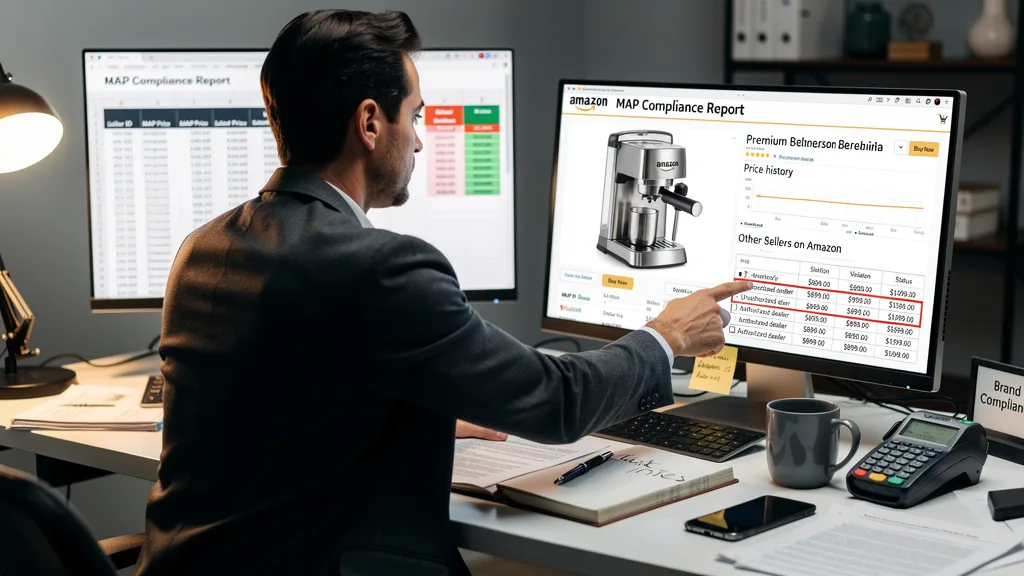
For brands that sell through multiple channels, maintaining price integrity is paramount. A Minimum Advertised Price (MAP) policy is designed to protect your brand's value and ensure a level playing field for all your retail partners. When this policy is ignored on Amazon, it can trigger a destructive race to the bottom that erodes your margins, devalues your brand, and damages crucial business relationships.
Allowing Unauthorized Resellers to Slash Your Prices
Unauthorized third-party sellers are a plague on Amazon. They often acquire your inventory through gray-market channels and are not bound by your brand standards or MAP policy. They will aggressively slash prices to win the Buy Box, forcing your authorized sellers to either match the price or lose sales. This constant downward pressure on price can make your product seem cheap and low-quality in the eyes of consumers. amazon listing optimization cost 2026.

Actively monitoring for and dealing with these unauthorized sellers is not optional for serious brand owners. It requires a consistent strategy of tracking listings, sending cease and desist letters, and using Amazon's brand protection tools to report violations. Letting these sellers operate unchecked sends a message that you don't value your own brand, which can have long-lasting negative consequences for your market position and profitability.
Losing the Buy Box and Damaging Retail Partner Trust
The Buy Box is where over 80% of Amazon sales happen. When price wars erupt, your brand and your trusted retail partners can easily lose control of it. If an unauthorized seller wins the Buy Box with a lower price, your sales plummet. This is not only a direct financial hit but also a major source of conflict with your other retail partners, both online and in brick-and-mortar stores.
Your retail partners have invested in your brand with the expectation of being able to sell your products at a fair margin. When they see your products being sold for less on Amazon, they lose trust and are less motivated to promote your brand. In some cases, they may even drop your product line entirely. Protecting your price on Amazon is therefore critical for maintaining healthy, long-term relationships across all your sales channels.
Mistake 3: Wasting Money on Inefficient PPC Campaigns
Amazon PPC is one of the most powerful tools for driving traffic and sales, but it can also be a massive money pit if not managed correctly. Many sellers make the mistake of simply turning on an automatic campaign, setting a high budget, and hoping for the best. This approach almost always leads to high ad spend, a poor Advertising Cost of Sale (ACoS), and shrinking profit margins. An effective PPC strategy is about precision, structure, and a relentless focus on profitability.
"Profit-first PPC is a mindset. We don't chase sales at any cost. We build highly structured, data-driven campaigns that target the right shoppers at the right time, ensuring that every dollar of ad spend contributes to the bottom line. This is how you scale from 7 to 8 figures sustainably."

Lacking a Coherent and Profitable Campaign Structure
A common mistake is having a disorganized mess of campaigns with no clear purpose or strategy. A profitable PPC account requires a coherent structure. This typically involves using different campaign types to achieve specific goals. For example, you might use broad and automatic campaigns for keyword and competitor research, discovering new search terms that customers are using to find products like yours.
These discovered terms are then 'graduated' into more targeted phrase and exact match manual campaigns where you can control the bids with much greater precision. This tiered structure allows you to control costs, optimize for your most profitable keywords, and continuously refine your targeting. Without this structure, you're essentially throwing money at the wall to see what sticks, which is a very expensive way to advertise. Proper Amazon PPC management is about building a system, not just running ads.
Focusing on High Ad Spend Instead of Healthy Returns
Many sellers get fixated on vanity metrics like total sales or impressions generated from ads. However, if your ad spend is eating up all your profit, those sales are not helping you build a sustainable business. The key is to shift focus from raw ad spend to healthy returns, measured by metrics like ACoS and, more importantly, Total Advertising Cost of Sale (TACOS).
TACOS measures your ad spend against your total sales (both organic and ad-generated), giving you a much clearer picture of your reliance on advertising and its true impact on your overall profitability. The goal is to use PPC to not only generate immediate sales but also to improve your organic rank, leading to more organic sales over time. This creates a flywheel effect where your TACOS decreases, and your overall profitability increases. Ignoring these crucial metrics is one of the most common Amazon PPC budget mistakes.
Mistake 4: Relying on Reactive Account Management
Managing an Amazon account reactively means you spend your days putting out fires. A listing gets suspended, you react. A flood of negative reviews comes in, you react. Inventory runs out unexpectedly, you react. This constant state of emergency is stressful, inefficient, and, most importantly, it prevents you from focusing on the one thing that matters: growth. Proactive management is about anticipating problems and capitalizing on opportunities before they happen.
Waiting for Problems to Arise Instead of Preventing Them
A proactive approach involves building systems to prevent common problems. For example, instead of waiting for a stockout, you implement sophisticated inventory forecasting and set up alerts to reorder at the optimal time. Instead of waiting for a listing suspension due to a policy change, you stay informed on Amazon's Terms of Service and audit your listings regularly for compliance.
This mindset shift is crucial. Problems like listing suspensions or running out of stock on your best-seller can halt your sales momentum for weeks, costing you thousands in lost revenue and damaging your sales rank. By investing time in preventative measures, you create a more stable and predictable business, freeing up your mental energy and resources to focus on strategic growth initiatives.
Missing Growth Opportunities From Algorithm Changes
Amazon is not a static platform; its search algorithm, advertising options, and customer-facing features are constantly evolving. A reactive seller only learns about these changes when they negatively impact their business. A proactive manager, however, sees these changes as opportunities. When Amazon introduces a new ad format or a new feature for A+ Content, the proactive seller is among the first to test and implement it.
This early adoption can provide a significant competitive advantage. Being the first in your niche to effectively use a new tool can lead to a surge in traffic, conversions, and sales before your competitors even know what's happening. Staying on top of industry news, reading Amazon's announcements, and being willing to experiment are key components of a proactive growth strategy. Many sellers are still unsure about Five Dumbest Things Amazon Sellers worry about, often missing the real strategic opportunities.
Mistake 5: Not Tracking Key Data and Performance Metrics
Running an Amazon business without consistently analyzing your data is like flying a plane without an instrument panel. You might be moving, but you have no idea if you're flying in the right direction, at the right altitude, or if you're about to run out of fuel. Amazon provides a wealth of data through Seller Central reports, and ignoring it is one of the most pervasive and damaging mistakes a brand owner can make. Success on Amazon is driven by data, not guesswork.
Guessing at What Works Instead of Analyzing Reports
Many sellers operate on intuition or 'what feels right'. They might guess that a certain keyword is important or that a particular competitor is their biggest threat. Data replaces these guesses with facts. Amazon's Brand Analytics reports, for example, can show you the exact search terms customers are using to find and purchase your products. They can also show you which competing products your customers are buying when they don't choose yours.
This information is pure gold. It allows you to refine your PPC targeting, optimize your listing copy with proven keywords, and make informed decisions about product development. Regularly diving into your business reports, advertising reports, and brand analytics is a non-negotiable task for any seller serious about scaling their business. It's often surprising to discover what's the biggest mistake you've made selling on, and often it's simply not looking at the data.
Overlooking Your Conversion Rate and Session Data
Two of the most critical metrics that sellers often overlook are sessions (traffic) and unit session percentage (conversion rate). You might have a product that gets thousands of sessions but has a very low conversion rate. This tells you that your listing is visible, but the content (images, copy, price) is not persuasive enough to convince shoppers to buy. This is a conversion problem, not a traffic problem.
Conversely, you might have a very high conversion rate but very few sessions. This indicates that when people find your product, they love it, but not enough people are finding it. This is a traffic problem, likely related to your keyword strategy, Amazon SEO, or PPC campaigns. Understanding the relationship between these two metrics is fundamental to diagnosing the health of your listings and prioritizing your optimization efforts effectively.
| Metric | What It Measures | Why It's Important |
|---|---|---|
| Unit Session Percentage (Conversion Rate) | The percentage of sessions where a customer purchased one or more of your units. | Indicates the persuasiveness of your listing (images, copy, price, reviews). |
| Sessions | The total number of unique visits to your product pages within a 24-hour period. | Measures the amount of traffic your listing is receiving. Your top-of-funnel reach. |
| TACOS (Total Advertising Cost of Sale) | Total Ad Spend / Total Sales (Organic + PPC) | Shows the true impact of advertising on your overall profitability and your reliance on ads. |
| Buy Box Percentage | The percentage of time your offer is featured in the Buy Box when a customer views the page. | Directly impacts sales volume. A low percentage indicates price or performance issues. |
| Organic Rank | Your product's natural search position for a given keyword, without paid advertising. | A key driver of free, high-converting traffic. The goal of PPC is to improve this. |
How to Proactively Fix These Costly Amazon Mistakes
Moving from a reactive to a proactive stance is the key to unlocking consistent growth and fixing these costly errors. It begins with a systematic audit of your entire Amazon presence. Start by analyzing your top products, looking at them through the eyes of a customer. Are your images compelling? Is your copy benefit-driven? How do you stack up against the top three competitors for your main keyword? This initial review will often highlight the most urgent issues.
Once you have a baseline, you can create a strategic action plan. This plan should be a living document that guides your weekly and monthly activities. Here are the core components of a proactive strategy:
- Comprehensive Listing Optimization: Go beyond keywords. Invest in professional photography and video. Write compelling, benefit-focused copy for your titles, bullets, and A+ Content. Systematically A/B test your main images and titles to continuously improve your conversion rate.
- Brand & Price Protection: Implement a MAP policy and a system for monitoring it. Actively identify and remove unauthorized sellers to protect your brand's value and your retail partners' trust. Utilize Amazon's Brand Registry tools to their fullest extent.
- Profit-Driven PPC Management: Restructure your campaigns into a logical, tiered system for discovery and performance. Shift your focus from high spend to a healthy TACOS. Harvest profitable keywords from research campaigns and negative keywords to eliminate wasted spend.
- Proactive Account Health Monitoring: Create checklists and standard operating procedures for key tasks like inventory management, compliance audits, and customer service. Set up alerts for potential issues before they become account-threatening problems.
- Data-Driven Decision Making: Schedule a weekly or bi-weekly time block dedicated to reviewing your key metrics. Dive into your business reports and Brand Analytics to understand what the data is telling you about your customers and your performance. Use these insights to guide your strategy.
Key Takeaways
Scaling an Amazon brand from 7 to 8 figures requires a shift in mindset from a reactive seller to a proactive business owner. The small mistakes, when multiplied by Amazon's scale, become the biggest barriers to growth. Here are the essential takeaways:
- Optimization is Non-Negotiable: Your product listing is your most important asset. Unoptimized images, copy, and a lack of A/B testing will kill your conversion rate and waste ad spend.
- Protect Your Price and Brand: Ignoring MAP violations and unauthorized sellers devalues your brand, erodes profits, and damages crucial retail partnerships.
- PPC Must Be Profitable: A structured, data-driven PPC strategy focused on TACOS, not just ACoS, is essential for sustainable growth. Unstructured campaigns are a fast way to burn cash.
- Proactive Management Prevents Disasters: Don't wait for problems to happen. Implement systems for inventory, compliance, and monitoring to ensure your business runs smoothly and you can focus on growth.
- Data Overrides Intuition: Your Amazon reports are a goldmine of strategic insights. Regularly analyzing metrics like conversion rate, sessions, and TACOS is the only way to make informed decisions that drive results.
Frequently Asked Questions
What are some common mistakes people make in sales on Amazon?
Beyond the five core strategic errors discussed, many sellers make fundamental operational mistakes. One of the most common is poor inventory management, either stocking out of popular products which kills sales momentum and search rank, or being overstocked, which leads to high storage fees and tied-up capital. Another is neglecting customer service, failing to respond to questions promptly or handle returns professionally, which can lead to negative seller feedback and damage account health.
Sellers also frequently mismanage reviews and feedback. They might not have a system for encouraging positive reviews or, worse, they might try to manipulate reviews, which is a serious violation of Amazon's terms. Ignoring negative reviews instead of publicly addressing them to show future customers you are responsive is another missed opportunity. Ultimately, many mistakes stem from treating Amazon as a simple sales channel rather than a complex ecosystem that requires a dedicated, professional strategy.
What is Amazon's biggest weakness for sellers in 2026?
For sellers in 2026, Amazon's biggest weakness is arguably the hyper-competition and the resulting increase in costs. The barrier to entry has lowered over the years, flooding the marketplace with competitors for almost every niche. This intense competition drives up Amazon PPC costs, making it harder to acquire customers profitably. A keyword that cost $0.50 per click a few years ago might now cost $3.00 or more.
This environment makes it extremely difficult for sellers who lack a sophisticated strategy. You can no longer just launch a 'good enough' product with decent pictures and expect to succeed. The platform's immense scale becomes a weakness because you are competing not just with a few local players, but with global manufacturers, professional aggregators with deep pockets, and Amazon's own private label brands. Success requires a strong brand, operational excellence, and a mastery of the tools to stand out in a very crowded field.
Can you still make $1000 a month selling on Amazon?
Yes, it is absolutely still possible to make $1000 a month in profit selling on Amazon in 2026, but it requires a more strategic approach than it did in the past. The days of 'easy money' are largely over. To achieve this level of profitability, you need to avoid the major mistakes outlined in this article. It starts with meticulous product and niche research to find a product with sufficient demand and manageable competition.
From there, you need excellent sourcing to secure a healthy profit margin, a well-optimized listing to drive conversions, and a smart, budget-conscious PPC launch strategy. Making $1000 a month is a realistic goal for a seller who treats it like a real business, invests in learning the fundamentals, and executes a solid plan from day one. It's not a get-rich-quick scheme, but a viable business opportunity for those willing to do the work.
What is the single biggest mistake for new Amazon brand owners?
The single biggest mistake for new Amazon brand owners is launching a product with no comprehensive post-launch marketing and growth strategy. Many new sellers pour all their energy and capital into product development and sourcing, assuming that once the product is live on Amazon, the sales will just start rolling in. This is a 'launch and pray' approach, and it almost always fails.
They underestimate the investment required for a successful launch, particularly in PPC advertising. They don't have a plan for gathering initial reviews, driving external traffic, or defending against competitors. They haven't thought about inventory planning for a successful product. This lack of a holistic strategy means that even a great product can fail to gain traction, lose its initial ranking potential, and eventually fade into obscurity on page 10 of the search results.
Conclusion
Avoiding these five fundamental Amazon mistakes is the difference between stagnation and scalable growth. By shifting your focus to optimized listings, disciplined brand protection, profit-driven PPC, proactive account management, and data-centric decision-making, you transform your Amazon channel from a source of frustration into a powerful engine for your brand. These principles are the foundation for scaling past 7 figures and building a resilient, profitable ecommerce business for 2026 and beyond.
Are you ready to stop leaking sales and start scaling profitably? Our team specializes in identifying and fixing these costly errors for 7-figure brands. We can help you implement the advanced strategies needed to protect your brand and accelerate your growth. Get a complimentary, no-obligation analysis of your Amazon listings and account today. Book your Free Audit to see how we can help you reach 8 figures.