
Are you ready to scale your 7-figure Amazon brand to 8 figures, but unsure which consulting agency to trust with your growth? Choosing the right partner is one of the most critical decisions you'll make for your business, and the wrong choice can lead to wasted ad spend, stagnant growth, and missed opportunities.
This Amazon Consulting Checklist: 10 Steps to Vet Your Agency provides a structured framework for thoroughly evaluating potential partners in 2026. By following these steps, you can confidently select an agency that aligns with your financial goals, understands your brand, and possesses the expertise to drive profitable expansion on the world's largest ecommerce platform. This process moves you from initial research and goal setting to deep-dive interviews and final selection, ensuring you find a true growth partner.
Before you even start searching for an agency, the most crucial work begins internally. A clear understanding of your own business objectives and financial parameters is the foundation for a successful partnership. Without this clarity, you cannot effectively measure an agency's potential or its eventual performance. This preparatory phase ensures you enter discussions from a position of strength, with well-defined expectations.

Taking the time to document your goals and budget prevents you from being swayed by impressive sales pitches that don't align with your core needs. It transforms your search from a vague hunt for "help" into a strategic mission to find a partner who can deliver specific, measurable results. This is the first and most important part of your due diligence.
Step 1: Define Your Business Goals and KPIs
Your first step is to translate your broad ambition of "scaling" into concrete, measurable Key Performance Indicators (KPIs). What does success look like for your brand in the next 12 to 18 months? Vague goals lead to vague results. Be specific about what you want an agency to achieve. This allows you to communicate your vision clearly and provides a benchmark for evaluating their proposals and future performance.
Consider metrics across different areas of your Amazon business. Are you focused on top-line revenue growth, or is improving profitability your primary concern? Perhaps you want to expand into new marketplaces or increase your market share in key categories. Defining these targets will help you find an agency that specializes in the areas most important to you.
- Revenue Targets: A specific monthly or annual sales goal.
- Profitability Metrics: Target Advertising Cost of Sale (ACOS), Total Advertising Cost of Sale (TACoS), and net profit margin.
- Market Share Growth: Increasing your brand's visibility and sales relative to top competitors.
- Market Expansion: Launching your products in new Amazon marketplaces (e.g., UK, EU, UAE).
- Conversion Rate Improvement: Enhancing your listing to turn more visitors into buyers.
Step 2: Establish Your Budget and Expectations
With your goals defined, you must establish a realistic budget. This includes not only the agency's management fees but also your monthly Amazon advertising spend. A common mistake is underestimating the ad budget required to achieve aggressive growth targets. Be transparent with potential agencies about your financial parameters so they can create a realistic proposal.
Equally important is setting expectations for the timeline of results. While some optimizations can yield quick wins, sustainable growth takes time. An expert agency will provide a realistic roadmap, often outlining milestones for the first 30, 60, and 90 days. Understand that scaling from 7 to 8 figures is a marathon, not a sprint, and requires a sustained, strategic effort. Discussing your Amazon PPC costs and budget upfront is critical for alignment.
Initial Screening: Creating an Agency Shortlist
Once you have your internal strategy in place, you can begin the process of identifying and vetting potential partners. The goal of this stage is not to make a final decision but to narrow down the vast number of options to a manageable shortlist of 3-5 qualified agencies. This screening process saves time by quickly eliminating those that are not a good fit based on their specialization, online presence, and apparent level of expertise. structured checklist to methodically evaluate.

Focus your energy on agencies that seem to align with your brand's size, niche, and growth ambitions from the outset. A methodical approach here ensures that the time you invest in deeper evaluation and interviews is spent on the most promising candidates.
Step 3: Research Potential Agencies and Specializations
Start your search by tapping into your professional network for referrals, as a recommendation from a trusted peer is invaluable. You can also explore reputable industry blogs and directories. As you compile a list, pay close attention to each agency's stated specializations. Do they focus on Amazon PPC management, creative services, listing optimization, or full account management? Some agencies are generalists, while others are deep specialists.
For a 7-figure brand aiming for 8 figures, you likely need a partner with proven expertise in both strategic PPC and advanced listing optimization. Consider the fundamental differences between hiring a solo Amazon consultant vs. an agency, as this will impact the breadth of services and resources available to you. Ensure their core competencies match your primary goals.
Step 4: Review Their Website and Online Presence
An agency's website is their digital storefront and a direct reflection of their professionalism and expertise. A well-designed, informative, and up-to-date site is table stakes. Look for clear descriptions of their services, their process, and the types of clients they serve. Pay special attention to their blog, resources, and any published thought leadership content. This demonstrates their commitment to the industry and their depth of knowledge.
Beyond their own site, investigate their presence on platforms like LinkedIn. Who are the key people at the agency, and what is their background? A strong online presence, characterized by insightful content and professional engagement, is a positive indicator of a credible and authoritative agency. Conversely, a sparse or outdated website should be considered a red flag.
Deep Dive Evaluation: Assessing Core Competencies
After creating your shortlist, it's time to dig deeper into each agency's capabilities and track record. This phase is about verifying their claims and ensuring they have the specific skills and systems required to manage and grow a brand of your scale. You're moving beyond surface-level impressions to a forensic analysis of their past performance and operational infrastructure. Target Advertising Cost of Sale (ACOS).
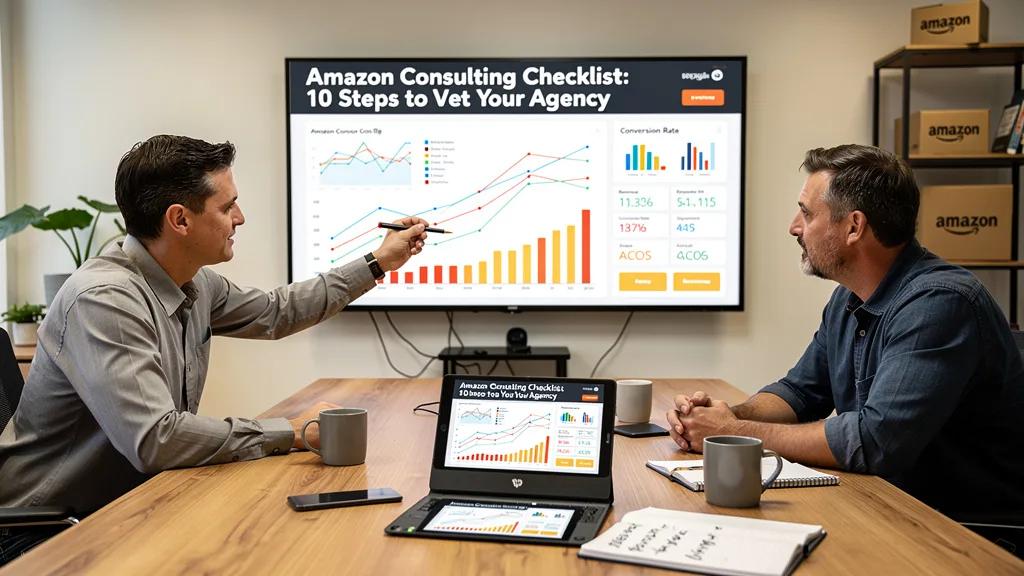
This is where you separate the talkers from the doers. An elite agency will be transparent and eager to showcase their expertise, processes, and the technology that powers their results. Pay close attention to the details in their case studies and the specificity of their answers regarding their Amazon expertise.
Step 5: Analyze Case Studies and Client Testimonials
Don't just glance at testimonials; scrutinize them. Look for case studies that are relevant to your business. A success story for a small startup in the beauty category may not be relevant if you're a 7-figure brand in electronics. Look for details: what were the specific challenges? What strategies did the agency implement? Most importantly, what were the measurable results (e.g., "ACOS reduced by 40% while sales increased by 150% in 6 months")?
Authentic testimonials will often mention the account manager by name or highlight specific aspects of the service they appreciated, like communication or strategic insights. Vague, generic praise is less valuable. The goal is to find evidence that they have successfully guided brands with similar profiles and ambitions to yours. A great agency can show how they apply principles from an Amazon listing optimization checklist to achieve real-world growth.
Step 6: Verify Their Amazon-Specific Expertise and Certifications
The Amazon marketplace is a complex ecosystem with its own rules and best practices. General digital marketing knowledge is not enough. Verify that the agency has deep, demonstrable expertise in Amazon-specific disciplines. This includes advanced PPC strategies, inventory management, A+ Content creation, Brand Store design, and navigating Amazon's Terms of Service.
"True Amazon expertise isn't just about running ads. It's about understanding the flywheel effect, where advertising, listing optimization, and inventory health all work together to create momentum. A top-tier partner for your brand should be able to articulate a holistic strategy, not just a PPC plan."
Ask about their team's experience and any official Amazon Advertising certifications they hold. While certifications aren't everything, they indicate a commitment to professional development and staying current with platform changes. A comprehensive Amazon PPC management strategy is a must, so probe their knowledge on campaign structures, bidding strategies, and performance analysis.
Step 7: Inquire About Their Technology and Software Stack
Top-tier agencies leverage sophisticated software to manage campaigns, conduct keyword research, and analyze performance data. Ask them what tools they use. Familiar names might include Helium 10, Jungle Scout, Perpetua, or Quartile. Many elite agencies also develop their own proprietary software to gain a competitive edge.
Understanding their tech stack gives you insight into the efficiency and sophistication of their operations. It shows they are invested in using the best tools to deliver results, rather than managing complex accounts manually. This is particularly important for managing large-scale PPC campaigns and analyzing market trends across thousands of keywords and products.
The Interview Stage: Asking Critical Questions
This is your opportunity to interview your top 2-3 candidates. The goal is to understand their strategic thinking, communication style, and what it would be like to work with them day-to-day. Prepare your questions in advance and make sure key members of your team are present for the call. Treat this like you're hiring a key executive for your company, because you are.

Pay as much attention to the questions they ask you as the answers they give. A great agency will be just as interested in determining if you are a good fit for them. They should be curious about your brand, your products, your margins, and your long-term vision. This two-way discovery process is a sign of a true partnership approach.
Step 8: Understand Their Communication and Reporting Style
Misaligned communication expectations are a common source of friction in agency relationships. Clarify this upfront. How often will you have formal meetings? Who will be your primary point of contact, and what is their experience level? Will you have direct access to the strategist working on your account?
Ask to see a sample of their performance reports. A good report goes beyond simply listing metrics; it provides context, explains what the data means, highlights key insights, and outlines the next steps. It should be a strategic document, not just a data dump. Ensure their reporting style gives you the transparency and confidence you need to trust them with your business.
Step 9: Scrutinize the Fee Structure and Contract Terms
A reputable agency will have a clear and transparent fee structure. Common models include a monthly retainer, a percentage of ad spend, or a hybrid/performance-based fee. Make sure you understand exactly what is included in the fee and what might incur additional costs. Ask for a detailed proposal that breaks down the scope of work and all associated costs.
Carefully review the contract terms. What is the initial commitment period? What is the process for termination if the partnership isn't working out? Are there any exclusivity clauses? Avoid getting locked into a long-term contract without a clear performance-based out-clause. The table below lists critical questions to ask during this stage.
| Category | Question to Ask |
|---|---|
| Strategy & Onboarding | What does your 90-day plan for a brand like ours look like? |
| Team & Communication | Who will be our day-to-day contact, and what is their experience? |
| Performance & Reporting | Can you walk us through a sample monthly performance report? |
| Expertise & Case Studies | Can you share a case study from a client in our category or with similar growth goals? |
| Fees & Contract | What is your exact fee structure and what is the required contract length? |
Making the Final Decision
You've done the prep work, conducted the research, and interviewed your top contenders. The final step is to synthesize all the information you've gathered, check references, and make an informed decision. This isn't just about picking the agency with the most impressive case studies; it's about choosing the team you believe will be the best long-term partner for your brand's journey.
Trust your gut, but verify with data and references. The best agency for you will not only have the technical skills but also a culture and communication style that aligns with your own. This final check ensures you are entering the partnership with confidence and a clear path forward.
Step 10: Check References and Identify Potential Red Flags
Always ask for and check at least two client references. Ideally, speak with one current client and one former client. Prepare specific questions to ask them. Inquire about the agency's strategic input, proactivity, communication, and, most importantly, the results they delivered. Ask them what they liked most and what they felt could be improved.
Throughout the entire process, be alert for potential red flags. These can be subtle but are often telling. A trustworthy partner will be transparent, strategic, and data-driven.
- Overpromising: Guarantees of specific results (e.g., "We guarantee a #1 ranking") are a major red flag.
- Vague Answers: Inability to provide specific details on strategy or past performance.
- High-Pressure Sales Tactics: Rushing you to sign a contract without proper due diligence.
- Lack of Curiosity: They don't ask deep questions about your brand, products, or margins.
- Poor Communication: Slow response times or unclear communication during the vetting process itself.
Key Takeaways
Choosing the right Amazon consulting agency is a critical step in scaling your brand. This 10-step checklist provides a systematic approach to ensure you find a partner that can truly drive profitable growth. By following this guide, you can move forward with confidence, knowing you have performed thorough due diligence.
- Preparation is Key: Always start by defining your own goals, KPIs, and budget before you begin your search. This is the most critical step.
- Evaluate Holistically: Assess agencies based on a combination of their specialized expertise, verifiable case studies, communication style, and technology stack.
- Ask Tough Questions: Use the interview stage to probe their strategy, reporting processes, and fee structures. Don't be afraid to dig deep.
- Verify Everything: Always check client references to validate an agency's claims and get an unbiased view of what it's like to work with them.
- Trust but Verify: Look for a partner who is transparent, data-driven, and as invested in your brand's success as you are.
Frequently Asked Questions
What steps are involved in the Amazon background check process?
The Amazon background check process typically refers to the Seller Identity Verification (SIV) that all new sellers must complete. This involves submitting government-issued photo ID, bank account or credit card statements, and business information to confirm your identity and legitimacy. Amazon conducts this to prevent fraud and maintain a trustworthy marketplace for customers and sellers.
How do I use Amazon FBA step-by-step?
Using Fulfillment by Amazon (FBA) involves several key steps. First, you create your seller account and list your products. Next, you prepare your products according to Amazon's packaging and labeling requirements. Then, you create a shipping plan in Seller Central and send your inventory to an Amazon fulfillment center. Once received, Amazon handles storage, packing, shipping, customer service, and returns for your orders.
What is Amazon Prime Day?
Amazon Prime Day is an annual multi-day shopping event exclusively for Amazon Prime members. It features significant discounts and deals on a vast range of products across the site, from electronics and home goods to fashion. For sellers, it represents a major opportunity to drive a high volume of sales, and it requires careful planning around inventory, pricing, and advertising to maximize results.
How do I set up an Amazon wish list for my organization?
Organizations like non-profits or schools can create a public wish list through the standard Amazon account process. You create a list, title it with your organization's name, and set the privacy to "Public." Then, you can add the specific items your organization needs. Finally, you share the unique link to your list on your website or social media, allowing supporters to purchase items and have them shipped directly to you.
Conclusion
Following this 10-step Amazon consulting checklist for 2026 will empower you to cut through the noise and select a growth partner with confidence. The process demands diligence, but the payoff is a relationship built on trust, transparency, and a shared commitment to scaling your brand profitably. By prioritizing strategic alignment and verifying expertise, you set the stage for a successful journey from 7 to 8 figures and beyond.
If you're a 7-figure brand owner ready to implement a profit-focused growth strategy, the next step is to get a clear, data-driven picture of your current opportunities and weaknesses. We offer a comprehensive audit to identify key leverage points for scaling your business. Get your no-obligation Free Audit today and discover your path to 8-figure success.