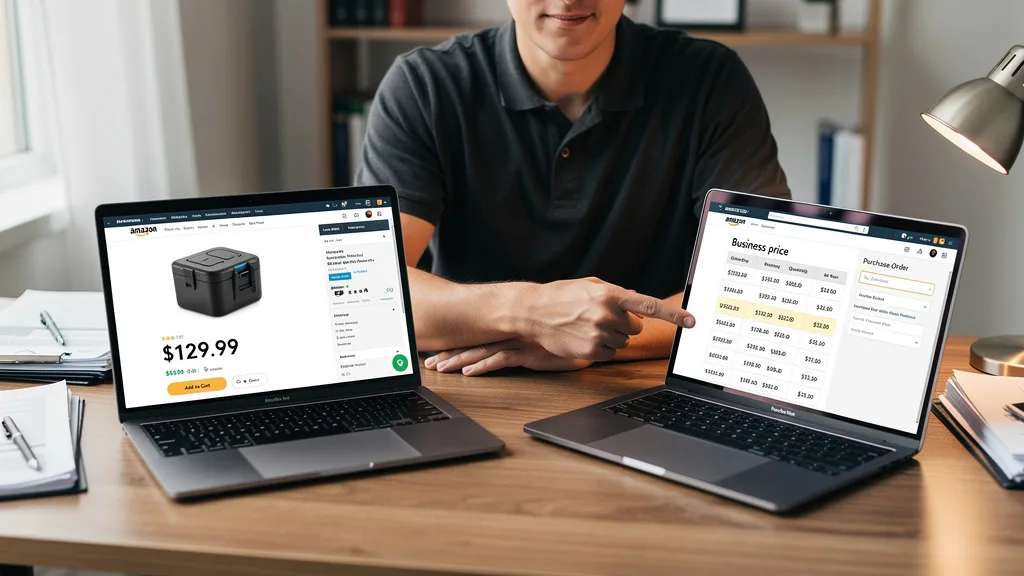
Are you using the right Amazon account for your company's purchases? As your business scales, the line between personal shopping and professional procurement blurs, leading many brand owners to question if their standard account is still the best tool for the job. The choice between an Amazon Business account vs personal account directly impacts your purchasing power, expense tracking, and overall operational efficiency.
Choosing the correct account type is crucial for streamlining your procurement and maximizing savings. A personal Amazon account is designed for individual shoppers, offering simplicity and access to entertainment benefits with Prime. In contrast, an Amazon Business account is a free, specialized portal built for companies. It unlocks business-only pricing, multi-user access, tax-exempt purchasing, and advanced analytics to give you greater control over your company's spending.
At a high level, the fundamental difference is who the account is built for. A personal account serves individual consumers, while an Amazon Business account is tailored for registered companies, non-profits, and sole proprietors. This core distinction drives all other differences in features, from payment methods to reporting capabilities.
To make the choice clearer, here is a direct comparison of the most important features you'll encounter. Understanding these distinctions is the first step toward optimizing your procurement process and ensuring your purchasing strategy aligns with your business goals for 2026.
| Feature | Amazon Business Account | Amazon Personal Account |
|---|---|---|
| Primary User | Registered Businesses, Organizations, Sole Proprietors | Individual Consumers |
| Account Cost | Free to create | Free to create |
| Multi-User Access | Yes, with custom permissions and groups | No (intended for single user) |
| Pricing | Access to Business-Only Prices & Quantity Discounts | Standard consumer pricing |
| Payment Options | Corporate credit cards, purchasing cards, Pay by Invoice | Personal credit/debit cards, gift cards |
| Tax Exemption | Yes, via Amazon Tax Exemption Program (ATEP) | No (taxes applied at checkout) |
| Approval Workflows | Yes, set spending limits and approval chains | No |
| Reporting | Advanced analytics dashboard, spending visibility | Basic order history |
| Prime Membership | Business Prime (multiple tiers, shared benefits) | Amazon Prime (includes digital entertainment) |
What Is an Amazon Business Account?
An Amazon Business account is a free purchasing solution that gives registered businesses access to a suite of features designed to simplify procurement and reduce costs. Think of it as a professional overlay on the familiar Amazon marketplace, equipped with tools specifically for managing company spending. It allows businesses of all sizes, from solo entrepreneurs to large multinational corporations, to streamline how they buy supplies.
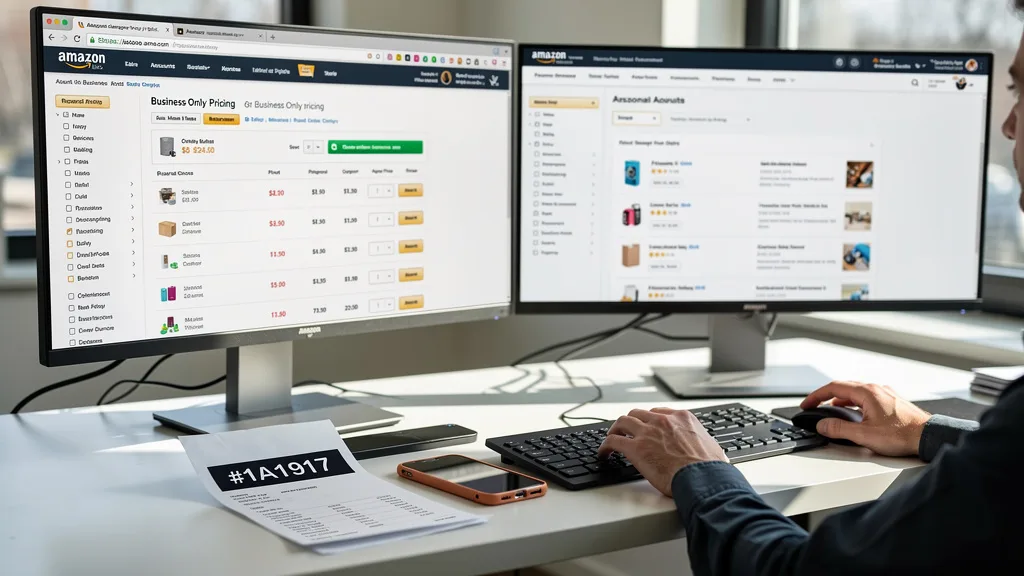
The platform provides access to hundreds of millions of products, but with added layers of control and insight. You can find everything from office supplies and IT equipment to industrial parts and janitorial products, often at exclusive prices. This specialized account transforms Amazon from a simple retail site into a strategic procurement tool for your organization.
Core Purpose and Intended Users
The core purpose of an Amazon Business account is to serve the purchasing needs of organizations. It's intended for any verified business entity, including for-profits, non-profits, educational institutions, and government agencies. By centralizing purchasing, it helps organizations manage budgets, track expenses, and enforce buying policies across different departments or locations.
Whether you are a small startup needing to furnish an office or a large enterprise managing a complex supply chain, the account scales to your needs. It provides the tools to add multiple users, create purchasing groups, and analyze spending patterns, making it an indispensable asset for any company looking to operate more efficiently.
Key Registration Requirements
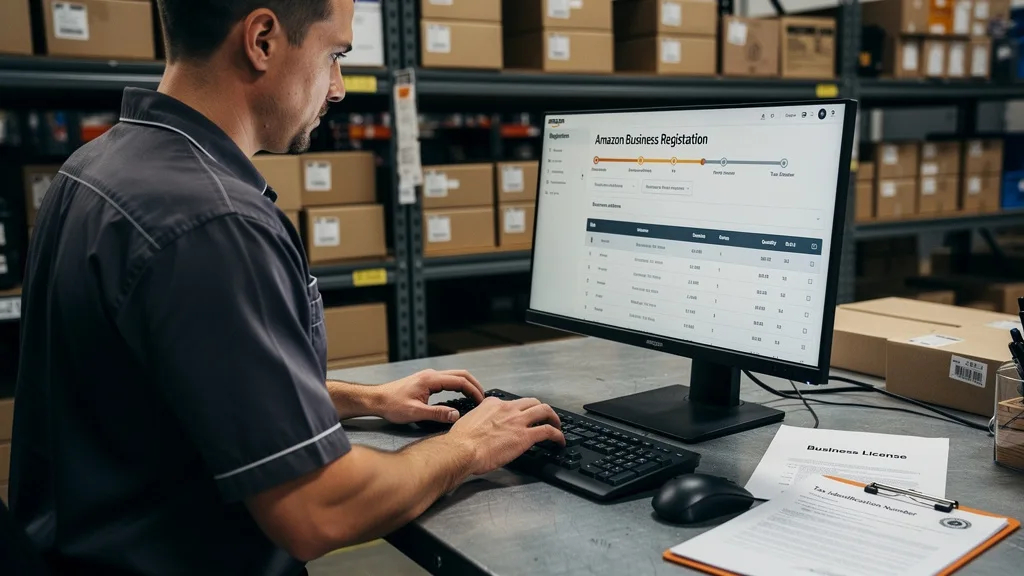
Creating an Amazon Business account is free, but it requires verification of your business identity. During registration, you will need to provide information that proves you are a legitimate organization. This typically includes your business name, address, and a business tax ID, such as an Employer Identification Number (EIN) in the United States.
For sole proprietors who may not have an EIN, other forms of verification, like a business license or other professional license number, may be accepted. Amazon's verification process is designed to ensure the integrity of the B2B marketplace and confirm that only legitimate businesses gain access to its exclusive features. Once verified, you can begin setting up your account and inviting team members.
What Is an Amazon Personal Account?
An Amazon personal account is the standard, default account that millions of people use for their everyday shopping. It is designed for individual use, providing a simple and direct way to purchase goods for personal, family, or household consumption. This is the account you likely already have for buying books, electronics, gifts, and groceries.
The entire experience is optimized for a single user. Its primary function is to offer a vast selection of products with a straightforward checkout process. While a business owner can technically use a personal account to buy items for their company, it lacks the specialized tools needed for proper expense management, tax documentation, and multi-user control, which can create accounting headaches down the line.
Designed for Individual Shoppers
Every feature of a personal Amazon account is tailored to the individual consumer. The recommendations are based on your personal browsing and purchase history, and the payment methods are linked to your personal credit or debit cards. The associated Amazon Prime membership is also geared toward individuals, bundling fast shipping with entertainment perks like Prime Video, Amazon Music, and Kindle reading.
This focus on the individual means the account is not equipped to handle the complexities of business procurement. It cannot generate the detailed invoices required for accounting, nor can it support multiple buyers from the same company. It serves its purpose perfectly for personal shopping but falls short when applied to a business context.
Simplicity and Ease of Use
The greatest strength of a personal account is its simplicity. The user interface is intuitive, making it easy to search for products, read reviews, and complete a purchase in just a few clicks. The 1-Click ordering feature and saved payment information are prime examples of how the platform is built for speed and convenience for a single user.
This ease of use is ideal for quick, infrequent purchases. However, this same simplicity becomes a liability for businesses. The lack of spending controls, approval workflows, and detailed reporting means there is no oversight, making it difficult to manage a budget or track departmental spending effectively.
Cost Comparison: Business vs Personal Accounts in 2026
When evaluating the Amazon Business vs personal account, cost is a primary consideration. While both account types are free to create, the true cost and savings potential diverge significantly based on your purchasing volume, tax status, and need for premium features like Business Prime.

Understanding these financial differences is key to making an informed decision. The savings from business-only pricing and tax-exempt purchases can quickly add up, making the Business account a more cost-effective choice for most companies, even small ones.
Account Creation Fees
There is no fee to create either a personal Amazon account or a basic Amazon Business account. This makes it easy for anyone to get started on the platform. The costs come into play with the optional Prime memberships associated with each account type. A personal account can be upgraded to Amazon Prime for a monthly or annual fee to access shipping and entertainment benefits.
Similarly, an Amazon Business account can be upgraded to Business Prime. Business Prime has several pricing tiers based on the number of users you need to add to the account. This allows you to pay for a plan that matches your organization's size and needs, without overspending on unused user slots.
Business-Only Pricing and Quantity Discounts
One of the most significant financial advantages of an Amazon Business account is access to special pricing. Many sellers on the platform offer exclusive, lower prices available only to verified business customers. These are labeled as "Business Prices" and can offer substantial savings over the standard consumer price.
Furthermore, Amazon Business facilitates quantity discounts. Sellers can set up tiered pricing, where the per-unit cost decreases as you buy more. For businesses that regularly purchase supplies in bulk, these discounts can lead to significant cost savings over time, a feature entirely absent from personal accounts.
Tax-Exempt Purchasing Options
For qualifying organizations like non-profits, educational institutions, or resellers, the ability to make tax-exempt purchases is a major benefit. The Amazon Business account includes access to the Amazon Tax Exemption Program (ATEP). Once you enroll and provide your exemption certificates, Amazon will automatically remove applicable sales taxes from eligible purchases at checkout.
This process automates what would otherwise be a manual, time-consuming task of claiming back taxes. For a personal account, all purchases are subject to sales tax, and reclaiming it for business purposes requires cumbersome paperwork. ATEP streamlines tax compliance and improves cash flow for eligible organizations.
Purchasing and Payment Features Compared
The differences in purchasing and payment features are where the business account truly distinguishes itself. While a personal account is built for a single user with a simple payment method, an Amazon Business account offers a robust suite of tools designed for corporate environments with multiple stakeholders and strict financial controls.
"For a scaling 7-figure brand, moving to an Amazon Business account is a non-negotiable step. The ability to set approval workflows and spending limits prevents rogue spending and gives you the financial control needed to manage cash flow effectively. It's about moving from reactive purchasing to strategic procurement."
Multi-User Access and Permissions
A standout feature of Amazon Business is the ability to add multiple users to a single account. You can invite your entire team and assign them specific roles and permissions. You can create purchasing groups for different departments or projects, each with its own payment methods and shipping addresses.
Administrators have full control, while users designated as "requisitioners" can only add items to a cart for approval. This granular control ensures that employees can only purchase what they are authorized to, streamlining the process while maintaining oversight. A personal account, by contrast, is tied to a single user and cannot be shared without compromising security.
Approval Workflows and Spending Limits
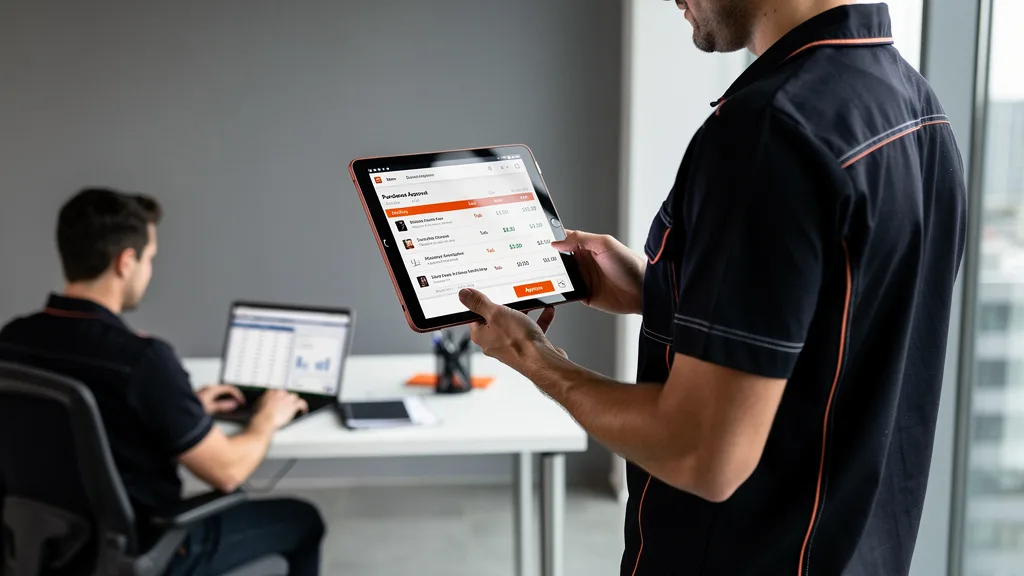
To further enhance control, Amazon Business allows you to create customized approval workflows. You can set spending limits for individual users or purchasing groups, requiring any order over a certain dollar amount to be sent to a designated approver before the purchase is completed. This is a critical tool for budget management.
These policies can be as simple or as complex as your organization requires. For example, you can restrict certain product categories or require multiple levels of approval for large purchases. This level of control is essential for scaling businesses that need to manage spending across a growing team. Such features are entirely unavailable on a personal account, where any purchase is processed immediately.
Business Invoicing vs Personal Receipts
Proper documentation is crucial for accounting and tax purposes. A personal account provides a simple order receipt, which may not contain all the information your accounting department needs, such as a VAT or GST number. This often leads to manual data entry and reconciliation challenges.
An Amazon Business account solves this by providing detailed, itemized invoices for every order. These invoices are easily downloadable in PDF format and are designed to meet business accounting standards. For items eligible for VAT invoicing, the invoices will automatically include the necessary details, saving your finance team significant time and effort during reconciliation and tax filing.
Amazon Prime vs Business Prime: A Detailed Benefits Breakdown
The conversation about account types often leads to questions about their respective Prime memberships. While both offer fast, free shipping, their structures, additional benefits, and costs are quite different. Understanding the nuances between standard Amazon Prime vs. Business Prime is key to maximizing value for your specific needs.
Your choice will depend on whether you prioritize entertainment and individual perks or business-centric features like multi-user shipping benefits and delivery scheduling. As an Amazon consultant, I often see clients overlook these differences, leading to inefficient spending on their Prime memberships.
Shipping Benefits and Delivery Speed
Both Prime and Business Prime offer fast, free shipping on millions of eligible items, including Same-Day, One-Day, and Two-Day Delivery. However, Business Prime adds features tailored for workplace logistics. For example, you can choose a designated "Amazon Day for Business" to have all your orders for the week arrive together on a single, predictable day, reducing delivery disruptions.
Business Prime also offers consolidated shipping for eligible orders, which means multiple items are packaged together in fewer boxes. This not only simplifies receiving but also supports corporate sustainability goals by reducing packaging waste. A single Business Prime membership can extend shipping benefits to multiple users on the account, making it more cost-effective for teams.
Entertainment and Digital Perks
This is the most significant point of divergence. A standard Amazon Prime membership includes a wide array of digital entertainment benefits, such as access to Prime Video, Amazon Music Prime, Prime Reading, and Prime Gaming. These perks are designed for personal enjoyment and are a major value proposition for individual subscribers.
Business Prime does not include any of these entertainment benefits. Its focus is purely on purchasing and shipping advantages for your company. If you or your employees want access to Prime Video or Music, you will still need a separate, personal Prime account.
Business Prime Plan Tiers and Pricing
Unlike the one-size-fits-all personal Prime membership, Business Prime offers several plan tiers with pricing that scales based on the number of users who can access the benefits. As of 2026, these plans typically range from the "Duo" plan, which covers one user, to the "Essentials," "Small," "Medium," and "Enterprise" plans, which cover progressively more users.
The Duo plan is a great option for sole proprietors who already have a personal Prime membership, as it allows them to add Business Prime benefits to their business account for free. For larger teams, the tiered structure ensures you only pay for the number of users you need, providing a scalable and cost-effective solution for extending shipping benefits across your organization.
Reporting and Analytics for Expense Management
For any business serious about growth, data is everything. The ability to track, analyze, and control spending is critical for maintaining profitability. This is another area where the Amazon Business account offers a clear advantage over a personal account, providing sophisticated tools for expense management.
Effective expense management goes beyond just saving receipts. It involves understanding spending patterns, ensuring compliance with company policies, and generating reports for financial planning. The analytics features built into Amazon Business are designed to provide this visibility. For brand owners managing budgets for everything from office supplies to R&D materials, this data is invaluable. You can learn more about managing campaign budgets in our guide to Amazon PPC management.
Amazon Business Analytics Dashboard
The Amazon Business Analytics dashboard is a powerful reporting tool that gives administrators a comprehensive view of the entire organization's purchasing activity. You can generate pre-configured or custom reports to track spending by individuals, groups, product categories, or specific time periods.
These reports can help you identify opportunities for savings, monitor compliance with purchasing policies, and reconcile expenses more efficiently. You can visualize data through charts and graphs, making it easy to spot trends and present findings to stakeholders. This level of insight is crucial for strategic financial planning and budget forecasting.
Personal Account Order History Limitations
In stark contrast, a personal Amazon account offers only a basic order history. You can see a chronological list of your past purchases, search for specific items, and print individual receipts. However, there is no way to aggregate this data, analyze spending trends, or view purchases made by anyone other than yourself.
For a business, relying on this limited history is inefficient and prone to errors. It requires manually downloading receipts and entering data into spreadsheets for analysis, a time-consuming process that offers little strategic insight. This fundamental lack of reporting capability is one of the most compelling reasons for any business to move away from using a personal account for company purchases, especially when exploring new product ideas and need to track research costs for low-competition Amazon niches.
Which Account Type Is Right for Your Needs?
By now, the differences should be clear. The decision ultimately comes down to your specific operational requirements. Are you an individual or a sole proprietor making occasional purchases, or are you part of an organization that needs control, visibility, and savings on business-related spending?
Answering this question honestly will guide you to the right choice. To simplify it further, we have broken down the key decision factors into two distinct scenarios. Use these checklists to determine which account type aligns with your needs in 2026.
Choose a Business Account If You Need to...
- Add multiple team members to a single account for purchasing.
- Set spending limits and create approval workflows to control budgets.
- Make tax-exempt purchases for a qualifying organization.
- Access business-only pricing and quantity discounts on bulk orders.
- Generate detailed invoices and reports for accounting and expense tracking.
- Separate your business and personal spending for clear financial records.
- Integrate your purchasing system with third-party procurement applications.
Stick with a Personal Account If You...
- Are purchasing items exclusively for personal, family, or household use.
- Are a sole proprietor with very infrequent and low-value business purchases.
- Prioritize access to Prime Video, Amazon Music, and other entertainment perks.
- Do not need to add other users or set spending controls.
- Do not require detailed invoicing or advanced spending analytics.
- Prefer the simplest possible interface for quick, individual transactions.
Key Takeaways
Choosing between an Amazon Business and a personal account is a critical decision for any company. As your business grows, leveraging the right tools can significantly impact your efficiency and bottom line. Here are the essential points to remember: manage budgets.
- Purpose-Built Tools: Personal accounts are for individual consumers, while Amazon Business accounts are free, specialized platforms for companies, offering features like multi-user access, approval workflows, and advanced reporting.
- Cost Savings Potential: Amazon Business provides access to exclusive business-only pricing and quantity discounts, which can lead to substantial savings on recurring purchases.
- Financial Control and Visibility: The ability to set spending limits, create approval chains, and use the analytics dashboard gives businesses unparalleled control over procurement, something impossible with a personal account.
- Tax and Accounting Simplification: With the Amazon Tax Exemption Program (ATEP) and downloadable, detailed invoices, the Business account streamlines financial administration and compliance.
- Distinct Prime Memberships: Business Prime is focused on scalable shipping benefits for teams and does not include the entertainment perks (Prime Video, Music) found in a personal Prime membership.
Frequently Asked Questions
Can I convert my personal Amazon account to a business account?
Yes, Amazon provides a process to convert an existing personal account into a business account. However, this action is permanent and will transfer your entire order history, addresses, and payment methods to the business profile. You will also lose access to personal Prime benefits like Prime Video and Music on that account.
For these reasons, it is often recommended to create a new, separate Amazon Business account using a dedicated business email address. This keeps your personal and business purchasing histories completely separate, which is cleaner for accounting and allows you to maintain a personal Prime membership for entertainment.
Is there a downside to having an Amazon Business account?
The primary downsides are minor and context-dependent. The interface can feel slightly more complex than the simple personal account due to the additional features. Additionally, the associated Business Prime membership lacks the entertainment perks of a personal Prime subscription, which might be a drawback for some sole proprietors.
However, for most businesses, the benefits of enhanced control, cost savings, and streamlined reporting far outweigh these minor disadvantages. The initial setup requires business verification, which takes a short amount of time, but it's a one-time process that unlocks significant long-term value.
Can I use my Amazon Business account for personal use?
While technically possible, it is strongly discouraged to use your Amazon Business account for personal purchases. Co-mingling personal and business expenses creates significant complications for accounting, expense reporting, and tax filing. It defeats the purpose of having a separate account designed for financial clarity.
Using the business account for personal items can also trigger compliance issues within your own company's purchasing policies. Best practice is to maintain two separate accounts: one for all business-related procurement and one for all personal shopping.
What are the main tax advantages of using a business account?
The two main tax advantages are tax-exempt purchasing and simplified expense documentation. Through the Amazon Tax Exemption Program (ATEP), eligible organizations can have sales tax automatically removed at checkout, improving cash flow. This is a huge benefit for non-profits, schools, and government entities.
For all businesses, the platform provides detailed, downloadable invoices that are suitable for tax filing and audits. This simplifies record-keeping and ensures you have the proper documentation to claim business expenses, which ultimately helps you understand your total costs and profitability, a key part of managing your Amazon ACoS.
Can I have both a personal and a business Amazon account?
Yes, you can and absolutely should have both a personal and a business account. This is the recommended approach for any business owner. Use a dedicated business email address to sign up for your free Amazon Business account and continue using your personal email for your personal account.
This separation allows you to take full advantage of the features of each platform. You get the robust procurement tools, reporting, and savings of the business account for your company, while still enjoying the simplicity and entertainment benefits of your personal Prime account for your private life.
Conclusion
In 2026, choosing between an Amazon Business account vs a personal one is a strategic decision. For any registered business, from a sole proprietor to a large enterprise, the advantages of an Amazon Business account are undeniable. It provides the essential tools for cost savings, financial control, and operational efficiency that a personal account simply cannot offer. While a personal account excels in simplicity for individual shopping, the business account is the clear winner for any professional procurement needs.
If you are still managing your company's purchasing through a personal account, you are leaving money on the table and creating unnecessary administrative work. Making the switch is a straightforward step toward professionalizing your operations and scaling your brand effectively. Are you ready to optimize every aspect of your Amazon presence, from procurement to sales? Our expertise in listing optimization and PPC management can help drive profitable growth.
Take the next step in scaling your brand. Request your Free Audit today and let's uncover opportunities to enhance your profitability.