
Table of Contents 8 sections
Are you prepared to navigate the complex web of rules for selling electronics on Amazon? Successfully launching and scaling an electronics brand using Fulfillment by Amazon (FBA) requires more than just a great product; it demands a deep understanding of Amazon's strict guidelines, from battery compliance to brand gating. Mastering these requirements is the key to unlocking massive growth and avoiding costly account suspensions.
To meet Amazon FBA eligibility for electronics and accessories in 2026, you must operate a Professional Seller Account with excellent health metrics, comply with all product restrictions for items like lithium batteries and RF devices, successfully navigate any category or brand gating, and adhere to FBA's specific prep, packaging, and labeling standards. Meeting these criteria is essential for gaining Buy Box eligibility and scaling your business.
Core Amazon FBA Seller Requirements for 2026
Before you can even think about product specifics, your seller account itself must be in pristine condition. Amazon holds sellers, especially those in high-risk categories like electronics, to an exacting standard. This foundation is non-negotiable for long-term success and is the first checkpoint in your FBA journey.
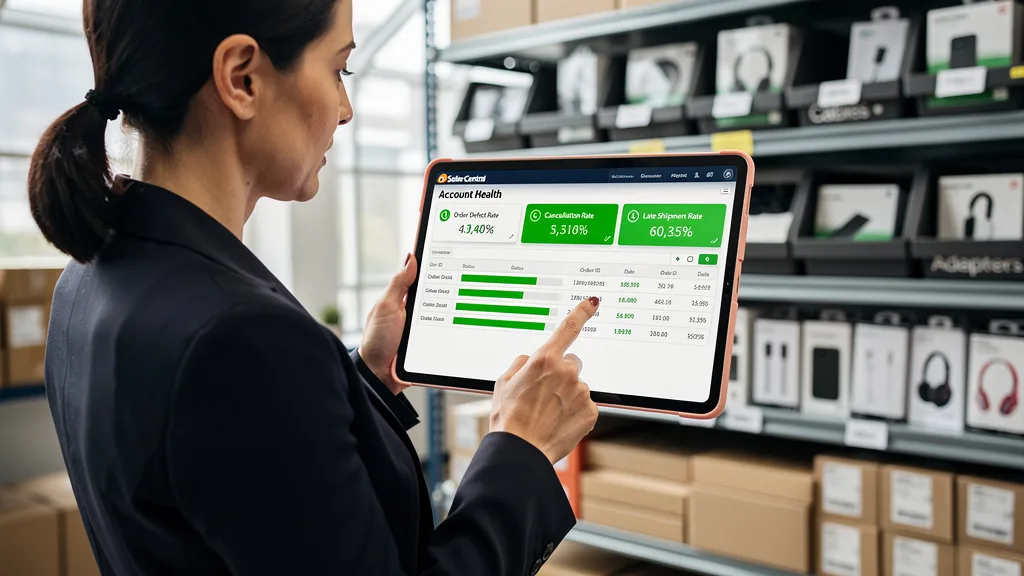
Meeting these core requirements demonstrates to Amazon that you are a reliable and professional business capable of providing a positive customer experience. This trust is crucial for gaining access to gated categories and achieving favorable placement, like winning the Buy Box.
Setting Up Your Professional Seller Account
A Professional Seller Account is the mandatory starting point for any serious brand aiming to sell electronics through FBA. This account type provides access to essential features like inventory management tools, API integration, and, most importantly, the ability to apply for restricted categories. To set one up, you will need to provide valid business information, government-issued identification, tax details, and a chargeable credit card.
Amazon's verification process is thorough, so ensure all your documents are clear, current, and match the information you provide exactly. Any discrepancies can lead to delays or even rejection. This initial setup establishes your business's legitimacy on the platform and is a prerequisite for all subsequent steps.
Understanding Performance Metrics and Account Health
Your Account Health dashboard is your business's report card on Amazon. Maintaining excellent metrics is critical for FBA eligibility and winning the Buy Box. The three core metrics are the Order Defect Rate (ODR), which must remain below 1%, the Pre-fulfillment Cancel Rate (below 2.5%), and the Late Shipment Rate (below 4%).
Consistently monitoring these figures is vital. A dip in performance can lead to listing suppression, loss of Buy Box eligibility, or even account suspension. For electronics sellers, providing excellent customer service to minimize negative feedback and A-to-z claims is paramount to keeping your ODR low and your account in good standing.
FBA Product Restrictions for Electronics and Accessories
The electronics category is one of the most heavily regulated on Amazon due to safety, compliance, and counterfeit concerns. Understanding the specific restrictions that apply to your products is essential to avoid inventory rejection at the fulfillment center or, worse, legal and financial penalties. These rules are in place to protect both customers and Amazon.
"Success in the electronics category on Amazon hinges on meticulous compliance. Sellers who treat safety certifications, battery documentation, and FCC regulations as a top priority are the ones who scale without disruption. Ignoring these details is the fastest way to get your listings suppressed or your account suspended."
General Prohibited and Restricted Product Categories
Amazon maintains a comprehensive list of products that are either entirely prohibited or require pre-approval to sell. For electronics, this includes items that can be used to circumvent copyright protection, illegal surveillance devices, and certain types of laser products. It's crucial to review Amazon's official FBA product restrictions before sourcing any new inventory.
Failure to comply can result in the destruction of your inventory at your expense, account suspension, and forfeiture of your funds. Always perform due diligence on every ASIN you plan to sell to ensure it is fully compliant with all platform-wide and category-specific policies.
Specific Rules for Lithium Batteries and Devices
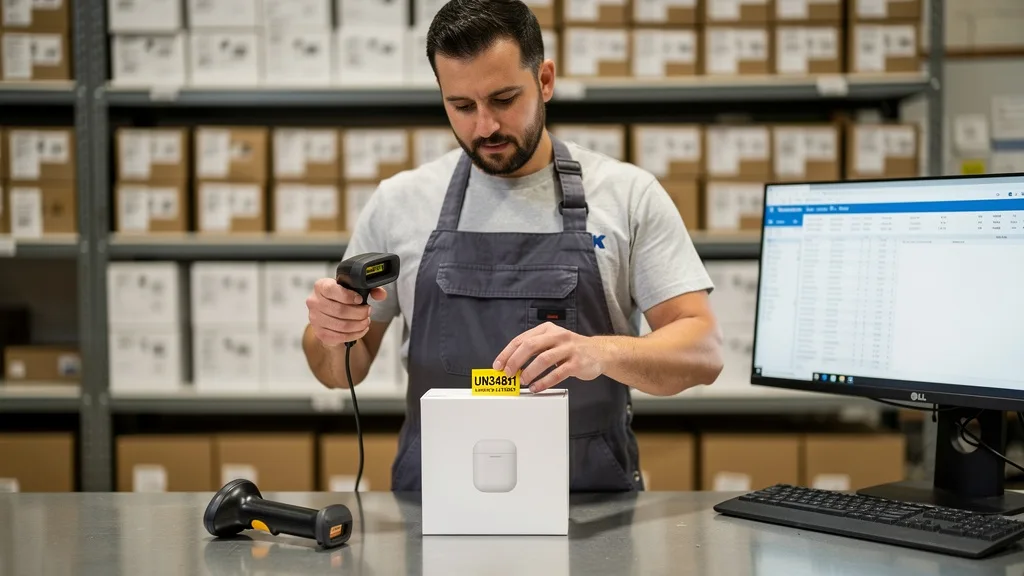
Virtually all modern portable electronics contain lithium batteries, which are classified as dangerous goods (hazmat) due to fire risk. Selling these products via FBA requires strict adherence to labeling and documentation requirements. You must provide a Safety Data Sheet (SDS) or an exemption sheet for every product containing a battery.
Products must be packaged to prevent short-circuiting, and the outer packaging needs the correct lithium battery handling labels. Amazon's fulfillment centers have specific processes for these items, and any deviation from the rules will result in your shipment being rejected. This is one of the most common points of failure for new electronics sellers.
Compliance for Products with Lasers or Radio Frequencies
Any electronic device that transmits a radio frequency, such as Wi-Fi or Bluetooth products, must comply with Federal Communications Commission (FCC) regulations in the United States. You must have proof of FCC compliance, typically an FCC ID visible on the product or in the user manual, and be prepared to provide documentation upon request.
Similarly, products containing lasers, like laser pointers or scanners, are regulated by the FDA. You must provide detailed technical specifications and a Laser Radiation Hazard report to prove compliance. Selling non-compliant RF or laser devices is illegal and will result in immediate removal from the platform.
Condition Guidelines: New vs. Used and Refurbished
Amazon has very strict condition guidelines. For most electronics, you can only list products as "New" if they are in their original, unopened packaging with the full manufacturer's warranty intact. Listing an open-box return as "New" is a serious policy violation that can lead to suspension.
Selling in "Used" or "Certified Refurbished" conditions has its own set of rules. Refurbished products must be processed by the manufacturer or a specialized third-party refurbisher and come with a separate warranty. Confusing these conditions is a frequent source of customer complaints and negative account metrics, so it's vital to be accurate and transparent.
Navigating Category and Brand Gating for Electronics
Beyond general restrictions, Amazon uses "gating" to control access to certain product categories and brands. This is especially common in electronics to combat counterfeit products and ensure sellers are sourcing their inventory from legitimate channels. Getting approved, or "ungated," is a critical step for many electronics sellers.
What Are Gated Categories and Brands?
Gating is a pre-approval process that Amazon requires before you can list items in certain categories or under specific brand names. The Consumer Electronics category has several sub-categories that may be gated. Additionally, major brands like Apple, Sony, and Bose are almost always gated, meaning you cannot list their products without explicit permission from both the brand and Amazon.
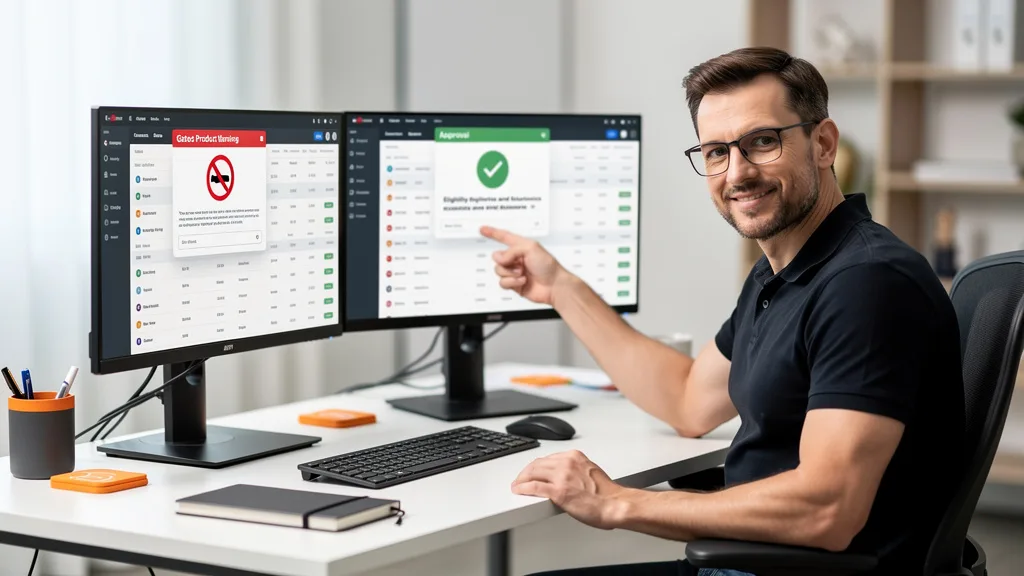
This process protects brand integrity and customer trust by ensuring that only authorized resellers are active on the platform. Attempting to circumvent these gates by listing a product in the wrong category or under a misspelled brand name is a severe violation.
How to Apply for Ungating in the Electronics Category
The ungating process typically begins when you attempt to add a restricted product to your inventory in Seller Central. You will be prompted to request approval, which initiates an application. The application will ask for specific documentation to prove the authenticity and safety of your products.
To improve your chances of approval, ensure your seller account is in good health, you are on the Professional selling plan, and you have all required documents ready before you apply. The process can take anywhere from a few days to several weeks, so patience and preparedness are key.
Required Documentation for Brand Approval
To get ungated for a specific brand or category, Amazon generally requires one of two things: either a letter of authorization directly from the brand owner or legitimate invoices from an authorized distributor. These invoices must be dated within the last 180 days, show your business name and address matching your Seller Central information, and include the purchase of at least 10 units of the product you're applying for.
Retail receipts, pro-forma invoices, or documents from online arbitrage sources are not accepted. This is where many sellers fail, as it requires establishing a legitimate wholesale supply chain. Using the right best Amazon listing optimization tools can help you present your products professionally once you are approved, but the documentation is the first hurdle.
Essential Product Preparation and Labeling for FBA
Once your products are deemed eligible, they must be prepped and labeled according to Amazon's strict FBA standards. Improper preparation is a leading cause of shipment delays, extra fees, and negative customer experiences. For electronics, which can be fragile and high-value, this step is particularly critical.
Packaging Requirements to Prevent Damage in Transit
Your products must be packaged to withstand the rigors of warehouse handling and shipping. For electronics, this often means using bubble wrap, sturdy boxes, and securing loose parts. Any product sold as a set must be clearly marked as such and packaged together. Amazon's packaging guidelines are designed to minimize damage and ensure the product reaches the customer in the condition they expect.
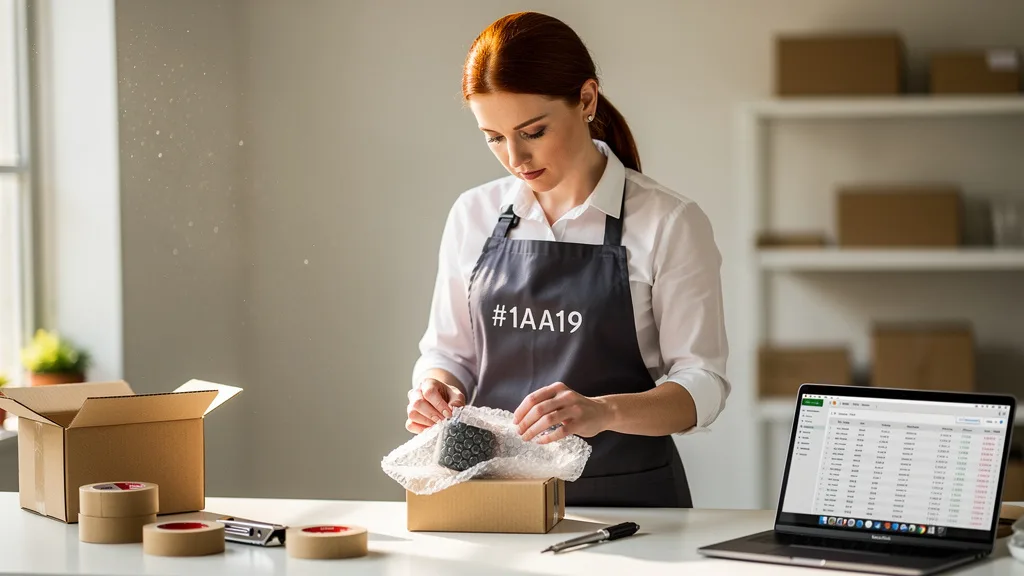
Products must also pass a 3-foot drop test without the contents breaking. If your product's retail packaging isn't sufficient to pass this test, you must place it in a separate, more protective shipping box before sending it to Amazon.
FNSKU Labeling vs. Commingled Inventory
When you send inventory to FBA, you have two labeling options: use the manufacturer's barcode (UPC/EAN) for commingled inventory or apply an Amazon-specific FNSKU label. For electronics, using an FNSKU is strongly recommended. Commingling mixes your inventory with that of other sellers who have the same product. If another seller sends in counterfeit or damaged goods, your customers could receive them, and your account would be at risk.
Applying an FNSKU label to each unit ensures that the inventory you send is the exact inventory a customer receives when they buy from you. This gives you full control over your product quality and protects your brand's reputation.
| Feature | FNSKU (Labeled Inventory) | Commingled (Manufacturer Barcode) |
|---|---|---|
| Inventory Control | Your inventory is kept separate. | Your inventory is mixed with other sellers'. |
| Counterfeit Risk | Low. Protects your brand. | High. Risk of receiving another seller's fake product. |
| Preparation | Requires applying an Amazon barcode to each item. | No extra labeling needed if UPC is present. |
| Recommendation for Electronics | Highly Recommended | Not Recommended |
Special Handling for Fragile or High-Value Items
High-value electronics may require additional preparation to ensure their safety and security within the FBA network. This can include using tamper-evident seals on the packaging or placing items in a secondary, more secure box. For items designated as fragile, you must apply a "Fragile" label to the outside of the shipping box.
Amazon's system tracks high-value items more closely, but the initial responsibility for secure packaging falls on you, the seller. Investing in proper prep can save you thousands in lost or damaged inventory and prevent negative customer feedback from items that arrive broken.
Achieving Buy Box Eligibility for Your Listings
Meeting all the eligibility requirements is only half the battle. To generate significant sales, you need to win the Buy Box. This is the white box on the right side of the product detail page where customers can "Add to Cart" or "Buy Now." Over 80% of sales go through the Buy Box, so achieving and maintaining buy box eligibility is crucial.
Key Factors Influencing the Buy Box Algorithm
Amazon's algorithm determines which seller wins the Buy Box based on several factors designed to give the customer the best possible experience. While the exact formula is a secret, the most important variables are well-known. Having a Professional Seller Account and FBA fulfillment are the most heavily weighted factors. Other key elements include:
- Landed Price: The total price (item price + shipping).
- Seller Performance Metrics: ODR, cancellation rate, and other health metrics.
- Inventory Availability: Having consistent stock is critical.
- Shipping Time: FBA sellers automatically get the highest score for this.
Pricing Strategies for Competitive Electronics
While a low price is important, it's not the only factor. Simply being the cheapest seller doesn't guarantee the Buy Box, especially if your account health is poor. For electronics, where prices can be volatile, using an automated repricing tool can help you stay competitive without sacrificing your margins. A smart strategy is to price competitively against other FBA sellers with similar performance metrics.
It's also important to understand your Advertising Cost of Sale (ACoS) and overall profitability. A good pricing strategy balances competitiveness for the Buy Box with healthy profit margins. You can learn more about this by reading an Amazon ACoS guide to optimize your ad spend and pricing together.
Maintaining Strong Inventory and Shipping Performance
Your Inventory Performance Index (IPI) score is a critical metric that Amazon uses to gauge your efficiency in managing FBA inventory. A low IPI score can result in storage limits, preventing you from sending in more stock. To maintain a high score, you need to manage sell-through rates, avoid excess or stranded inventory, and keep popular items in stock.
Running out of stock not only means lost sales but also hurts your listing's sales velocity and ranking, making it harder to regain the Buy Box when you do restock. Consistent inventory management is a cornerstone of sustained success on Amazon.
Key Takeaways
Navigating the requirements for selling electronics via FBA in 2026 demands precision and diligence. Success is built on a foundation of compliance, account health, and operational excellence. Here are the most critical takeaways for your brand:
- Professional Account & Health: A Professional Seller Account with pristine health metrics is the mandatory entry ticket. Your ODR, cancellation rate, and late shipment rates must be actively managed.
- Strict Product Compliance: You must adhere to all rules for electronics, especially concerning lithium batteries (requiring an SDS), RF devices (FCC compliance), and laser products. There is no room for error here.
- Master Gating & Sourcing: Be prepared to provide legitimate invoices or brand authorization letters to get ungated. This requires a professional wholesale supply chain, not retail arbitrage.
- FNSKU Labeling is Non-Negotiable: Always use FNSKU labels for electronics to protect your inventory from being commingled with counterfeit or damaged goods from other sellers.
- Buy Box is Earned: Winning the Buy Box is a result of excelling in all areas: using FBA, competitive pricing, strong inventory management, and perfect seller metrics.
Frequently Asked Questions
What does FBA stand for in Amazon e-commerce?
FBA stands for "Fulfillment by Amazon." It is a service where sellers send their products to Amazon's fulfillment centers, and Amazon handles the storage, packing, shipping, customer service, and returns for those products. This allows sellers to leverage Amazon's world-class logistics network and offer Prime shipping to customers.
Using FBA is one of the most significant factors in winning the Buy Box and scaling an e-commerce business on the platform. The 𝐁𝐞𝐧𝐞𝐟𝐢𝐭𝐬 𝐨𝐟 𝐅𝐁𝐀 𝐟𝐨𝐫 𝐖𝐡𝐨𝐥𝐞𝐬𝐚𝐥𝐞 are significant, as it automates much of the operational workload.
How do I find FBA-eligible electronic items to sell?
Finding eligible items starts with thorough product research. Use tools to identify high-demand, low-competition products, then cross-reference them with Amazon's restricted products list. For any potential product, check for gating by attempting to add it in Seller Central and see if it requires approval.
Furthermore, verify that you can source the product from an authorized distributor who can provide the invoices needed for ungating. You should also confirm the product has all necessary compliance certifications, like an FCC ID or UL listing, before making a purchase. Using dedicated Amazon niche research tools can streamline this discovery process significantly.
How much does Amazon take in fees from a sale?
Amazon's fees are multi-layered. For every sale, Amazon charges a referral fee, which is a percentage of the total sale price and varies by category (for consumer electronics, it's typically around 8-15%). If you use FBA, you will also pay FBA fulfillment fees (for picking, packing, and shipping) and monthly inventory storage fees.
Other potential costs include long-term storage fees for slow-moving inventory, advertising costs, and fees for optional services like labeling or removal orders. It's crucial to use Amazon's FBA Revenue Calculator to understand the full fee structure for your specific product to ensure profitability. Amazon occasionally updates its fee structure, so staying informed is important for financial planning.
Are there specific warranty requirements for electronics sold via FBA?
Yes, warranty requirements are strict. To list an item as "New," it must carry the full, original manufacturer's warranty. If the warranty is voided or altered because you are not an authorized reseller, you cannot list the product as new. This is a common pitfall for sellers using arbitrage sourcing methods.
For used or refurbished items, you must accurately describe the warranty status in the condition notes. Amazon's own Certified Refurbished program has specific warranty requirements that sellers must adhere to. Misrepresenting warranty information is a serious policy violation that can lead to customer complaints and account suspension.
What is the difference between brand gating and category gating on Amazon?
Category gating is when Amazon restricts an entire category or sub-category of products, requiring all sellers to apply for approval before listing any items within it. This is often done for categories that have high safety or compliance standards, such as Automotive or Grocery.
Brand gating is more specific. It applies to a particular brand name, regardless of the category. For example, even if the general "Electronics" category is open to you, you may still be gated from selling Apple or Samsung products. This requires separate approval, usually with documentation directly from the brand or its authorized distributors, to prove you are an authorized reseller.
Conclusion
Mastering the Amazon FBA eligibility for electronics and accessories is a complex but achievable goal for detail-oriented sellers. By focusing on maintaining a healthy account, ensuring strict product compliance, navigating the ungating process with proper documentation, and adhering to FBA prep standards, you build a resilient business. These steps are not just about following rules; they are about building the foundation needed to win the Buy Box, earn customer trust, and scale your brand profitably on the world's largest marketplace.
If you're a 7-figure brand owner ready to tackle these challenges and scale to the next level, ensuring your listings and account are fully optimized is the next logical step. A comprehensive audit can reveal hidden opportunities and compliance risks before they become problems. Get a professional review of your Amazon presence to ensure you're primed for growth. Request your Free Audit today.