
A+ Content and Brand Storefronts build trust and can significantly increase conversion rates.You've invested time and resources into improving your Amazon product listings, but now you're asking the most critical question: how long does it take to actually see a return on that effort? The answer isn't instantaneous, but with a strategic approach, you can track progress methodically and expect significant results within a few months.
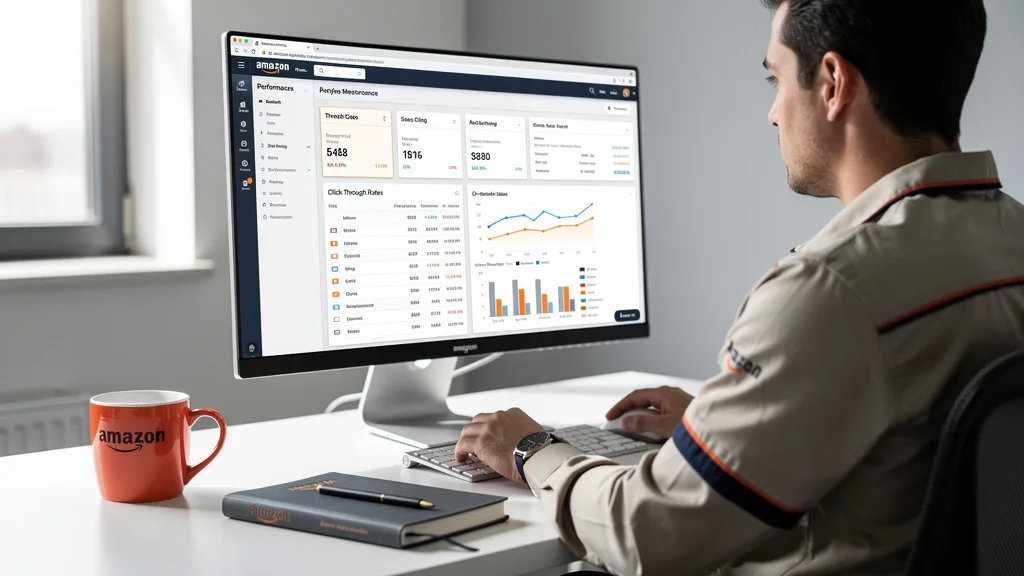
Generally, you can expect to see initial indexing changes within 1-2 weeks, early performance shifts like improved click-through rates in 2-4 weeks, and more substantial impacts on keyword rankings and sales velocity within 1-3 months. The full effect, leading to sustained growth and a mature, high-converting listing, often solidifies after the 3-month mark. This timeline depends heavily on factors like your product category's competitiveness, your starting rank, and the quality of your optimization.
Amazon listing optimization is the process of strategically enhancing your product detail pages to improve their visibility in search results, increase click-through rates (CTR), and boost conversion rates. It's not just about stuffing keywords into your title. It is a comprehensive strategy that involves refining every element of your listing, from the text to the visuals, to better appeal to both Amazon's A10 algorithm and human shoppers. The primary goals are to attract more qualified traffic and persuade that traffic to make a purchase.
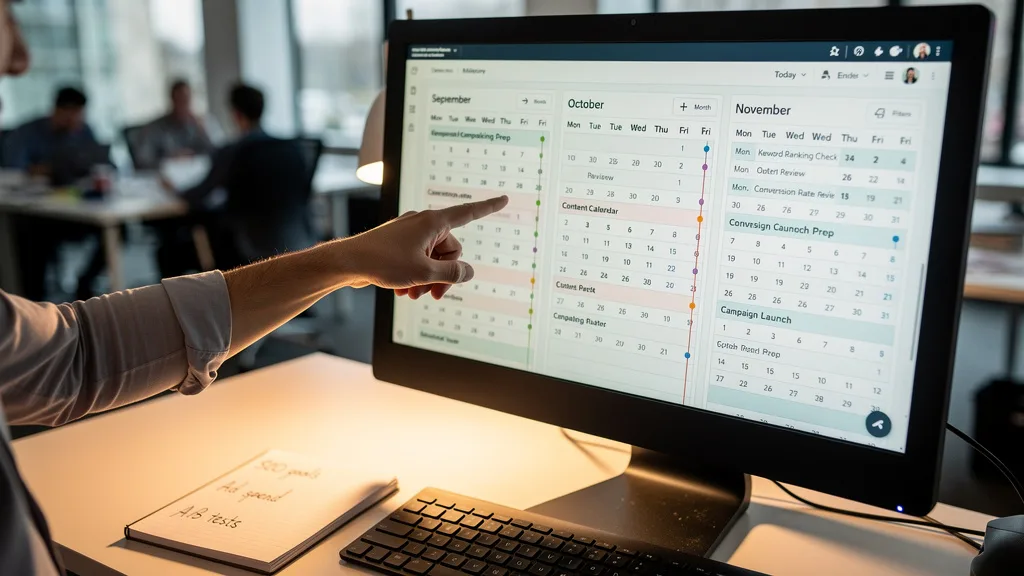
A fully optimized listing acts as your 24/7 digital salesperson on the world's largest ecommerce platform. It answers customer questions before they are asked, builds trust in your brand, and clearly communicates your product's value proposition. This involves deep keyword research, compelling copywriting, high-quality imagery and video, and the effective use of A+ Content. Ultimately, a well-executed Amazon listing optimization strategy is a cornerstone of scaling your brand from seven to eight figures, as it directly impacts your organic ranking and profitability.
The Typical Timeline for Seeing Optimization Results
Understanding the timeline for results helps you set realistic expectations and measure success accurately. The impact of your optimization efforts unfolds in stages, from initial indexing by Amazon's algorithm to long-term, sustained sales growth. While every product is different, you can generally anticipate progress along a predictable path.
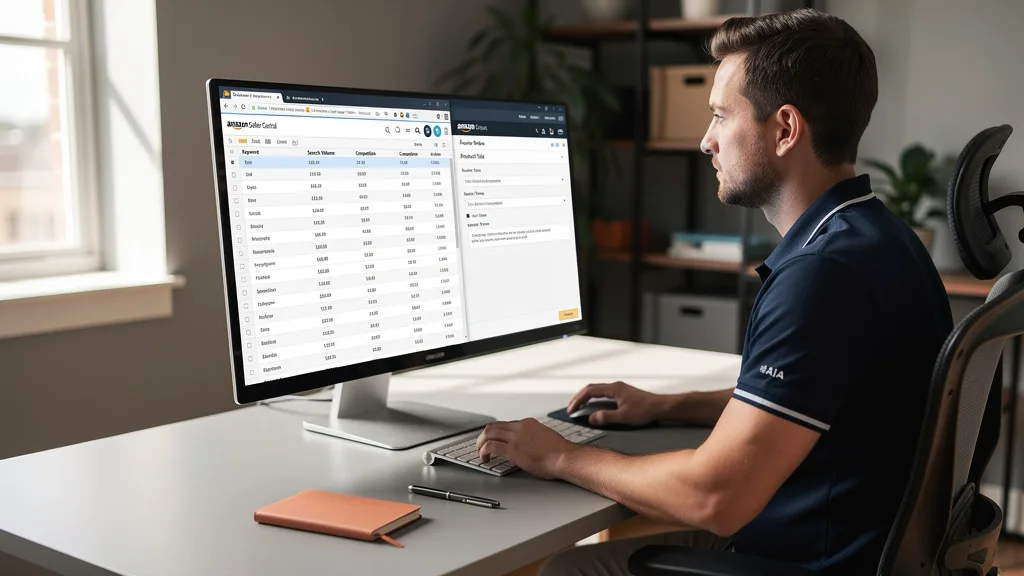
The key is to monitor the right metrics at each stage. In the beginning, you'll be looking for signs of life like new keyword indexing. Later, you'll focus on traffic and engagement metrics. Finally, your attention will shift to sales velocity and Best Seller Rank (BSR). This phased approach prevents premature conclusions and allows you to make data-driven adjustments along the way.
Initial Changes and Indexing: The First 1-2 Weeks
In the first one to two weeks after you update your listing, the primary changes are happening behind the scenes. Amazon's A10 algorithm will recrawl your product detail page to process the new information. This includes indexing your listing for the new keywords you've integrated into your title, bullet points, backend search terms, and description. You may not see a dramatic spike in sales right away, but this indexing is the critical foundation for everything that follows.
During this period, you can use third-party tools or a reverse-ASIN search to check if your product is now showing up for your target keywords. Seeing your ASIN indexed for these new terms is the first positive sign that your optimization is working. Any immediate shifts in traffic or sales are a bonus, but the main goal here is to confirm that the algorithm has recognized and categorized your changes correctly. This is the first step in improving your organic visibility.
Early Performance Indicators: Weeks 2-4
Once your listing is properly indexed, the focus shifts to early performance metrics in weeks two through four. With your product now appearing in search results for more relevant terms, you should start to see an increase in impressions and sessions (traffic). This is the time to closely monitor your Click-Through Rate (CTR). An improved title and main image should entice more shoppers to click on your listing from the search results page.
A rising CTR is a strong signal that your front-end optimization is effective and resonating with customers. While sales may only begin to tick up slightly, an increase in traffic and engagement tells the Amazon algorithm that your listing is relevant and appealing. This positive feedback loop is crucial for building momentum and is a leading indicator of future ranking improvements and sales growth.
Significant Rank and Sales Shifts: Months 1-3
This is the period where your patience and strategic efforts truly begin to pay off. Between the first and third months, the cumulative effects of increased traffic and better engagement start to translate into more significant gains. You should see your organic keyword rankings improve for your most important search terms, pushing your product higher up on the search results pages. This increased visibility naturally leads to more organic traffic.
As your ranking improves, you will likely experience a noticeable lift in sales velocity. This is also when your Unit Session Percentage, or conversion rate, becomes a critical metric to watch. If your compelling copy, high-quality images, and A+ Content are doing their job, a higher percentage of visitors will convert into buyers. This combination of higher rank and better conversion is what fuels substantial growth and begins to impact your Best Seller Rank (BSR).
Sustained Growth and Maturity: 3+ Months
After three months, a well-optimized listing should enter a phase of sustained growth and maturity. Your keyword rankings should stabilize at a higher position, your sales velocity should be consistently stronger, and your BSR should reflect this improved performance. At this stage, your listing has established a strong performance history with Amazon's algorithm, creating a flywheel effect where good sales velocity helps maintain high rankings, which in turn drives more sales.
The work isn't over, however. This is the time to focus on maintaining your position and making iterative improvements. You can test different main images, refine bullet points based on customer feedback from reviews and questions, and update your A+ Content. Continuous, minor optimization ensures you stay ahead of competitors and adapt to any changes in the market or Amazon's algorithm, securing your long-term profitability.
Key Factors That Influence Your Results Timeline
While the 1-3 month timeline is a reliable benchmark, several key factors can significantly speed up or slow down your journey to seeing results. Acknowledging these variables is crucial for setting realistic expectations for your specific product and brand. A brand selling a unique gadget in a low-competition niche will see results much faster than one selling a generic phone case in a saturated market.
Understanding these influences allows you to create a more effective strategy. For example, if you are in a highly competitive category, you know that your advertising strategy and the quality of your optimization need to be flawless to make an impact. Conversely, if you have a strong starting sales history, you can leverage that momentum to achieve faster ranking gains. Let's break down the most important factors.
Product Category and Competition Level
The level of competition in your product category is one of the biggest determinants of your optimization timeline. If you are selling in a niche with few dominant players and lower advertising costs, your optimized listing can climb the ranks relatively quickly. The algorithm has fewer competing products to weigh against yours, so your improvements in relevance and conversion will stand out more.
Conversely, if you're in a highly saturated category like phone accessories or popular supplements, the timeline will be longer. You are competing against established sellers with thousands of reviews and massive advertising budgets. In these scenarios, even perfect optimization will take more time to gain traction. Your changes need to be exceptionally compelling to steal market share, and you'll need to support your organic efforts with a robust PPC campaign to even get noticed.
Your Starting Sales Velocity and Rank
Your product's existing performance history plays a significant role. If you are optimizing a listing that already has consistent sales and a decent BSR, you can expect to see results faster. This existing sales velocity provides a foundation of data for the A10 algorithm. When you optimize, the algorithm can quickly measure the uplift in CTR and conversion rate against this baseline, rewarding positive changes with faster ranking improvements.
On the other hand, if you are launching a new product or trying to revive a listing with zero or very low sales, the process will take longer. You are starting from a blank slate. The algorithm has no performance history to evaluate, so it needs more time and more data from traffic and initial sales, often driven by PPC, to begin trusting your listing and moving it up in the rankings. This is why a strong launch strategy is critical for new products.
Quality of Your Optimization Efforts
The effectiveness of your results is directly proportional to the quality of your optimization. A half-hearted effort, such as simply adding a few keywords to your title, will yield minimal, if any, results. A comprehensive, high-quality optimization involves meticulous keyword research, professionally written copy that balances SEO with persuasive language, and studio-quality visuals that showcase your product's features and benefits.
Top-tier optimization also includes building out robust A+ Content, creating a compelling brand story, and ensuring your backend search terms are fully maximized. When every element of the listing works together to create a seamless and convincing customer experience, Amazon's algorithm takes notice. This is why investing in professional Amazon listing optimization services can dramatically shorten the timeline and produce a far greater ROI than a DIY approach.
Advertising Strategy and Budget
Your Amazon PPC strategy is not separate from your listing optimization; it is a powerful accelerator. A well-structured advertising campaign can significantly shorten the time it takes to see results by driving immediate, targeted traffic to your newly optimized page. This influx of visitors allows the algorithm to gather data on your listing's performance, like CTR and conversion rate, much faster than if you were relying solely on organic traffic.
A sufficient budget is essential, particularly in competitive markets. PPC campaigns help you generate those critical first sales on a new or struggling listing, which creates the sales history needed for organic ranking. By bidding on your newly researched keywords, you prove your listing's relevance to the algorithm. Understanding how much Amazon PPC costs and allocating an adequate budget is a direct investment in speeding up your optimization timeline.
Core Components of Listing Optimization to Drive Sales
To achieve meaningful results, your optimization strategy must be comprehensive. It's about creating a cohesive and persuasive product page that excels in every area. Focusing on just one element, like the title, while neglecting others, like images or A+ Content, will limit your success. A holistic approach ensures your listing is primed to attract, engage, and convert shoppers, which is how you ultimately drive sales and grow your brand on the Amazon marketplace.
"Effective Amazon listing optimization is a blend of art and science. It requires data-driven keyword strategy combined with compelling storytelling through copy and visuals. Getting this mix right is what separates listings that just exist from those that dominate their category in 2026."
Strategic Keyword Research and Integration
The foundation of all successful listing optimization is strategic keyword research. This process involves identifying all the relevant search terms that potential customers use to find products like yours. This includes broad, high-volume keywords as well as long-tail, more specific phrases that often have higher purchase intent. Using advanced tools helps uncover hundreds of opportunities you might otherwise miss.
Once you have this master list, the next step is to integrate these keywords naturally and strategically throughout your listing. This includes placing your most important keywords in the title, followed by distributing primary and secondary keywords across your bullet points, product description, and backend search term fields. This practice is a core part of any effective Amazon SEO strategy, telling the A10 algorithm exactly what your product is and when to show it to potential buyers.
Compelling Title, Bullets, and Description Copy
While keywords get you found, compelling copy is what sells your product. Your title, bullet points, and description must do more than just house keywords. They need to grab a customer's attention, highlight the key benefits, and answer potential questions. The title is your first impression and should include your main keyword along with a key benefit or feature.
Your five bullet points are your prime real estate to elaborate on the product's value. Each bullet should start with a benefit-driven header and then explain the feature that delivers that benefit. Use this space to overcome objections, differentiate yourself from competitors, and build desire. The product description offers a final chance to tell a story, provide more detailed specifications, and reinforce your brand message, tying everything together to persuade the customer to click "Add to Cart."
High-Quality Images and Video Content
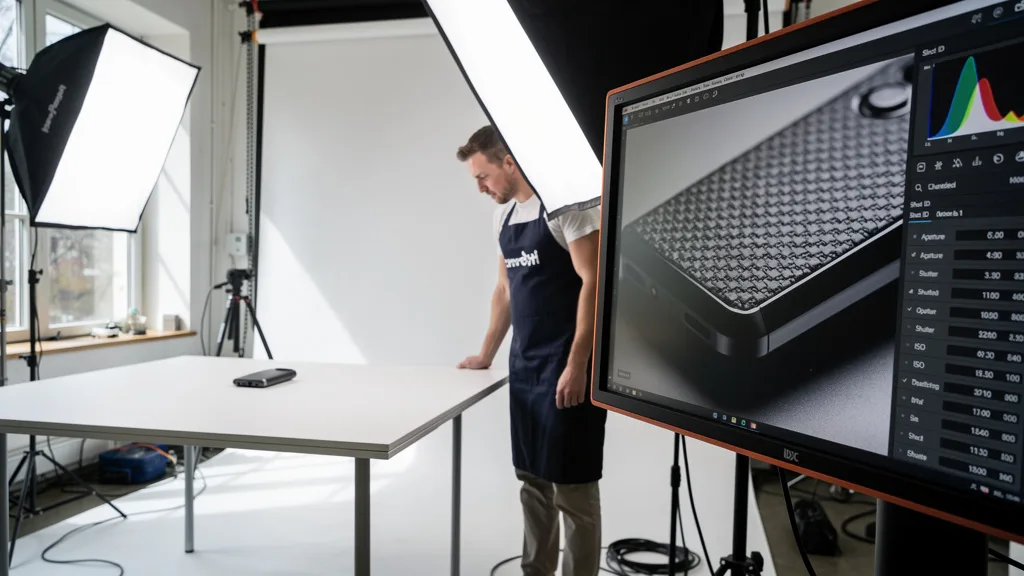
In ecommerce, your images are your product. Shoppers cannot touch or feel your item, so your visuals must do all the heavy lifting. High-quality, professionally shot images are non-negotiable. Your image stack should include a clean main image on a pure white background, followed by several lifestyle images showing the product in use, infographic images calling out key features, and images that show scale or packaging.
Video content takes this a step further, offering a dynamic way to demonstrate your product, explain its benefits, and build a stronger emotional connection with the shopper. A well-produced product video can significantly increase conversion rates by providing a level of detail and context that static images cannot. Investing in a full suite of high-resolution images and a product video is one of the highest-impact changes you can make. You can learn more by watching videos on How to Optimize Your Amazon visuals.
A+ Content and Brand Storefronts
For brand-registered sellers, A+ Content (formerly Enhanced Brand Content) is a powerful tool to enhance your product description with rich media. Instead of a plain text block, you can use a modular builder to add custom images, comparison charts, and detailed text layouts. This visually breaks up the page, making it easier for customers to scan and absorb information. It's your opportunity to tell a deeper brand story and further differentiate your product.
A+ Content not only improves the customer experience but has also been shown to increase conversion rates by up to 10%. It builds brand trust and legitimacy. This works hand-in-hand with your Amazon Brand Storefront, a custom multi-page destination for your brand on Amazon. A well-designed storefront allows you to showcase your full product catalog, share your brand's mission, and create a curated shopping experience that can increase customer loyalty and average order value.
How to Measure the Impact of Your Optimization Efforts
To truly understand if your optimization is working, you need to track the right Key Performance Indicators (KPIs). Simply hoping for more sales is not a strategy. By monitoring specific metrics within Seller Central and with third-party tools, you can get a clear, data-driven picture of your performance and diagnose any issues. This allows you to make informed adjustments instead of guessing what to do next.
Tracking these metrics over the timeline discussed earlier will show you the story of your optimization. You'll see how better keyword integration leads to higher rankings, how improved visuals lead to a better CTR, and how compelling copy leads to a higher conversion rate. Each metric is a piece of the puzzle, and watching them together provides a complete view of your listing's health and performance.
Tracking Keyword Ranking and Organic Traffic
The first and most direct measure of your SEO efforts is your keyword ranking. Using an Amazon rank tracker tool, you should monitor your position for your top 10-20 most important keywords. After optimization, you should see your product begin to climb from page 10 to page 3, and eventually onto the coveted page 1 for your target terms. This is direct proof that the algorithm is finding your listing more relevant.
Alongside ranking, you should monitor your organic traffic, which Amazon calls "sessions" in the Business Reports. An increase in sessions, especially when your advertising spend is stable, indicates that your higher organic ranking is successfully driving more shoppers to your page. This is the ultimate goal of the visibility aspect of your optimization.
Monitoring Click-Through Rate (CTR)
Click-Through Rate (CTR) measures the percentage of shoppers who see your product in the search results and click on it. This metric is a direct reflection of how effective your main image, title, price, and review rating are at grabbing attention. You can find this data in your Search Query Performance reports within Brand Analytics.
An increasing CTR after you've updated your title and main image is a fantastic sign. It tells you that your changes are resonating with customers and making your listing more appealing than your competitors'. A high CTR also sends a positive signal to Amazon's algorithm, which can further boost your organic ranking, creating a powerful flywheel effect.
Analyzing Unit Session Percentage (Conversion Rate)
The Unit Session Percentage, found in your Business Reports, is Amazon's term for conversion rate. It calculates the percentage of sessions that result in a sale. This is arguably the most important metric for measuring the effectiveness of your listing's content, including your bullet points, secondary images, A+ Content, and video.
If your traffic is increasing but your Unit Session Percentage is flat or declining, it's a sign that your listing isn't doing a good enough job of persuading visitors to buy. Conversely, an increasing conversion rate means your copy and visuals are effectively communicating value and building trust. Improving your conversion rate is the key to maximizing profitability from the traffic you receive. We've seen that there is a lot of debate on social media about what's the average time to see these changes, but consistent tracking is key.
Watching Your Best Seller Rank (BSR)
Your Best Seller Rank (BSR) is a dynamic score that reflects your sales velocity relative to other products in the same category. A lower BSR number is better (e.g., a BSR of #100 is better than #10,000). While BSR can fluctuate wildly throughout the day, a consistent downward trend over weeks and months is a definitive sign of success.
BSR is a lagging indicator, meaning it's a result of all your other efforts. Improvements in keyword rank, CTR, and conversion rate will all eventually lead to more sales, which in turn improves your BSR. Tracking your BSR provides a high-level confirmation that your overall strategy is working and that you are successfully capturing more market share within your category.
Key Takeaways
Mastering Amazon listing optimization is a marathon, not a sprint. Understanding the timeline and the key components is crucial for any serious brand owner looking to scale. Here are the most important points to remember from this guide.
| Timeline | Key Focus | Primary Metrics to Watch |
|---|---|---|
| Weeks 1-2 | Indexing & Foundation | Keyword Indexing, Impressions |
| Weeks 2-4 | Early Engagement | Sessions (Traffic), Click-Through Rate (CTR) |
| Months 1-3 | Growth & Momentum | Keyword Rank, Sales Velocity, Unit Session Percentage |
| Months 3+ | Maturity & Maintenance | Best Seller Rank (BSR), Sustained Sales, Customer Reviews |
First, results are phased. Expect to see technical changes like keyword indexing within two weeks, followed by engagement metrics like CTR improving within the first month. Significant sales and rank improvements typically materialize between one and three months, with sustained growth occurring after that.
Second, your results are influenced by many factors. The competitiveness of your category, your starting sales velocity, the quality of your optimization, and your advertising budget all play a role. A comprehensive strategy that accounts for these variables will always outperform a piecemeal approach.
Finally, measurement is non-negotiable. Consistently tracking metrics like keyword rank, sessions, CTR, and Unit Session Percentage is the only way to know what's working. This data allows you to refine your strategy and proves the ROI of your optimization efforts.
Frequently Asked Questions
Can I make $1000 a month selling on Amazon?
Yes, making $1000 a month in profit is an achievable goal for many sellers on Amazon, but it requires a solid strategy. This involves selecting the right product in a niche with manageable competition, creating a highly optimized listing, and managing your inventory and advertising effectively. It is not a get-rich-quick scheme; it requires research, capital investment, and consistent effort to build momentum.
For most new sellers, reaching this milestone can take several months. Profitability depends on your product's profit margin, your advertising efficiency (ACoS), and your ability to scale sales. Focusing on building a strong brand and providing excellent customer service from the start will set you on the right path to achieving and exceeding this income level.
How many Amazon sellers make over $100k?
A significant number of Amazon sellers achieve high levels of success. According to recent industry reports, nearly 40% of third-party sellers surpass $100,000 in annual sales. However, it's important to distinguish between revenue and profit. Achieving six figures in sales requires a well-run operation with strong profit margins and controlled costs.
Sellers who reach this level typically have been on the platform for more than a year, have multiple products, and have mastered the key levers of growth: sourcing, listing optimization, PPC advertising, and inventory management. Scaling to this level often involves moving from a solo operation to outsourcing tasks or hiring help to manage the workload.
Is FBA still profitable in 2026?
Yes, Amazon FBA (Fulfillment by Amazon) is absolutely still a profitable business model in 2026, but the landscape is more competitive than ever. Success now requires a higher level of sophistication and strategy. The days of launching any generic product and expecting it to sell are over. Profitability hinges on strong brand differentiation, a deep understanding of your target customer, and flawless execution.
Sellers who thrive in 2026 are those who focus on building real brands, not just selling products. They invest heavily in high-quality listing optimization, smart advertising through a comprehensive Amazon PPC management strategy, and creating a superior customer experience. While fees have increased, the massive volume of customers on Amazon means the opportunity for profit remains immense for serious entrepreneurs.
How often should you optimize your Amazon listings?
Your main listing optimization should be done thoroughly upon launch or when undertaking a major refresh. After that, you should review your listing's performance quarterly. This includes checking your main keywords' performance, analyzing competitor changes, and reading new customer reviews for insights. Minor tweaks can be made during these reviews, such as updating a bullet point to address a common question.
You should consider a major re-optimization every 6-12 months or whenever you see a sustained dip in performance (e.g., falling conversion rate or keyword rank). The market is always changing, with new competitors and evolving customer language. Staying proactive with periodic optimization ensures your listing remains relevant and competitive.
Does changing my Amazon listing hurt my ranking?
Making changes to your Amazon listing can cause a temporary, short-term fluctuation in ranking, but it does not inherently hurt it if done correctly. When you update your listing, Amazon's algorithm needs to recrawl and re-index it, which can cause a brief dip or volatility for a few days. This is often called the "honeymoon" period for new changes.
However, if your changes are a strategic improvement, such as adding more relevant keywords or improving your conversion rate with better images, your ranking will recover and ultimately climb higher than before. The key is to avoid making constant, drastic changes. Make thoughtful, data-driven updates and give the algorithm time to process them and reward your improved listing.
Conclusion
Figuring out how long Amazon listing optimization takes to see results is a matter of understanding that it's a phased process, not an overnight fix. As we've seen, the timeline unfolds over weeks and months, starting with behind-the-scenes indexing and culminating in sustained sales growth. Expecting instant page-one rankings is unrealistic, but by tracking the right KPIs at each stage, you can confidently measure your progress and see a clear return on your investment within one to three months.
The two most critical takeaways are that quality and consistency are paramount. A thorough, one-time optimization of your keywords, copy, and images will always outperform sporadic, minor tweaks. Furthermore, this effort must be supported by a smart PPC strategy to accelerate data collection and prove your listing's relevance to the algorithm. This holistic approach is what separates brands that struggle from those that scale successfully to eight figures on the platform.
Navigating this process can be complex, and mistakes can be costly in both time and money. Ensuring your optimization is executed flawlessly from the start is the fastest way to achieve your growth goals. A professional review can identify critical gaps and opportunities you might have missed.
If you are a 7-figure brand owner ready to scale and want to ensure your listings are perfectly optimized for profit-focused growth, a detailed audit is your first step. I can help you analyze every aspect of your listing to build a clear roadmap for success. Get your Free Audit today to unlock your brand's true potential on Amazon.