Table of Contents 10 sections
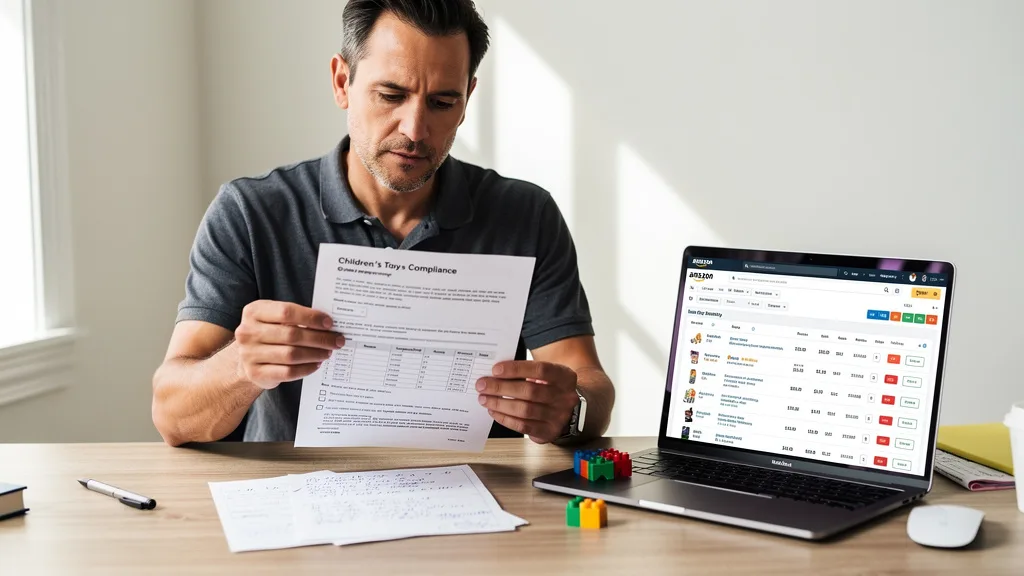
Are you struggling to understand the complex web of rules for selling toys on Amazon? The toy category is one of the most profitable on the platform, but it's also one of the most heavily regulated. For ambitious sellers looking to scale, navigating the compliance landscape is the difference between explosive growth and a suspended listing.
To meet Amazon toy eligibility, you must provide proof of compliance with federal safety standards, including a Children's Product Certificate (CPC) and test reports from a CPSC-accepted laboratory. You also need to adhere to Amazon's specific listing policies, packaging requirements, and performance metrics, especially for Q4 holiday selling. This process ensures all toys sold are safe for children and meet legal standards in the marketplace where they are sold.
Understanding Amazon's Core Toy Eligibility Requirements
Amazon's primary concern for the toy category is safety. To ensure this, they require all sellers to prove their products meet the specific safety standards mandated by law in the country of sale. In the United States, this primarily means complying with the regulations set forth by the Consumer Product Safety Commission (CPSC). All toys intended for children 12 years of age and under must meet these stringent requirements.
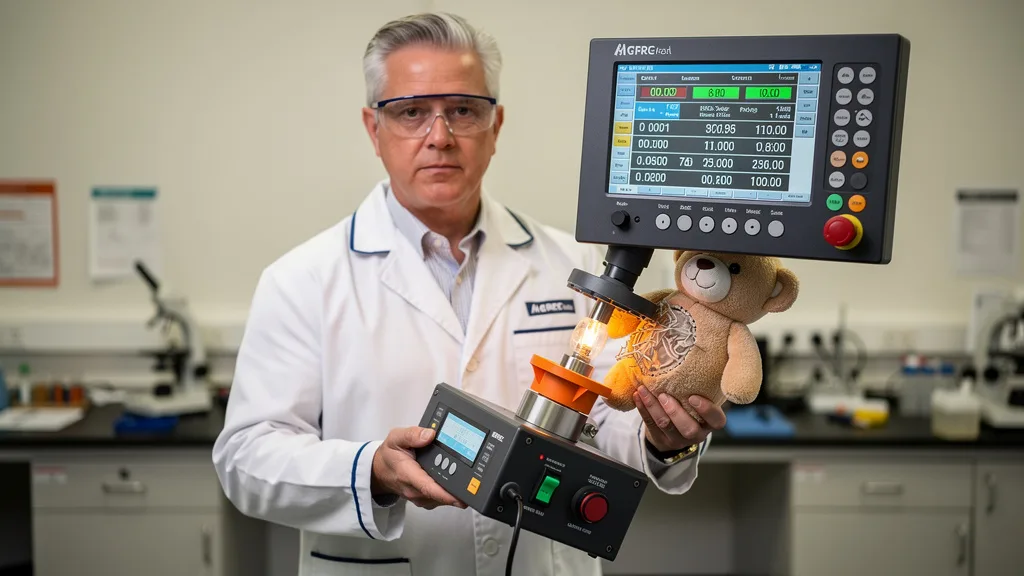
The cornerstone of this compliance is adherence to standard ASTM F963, which covers numerous potential hazards, including small parts, sharp points, chemical content like lead and phthalates, and flammability. Amazon requires sellers to provide verifiable proof that their products have been tested and passed these standards. Failing to provide this documentation can lead to immediate listing removal, account suspension, and forfeiture of inventory in FBA fulfillment centers.
Beyond federal law, Amazon has its own set of policies. Your product listings must be accurate, with correct age grading and clear warning labels displayed on the product detail page. For example, if your toy contains small parts and is not suitable for children under 3, this warning must be clearly visible. Understanding these dual layers of requirements, both legal and platform-specific, is essential for maintaining a healthy seller account. Proper Amazon SEO practices ensure these warnings and details are correctly indexed and displayed.
What Documents Are Required to Sell Toys on Amazon FBA?
When Amazon requests compliance documentation, you need to have your files ready and organized. The request can come at any time, during the initial listing setup or months after your product has been selling. Being unprepared is a significant risk for any serious brand. The documentation serves as your evidence that the product is safe and legally compliant.
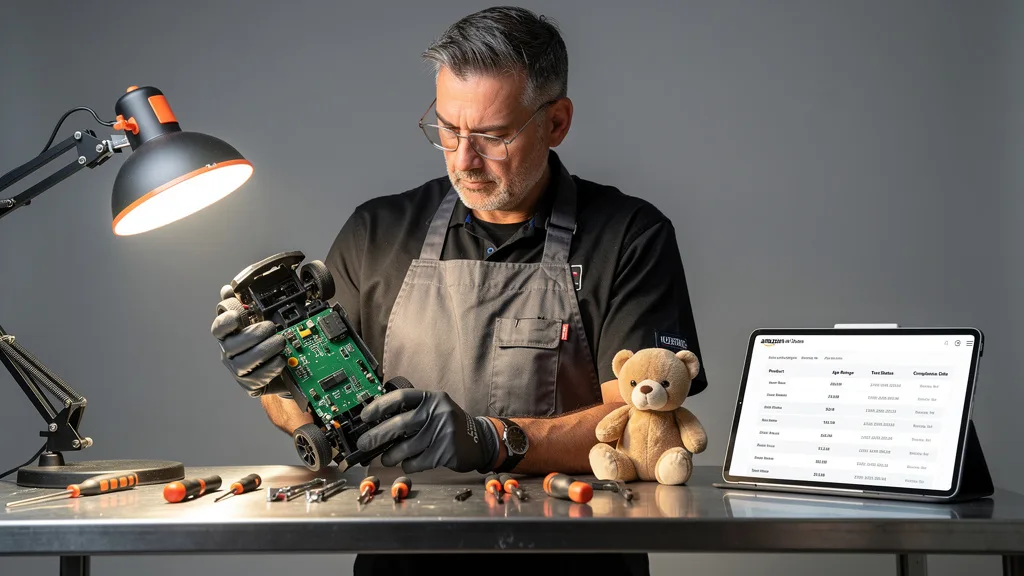
You will typically be asked to provide a set of specific documents for each ASIN or product model. These documents must be legible, in English, and match the product information on your Amazon listing exactly. Any discrepancies in product name, model number, or manufacturer information can lead to rejection, so attention to detail is critical.
Here are the primary documents Amazon requires:
- Children's Product Certificate (CPC): This is a self-issued document where you, the importer or US manufacturer, certify that your product complies with all applicable children's product safety rules. It must list the manufacturer, importer, the specific safety regulations the product was tested for, and information about the third-party lab that performed the tests.
- Third-Party Test Reports: You need to provide complete test reports from a CPSC-accepted laboratory. These reports must show that your product has passed all required tests for its specific category, such as ASTM F963 for general toys.
- Product Images: Amazon requires clear images of your product and its packaging. These images must show all safety warnings, tracking labels, and manufacturer information. The photos on the documents must perfectly match your Amazon product photography on the live listing.
- Invoices from Manufacturer (Sometimes): In some cases, especially when dealing with brand gating, Amazon may request commercial invoices to prove the authenticity and origin of your products.
Navigating Toy Safety Testing and CPSC Compliance
Achieving CPSC compliance is a non-negotiable step for selling toys in the US market, and by extension, on Amazon.com. This process revolves around third-party testing performed by a laboratory that is officially accepted by the CPSC. You cannot use just any testing facility; it must be on the CPSC's approved list to ensure the results are considered valid.
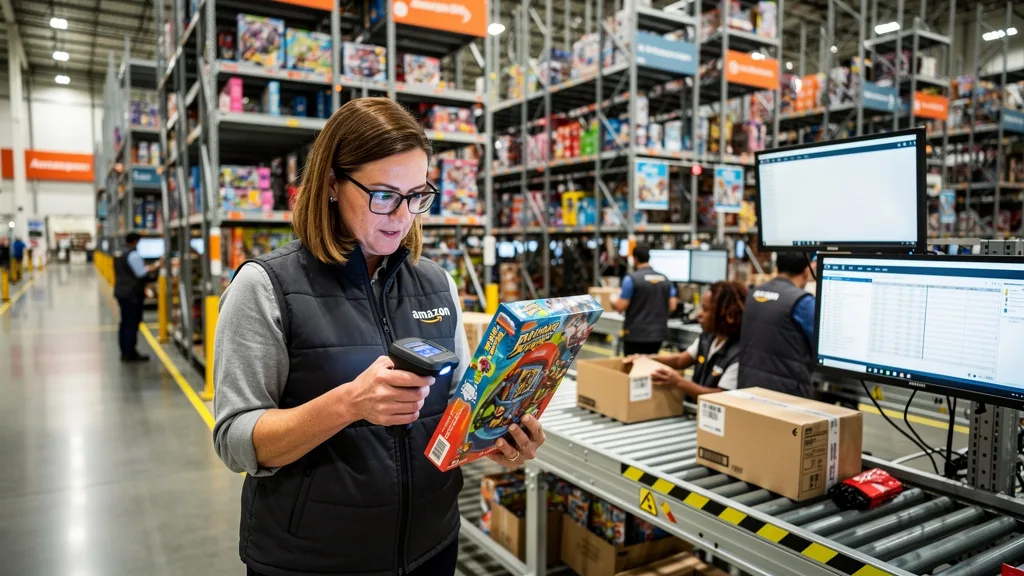
The testing process is rigorous and designed to identify any potential safety hazards before a product reaches a child's hands. The lab will subject your toy to a series of physical, mechanical, and chemical tests based on its material, design, and intended age group. For example, a baby rattle will undergo different tests than a chemistry set for a 10-year-old. It's your responsibility as the seller or brand owner to work with the lab to identify the correct set of required tests.
How Much Does Toy Safety Testing Cost for Amazon Sellers?
The cost of toy safety testing can vary significantly, typically ranging from $500 to over $3,000 per product. This price depends on several factors, including the complexity of the toy, the number of materials used, and the specific tests required. A simple wooden block set will be on the lower end of the cost spectrum, while a complex electronic toy with multiple components, batteries, and paints will be on the higher end.
Each distinct material and color in your product often needs to be tested separately for heavy metals and other restricted substances, which can increase costs. It's wise to budget for testing as a core part of your product development and sourcing costs. While it may seem like a significant expense, the cost of a product recall, a lawsuit, or an Amazon account suspension is infinitely higher. Investing in proper compliance from the start is a critical business practice.
Finding the Best CPSC-Accepted Toy Testing Labs in 2026
Choosing the right testing lab is a crucial decision. You need a partner that is not only CPSC-accepted but also reliable, communicative, and experienced with Amazon's specific requirements. The CPSC maintains a searchable online database of accepted laboratories, which is the only official source you should use to verify a lab's credentials. You can find this database on the official CPSC website.
In 2026, some of the most reputable global labs include SGS, Intertek, Bureau Veritas, and UL. These organizations have extensive experience testing consumer products for the US market and understand Amazon's documentation needs. When selecting a lab, consider factors like turnaround time, cost, customer service, and their physical location relative to your manufacturer. Always request a detailed quote that outlines every test to be performed before committing.
Specific FBA Requirements for Different Toy Categories
While the foundational safety rules apply to most toys, Amazon and federal regulations have specific nuances for different product types. Understanding these distinctions is crucial for ensuring your product remains compliant. A one-size-fits-all approach to testing and labeling can lead to rejections, as the risks associated with a plush toy are very different from those of a remote-controlled drone.
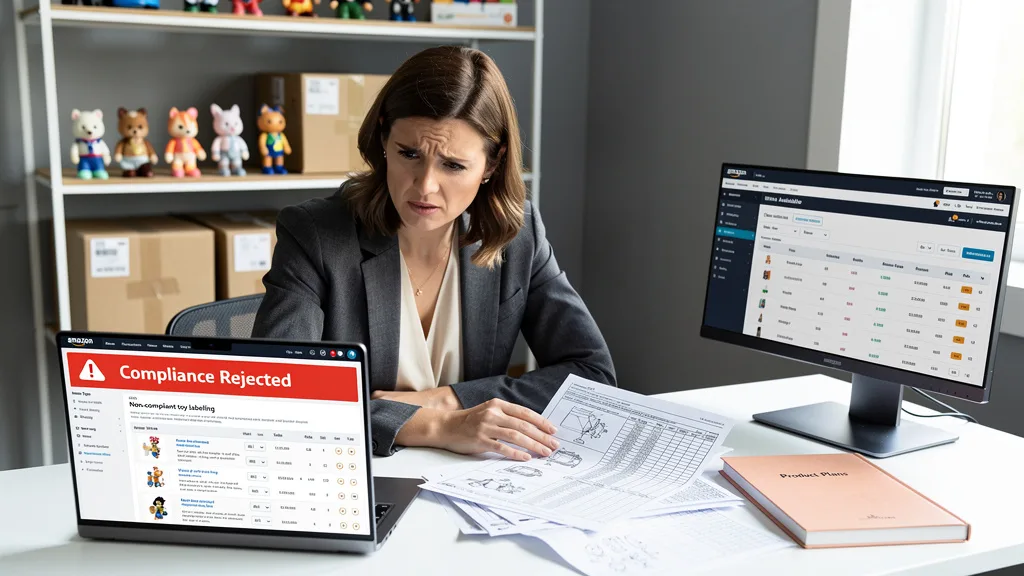
These category-specific rules often involve additional testing standards beyond the general ASTM F963 requirements. For example, toys that connect to the internet may have data privacy implications, while toys with batteries have specific transport and safety regulations. As a seller, you must identify every applicable rule for your specific product to ensure complete compliance before sending inventory to an FBA warehouse.
Are There Different Rules for Electronic vs Plush Toys?
Yes, the compliance requirements for electronic and plush toys differ significantly. Plush toys are primarily tested for flammability (under 16 CFR Part 1610), small parts, and sharp edges, ensuring they are safe for young children to handle. The stuffing material and any attached components like plastic eyes must also be secure and non-toxic.
Electronic toys, on the other hand, face a more complex set of regulations. In addition to the standard physical and chemical tests, they may need to comply with Federal Communications Commission (FCC) rules if they emit radio frequencies (like remote controls or Wi-Fi-enabled toys). Furthermore, toys containing button cell or coin batteries are subject to Reese's Law, which mandates stringent requirements for secure battery compartments to prevent ingestion by children. These additional layers of compliance make electronic toys more challenging and expensive to bring to market.
Compliance for Collectible and Educational Toys
Many sellers mistakenly believe that labeling a product as a "collectible" exempts it from children's product safety rules. This is a dangerous misconception. If a product has play value and could reasonably be used by a child, the CPSC will consider it a children's product, regardless of its marketing. A collectible action figure, for example, must still meet the same safety standards as a regular toy action figure if it's intended for ages 12 and under.
Similarly, educational toys are held to the same high safety standards. Science kits, building sets, and learning tablets must all pass the relevant ASTM F963 tests and other applicable regulations. The educational value of a toy does not provide a pass on safety compliance. When listing these items, it is crucial to use targeted keywords that attract the right buyers while ensuring all safety information is clearly presented on the detail page.
Latest Holiday Selling Requirements for the Toy Category
Selling toys during the fourth quarter (Q4) holiday season is a massive opportunity, but Amazon restricts this privilege to sellers who have demonstrated a history of excellent performance. To gain holiday selling eligibility for toys, you must meet specific performance metrics during a qualifying period, typically from late August to late October. Amazon announces the exact requirements each year, but they generally remain consistent.
The key performance targets you must meet include:
- First Ship Date: You must have shipped your first seller-fulfilled order before a specific date in September. This requirement does not typically apply to sellers who use FBA exclusively.
- Order Volume: You must have shipped a minimum number of orders during the qualification period.
- Pre-fulfillment Cancel Rate: Your rate must be below a low threshold, typically under 1.75%.
- Late Shipment Rate: Must be below 4%.
- Order Defect Rate (ODR): Must be below 1% as of early November.
Sellers using Fulfillment by Amazon (FBA) are generally not subject to these specific performance metrics for holiday selling, as Amazon handles the fulfillment. However, your account must still be in good standing. Maintaining a healthy Account Health Rating is paramount for all sellers hoping to capitalize on the Q4 rush. A well-managed Amazon PPC management strategy can help drive the sales velocity needed to establish a strong performance history.
How to Submit Compliance Documents in Seller Central
When Amazon requests your compliance documents, you will receive a notification via email and a performance notification in your Seller Central account. The process for submitting these documents is straightforward, but it requires precision. All files must be in an accepted format (usually PDF, JPG, or PNG) and clearly labeled.
Follow these steps to upload your documentation:
- Log in to your Amazon Seller Central account.
- Navigate to the 'Performance' tab and click on 'Account Health'.
- In the bottom right corner, look for the 'Product Compliance Requests' section. Click on 'Manage Your Compliance'.
- You will see a list of your ASINs that require documentation. Find the relevant product and click 'Add/Appeal Compliance'.
- A new window will open where you can upload each required document (e.g., CPC, Test Reports). There will be separate upload buttons for each document type.
- After uploading all files, add any necessary comments and click 'Submit for Approval'.
Once submitted, the review process can take anywhere from a few days to several weeks. You can monitor the status of your submission in the same 'Manage Your Compliance' dashboard. Ensure that the information on your documents, such as the ASIN and your company name, exactly matches what is in your Seller Central account to avoid automatic rejections.
Common Reasons Amazon Rejects Toy Product Applications
Receiving a rejection from Amazon after submitting your compliance documents can be frustrating, especially when you believe you've done everything correctly. Understanding the common pitfalls can help you avoid them and ensure a smoother approval process. Most rejections stem from a lack of attention to detail rather than a fundamentally unsafe product.
"In my experience scaling brands, the most frequent cause for toy application rejection is a simple mismatch. The company name on the test report doesn't match the brand name in Seller Central, or the product image on the CPC is slightly different from the main image on the listing. Amazon's review process is often automated initially, and these small inconsistencies are immediate red flags."
Here is a list of common rejection reasons:
- Incomplete or Missing Documents: Submitting a CPC without the corresponding full test reports is a frequent error.
- Testing from a Non-CPSC-Accepted Lab: The lab that performed the tests must be on the CPSC's approved list at the time of testing.
- Information Mismatches: The product name, brand, model number, and your seller information must be identical across all documents and your Amazon listing.
- Outdated Test Reports: While test reports don't technically expire, if a safety standard has been updated, you may need to re-test to the latest version.
- Illegible Scans: Ensure all submitted documents are high-quality scans or digital files that are easy to read.
- Missing Warnings on Packaging: The product packaging shown in images must display all required safety warnings, such as the small parts warning.
Thoroughly reviewing every detail before submission is the best way to prevent these common errors and secure your Amazon FBA product eligibility for toys.
Key Takeaways
Navigating the requirements for selling toys on Amazon FBA requires a diligent and proactive approach. Staying compliant is not just about getting your product listed; it's about building a sustainable and scalable brand. Here are the most critical points to remember:
- Safety is Paramount: All toys for children 12 and under must be tested to ASTM F963 and other relevant standards by a CPSC-accepted lab.
- Documentation is Key: Always have your Children's Product Certificate (CPC) and full third-party test reports ready to submit to Amazon.
- Details Matter: Ensure all information is consistent across your documents, product packaging, and Amazon listing to avoid rejections.
- Holiday Selling has Rules: To sell toys in Q4, you must meet strict performance metrics if you are not exclusively using FBA.
- Compliance is Ongoing: Safety standards can be updated. Periodically review your products and documentation to ensure they remain compliant.
Frequently Asked Questions
What are the compliance differences for selling toys via FBA vs FBM?
The core product safety and compliance requirements are exactly the same whether you use Fulfillment by Amazon (FBA) or Fulfillment by Merchant (FBM). You must have a Children's Product Certificate and valid test reports from a CPSC-accepted lab for any toy intended for children 12 and under, regardless of the fulfillment method.
The main differences lie in logistics and performance metrics. FBM sellers are directly responsible for meeting shipping performance targets (like Late Shipment Rate and Pre-fulfillment Cancel Rate) to be eligible for holiday selling in the toy category. FBA sellers are generally exempt from these specific metrics for holiday eligibility because Amazon handles their fulfillment, but their overall account health must still be in good standing.
Are toy ungating services for Amazon worth the cost?
Toy ungating services can be a tempting shortcut, but they come with risks. These services promise to get your products or category approved for a fee. While some may be legitimate, the seller of record (you) is always ultimately responsible for compliance. If the service uses fraudulent documents to get you approved, your account could be suspended permanently.
Instead of paying a service, it is far more valuable to invest the time in understanding the process yourself or working with a knowledgeable Amazon consultant. Learning how to properly source, test, and document your products is a fundamental skill for building a long-term, scalable brand in the toy category. It protects your business and ensures you are in full control of your compliance.
What is a Children's Product Certificate (CPC)?
A Children's Product Certificate (CPC) is a document required by the CPSC in which the importer or U.S. manufacturer certifies that their children's product complies with all applicable product safety regulations. It is a self-issued document, meaning you create it yourself based on the passing results from your third-party lab tests.
The CPC must include specific information: the product name and description, a list of all safety regulations it was tested for, your company's name and contact information, the contact information for the person maintaining the test records, the date and location of manufacturing and testing, and information identifying the CPSC-accepted third-party lab that conducted the tests.
Do I need approval to sell every toy brand on Amazon?
No, but you may need approval for many major brands. Amazon has two types of restrictions: category restrictions and brand restrictions (brand gating). Getting approved to sell in the toy category does not automatically grant you permission to sell products from brands like LEGO, Disney, or Mattel. These major brands are often "gated," meaning you must apply separately to sell them.
To get approval for a gated brand, you typically need to provide wholesale invoices from an authorized distributor and sometimes a letter of authorization from the brand itself. This process is in place to prevent the sale of counterfeit products and protect brand integrity. Always assume a major toy brand is gated until you have confirmed otherwise in your Seller Central account.
How long does the toy approval process typically take on Amazon?
The timeline for Amazon's toy approval process can vary widely. After you submit your compliance documents, the review can take anywhere from 48 hours to several weeks. The timing often depends on the current volume of applications Amazon is processing and the complexity of your submission. During peak seasons like Q3, leading up to the holidays, review times may be longer.
If your documents are perfectly organized, clearly legible, and all information matches your listing exactly, you have a better chance of a quick approval. If Amazon's team needs to request additional information or if your initial submission is rejected, the process will be significantly delayed. It's best to start the process well in advance of your planned launch date.
Conclusion
Successfully navigating Amazon FBA product eligibility for toys is a critical hurdle for any brand aiming to scale in this lucrative market. While the requirements for documentation, testing, and compliance are strict, they are manageable with a detail-oriented and proactive approach. By understanding the core principles of CPSC safety standards, organizing your documents meticulously, and staying ahead of holiday selling requirements, you can build a defensible and profitable toy business on Amazon. The key is to treat compliance not as a one-time task, but as an integral part of your business operations.
If you're feeling overwhelmed by the complexities of toy compliance or simply want an expert eye to ensure your listings are optimized for growth and safety, we can help. Our team specializes in scaling 7-figure brands to 8-figures by handling the intricate details of Amazon management. To get a clear, actionable analysis of your product listings and compliance status, request your Free Audit today.